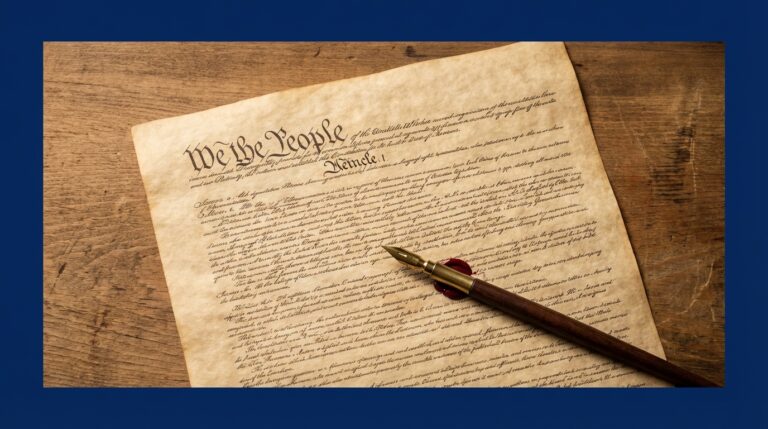
The approach is neutral and factual. It focuses on what the text says, where to read it, and how courts and commentators shape modern application.
What the first ten amendments are and why they matter
1 through 10 amendments, a quick label
The first ten amendments to the U.S. Constitution are collectively known as the Bill of Rights, and they establish core individual liberties and basic procedural protections for people in the United States.
For the original text and a clean transcription, consult the National Archives transcription, which preserves the ratified language of the Bill of Rights.
Quick steps to check primary texts and annotations
Use primary sources first
These amendments were ratified in 1791 and remain a foundational legal framework for civil liberties, while their modern application depends on later court decisions and interpretive work.

The Constitution Annotated offers clause by clause commentary that helps readers understand how courts and scholars interpret those provisions.
After the Constitution was drafted, several states and delegates demanded explicit protections for individual rights, and what emerged became the Bill of Rights.
The ratification process used the amendment procedure in the Constitution and the final texts are preserved in archival transcriptions such as the National Archives transcription.
For clause level explanation and doctrinal history, the Constitution Annotated is the recommended annotated source for researchers and readers seeking context.
Accessible summaries are available from educational resources like the Cornell Legal Information Institute, which provides plain language overviews suited to first time readers.
Amendment I, clause by clause: speech, religion, press, assembly and petition
The First Amendment names five related freedoms: speech, religion, press, assembly and petition, and it is the starting point for many free expression questions in American law.
In short, the text prevents Congress from making laws that establish religion or prohibit its free exercise, and it forbids laws that abridge speech or the press or the right to assemble and petition the government.

Courts have defined the practical scope of these freedoms through a long line of decisions that test limits for speech, press and assembly in different contexts.

Many modern disputes over regulation of online speech, political expression and religious accommodation are resolved by reference to Supreme Court precedent and the interpretive notes in the Constitution Annotated. Also see the homepage.
Amendments II and III: arms and quartering in historical context
The Second Amendment addresses bearing arms in the context of 18th century concerns about militias, while the Third Amendment prohibits the quartering of troops in private homes without consent, reflecting the founders concerns about standing armies.
The Second Amendment has been the focus of substantial judicial interpretation in modern years, and its contours continue to evolve through court rulings and commentary.
The Third Amendment is rarely litigated today but serves as an historical marker of the framers priorities and of the broader principle that private property and home privacy deserve protection.
Readers seeking a concise overview of these provisions can consult the Bill of Rights overview at Cornell Law School for plain language background.
Amendments IV through VI: search and seizures, indictments and trials
The Fourth Amendment limits unreasonable searches and seizures and sets rules for warrants supported by probable cause.
How courts apply those warrant rules and define unreasonable searches is the subject of ongoing doctrinal work and is explained in clause level annotations in the Constitution Annotated.
The Fifth Amendment includes protections such as the grand jury requirement for federal felonies, the prohibition on double jeopardy, and the privilege against self incrimination, while the Sixth Amendment guarantees a speedy and public trial, an impartial jury, notice of charges, confrontation of witnesses and the right to counsel.
Modern courts analyze digital searches under Fourth Amendment principles, weighing government interest, the expectation of privacy, and established precedent; outcomes vary with technology and case facts.
Together those protections shape basic criminal procedure and have been incorporated against the states through later jurisprudence, so many of the protections now apply in state as well as federal prosecutions.
For readers who want clause by clause case citations and doctrinal explanation, the Constitution Annotated and Supreme Court summaries are authoritative starting points.
Amendments VII through X: jury trials, punishments and federalism
The Seventh Amendment protects the right to a civil jury trial in many federal civil cases, preserving a colonial practice seen as a check on judicial power.
The Eighth Amendment prohibits excessive bail and cruel and unusual punishment, concepts courts have interpreted through case law over time.
Amendments Nine and Ten make two related points: the Ninth notes that the enumeration of certain rights does not deny other rights retained by the people, and the Tenth reserves powers not delegated to the federal government to the states or the people, together shaping federalism and limits on national authority.
Readers can find plain language summaries and historical commentary in resources like the Constitution Annotated and educational essays at the National Constitution Center.
How the Bill of Rights is applied today: common questions, mistaken readings and scenario examples
Active debates and practical questions
Contemporary legal debates include how the Bill of Rights protects privacy and speech in a digital age, with specific questions about surveillance, data collection and platform regulation.
Stay informed and involved with Michael Carbonara
The Constitution Annotated and primary texts are the best starting points for evaluating modern claims about constitutional rights.
To evaluate a claim, a practical framework is to identify the amendment at issue, read the relevant text, check authoritative annotations and then look for controlling Supreme Court precedent.
Common reporting errors include stating constitutional outcomes as settled facts, omitting attribution to cases or primary texts, and confusing policy proposals with constitutional requirements.
When readers apply the simple framework above they reduce the risk of overstatement and make clearer distinctions between the text, judicial interpretation and ongoing legal debate.

Summary, further reading and reliable primary sources
Quick takeaway: Amendments I through X form the Bill of Rights, a collection of protections for speech, religion, criminal procedure, trial rights and limits on federal power that remain central to American civil liberties. See the about page.
For full texts and definitive clause level notes consult the National Archives transcription and the Constitution Annotated as primary reference sources and our constitutional-rights hub.
Educational essays and plain language guides such as the Interactive Constitution and the Legal Information Institute help readers translate the text into everyday terms and point to key cases for further reading.
They are called the Bill of Rights, ratified in 1791 to protect individual liberties and basic procedural safeguards.
The National Archives transcription preserves the ratified text, and the Constitution Annotated offers clause level explanation.
Courts apply traditional Fourth Amendment principles to new technologies, and outcomes depend on evolving case law and statutory context.
References
- https://constitution.congress.gov/browse/essay/amdt9-1/ALDE_00013641/
- https://www.law.cornell.edu/constitution-conan/amendment-9/ninth-amendment-doctrine
- https://michaelcarbonara.com/
- https://michaelcarbonara.com/issue/constitutional-rights/
- https://michaelcarbonara.com/about/
- https://constitutioncenter.org/the-constitution/amendments/amendment-ix/interpretations/131
- https://michaelcarbonara.com/contact/