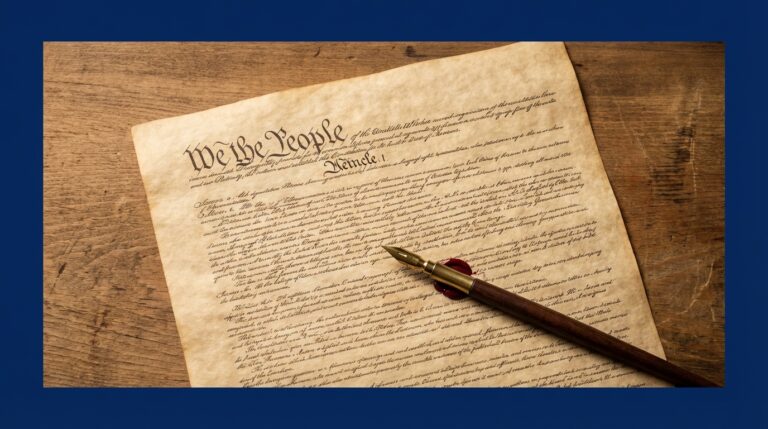
Readers will find brief historical context, amendment-by-amendment explanations, common misconceptions to avoid, practical modern examples and clear sources for follow-up. The guide aims to be neutral, factual and useful for civic-minded readers seeking verification and clarity.
What the Bill of Rights is: a brief definition and context
The phrase “Bill of Rights” refers to the collective name for the first ten amendments to the U.S. Constitution, ratified as a package in 1791 and preserved in the National Archives as the authoritative text; this guide uses that transcription as the baseline for wording and summary National Archives transcription.
These first additions to the Constitution were written to enumerate certain individual liberties and procedural protections rather than to create new federal institutions or policy programs. For historical background on the drafting and adoption process, readers can consult materials held by the Library of Congress Library of Congress overview. For a concise annotated reference to free-speech principles, see Cornell LII.
The Bill of Rights sets out rights ranging from freedom of speech to trial protections and the reservation of powers to states and the people. Over time, courts have clarified how those phrases operate in practical law, which means the text and court interpretation together determine contemporary effect National Archives transcription.
The first ten amendments establish core individual liberties and procedural protections; modern application depends on judicial interpretation, which adapts the text to new facts and technologies.
The first ten amendments were proposed after the Constitution was drafted and then ratified by the states in 1791 as a single set of changes; historians and the archival record show the package nature of that ratification and the text as preserved in the National Archives National Archives transcription.
Debates in the Founding era weighed protections for individual liberties against concerns about central authority. The Library of Congress provides a concise historical account that situates those debates and the amendment process for readers seeking documentary context Library of Congress overview.
While the amendment wording itself has not changed since ratification, later judicial interpretation and statutory developments have shaped how the provisions operate in modern government and everyday life. Readers should understand that case law, not new amendment texts, typically governs contemporary application United States Courts overview.

This section summarizes each amendment in plain language and highlights common modern contexts where courts or commentators often focus when applying the text.
Read the authoritative Bill of Rights text and compare it with recent opinions on the campaign join page for news and updates
For the authoritative wording of each amendment, consult the National Archives transcription of the Bill of Rights for the exact text and ordering.
1 through 10 amendments
Amendment I: religion, speech, press, assembly, petition
The First Amendment protects five core freedoms: religion, speech, press, assembly and petition. Courts have extended application of those protections into contemporary platforms and disputes, including cases that involve social media and online speech, where constitutional frameworks are adapted to modern communication forms Cornell LII First Amendment overview.
Amendment II: right to keep and bear arms
The Second Amendment secures a right to keep and bear arms in its text; in modern practice the scope of that right is largely shaped by Supreme Court decisions and subsequent lower-court rulings, which determine how the amendment applies to regulations and public-policy measures Oyez subject overview.
Amendments III-V: quartering, due process, double jeopardy, self-incrimination
Amendment III forbids the peacetime quartering of soldiers in private homes without consent; it is less litigated than other provisions but remains part of the Bill of Rights text preserved at the National Archives National Archives transcription.
The Fourth Amendment protects against unreasonable searches and seizures, and the Fifth Amendment provides that no person shall be compelled to incriminate themselves and guarantees due process protections including protection from double jeopardy. Courts commonly address these protections in cases about searches of electronic devices and compelled testimony, where judges interpret eighteenth-century wording for twenty-first-century technology United States Courts overview.

The Supreme Court and lower federal courts are the primary institutions that interpret the Bill of Rights language and apply it to new facts and technologies. Judicial opinions, from trial courts through the Supreme Court, create binding precedents that shape the practical meaning of the amendments United States Courts overview.
A key mechanism that changed how the Bill of Rights operates in practice is the doctrine of incorporation, where the Supreme Court has relied on the Fourteenth Amendment to make many federal protections applicable to state governments. Incorporation is a product of court practice rather than a change in the original text, and it explains why many rights now constrain both federal and state action Britannica Bill of Rights entry.
Court interpretation is an adaptive process: judges apply original text to novel contexts, and that means outcomes can evolve as new legal issues emerge. For current law on technical or contested questions, consult recent opinions and annotated explanations by trusted legal resources Cornell LII First Amendment overview.
Criminal-procedure protections in practice: IV through VIII in common scenarios
In modern criminal cases, the Fourth Amendment’s bar on unreasonable searches and seizures frequently requires courts to balance privacy interests against law enforcement needs; this balance is particularly visible in litigation about searches of smartphones and other electronic devices, where courts apply established search doctrines to new forms of data United States Courts overview.
The Fifth Amendment’s protection against compelled self-incrimination operates in tandem with Miranda and Sixth Amendment rights to counsel. Courts decide the reach of those protections by examining interrogation practices, waiver language and procedural safeguards that determine whether statements are admissible at trial United States Courts overview.

The Sixth Amendment guarantees prompt notice of charges, the opportunity to confront witnesses and a right to counsel, and courts have developed rules to ensure those elements operate fairly in practice. Where questions arise-for example about access to counsel before trial or during interrogation-judges resolve disputes through case-by-case rulings United States Courts overview.
The Eighth Amendment limits how courts set bail, fines and punishments and continues to be a reference point in sentencing and detention debates. Courts look to precedent and to constitutional standards when assessing whether bail or punishment is excessive under the amendment Britannica Bill of Rights entry.
A common mistake is to treat slogans or campaign phrasing as legal guarantees. Phrases used for political messaging may summarize values, but they are not a substitute for the constitutional text or for court holdings that define legal effect Library of Congress overview.
Another error is to say the Bill of Rights only limited the federal government; while that was often true at first, incorporation through judicial decisions has applied many protections to state governments, so descriptions that omit that history can mislead readers about modern coverage Britannica Bill of Rights entry.
Avoid absolute phrasing when describing rights. Instead of saying a provision guarantees a policy outcome, state that courts have interpreted or applied a right in particular ways and cite the relevant text or opinion. That approach keeps reporting and explanation accurate and verifiable National Archives transcription.
Practical examples: recent contexts where the first ten amendments matter
Disputes about speech on social media regularly raise First Amendment questions when users and platforms clash over content moderation, and legal commentators and courts consider how traditional free-speech principles translate to private platforms that host public discourse Cornell LII First Amendment overview. Read relevant coverage in our news.
Challenges to firearms regulation illustrate how the Second Amendment’s modern scope is shaped by Supreme Court decisions and lower-court application; courts evaluate regulatory frameworks against constitutional standards developed in recent rulings Oyez subject overview.
Fourth and Fifth Amendment issues commonly arise in litigation over searches of electronic devices and data, where judges apply search and self-incrimination doctrines to new evidence types and technologies on a case-by-case basis United States Courts overview.
Quick pointers to authoritative explanatory resources
Use these sites to read annotated explanations
Where to read the primary texts and reliable summaries
The National Archives transcription is the authoritative primary source for the Bill of Rights wording, and readers who want the exact amendment texts should start there National Archives transcription.
For annotated explanations and accessible legal summaries, Cornell LII and Oyez provide useful overviews, while the United States Courts site offers clear material on criminal-procedure protections; these sources help readers move from text to practical meaning Cornell LII First Amendment overview. See the constitutional-rights hub for related posts and resources.
Encyclopedic and historical entries, such as those in Britannica or the Library of Congress, offer helpful background and context for the Founding era and subsequent developments in amendment interpretation Britannica Bill of Rights entry.
Conclusion: how to use this guide and where to verify updates
The first ten amendments, often called the Bill of Rights, set out core liberties and procedural safeguards, but modern application depends on judicial interpretation and legal developments; consult the National Archives text and recent court opinions to verify current law National Archives transcription. Learn more on the about page.
When you summarize or cite these protections, attribute claims to primary texts or to court rulings rather than stating policy outcomes as guaranteed facts. That practice keeps reporting accurate and helps readers follow updates as courts issue new opinions United States Courts overview.
The 1 through 10 amendments, or the Bill of Rights, list foundational protections including free speech, the right to bear arms, search and trial protections, and reserved state powers.
The National Archives provides the authoritative transcription of the Bill of Rights, which is the reliable starting point for the exact wording.
Courts interpret amendment language in light of new technologies, so application to items like smartphones or social media depends on recent judicial rulings and statutory context.
This guide focuses on explanatory context and sources; it does not interpret specific case outcomes or offer legal advice.
References
- https://www.archives.gov/founding-docs/bill-of-rights-transcript
- https://www.loc.gov/rr/program/bib/ourdocs/billofrights.html
- https://www.uscourts.gov/about-federal-courts/educational-resources/what-are-bill-rights
- https://www.law.cornell.edu/constitution/first_amendment
- https://www.oyez.org/issues/subjects/1
- https://www.britannica.com/topic/Bill-of-Rights
- https://michaelcarbonara.com/contact/
- https://michaelcarbonara.com/issue/constitutional-rights/
- https://michaelcarbonara.com/news/
- https://michaelcarbonara.com/about/