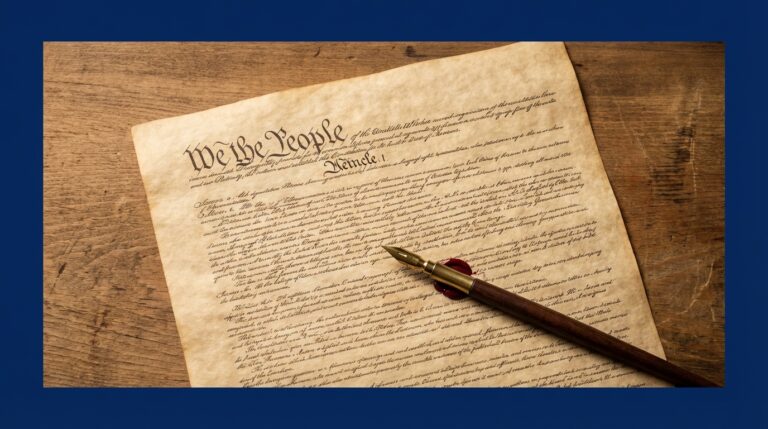
Readers will find a concise summary, a chronological account of Madison’s proposals and congressional action, examples that link specific amendments to eighteenth century concerns, and a short guide to primary sources for further reading.
Quick answer: what the first ten amendments are and why they were added
One-sentence summary, 1 through 10 amendments
The first ten amendments are the Bill of Rights, a set of protections ratified in 1791 to address objections raised during the Constitution’s ratification and to define limits on federal power, a point underlined in archival records and legal overviews National Archives.
In short, they were added to protect individual liberties, to limit the new national government, and to secure broader ratification by reassuring critics who feared an overpowerful central authority National Constitution Center overview.
They were added mainly to protect individual liberties, to limit federal authority, and to secure ratification by addressing objections raised in state conventions; James Madison proposed amendments in 1789 and Congress revised and sent twelve articles to the states, of which ten were ratified in 1791.
Why this question matters today
Understanding why the 1 through 10 amendments were added helps citizens read early constitutional choices and modern debates with context. Primary documents show the original remedies framers sought and the political tradeoffs that shaped the founding era Library of Congress transcription.
Historical context: post-1787 politics and Anti-Federalist objections
State ratifying conventions
After the 1787 Constitution circulated, state ratifying conventions became the main venues for debate. Delegates examined the new structure and raised questions about how individual rights would be protected under a stronger federal government Avalon Project, Yale Law School.
Those conventions produced extensive public discussion. Several states submitted conditional ratification or urged amendments as a way to accept the Constitution while reserving concerns about central authority for later remedy Encyclopaedia Britannica.

Anti-Federalist concerns and public debates
Anti-Federalist writings emphasized the lack of an explicit bill of rights and warned that a federal government with vague powers might encroach on liberties. Scholars note that these objections were a central political force shaping subsequent amendment proposals Avalon Project, Yale Law School.
Debates in newspapers, pamphlets, and convention records framed the Bill of Rights as both a list of protections and a political instrument meant to reassure skeptical states. That dual role explains why the language of many amendments reflects concrete eighteenth century worries as well as broader constitutional principles National Constitution Center overview. See contemporary news and commentary collected in the news section for examples of how public debate shapes constitutional discussion.
How James Madison drafted the amendments and how Congress revised them
Madison’s 1789 proposals
In 1789 James Madison introduced a set of proposed amendments to Congress, responding to state ratifying convention concerns and public pressure for explicit protections; primary transcriptions report his proposal and the context of its submission Library of Congress transcription.

Madison’s early approach combined principled commitments to rights with a practical aim: to produce a text acceptable to enough states so the Constitution would stand. He drafted language that could be debated and revised in Congress rather than presenting a final, untouchable list.
Congress in 1789 considered roughly two dozen amendment ideas from various sources, and after debate it approved twelve articles to send to the state legislatures for ratification, a process documented in contemporary records National Archives.
Explore original Bill of Rights documents
For a direct look at the primary documents and early congressional records, consult the transcriptions and archival materials noted above to see Madison’s drafts and how Congress edited them.
Congressional debate and the twelve articles approved for the states
Congress revised Madison’s proposals partly to condense language and partly to align the amendments with procedural requirements for state consideration. The record shows a mixture of technical edits and political negotiation as members sought a package states would accept Library of Congress transcription.
Of the twelve articles Congress sent, ten were ratified by the required number of states by 1791 and entered the Constitution as the Bill of Rights. The two unratified proposals remained unresolved for different reasons, but the main package addressed the core demands of critics at the time Legal Information Institute.
The three main motives behind the Bill of Rights
Protecting individual liberties
One clear motive was to protect certain personal freedoms against federal intrusion, such as speech, religion, and trial rights. Archival and legal summaries place these protections at the center of why amendments were proposed and accepted National Archives.
These protections responded both to philosophical commitments to natural rights and to practical worries about specific government actions that had occurred under colonial and confederal arrangements.

A second motive was to define limits on the new national government so citizens and states would have clearer legal guarantees. Historians group limiting federal authority with liberty protections as twin aims of the Bill of Rights National Constitution Center overview.
The framers and critics debated whether a written list would truly constrain future federal action, but at the time a concrete set of clauses offered a politically reassuring boundary for many skeptics.
Securing political compromise for ratification
The third motive was practical: to secure ratification of the Constitution by addressing the most pressing objections in state conventions. Scholars emphasize that the Bill of Rights played a compromise function as much as a doctrinal one Legal Information Institute.
Madison and other leaders treated the amendments as a way to close the political gap between Federalists and Anti-Federalists, making the overall constitutional settlement more durable and acceptable across diverse states.
How specific amendments reflect 18th-century concerns
Third and Fourth Amendments: quartering and searches
The Third Amendment, limiting quartering of troops, reflects direct colonial grievances about housing soldiers in private homes, a concrete practice that shaped popular distrust of military authority, as legal overviews explain Legal Information Institute.
The Fourth Amendment’s protection against unreasonable searches and seizures grew from similar concrete experiences with writs and searches under earlier imperial rule, and historians link its language to those eighteenth century controversies Encyclopaedia Britannica.
Fifth and Sixth: trial rights and due process
Trial protections in the Fifth and Sixth Amendments, including grand jury, speedy trial, and counsel, echo long standing Anglo American legal traditions and specific colonial-era disputes about prosecution and jury procedure, which guided the framers when drafting procedural guarantees Legal Information Institute.
Those provisions sought to prevent arbitrary government prosecutions and to assure fair procedures, responding to both philosophical commitments and observed abuses in the recent past.
Other provisions and local controversies
Several other clauses likewise reflect practical eighteenth century concerns, from assembly and petition rights to limits on excessive bail and cruel punishments. Legal-historical accounts connect these clauses to the debates that dominated state conventions and public commentary at the time Encyclopaedia Britannica.

Ratification mechanics: numbers, states, and the two unratified proposals
How many states ratified and when
Congress sent twelve proposed articles to the states; by 1791 ten had been ratified by the required number of states and thus became the Bill of Rights, a sequence documented in congressional and archival records Library of Congress transcription.
The ratification timeline shows states acting at different speeds. Some states ratified quickly when satisfied that the amendments addressed their concerns, while others delayed or attached conditions to their acceptance, reflecting the political give and take of the period National Archives.
What happened to the two articles not initially ratified
Two of the articles Congress sent were not ratified in 1791. One of those dealt with congressional apportionment and did not reach the required number of state approvals at that time; another was eventually ratified more than two centuries later through a different process, illustrating the technical and political complexity of amendment procedures Legal Information Institute.
These outcomes show how amendment text, political will, and timing interact; they also reinforce that the Bill of Rights package reflects both legal drafting and political compromise during the founding era.
Original scope and later incorporation against the states
Federal-only limitations in original text
The Bill of Rights originally constrained only the federal government, a point clear in original documents and early legal interpretation; historians and legal references emphasize this federal-only scope at ratification Legal Information Institute.
That meant states were not initially bound by the Bill of Rights clauses, which led to later constitutional and judicial developments when questions arose about state practices and civil liberties.
Quick guide to primary sources and landmark cases for incorporation
Use library and court databases for deeper research
14th Amendment and selective incorporation
After the Civil War, the Fourteenth Amendment created a new constitutional route for applying federal protections against state actions, and over the late nineteenth and twentieth centuries the Supreme Court used the Due Process and Equal Protection clauses to incorporate many Bill of Rights protections selectively, as legal summaries document Encyclopaedia Britannica.
Incorporation was selective and gradual, not an immediate wholesale transfer of all clauses to the states, and scholars continue to debate the doctrinal and historical nuances of that process Legal Information Institute.
How Supreme Court doctrine unfolded
Key Supreme Court decisions across the twentieth century interpreted the Fourteenth Amendment in ways that extended many protections to state action, a development explained in legal reference overviews and Supreme Court histories Legal Information Institute.
Scholars note that incorporation reshaped American federalism by aligning state-level protections more closely with federal standards, while also producing ongoing debates about original intent and modern interpretation National Constitution Center overview.
Common misconceptions, practical implications, and takeaways for readers
Frequent misunderstandings and clarifications
A common misconception is that the Bill of Rights always applied to states; in fact, its reach against state governments developed later through the Fourteenth Amendment and Supreme Court doctrine, not at the moment of 1791 ratification Legal Information Institute.
Another frequent error treats the Bill of Rights as purely symbolic. While it served a political compromise function, primary sources and scholarship make clear it also established concrete legal guarantees that mattered in practice and in later jurisprudence National Archives.
Why the origin story matters today
Knowing that the 1 through 10 amendments combined principle with compromise helps citizens evaluate how original language is used in modern debates. The historical record clarifies what framers prioritized and where later legal development reshaped application.
That context matters for civic literacy: it distinguishes between the historical reasons for creating protections and the modern legal systems that interpret and apply them. For more on the topic and related content on this site, see the about page.
Where to find primary sources and further reading
For primary documents consult the National Archives and the Library of Congress transcriptions, which present founding texts and ratification records in full and are reliable starting points for research National Archives. You can also consult the Library of Congress digital collections and guides Library of Congress digital collections and the Bill of Rights Institute primary sources Bill of Rights Institute. See the site’s constitutional rights hub for related commentary.
For accessible legal context, the Legal Information Institute and Encyclopaedia Britannica offer concise summaries and links to cases that trace incorporation and doctrine over time Legal Information Institute.
No. The Bill of Rights initially limited the federal government; applying its protections to states occurred later through the Fourteenth Amendment and Supreme Court decisions.
James Madison proposed the amendments in 1789 and Congress revised and approved a set of articles that the states later ratified as the Bill of Rights in 1791.
Congress sent twelve proposed articles to the states, and by 1791 ten had been ratified by the required number of states and thus became the Bill of Rights.
For readers seeking primary texts, archival transcriptions and legal reference sites cited here are good starting points for deeper study.
References
- https://www.archives.gov/founding-docs/bill-of-rights
- https://constitutioncenter.org/blog/why-was-the-bill-of-rights-added-to-the-constitution
- https://www.loc.gov/rr/program/bib/ourdocs/billofrights.html
- https://avalon.law.yale.edu/subject_menus/antifed.asp
- https://www.britannica.com/topic/Bill-of-Rights-United-States-Constitution
- https://michaelcarbonara.com/news/
- https://michaelcarbonara.com/issue/constitutional-rights/
- https://michaelcarbonara.com/about/
- https://www.archives.gov/legislative/features/bor
- https://guides.loc.gov/bill-of-rights/digital-collections
- https://billofrightsinstitute.org/primary-sources/bill-of-rights/
- https://www.law.cornell.edu/wex/bill_of_rights
- https://michaelcarbonara.com/contact/