What Section 3 of the Fourteenth Amendment says and why it was adopted
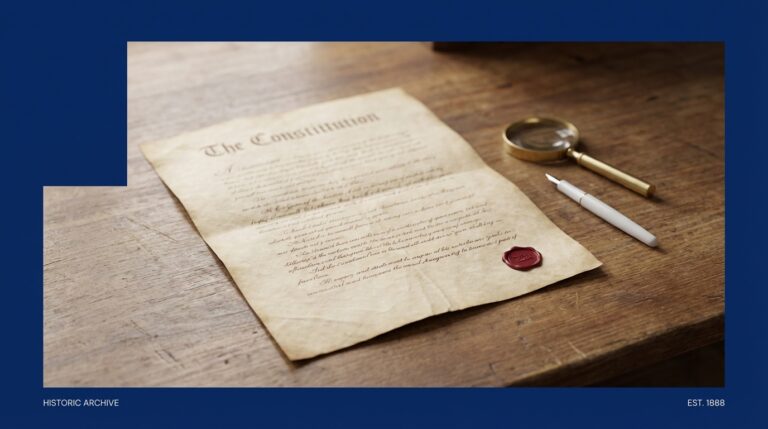
Text of the clause, 14th amendment sec 3
Section 3 bars any person who, having sworn an oath to the Constitution, later engaged in insurrection or rebellion from holding federal or state office; the operative text is preserved in the National Archives and is the clause courts and scholars begin with for interpretation National Archives and Constitution Annotated.
Find primary documents and legal summaries on the Fourteenth Amendment
For primary texts and authoritative overviews on the amendment text and historical background, consult the National Archives and neutral legal summaries listed in this article.
The clause was adopted in the aftermath of the Civil War as part of the Fourteenth Amendment to prevent individuals who had taken an oath to support the Constitution and then participated in rebellion from reassuming public office, a purpose historians and legal analysts describe in reconstruction-era accounts Harvard Law Review.
Readers should note the basic structure: the clause sets a qualification rule tied to an earlier oath and later disqualifying conduct, rather than creating a new criminal penalty or specifying enforcement procedures, a distinction discussed in neutral legislative analyses Congressional Research Service.
Reconstruction-era purpose and context
Those who drafted and ratified the amendment in 1868 framed the provision to respond to the recent rebellion and to limit the political return of former Confederates, an intention reflected in contemporary debates and later historical accounts Harvard Law Review.
At issue in 1868 was how to secure the republican form of government and ensure that officeholders had not actively taken part in efforts to overthrow the federal order, which explains why the clause ties disqualification to a prior oath and subsequent engagement in insurrection National Archives.
How Section 3 was actually used during Reconstruction
Typical applications in the 1860s and 1870s
Most of the clause’s historical applications occurred in the late 1860s and 1870s, when state and federal authorities used it to remove or bar former Confederate officeholders from state legislatures, federal seats, and other positions of public trust Congressional Research Service.
Enforcements ranged from legislative exclusions to formal disqualification processes, and in many cases state legislatures or congressional committees played a direct role in evaluating loyalty and fitness for office, as described in reconstruction-era legal histories Harvard Law Review.

Who enforced it then
During Reconstruction, enforcement often involved a mix of state actors, Congress, and sometimes courts; those institutions operated with varying procedures to adjudicate whether an individual fell within the ban, a pattern documented in legal overviews of the period Congressional Research Service.
The practical result was that Reconstruction remains the principal historical era when Section 3 had broad practical effect, a characterization repeated in academic and government summaries of the amendment’s use Harvard Law Review.
Why Section 3 was rarely used after Reconstruction
Legal and practical reasons for decline
After the 19th century, enforcement declined markedly; scholars note that the clause saw sporadic attention in the 20th century and that mechanisms for applying it were inconsistent, reducing its practical use outside the Reconstruction era Congressional Research Service.
Most uses occurred in Reconstruction; modern invocations since 2021 produced multiple challenges but only a small number of uncontested, court-affirmed disqualifications as of 2026, and no single authoritative modern count exists.
Part of the reason for the decline was that institutions moved away from using political disqualification broadly, and courts and officials faced procedural uncertainty about how to prove and apply the disqualification standard in many contexts, as neutral explainers discuss National Constitution Center.
Because of the limited twentieth-century record, researchers find relatively few documented disqualifications outside Reconstruction, a pattern legal summaries and case surveys confirm Congressional Research Service.
Sporadic 20th century examples
A small number of twentieth-century matters touched Section 3 in administrative or litigation contexts, but these did not produce a broad, sustained pattern of enforcement and are described as intermittent in neutral accounts National Constitution Center.
Because of that sparse record, historians typically treat Reconstruction as the clause’s active period and the twentieth century as one of relative dormancy, rather than frequent application Harvard Law Review.
The modern resurgence: Section 3 after January 6, 2021
New challenges brought against candidates

Following January 6, 2021 several state-level and federal challenges asserted that persons who participated in or supported the events were disqualified under the clause, producing a wave of lawsuits and administrative steps that revived attention to the provision Brennan Center for Justice.
The new litigation included ballot challenges, administrative determinations by election officials, and federal filings; observers and advocacy organizations catalogued these actions and their divergent outcomes through 2024 and 2025 The New York Times.
Range of state and federal actions
Some officials removed or attempted to remove candidates from ballots, while other courts declined to disqualify, stayed rulings, or left ultimate resolution for appellate review, creating a mixed patchwork of results across jurisdictions Brennan Center for Justice.
The post-2021 matters illustrate that modern invocations can take multiple administrative and judicial forms and that counting outcomes depends on whether one counts preliminary rulings, administrative exclusions, or only final court-affirmed disqualifications The New York Times.
Key legal questions that make counting uses difficult
Who can enforce Section 3?
A central unresolved question is which institutions may lawfully enforce Section 3, with disputes over the roles of state executives and secretaries of state, state and federal courts, and Congress in adjudicating or applying disqualification claims Congressional Research Service.

The uncertainty about who enforces the clause affects any count of uses because one source may include administrative exclusions by election officials while another counts only court orders or congressional action, a definitional choice legal observers note Brennan Center for Justice.
What counts as engagement in insurrection?
Courts and commentators disagree about the factual showing needed to prove someone “engaged” in insurrection, with some focusing on direct participation, others on incitement or concerted support, and still others on substantial facilitation of violent acts, a range of tests discussed in legal analyses Congressional Research Service.
Those disagreements mean that two courts could reach different results on the same facts, and so a single incident may be counted as a successful disqualification in one jurisdiction but not in another, which complicates any simple tally Brennan Center for Justice.
Notable modern cases and outcomes to date
Select state decisions and federal filings
A number of prominent state-level rulings and federal filings since 2021 illustrate the mix of outcomes: some courts allowed ballot challenges to proceed or deferred to officials, while other courts rejected disqualification claims or issued stays, patterns chronicled in news and legal summaries The New York Times.
Those representative cases show procedural variety, including hearings on factual records, emergency appeals, and interlocutory stays that leave final resolution pending, a procedural reality discussed in legal trackers Brennan Center for Justice.
How courts have split
Where courts have split, the splits generally reflect differing views on evidentiary thresholds, the proper forum for resolving disputes, and constitutional text and history; neutral reports note that no single Supreme Court decision through 2026 has settled these nationwide questions Congressional Research Service.
The result is that, although many challenges were filed and some administrative actions occurred, the number of uncontested, court-affirmed modern removals remains small and legally contested, a conclusion reached by multiple legal observers Brennan Center for Justice.
How to interpret the question ‘How many times has Section 3 been used?’
Counting methods and definitional choices
There are at least three reasonable counting methods: tally documented Reconstruction removals, add twentieth-century examples, and include modern administrative and judicial actions since 2021; each approach produces a different total and different policy implications Congressional Research Service.
Some trackers count every attempted challenge and administrative exclusion, others count only final court rulings that affirm disqualification, and still others present separate categories, which is why published totals differ across sources Brennan Center for Justice.
ToolType: | Purpose: | Fields: | Notes:
For readers doing their own review, a practical approach is to separate categories clearly: Reconstruction-era removals, twentieth-century occurrences, modern administrative exclusions, and modern court-affirmed disqualifications, then report each subtotal and the sources used, an approach legal analysts recommend Congressional Research Service.
Why published totals differ
Differences in scope, definitions, and data sources explain divergent published counts: some compilations emphasize historical removals, others focus on modern litigation, and still others blend categories without clear distinctions, a methodological point noted by neutral observers The New York Times.
Legal standards courts have used when considering “engagement”
Causal involvement, speech, and conduct tests
When courts evaluate whether someone “engaged” in insurrection they have considered tests ranging from direct physical participation to incitement or meaningful support, and those different focal points lead to different outcomes based on the same facts Congressional Research Service.
Some courts have treated incendiary speech or organizational support as relevant evidence, while others require a closer causal connection to violent acts; legal commentaries track these divergent approaches across jurisdictions Brennan Center for Justice.
Evidentiary burdens in different forums
Evidentiary standards can differ between an election official making an administrative determination, a trial court hearing contested facts, and an appellate court reviewing legal errors, which affects the practical ease or difficulty of proving disqualification in any given forum Congressional Research Service.
That variation matters for counting uses because an administrative exclusion that rests on a low threshold may be overturned on appeal, and some sources count the initial exclusion while others do not, an issue legal analysts emphasize Brennan Center for Justice.
Remedies and who can remove or restore eligibility
Court orders, administrative exclusions, and congressional action
Remedies seen in practice include court injunctions that bar or restore ballot access, administrative decisions by election officials that temporarily exclude a candidate, and potential congressional action to disqualify or restore eligibility, as described in legal summaries Congressional Research Service.
Because Congress can legislate under its Enforcement Clause powers, Section 5 of the Fourteenth Amendment is often discussed as a route for congressional remedial action, though how that power interacts with judicial and administrative routes remains contested Congressional Research Service.
Potential role of Section 5
Section 5 gives Congress the authority to enforce aspects of the Fourteenth Amendment, and scholars debate how Congress might use that authority to create procedures for enforcement or restoration of rights under Section 3, a point examined in neutral analyses Congressional Research Service.
Until there is clearer consensus or controlling precedent, remedies will continue to vary by forum and fact pattern, which contributes to the uncertain modern tally of uses Brennan Center for Justice.
For the primary amendment text, the National Archives provides an authoritative transcription, while court opinions and official election determinations should be obtained from court websites or state election offices for verification National Archives.

For neutral analyses, the Congressional Research Service offers a concise legal overview and academic law reviews provide deeper historical context, both useful for tracking how scholars and officials interpret the clause Congressional Research Service and for related material see constitutional rights coverage on this site.
Reliable secondary analyses
Reputable trackers and explanatory journalism can provide timely summaries of evolving case law, but they often categorize cases differently; use those summaries as starting points and follow up with primary rulings for final determinations The New York Times.
Academic work on the Reconstruction history of the clause is useful for historical counts, while legal policy papers help explain modern procedural questions, both complementing official documents Harvard Law Review.
Conclusion: a cautious answer to ‘how many times’ and the open questions ahead
Bottom-line summary
Most historical uses of the clause occurred in Reconstruction when officials removed or barred former Confederates; modern invocations since January 6, 2021 have prompted multiple challenges but produced a small number of uncontested, court-affirmed disqualifications as of 2026 Congressional Research Service.
Because of definitional choices and unresolved legal questions about enforcement and proof, no single authoritative modern tally exists, and published counts differ depending on whether they include administrative exclusions, attempted challenges, or only final court affirmations Brennan Center for Justice.
What remains unresolved
Key open questions that will shape future applications include who may enforce Section 3, what factual standard proves engagement in insurrection, and how Congress might use Section 5 to enact remedial legislation or procedures, matters that remain subjects of litigation and scholarship Congressional Research Service.
Readers tracking this area should watch for final appellate or Supreme Court rulings that could establish clearer nationwide standards and for any congressional action that clarifies enforcement pathways The New York Times.
It disqualifies from federal or state office anyone who, after taking an oath to the Constitution, engaged in insurrection or rebellion against the United States, subject to legal interpretation and enforcement procedures.
Most active uses occurred during Reconstruction in the late 1860s and 1870s; enforcement was rare and inconsistent through much of the twentieth century.
No. Preliminary administrative actions or early court orders can be stayed, reversed, or appealed, so a final court judgment or administrative certification is needed for certainty.
References
- https://www.archives.gov/founding-docs/amendments-11-27#toc-amendment-xiv
- https://constitution.congress.gov/browse/amendment-14/section-3/
- https://harvardlawreview.org/2019/05/section-three-and-reconstruction
- https://crsreports.congress.gov/product/pdf/LSB/LSB10492
- https://constitutioncenter.org/interactive-constitution/amendments/amendment-xiv/section-3
- https://www.brennancenter.org/our-work/research-reports/how-section-3-14th-amendment-bars-insurrectionists-office
- https://www.nytimes.com/2024/02/21/us/politics/14th-amendment-section-3-explainer.html
- https://michaelcarbonara.com/contact/
- https://www.lawfaremedia.org/article/what-the-supreme-court-got-wrong-in-the-trump-section-3-case
- https://www.congress.gov/crs-product/LSB10569
- https://michaelcarbonara.com/us-constitution-14th-amendment-text/
- https://michaelcarbonara.com/issue/constitutional-rights/
- https://michaelcarbonara.com/what-is-section-5-of-the-fourteenth-amendment/