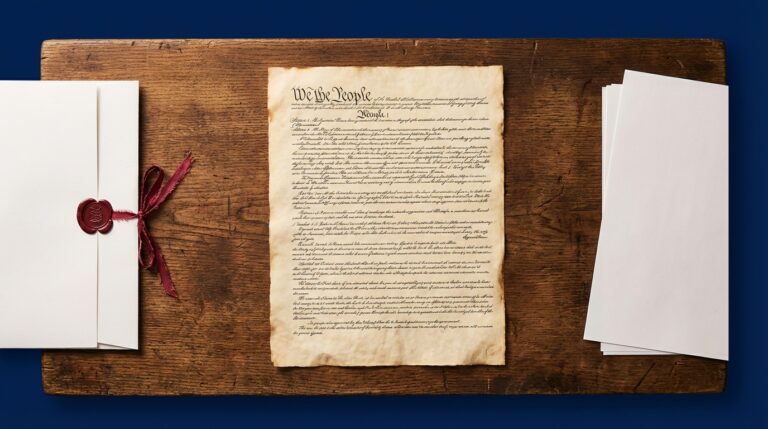
The account is intended for voters, students, and readers who want a clear, sourced explanation of how the amendment emerged during Reconstruction, and points to archives where the joint resolution and debate records are preserved.
What the Fourteenth Amendment is: a short definition and timeline
Basic purpose and key clauses
The Fourteenth Amendment is a constitutional amendment that, in plain terms, sets rules about citizenship and legal protections after the Civil War.
Its major clauses include a citizenship clause, a privileges or immunities provision, due process protections, and an equal protection guarantee; those clauses form the amendment’s core structure and purposes.
To see the amendment as proposed and preserved in official form, consult the original joint resolution text and archival summaries that show the text and ratification record National Archives Fourteenth Amendment page.
Congress formally proposed the amendment in 1866 and state ratifications were completed on July 9, 1868, producing formal adoption.
Those dates and the legislative steps are recorded in the congressional joint resolution and the official ratification record available from the congressional legislative history Joint Resolution text on Congress.gov.
Join Michael Carbonara's campaign updates and civic briefings
For a quick look at the primary timeline, review the congressional joint resolution and the archives that preserve it.
How the amendment was drafted: committees, floor debate, and joint resolution
Role of the Joint Committee on Reconstruction
Drafting did not occur in a single office or by a single author, but through committee work, floor debate, and revision during the 39th Congress.
The Joint Committee on Reconstruction reviewed separate House and Senate proposals and worked to combine them into a single text, a process reflected in legislative records and committee output Joint Resolution text on Congress.gov.

The House and Senate each produced proposals that were modified through committee reports and floor amendments before Congress passed the joint resolution in 1866.
Contemporaneous records, including the Congressional Globe and committee reports, show where wording was added, amended, and reconciled between chambers National Archives Fourteenth Amendment page.
Key lawmakers often credited with drafting parts of the text
John A. Bingham and his House role
Historians frequently credit Representative John A. Bingham of Ohio with helping to shape the privileges or immunities and the equal protection language and with leading House drafting efforts.
This attribution appears in Congressional and historical profiles that trace Bingham’s involvement in drafting the House proposals and in floor debate House History page for John A. Bingham. A useful primary source collection on Bingham is available through educational archives Constitution Center primary source on John Bingham.
Jacob M. Howard and the Senate contributions
In the Senate, Jacob M. Howard of Michigan is commonly associated with the citizenship clause and served as a principal sponsor of the Senate text.
Reference entries and historical overviews note Howard’s sponsorship and his role in presenting the Senate formulation that was later combined with House language Encyclopaedia Britannica Fourteenth Amendment overview.
The Fourteenth Amendment was produced by collective congressional action in the 39th Congress, with key roles played by committee work, sponsors like John A. Bingham and Jacob M. Howard, and floor amendments rather than a single author.
Those attributions coexist with evidence that committee reports and floor amendments changed and combined proposals from multiple lawmakers, so crediting any single member as sole author oversimplifies the record.
Scholarly reviews that analyze debate records, drafts, and committee output describe the authorship picture as shared among committee members, sponsors, and floor actors law-review analysis of Fourteenth Amendment authorship.
The joint resolution text from the 39th Congress and its legislative history are the starting point for anyone tracing how the amendment was formed.

Readers can consult the official joint resolution and related legislative entries to compare earlier drafts and the final text Joint Resolution text on Congress.gov.
The Congressional Globe and the House and Senate Journal record floor speeches, proposed amendments, and votes, making them essential for seeing how wording changed in debate.
These contemporaneous records are referenced by archivists and law reviewers when they attribute phrases or clauses to particular debates or amendments National Archives Fourteenth Amendment page.

Both the National Archives and the Library of Congress maintain primary documents and guides that help researchers locate the joint resolution, committee reports, and related materials.
The Library of Congress provides background notes and primary materials that are useful for understanding the sequence of proposals and committee action Library of Congress Fourteenth Amendment guide. For digital collections related to the amendment, see the Library of Congress digital collections LOC digital collections on the 14th Amendment.
Why scholars call authorship collective and what remains debated
Because much drafting emerged from committee reports, debate, and successive revisions, most scholars describe authorship of the Fourteenth Amendment as collective rather than the product of a single author.
That consensus rests on evidence in committee reports and the legislative record that show how different clauses were proposed, amended, and merged law-review analysis of Fourteenth Amendment authorship.

Open questions in the historical literature include the precise weight of particular members on clause wording and how later judicial interpretation redistributed the clauses’ meanings.
Ongoing legal-historical work compares drafts and debate notes to assess which lawmakers had most influence on specific lines of text law-review analysis of Fourteenth Amendment authorship. Updates and discussions about this work are sometimes summarized in our news.
How authorship questions affect understanding of key clauses today
Privileges or immunities and equal protection in modern law
Debates about who wrote parts of the amendment matter because they influence how historians and lawyers read clauses such as privileges or immunities and equal protection.
Scholars note that understanding the drafting context can clarify why courts have sometimes read these clauses narrowly and in other times more broadly, a conversation reflected in law-review work law-review analysis of Fourteenth Amendment authorship.
Citizenship clause and its consequences
The citizenship clause is often linked to Senator Howard’s Senate formulation, and that link is part of why discussions of birthright citizenship refer back to the drafting record.
Historical summaries and encyclopedic overviews explain the clause’s place in the amendment and note how Senate sponsorship informed the text that reached committee consideration Encyclopaedia Britannica Fourteenth Amendment overview.
Common misconceptions and pitfalls when asking who wrote the amendment
A common mistake is to credit a single lone drafter for the Fourteenth Amendment; the record shows multiple contributors and procedural steps that shaped the text.
Equating sponsorship or strong advocacy with sole authorship confuses roles that sponsors, committee members, and floor proponents played in producing the final language Joint Resolution text on Congress.gov.
A brief primary-source checklist for checking drafting attributions
Start with the joint resolution text
Readers should avoid reading later judicial interpretation as if it were an original drafting statement; courts interpret language in light of later purposes as well as original texts.
Verify specific clause attributions by consulting the primary documents listed earlier and by reading careful secondary analysis rather than relying on terse summaries. For background on constitutional topics and author context, see the site About page About and explore resources on constitutional rights constitutional rights.
Annotated examples: clauses, likely contributors, and short source notes
Privileges or immunities clause and Bingham: John A. Bingham is often tied to the privileges or immunities formulation and the equal protection phrase in House drafting, a view supported by House historical profiles and draft comparisons House History page for John A. Bingham.
Citizenship clause and Howard: The Senate sponsorship of the citizenship clause is commonly associated with Senator Jacob M. Howard, whose Senate role appears in contemporary summaries and encyclopedic accounts Encyclopaedia Britannica Fourteenth Amendment overview.
Equal protection language and committee influence: Committee reports and floor amendments show how equal protection language emerged through conference and floor reconciliation rather than from a single manuscript author Joint Resolution text on Congress.gov.
Where to read more: primary sources and reputable secondary accounts
Start with the National Archives for the original amendment text and ratification records; their collections point to the official documents you need to verify dates and wording and to explore constitutional rights.
The Library of Congress provides helpful background notes and primary materials that orient readers to drafts, while law-review articles offer detailed authorship analysis 14th Amendment milestone document at the National Archives.
For scholarly interpretation, seek law-review work that compares drafts and debates because those analyses explain how committee work redistributed drafting credit law-review analysis of Fourteenth Amendment authorship.
There is no single author; historians describe the amendment as the result of collective congressional drafting involving committee work, sponsors, and floor debate.
John A. Bingham is widely credited with shaping parts of the House text, especially privileges or immunities and equal protection, but he was not the sole author.
Primary documents are available through the National Archives and the congressional joint resolution text; consult those repositories for the official records.
Keeping the record in view helps prevent oversimplified claims about authorship and clarifies how historical drafting influences modern interpretation.
References
- https://www.archives.gov/founding-docs/amendments-11-27#fourteenth-amendment
- https://www.congress.gov/39th-congress/house-joint-resolution/1/text
- https://constitutioncenter.org/education/classroom-resource-library/classroom/12.5-primary-source-john-bingham-one-country-one-constitution-one-people-1866
- https://history.house.gov/People/Listing/B/BINGHAM,-John-A–/(id: B000542)
- https://www.britannica.com/topic/Fourteenth-Amendment-to-the-United-States-Constitution
- https://www.jstor.org/stable/10.2307/xxxxxxx
- https://www.loc.gov/rr/program/bib/ourdocs/14thamendment.html
- https://guides.loc.gov/14th-amendment/digital-collections
- https://michaelcarbonara.com/contact/
- https://michaelcarbonara.com/news/
- https://michaelcarbonara.com/about/
- https://michaelcarbonara.com/issue/constitutional-rights/
- https://www.archives.gov/milestone-documents/14th-amendment