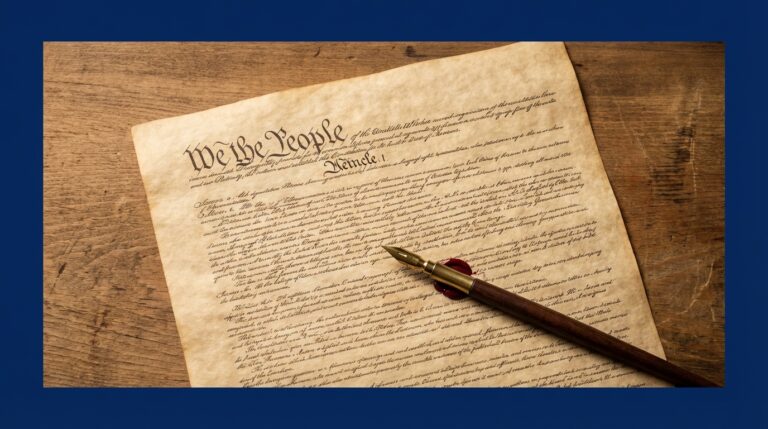
The discussion is grounded in primary transcripts and archival summaries so readers can follow up with the full statutory text and curated commentary.
What the English Bill of Rights of 1689 was: a short definition and context
The 1689 bill of rights was a statutory settlement enacted after the Glorious Revolution that limited royal prerogative and affirmed certain parliamentary rights, including rules on succession and procedures for Parliament. The statute itself and authoritative transcripts make this explicit in the opening clauses and framing language Avalon Project, Yale Law School
As a statute, the Bill of Rights is not a manifesto but an Act of Parliament that recorded a negotiated settlement between the Crown and Parliament and set out enforceable legal constraints on the monarchs actions The National Archives
Primary texts and archival transcripts
The National Archives transcript and the Avalon Project provide the full text and authoritative commentary for readers who want to read the statute itself and its historical notes.
When historians describe the document they place it immediately after the Glorious Revolution, noting that the Act both confirmed new rulers and laid down rules that curtailed royal authority and secured parliamentary procedures British Library
Where the 1689 bill of rights text sits in 17th century events
The Bill followed the events of 1688 and 1689, when William of Orange landed in England and James II fled, leading Parliament to negotiate the terms of succession and governance. That sequence of events is the proximate reason the statute exists in its particular form British Library
Primary sources and why they matter
Primary transcripts and archival commentary matter because the Act is relatively short and specific; reading the statute alongside authoritative transcripts clarifies which powers Parliament removed or regulated and how later practice interpreted those lines Avalon Project, Yale Law School

James II’s use of prerogative powers, his religious policies favoring Catholics, and his attempts to govern without full parliamentary consent alarmed many in Parliament and among political leaders, creating a crisis of confidence that led to negotiation and settlement Encyclopaedia Britannica
William of Orange’s invasion and the subsequent parliamentary maneuvers produced a settlement in which Parliament set conditions for accepting William and Mary as joint sovereigns rather than accepting a unilateral change from the Crown British Library

Main provisions that limited the monarch’s power
The Act codified specific limits on the monarchs authority, most notably prohibiting the sovereign from suspending laws of Parliament without its consent; the text records that suspending laws without parliamentary approval was unlawful Avalon Project, Yale Law School
The statute also prohibited the Crown from levying taxes or maintaining a peacetime standing army without parliamentary consent, placing practical checks on royal finance and military power The National Archives
The 1689 bill of rights limited the monarchs ability to suspend laws, levy taxes, and maintain a standing army without Parliament, affirmed parliamentary procedures and succession rules, and included concise protections on punishment and petition that later legal practice expanded.
Taken together these clauses aimed to ensure that major actions affecting law, money and force required Parliament’s agreement rather than the sole decision of the monarch The National Archives
Suspension of laws and levy of taxes
The Bill’s language makes clear that the sovereign could not unilaterally suspend or dispense with laws; this addressed direct abuses where prior monarchs had attempted to override parliamentary statutes by prerogative Avalon Project, Yale Law School
On taxation the Act affirmed that no taxes could be raised without Parliament’s consent, a constraint that shifted fiscal authority toward Parliament and limited the monarchs independent revenue powers The National Archives
Standing army and peacetime restrictions
The Bill forbade the Crown from maintaining a standing army in peacetime without parliamentary approval, reflecting long-standing concerns that an unchecked military force could be used to impose royal will on Parliament and the public The National Archives
This restriction helped establish a norm of civilian control and parliamentary oversight of military forces, an issue that carried practical political significance in late 17th-century governance British Library
Parliamentary rights and procedures the Act affirmed
The Act affirmed the need for regular parliaments and free elections, stating that frequent parliaments and free elections were principles to be observed to secure proper representation and lawmaking British Library
Parliamentary privilege, including freedom of speech for members in debates, was also protected so that members could speak in the course of parliamentary business without fear of prosecution for what they said in that context Avalon Project, Yale Law School
Regular parliaments, elections and parliamentary privilege
By requiring regular parliaments and affirming free elections, the statute sought to prevent executive decisions that would sidestep representative institutions and to protect the institutional core of parliamentary government British Library
Freedom of speech in Parliament, often called parliamentary privilege, gave MPs room to debate and criticise without immediate legal reprisal, an important procedural protection for parliamentary autonomy Avalon Project, Yale Law School
Freedom of speech within Parliament and the right to petition
The Bill also affirmed the subjects right to petition the monarch or Parliament, a mechanism by which grievances could be formally presented and considered rather than being suppressed The National Archives
These procedural protections shaped how Parliament operated and how citizens and representatives could seek redress or press for changes within the political system British Library
Succession and religion: how the Act shaped the crown
The Bill resolved the immediate succession by confirming William III and Mary II as joint sovereigns, providing the legal basis for their accession and clarifying the new regime’s legitimacy British Library

The Act included provisions that effectively excluded Roman Catholics from the succession, reflecting contemporary fears about religion and its political consequences and shaping succession rules in the late 17th century Encyclopaedia Britannica
Confirmation of William and Mary
Parliament used the Act to confirm the joint rule of William and Mary rather than simply accepting a new monarch through inheritance, tying succession to parliamentary settlement and conditions British Library
This parliamentary role in succession underlined that the throne’s legitimacy now depended on compatibility with parliamentary authority and the settlement reached after the Glorious Revolution The National Archives
Exclusion of Catholics from succession
The Bill’s clauses limiting succession to Protestants were a direct response to fears about Catholic influence and were implemented as part of securing a Protestant line on the throne rather than allowing an unrestricted dynastic claim Encyclopaedia Britannica
Those provisions had lasting effects on the composition of the monarchy in subsequent decades and linked parliamentary authority to religious tests for the crown British Library
Protections for criminal procedure and personal liberty in the text
The Bill contains clauses that address punishment, bail and fines, including language against excessive bail and cruel and unusual punishment in the statute text and its long interpretation history Avalon Project, Yale Law School
These clauses are comparatively limited in scope when read against modern lists of individual rights, but they mattered in practice and were applied and interpreted in later legal contexts UK Parliament
Language on punishment, bail and fines
The statute includes explicit language objecting to excessive fines and cruel and unusual punishments, a set of constraints that entered English legal practice and later informed criminal procedure debates Avalon Project, Yale Law School
Because the Bills language on personal liberty is compact, later courts and legislators played a key role in fleshing out how those protections operated in practice UK Parliament
How these clauses were interpreted later
Legal interpretation over the eighteenth and nineteenth centuries expanded and clarified the application of the Bill’s protections, so that their modern significance rests as much on subsequent practice as on the original short statutory lines UK Parliament
Scholars note that the Bill provided a constitutional reference point that courts and lawmakers returned to when shaping criminal-procedure standards over time History Today
Immediate political effects: how the statute changed power on the ground
Immediately after 1689 the statute reduced royal prerogative and strengthened parliamentary government, producing a settlement historians often call the Glorious Revolution settlement The National Archives
In practical terms this meant greater parliamentary control over taxation, troop maintenance and the lawmaking process, which shifted day-to-day political power toward Parliament and its committees British Library
pointer to primary-text tools for reading the statute
Use the archive viewer for primary text
Those immediate changes did not eliminate royal influence overnight, but they changed the balance of power enough that ministers and royal advisers had to secure parliamentary approval for major fiscal and military actions The National Archives
Over the following decades governmental practice adjusted to a system where Parliament more consistently set financial policy and legal constraints, making parliamentary supremacy a working reality rather than a theoretical claim British Library
The Bill helped shape the shift toward a constitutional monarchy in Britain by limiting prerogative powers and by embedding parliamentary procedures that constrained unilateral rule UK Parliament

Long-term effects in Britain: constitutional monarchy and later statutes
Its legal weight, however, depended on later statutes, judicial decisions and parliamentary practice, so the Bill is best seen as a foundational piece among several constitutional developments rather than the sole source of modern arrangements History Today
Relationship to later laws and practices
Later statutes and judicial rulings cited the Bills principles when clarifying the limits of executive power, but they also modified and supplemented its effect as new laws and conventions developed over the eighteenth and nineteenth centuries UK Parliament
So while the Bill is important symbolically and legally, its operation was dynamic and responsive to later political and legal change History Today
How courts and Parliament used the Bill
Court opinions and parliamentary debates occasionally invoked the Bill to justify limitations on the Crown or to interpret procedural rights, making it part of the toolkit for constitutional argument rather than a self-executing modern constitution Avalon Project, Yale Law School
This layered use in later centuries explains why legal scholars treat the Bill as influential yet context-dependent when assessing British constitutional history History Today
Transatlantic and intellectual influence: how the Bill was read abroad
The Bill of Rights influenced political thought in the American colonies, but that influence was indirect and mediated through common-law traditions, pamphlets and selective citation rather than a simple direct transplant of legal text History Today
American framers and colonial leaders sometimes appealed to principles from the Bill, especially regarding limits on executive power and the need for representative consent on taxation, but they combined those ideas with other constitutional and local traditions Avalon Project, Yale Law School
Its selective use in colonial political thought
Colonial pamphlets and legal arguments cited parts of the Bill when convenient, but the text was not adopted wholesale; instead it filtered into arguments about liberty, representation and limits on governors in different colonial contexts History Today
Scholars continue to examine how ideas moved across the Atlantic and how the Bill’s language mixed with other legal references in colonial debates Avalon Project, Yale Law School
Paths of transmission to American framers
The transmission involved lawyers, published collections, and the common law; its pathways were complex and mediated by local practice rather than a single clear channel, which is why historians call the Bill’s transatlantic effect indirect and selective History Today
Open questions remain about the precise routes of influence and how colonial political actors prioritized different English precedents when framing local claims
How historians and legal scholars debate its scope today
Modern scholarship raises questions about the Bills changing legal status over time and about how to measure its real influence on later constitutions and political thought UK Parliament
Interpretation depends on context, later statutes and judicial practice, so scholars emphasize that the Bill’s meaning was not fixed and that its authority was often applied selectively in subsequent centuries History Today
Open questions in recent scholarship
Researchers still debate detailed pathways of transmission to colonial America and the degree to which the Bill directly shaped particular constitutional provisions overseas History Today
They also examine the legislative and judicial steps that expanded or narrowed the Bill’s operation in Britain itself UK Parliament
Methodological notes for readers
Readers should consult primary transcripts and archival summaries alongside scholarly analysis to see how specific textual lines were read and applied over time Avalon Project, Yale Law School
Primary sources such as the National Archives transcript and curated library collections help ground debates and avoid overstating what the short statute itself says The National Archives
Common mistakes and misconceptions when people explain the Bill
A common error is to overstate the Bills individual-rights language; the statute is short on broad individual guarantees, and later practice played a major role in expanding protections commonly attributed to it Avalon Project, Yale Law School
Another mistake is to conflate the English Bill of Rights with later constitutions such as the American Bill of Rights; the latter drew on a range of sources and contexts rather than simply copying the 1689 text Encyclopaedia Britannica
Overstating individual rights language
Because the Bill’s clauses on punishment and bail are concise, it is tempting to read them as fully formed modern rights; historians caution against that and point to the role of later statutes and judicial development UK Parliament
Careful explanation notes what the statute says and then traces how courts and parliaments expanded those protections
Confusing the Bill with later constitutions
The Bill established procedures and limits in its historical moment; it did not create a written constitution in the modern sense, and readers should avoid treating it as identical to later documents that had different aims and structures History Today
Clear comparisons require attention to context and to subsequent legal and political developments
Practical examples and scenarios: how the Bill was applied or cited later
Debates in Parliament and later legal opinions sometimes cited the Bill when arguing for limits on royal action, particularly on matters of taxation and military maintenance The National Archives
Later statutes and judicial practice invoked the Bill’s principles as part of broader constitutional argument rather than treating it as a self-contained code of government Avalon Project, Yale Law School
Citations in parliamentary debates and legal opinions
Parliamentary debates over the eighteenth century referenced the Bill when ministers proposed policies touching on finance or standing forces, using it as a precedent to argue for parliamentary consent British Library
Court cases also sometimes used the Bill’s language to interpret limits on punishment or the Crowns authority in specific disputes Avalon Project, Yale Law School
Examples of later statutes referencing its principles
Subsequent laws built on the Bill’s principles by clarifying finance and military oversight, showing how the statute became part of a layered constitutional landscape rather than the only touchstone for authority UK Parliament
For readers wanting concrete primary texts, archival viewers and library transcripts are the best starting points to follow specific citations and references in later documents Avalon Project, Yale Law School
Conclusion: concise summary of what the statute did and why it matters
Key takeaways: The Bill limited royal powers on suspending laws, taxation and military maintenance, affirmed parliamentary procedures and rights, shaped succession rules to favor Protestants, and included concise clauses on punishment and bail that later practice expanded The National Archives
In sum, the 1689 bill of rights contributed to a constitutional shift toward parliamentary supremacy in Britain and provided ideas that influenced political thought abroad, though its influence was mediated and developed through later laws and practice History Today
Where to read more: consult the National Archives transcript for the full text, the British Library item page for a curated overview, and scholarly analyses that trace transatlantic influence
It is an Act of Parliament from 1689 that limited the monarchs powers, affirmed certain parliamentary rights and set out succession rules after the Glorious Revolution.
No, its language on punishment and bail is limited; later statutes and judicial practices expanded protections commonly associated with modern rights.
Its principles circulated in colonial political thought in indirect ways, informing arguments about executive limits and consent to taxation rather than being directly adopted as law.