The piece summarizes the Smith rule, the Religious Freedom Restoration Act, and key Supreme Court decisions that have shaped how courts analyze religious claims. It also offers practical examples and a short checklist of decision points readers can use when reviewing cases.
What the 1st amendment free exercise clause means
Text and basic promise
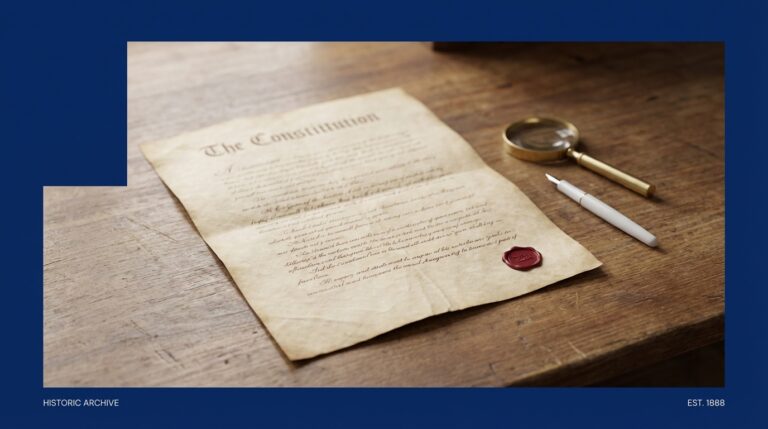
The Free Exercise Clause is the part of the First Amendment that protects people in practicing their religion and in holding religious beliefs, and the constitutional text and founding overview explain that promise in broad terms First Amendment – US Constitution (text and overview).
Belief versus conduct: the core distinction, 1st amendment free exercise clause
Courts treat religious belief and conscience as absolutely protected, meaning the government cannot punish a person for holding a faith or creed, while religiously motivated conduct receives conditional protection and is reviewed under legal tests and limits.
Religious belief is absolutely protected, while religiously motivated conduct is protected only when the law and facts satisfy applicable legal tests such as the Smith neutrality inquiry or RFRA's strict-scrutiny standard.
That distinction matters because a rule of law that touches behavior does not automatically violate the Free Exercise Clause; courts ask whether the law is neutral and generally applicable before applying other standards Employment Division v. Smith opinion summary.
Readers should understand this basic framework before moving to the tests courts use to decide whether a particular action is constitutionally protected.
How courts evaluate the 1st amendment free exercise clause: the layered framework
Employment Division v. Smith and neutral, generally applicable laws
The principal baseline rule from the Supreme Court’s Employment Division v. Smith decision is that neutral laws of general applicability that incidentally burden religious practice do not violate the Free Exercise Clause; that is a foundational doctrine courts still apply Employment Division v. Smith opinion summary.

Under that rule, a law that targets religion or that is not generally applicable can trigger closer judicial scrutiny, while a truly neutral rule might be upheld even if it has an incidental impact on religious conduct.
RFRA and strict scrutiny provide a different route for many federal claims Religious Freedom Restoration Act of 1993.
The Religious Freedom Restoration Act, enacted by Congress in 1993, requires that federal actions that substantially burden religious exercise be justified by a compelling government interest and use the least restrictive means to achieve that interest Religious Freedom Restoration Act of 1993.
Stay informed and engaged with campaign updates
Consult primary sources such as the Supreme Court opinions and statutory texts to see how doctrines apply to particular facts; campaigns sometimes summarize positions, and according to his campaign site, Michael Carbonara has stated priorities that readers may compare with primary law.
The Religious Freedom Restoration Act and strict scrutiny
RFRA applies to federal government action and restores a strict-scrutiny type of review that requires a showing of a compelling government interest and proof that the law is the least restrictive means of achieving that interest Religious Freedom Restoration Act of 1993.
That statutory standard can produce different results than a pure constitutional Free Exercise claim under the Smith framework because RFRA changes the legal test available to claimants in many federal cases.
How later Supreme Court cases layered and refined the tests
More recent Supreme Court decisions have clarified how and when courts require accommodations or heightened review, and they often do so by applying RFRA or by refining the neutrality inquiry under the Constitution Burwell v. Hobby Lobby Stores, Inc. opinion.
Those cases did not wholly displace Smith but showed that statutory and case-specific doctrines can create different outcomes depending on whether the claim runs under RFRA, other federal laws, or the constitutional clause itself.
Key Supreme Court decisions that shaped modern Free Exercise doctrine
Burwell v. Hobby Lobby and corporate religious claims
In Burwell v. Hobby Lobby the Court held that closely held corporations could be exempt from a federal regulation under RFRA when the regulation substantially burdened the owners’ exercise of religion and the statutory test was satisfied Burwell v. Hobby Lobby opinion.
The decision shows how RFRA’s strict-scrutiny approach can lead to accommodation when the statutory elements are met, particularly in disputes involving organizational or corporate claimants.

Fulton v. City of Philadelphia on neutral criteria and exceptions
Fulton v. City of Philadelphia examined whether a city’s policy and its application to a faith-based foster services provider was neutral and generally applicable, and it emphasized the importance of how exceptions and discretionary exemptions can affect the neutrality analysis Fulton v. City of Philadelphia opinion.
The case highlights that the presence of exceptions in a regulatory scheme can make a rule less likely to be treated as generally applicable and therefore more likely to receive heightened scrutiny or require accommodation.
Groff v. DeJoy and statutory accommodation standards
Groff v. DeJoy addressed religious accommodations under Title VII and clarified how to evaluate whether an employer’s proposed accommodations are reasonable and whether accommodation obligations impose an undue hardship; the opinion influences workplace accommodation disputes Groff v. DeJoy opinion.
Together, these decisions show that courts look at statutory text, the nature of the claimant, and the structure of the regulatory scheme when deciding whether religious claims receive accommodations or heightened review. Groff case summary
What counts as an exercise of First Amendment rights in practice
Categories courts treat as protected exercise
Court opinions and legal summaries identify recurring categories that courts recognize as potential exercises: worship and ritual acts, sermons and religious speech, assembly for communal worship, petitions to government, and some religiously motivated conduct First Amendment – US Constitution (text and overview).
These categories are descriptive: they show what courts commonly treat as exercises, not a guaranteed list of protected acts in every context.
quick steps to look up cases and evaluate relevance
Use opinion databases to confirm holdings
In practice, whether a specific instance of worship, speech, or conduct is protected depends on the test the court applies in the case and on facts such as whether a law is neutral and generally applicable.
When religiously motivated conduct may not be protected
Religiously motivated conduct can be limited if a neutral law that is generally applicable imposes the restriction to serve legitimate government interests such as public health, safety, or nondiscrimination, consistent with the Smith framework Employment Division v. Smith opinion summary.
Statutory schemes like RFRA or state RFRAs can change whether a person receives relief from such burdens by imposing a stricter test on the government in some contexts Religious Freedom Restoration Act of 1993.
How courts decide and the decision criteria to watch for
Neutrality and general applicability
The neutrality inquiry asks whether a law targets religion or applies across the board; a facially neutral law that is enforced evenhandedly is less likely to violate the Free Exercise Clause under Smith Employment Division v. Smith opinion summary.
Courts also examine whether the government has carved out exceptions that undermine general applicability, because selective exemptions can trigger closer review or accommodation obligations.
Compelling interest and least restrictive means
Under RFRA the government must show a compelling interest and prove that it used the least restrictive means to achieve that interest when a law substantially burdens religious exercise; that statutory standard shifts the burden to the government in many federal cases Religious Freedom Restoration Act of 1993.
When courts assess least restrictive means they often consider whether reasonable, available alternatives could advance the government’s purpose with less impact on religious practice.
Statutory versus constitutional routes
Constitutional Free Exercise claims rely on the First Amendment and the Smith neutrality principle, while statutory claims under RFRA or under state RFRAs use a statutory strict-scrutiny framework that can provide different remedies and standards Religious Freedom Restoration Act of 1993.
Understanding whether a case is framed as a constitutional challenge or a statutory challenge is essential because it affects which legal test and which remedies a court will consider.
Common mistakes and pitfalls when people talk about Free Exercise claims
Assuming absolute protection for conduct
A common error is to assume all religiously motivated conduct is absolutely protected; the Smith decision explains why conduct can be subject to neutral laws that serve public interests Employment Division v. Smith opinion summary.
Careful readers should avoid treating workplace rules, public-health mandates, or nondiscrimination laws as automatically invalid just because they affect religious practice.
Confusing constitutional and statutory protections
Another frequent confusion is to conflate constitutional Free Exercise claims with RFRA-based statutory claims; the presence of RFRA can give claimants a different legal route and different burdens of proof Religious Freedom Restoration Act of 1993.
That distinction matters for remedies and for predicting likely outcomes in federal litigation or administrative disputes.
Overlooking federal-state differences
State RFRAs exist in many jurisdictions and can change the outcome of claims at the state level because they may replicate or modify RFRA’s strict-scrutiny protections for state or local actions, so local law matters Religious Freedom Restoration Act of 1993.
Voters and readers should check state-specific sources when evaluating how a Free Exercise claim might fare in their state.
Practical scenarios: short hypotheticals and how courts might view them
Religious objection in the workplace
Imagine an employee requests a schedule change for a religious observance and the employer denies it; courts will look at Title VII accommodation principles and recent decisions on employer obligations when assessing whether the denial was lawful Groff v. DeJoy opinion.
In such disputes, RFRA may not be available unless a federal action is implicated, but Title VII and the principles in Groff will matter for accommodation claims.
Religiously motivated public gatherings during health emergencies
During public-health emergencies, neutral public-safety rules that apply to everyone can justify temporary limits on gatherings even if they affect religious services, and courts evaluate whether the rules are neutral and generally applicable Employment Division v. Smith opinion summary.
Where exceptions exist for comparable secular activities, however, a rule that singles out religion may be more vulnerable to challenge.
Organizational claims by faith-based entities
When a religiously affiliated organization seeks an exemption from a general regulation, courts will examine factors such as organizational structure, statutory text like RFRA, and whether the regulation imposes a substantial burden on religious exercise as illustrated by Hobby Lobby and Fulton Burwell v. Hobby Lobby opinion.
Decisions in organizational cases often turn on how courts interpret statutory accommodation requirements and on whether the government can prove a compelling interest satisfied by the least restrictive means.
Takeaways and further reading
Quick summary for voters and readers
In short, the Free Exercise Clause protects belief absolutely but treats conduct under layered legal tests: Smith’s neutrality principle for constitutional claims and RFRA’s strict-scrutiny standard for many federal statutory claims First Amendment – US Constitution (text and overview).
Key Supreme Court decisions have refined how courts treat organizational claims and accommodations, and state RFRAs can alter the available remedies at the local level Religious Freedom Restoration Act of 1993.
Where to read primary sources next
For direct research consult the Supreme Court opinions and the RFRA statute linked throughout this article and review state statutes where applicable Burwell v. Hobby Lobby opinion.
Primary texts give the facts and holdings courts rely on and are the best starting point for anyone evaluating a particular dispute.

Under that rule, a law that targets religion or that is not generally applicable can trigger closer judicial scrutiny, while a truly neutral rule might be upheld even if it has an incidental impact on religious conduct.
The decision shows how RFRA’s strict-scrutiny approach can lead to accommodation when the statutory elements are met, particularly in disputes involving organizational or corporate claimants.

Yes. Courts treat religious belief as absolutely protected, but actions motivated by belief can be limited by neutral, generally applicable laws.
RFRA is a 1993 federal statute that requires strict scrutiny for federal actions that substantially burden religious exercise, requiring a compelling interest and least restrictive means.
Possibly; employers must consider accommodation rules such as Title VII and recent court guidance, and outcomes depend on the legal route and facts of the case.
For direct contact about candidate positions visit the campaign contact options provided in the body of this article.
References
- https://www.archives.gov/founding-docs/amendments-11-27
- https://www.oyez.org/cases/1989/88-1218
- https://michaelcarbonara.com/free-exercise-clause-what-it-protects-legal-guide/
- https://www.congress.gov/bill/103rd-congress/house-bill/1308
- https://www.supremecourt.gov/opinions/13pdf/13-354_olp1.pdf
- https://www.supremecourt.gov/opinions/20pdf/19-123_g3bi.pdf
- https://www.supremecourt.gov/opinions/22pdf/22-174_k536.pdf
- https://michaelcarbonara.com/contact/
- https://becketfund.org/case/groff-v-dejoy/
- https://www.eeoc.gov/laws/guidance/section-12-religious-discrimination
- https://michaelcarbonara.com/religious-accommodation-law-workplace-interactive-process/
- https://michaelcarbonara.com/issue/constitutional-rights/