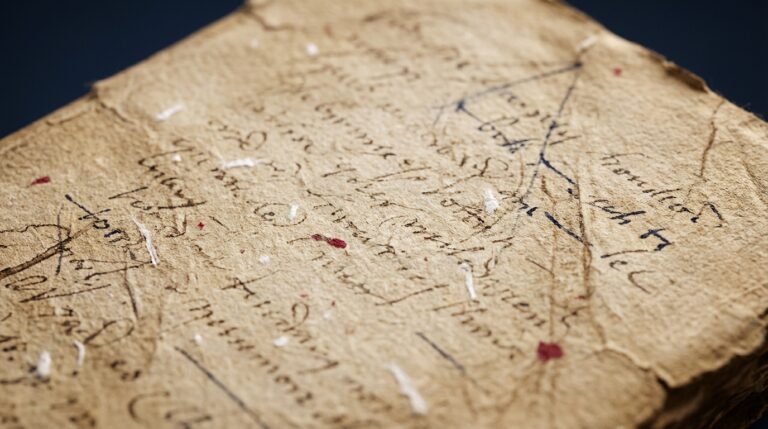
Readers who want to verify authorship with primary records will find direct references to the key manuscripts and journal entries cited in the text, along with tips for comparing drafts and the adopted text.
Who drafted the amendments that became the Bill of Rights?
Short answer for readers skimming for a quick fact
Short answer: James Madison drafted and submitted the set of proposed constitutional amendments that served as the primary basis for the Bill of Rights. See the simplified guide.
Madison’s June 8, 1789 submission is preserved and available for inspection at the National Archives collection of Founders Online, which provides the manuscript and transcribed text that scholars rely on when attributing the draft to him Founders Online manuscript.
Stay connected with Michael Carbonara’s campaign
For readers who want to check the documents themselves, consulting Madison’s June 8, 1789 submission is the clearest first step; it shows the wording he proposed and helps distinguish draft authorship from later congressional edits.
Madison’s related drafts and correspondence are also held in the Library of Congress James Madison papers, which give context about his intentions and the drafting process Library of Congress Madison papers.
Primary documentary evidence and where it is preserved

The primary documents establishing who drafted the amendments include Madison’s June 8, 1789 proposal, contemporaneous drafts and letters, and the House and Senate journal entries that record debate and formal votes. These records together form the documentary trail researchers use to assign drafting credit.
For a ready compilation of the proposed amendments and the congressional proceedings that followed, editors have long pointed readers to compiled sources such as the Avalon Project, which collects the proposed language alongside the congressional records for 1789 to 1791 Avalon Project compilation.
How Madison’s June 1789 proposal moved through Congress
Madison’s original list and phrasing
Madison presented a set of proposed amendments to the First Congress on June 8, 1789; that submission functioned as the starting text for debate in the House and later the Senate. See the National Constitution Center’s overview Constitution Center.
The record of Madison’s submission and its contents are kept on Founders Online and in the Library of Congress collections, which show the initial phrasing he offered and several draft variants that preceded the formal presentation Founders Online manuscript. For classroom context, Teaching American History provides a concise account Teaching American History.

House and Senate deliberations and the joint resolution process
After Madison’s submission, the House and Senate debated, amended, and reconciled language across several committee and floor actions during 1789; those journal entries document the edits that produced the joint resolution sent to the states.
The compiled record of congressional proceedings and the final adopted text are preserved in the National Archives and in modern compilations such as the Avalon Project, which together show how the joint resolution process produced the set of amendments that state legislatures then considered for ratification Avalon Project on congressional proceedings. The Archives Foundation also summarizes Senate revisions to the House proposals Archives Foundation.
State-by-state ratification followed the congressional transmission, and the collective process concluded with the ten amendments becoming effective on December 15, 1791, when the required number of state legislatures had ratified them. The National Archives provides an accessible transcription of the Bill of Rights that records that date National Archives Bill of Rights transcript.
Why historians credit Madison but stress congressional edits
Distinguishing draft authorship from the final text
Scholars credit James Madison with drafting and formally submitting the initial set of proposed amendments, while also noting that the version adopted by the states reflects congressional changes made during 1789 and later reconciliation between the two houses.
Madison’s role as drafter rests on his June 8, 1789 proposal and related papers, while the House and Senate journals record the specific edits that altered wording before adoption Founders Online manuscript.
James Madison drafted and submitted the proposed amendments on June 8, 1789, and Congress edited that draft before the states ratified the first ten amendments on December 15, 1791.
Researchers use the draft manuscripts to show who authored the initial language and the legislative journals to show what Congress changed, which is why both document types are needed to answer who wrote the Second Amendment and how its final wording arose.
How researchers use primary sources to assign credit
When historians attribute drafting credit they typically cite Madison’s manuscript as the origin and then show, by pointing to congressional journal entries, where lawmakers replaced phrases or reordered clauses; this workflow separates authorship from final textual authority.
Secondary reference works and scholarly treatments repeatedly follow that documentary sequence to explain authorship and the role of congressional editing in producing the final text Encyclopaedia Britannica entry.
What the Second Amendment text says and how it differs from Madison’s draft
Compare Madison’s draft language with the final amendment text
The Second Amendment’s final wording as ratified by the states is not a word-for-word copy of Madison’s June 1789 draft; congressional edits adjusted phrasing and structure during the committee and floor stages.

Readers can compare the drafted phrases preserved on Founders Online with the text of the ratified amendment, which the National Archives presents as the official transcription of the Bill of Rights, to see where wording diverges Founders Online draft.
Influences: state constitutions and English legal traditions
Historians also point out that the final amendment’s language echoes ideas found in several state constitutions and longstanding English legal traditions, so the wording reflects multiple influences rather than a single source.
Scholarly discussions of influence and original meaning treat the documentary evidence as the basis for argument, using Madison’s draft and the congressional record to trace parallels and lines of inheritance in phrasing and structure Encyclopaedia Britannica analysis.
Primary sources to consult and how to read them
Where to find Madison’s June 1789 submission and related papers
Key primary sources are Madison’s June 8, 1789 proposed amendments on Founders Online, the James Madison papers in the Library of Congress collection, and the House and Senate journal records that log debate and amendments. See our constitutional rights hub for related resources.
The Founders Online entry for Madison’s submission and the Library of Congress Madison papers provide the drafts and correspondence; these are the places to start when verifying authorship claims Founders Online manuscript.

How to use House and Senate journals and the Avalon Project for tracing edits
House and Senate journals document votes, motions, and committee steps, showing the discrete edits that moved language between Madison’s draft and the joint resolution sent to the states.
Compilations such as the Avalon Project gather the proposed amendments and the related congressional proceedings into a single accessible resource that is useful for tracing the sequence of edits across 1789 and 1790 Avalon Project compilation.
As a practical tip, consult multiple primary records rather than a single secondary summary: compare the manuscript draft, the congressional journal entries, and the National Archives transcription to verify dates and exact wording. For a quick reference to the Bill of Rights text itself, see our full-text guide.
Common misunderstandings about who wrote the Second Amendment
Mistake: treating the final wording as Madison’s verbatim draft
A common error is to credit Madison with the exact final phrasing of the Second Amendment; the documentary record instead shows that Congress revised his proposals, so authorship of the draft is Madison’s while textual authority rests with the congressional edits preserved in the journals.
Readers should check Madison’s June 1789 submission and the House and Senate records to see the differences between the draft language and the version that was transmitted to the states Founders Online draft.
Mistake: conflating authorship with modern interpretive claims
Another frequent misunderstanding is to treat documentary authorship as resolving modern legal or historical debates about original meaning; while Madison drafted the proposals, scholars debate how to interpret the adopted wording and which influences should carry the most weight.
Secondary scholarship and reference works synthesize the documentary record but often disagree on interpretive questions, which is why authorship and meaning should be handled as distinct inquiries.
How historians and legal scholars treat authorship and intent
Major scholarly approaches and representative treatments
Scholars follow a range of methods when discussing authorship and intent. Many begin with the documentary record, credit Madison for drafting, and then analyze how congressional edits, state constitutional language, and English legal traditions shape the amendment’s final form.
Representative scholarly treatments combine close reading of primary sources with interpretive frameworks drawn from constitutional history; these approaches explain why attribution to Madison does not end debates about original meaning Akhil Reed Amar analysis.
helps researchers plan a primary source review
Use this checklist to confirm you have matched draft and journal text
Why debates about intent and meaning persist
Debate persists because primary documents show authorship and edits but do not always make plain the interpretive choices lawmakers and commentators intended; scholars therefore draw different conclusions from the same records.
That methodological divergence explains why, even with strong documentary evidence about drafting, disputes about original meaning and the amendment’s practical scope remain active in legal and historical scholarship.
How to cite and phrase claims about authorship when writing
Sample neutral phrasings and attribution formats
Use careful, neutral sentences such as: James Madison drafted and submitted a set of proposed amendments to the First Congress on June 8, 1789; Congress later revised that language during the 1789 proceedings. This balances credit for drafting with recognition of congressional editing.
When asserting that Madison drafted the proposals, cite the manuscript or the National Archives transcription as appropriate, and when noting textual differences cite the congressional journals or compilations that show edits Avalon Project proceedings.
Citation examples for primary sources
Example sentence with citation: James Madison’s June 8, 1789 submission is the primary draft scholars cite when discussing authorship Founders Online manuscript.
Example citation for the adopted text: cite the National Archives transcription when referring to the final wording of the Bill of Rights and its ratification date National Archives Bill of Rights transcript.
Conclusion: What the documentary record shows and what scholars still debate
The documentary record shows that James Madison drafted and submitted the set of proposed amendments on June 8, 1789, and that Congress debated and edited those proposals before the states ratified the first ten amendments, which took effect on December 15, 1791 Founders Online manuscript.
While authorship of the initial draft is well supported by the surviving manuscripts and correspondence, scholars continue to debate original meaning and the relative influence of state constitutions and English legal traditions on the final wording.
James Madison drafted and submitted the proposed amendments on June 8, 1789; Congress revised that draft during 1789 and the revised language was what the states ratified in 1791.
Madison’s June 8, 1789 submission and related drafts are available through Founders Online and the Library of Congress James Madison papers for public consultation.
No. Congress edited and rephrased parts of Madison’s draft during the 1789 proceedings, and the joint resolution sent to the states reflects those edits.
Consult the linked primary sources to confirm dates and exact wording if you need precise quotations or are researching a specific interpretive question.
References
- https://michaelcarbonara.com/bill-of-rights-simplified-who-authored/
- https://founders.archives.gov/documents/Madison/01-10-02-0430
- https://www.loc.gov/collections/james-madison-papers/about/
- https://avalon.law.yale.edu/18th_century/amendments.asp
- https://constitutioncenter.org/blog/on-this-day-james-madison-introduces-the-bill-of-rights
- https://teachingamericanhistory.org/james-madison-proposes-a-bill-of-rights/
- https://archivesfoundation.org/documents/senate-revisions-house-proposed-amendments-u-s-constitution/
- https://www.archives.gov/founding-docs/bill-of-rights-transcript
- https://www.britannica.com/topic/Second-Amendment
- https://michaelcarbonara.com/contact/
- https://michaelcarbonara.com/issue/constitutional-rights/
- https://michaelcarbonara.com/bill-of-rights-full-text-guide/
- https://yalebooks.yale.edu/book/9780300073717/bill-rights