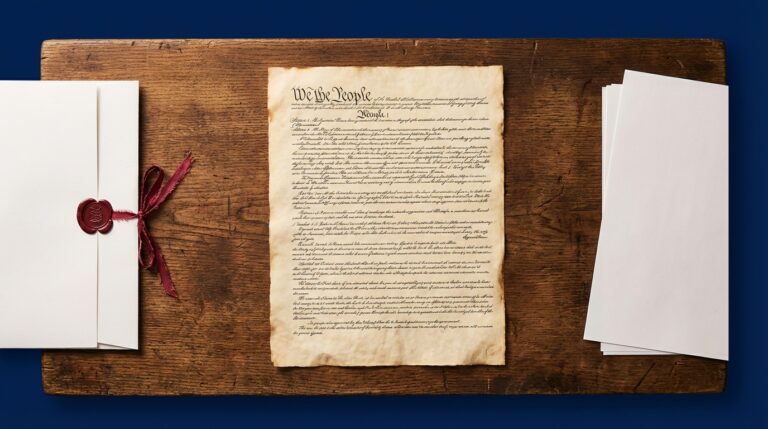
The material is intended for voters, students, journalists, and civic readers seeking a clear and sourced overview rather than advocacy. It relies on the Amendment text and leading Supreme Court opinions to describe how each right is applied.
Quick answer: What the constitution freedom of expression covers
Short summary of the five rights
The First Amendment names five protections commonly grouped under the idea of constitution freedom of expression: freedom of speech, freedom of the press, freedom of religion, the right to peaceably assemble, and the right to petition the government, and the Amendment text remains the primary source for those guarantees Bill of Rights transcript.
These five protections are often discussed together as First Amendment freedoms, but courts and scholars treat each right with its own rules and tests.
quick citation of the First Amendment text
use the National Archives transcript
Who this answer is for
This explanation is written for voters, students, journalists, and civic readers who want a clear, sourced summary of the five First Amendment rights and how courts evaluate them.
The rest of this article outlines the constitutional text, the key Supreme Court tests that shape each right, common limits, practical examples, and where to read the primary materials.
Where the phrase comes from: text and historical context of the First Amendment
Exact First Amendment text
The First Amendment begins the modern list of protections for speech and related activities; the text as recorded in the Bill of Rights is the starting point for understanding constitution freedom of expression, and readers can consult the official transcript for the precise wording Bill of Rights transcript.

Brief ratification context
At ratification, the First Amendment addressed concerns about government limits on political speech, religious practice, and the press; over time the Supreme Court has interpreted how the text applies to particular facts and to state action through incorporation and doctrinal development, as seen in later opinions that are discussed below Library of Congress First Amendment collection.
Understanding the text and its history helps explain why the five protections are treated collectively as freedom of expression while still being analyzed separately in litigation and policy discussions.
The five rights listed: speech, press, religion, assembly and petition explained
Freedom of speech – scope and limits
Freedom of speech protects spoken and written expression and other communicative acts, but it is not absolute; courts exclude categories like true threats and speech that meets the incitement standard described in Brandenburg v. Ohio, which sets the modern test for unprotected incitement Brandenburg opinion. (see Justia).

In practical terms, protected speech includes political argument and many forms of public advocacy, while narrowly defined criminal conduct and imminent lawless action fall outside constitutional protection under the Brandenburg framework.
Freedom of the press – role and protections
Freedom of the press protects newsgathering, publishing, and public criticism of officials, and the Supreme Court has imposed a higher showing for public-figure plaintiffs in defamation cases: New York Times Co. v. Sullivan established the actual malice standard for such claims New York Times v. Sullivan opinion. (see Oyez).
The press protection is broad but not unlimited; courts consider whether statements are opinion or false factual assertions and apply doctrinal standards that reflect the balance between reputation and robust public debate.
Freedom of religion – Establishment and Free Exercise
Freedom of religion covers two related concerns: preventing the government from establishing a religion and protecting individuals’ free exercise; cases such as Cantwell v. Connecticut show how courts have applied the Free Exercise protection against state action Cantwell opinion.
Religious protections often require careful balancing when public settings or government benefits interact with religious practice, and courts use doctrines that trace to both clauses of the First Amendment.
Right to assemble and to petition the government
The rights to peaceably assemble and to petition allow collective advocacy, rallies, and associational activity; the Court has protected membership and association from state intrusion in cases such as NAACP v. Alabama, which limited forced disclosure that could chill associational rights NAACP v. Alabama opinion.
These rights protect groups and individuals who organize for political or civic ends while allowing governments to impose neutral time, place, and manner rules when appropriate.
Stay updated and involved with Michael Carbonara
For a clear view of these sources, read the Amendment text and the leading opinions to see how the courts define and limit each right
How courts have tested and balanced the five freedoms
The Brandenburg incitement test
The Brandenburg test requires courts to ask whether speech is intended to produce imminent lawless action and is likely to do so, and this two-part approach excludes only a narrow category of advocacy from constitutional protection Brandenburg opinion.
That means much provocative or harsh advocacy remains protected unless it meets both the intent and imminence elements of the test.
The actual malice standard for press and public figures
New York Times v. Sullivan raised the burden for public-figure plaintiffs by requiring proof that a false statement was made with actual malice, which means knowing falsity or reckless disregard for the truth; that standard gives the press substantial breathing room to report and criticize public officials New York Times v. Sullivan opinion. (see US Courts).
The standard does not mean false statements are always protected, but it requires courts to weigh the value of public debate against reputational harms when a figure has sought public influence.
Religion cases and incorporation
Cases such as Cantwell demonstrate that religion clauses protect individuals against state action in many contexts, and incorporation doctrine brought these protections to apply broadly beyond the original federal-state division Cantwell opinion.
Court decisions in this area vary with the facts, especially when government neutrality or accommodation is at issue, so legal outcomes depend on how courts balance competing interests.
Association, assembly and membership privacy
NAACP v. Alabama protected membership privacy by limiting compelled disclosure that could chill association, illustrating how courts will guard collective advocacy when disclosure poses a real threat to group activity NAACP v. Alabama opinion.
That protection recognizes that assembly and petition rights can be harmed not only by arrests or bans but also by government actions that make participation risky.
Limits, exceptions and modern questions about constitution freedom of expression
Traditional limits: incitement, true threats, defamation, obscenity, time-place-manner
Longstanding categories such as incitement and true threats remain outside First Amendment protection when they meet established tests, and defamation claims by public figures follow the actual malice rule described in New York Times v. Sullivan New York Times v. Sullivan opinion.
Obscenity and narrowly tailored time, place, and manner regulations are other recognized limits, but courts require careful justification when government action restricts expressive activity that is otherwise protected under the First Amendment Bill of Rights transcript.
How private platforms differ from state action
The First Amendment restricts government actors, not private companies, so platform moderation is governed by private rules and contracts rather than by constitutional law, and readers should not assume private moderation equals unconstitutional censorship Library of Congress First Amendment collection.
That distinction means questions about online speech often involve separate legal frameworks and policy debates rather than direct constitutional prohibitions.
Open legal questions about online content moderation
Court tests developed for print and public speech are being applied to digital contexts, and while foundational precedents remain controlling for government action, courts and legislatures are still resolving how those tests fit new platforms and technologies Brandenburg opinion.

Typical mistakes and myths people make about freedom of expression
Misunderstanding private moderation as unconstitutional censorship
A common mistake is treating content removal by a private platform as a First Amendment violation; the Constitution limits government action, so private moderation is a separate policy and contractual matter rather than a direct constitutional restriction Library of Congress First Amendment collection.
Discussing platform rules as distinct from constitutional protections helps keep debates focused on the correct legal framework and on realistic policy options.
Overstating what the First Amendment guarantees
Another frequent error is absolutist language that says the First Amendment protects all speech in every setting; in practice, doctrines and tests mean courts balance interests and exclude narrowly defined categories of unprotected speech such as incitement and true threats Brandenburg opinion.
Using careful phrasing like according to the opinion or courts have held avoids overstating what the Constitution guarantees in every circumstance.
Confusing legal standards for public figures and private individuals
People often conflate the defamation standard for public figures with the standard for private plaintiffs; New York Times v. Sullivan requires a showing of actual malice for public figures, which differs from the rules that may apply to private individuals New York Times v. Sullivan opinion.
Understanding that the public-figure standard raises the bar for defamation claims clarifies why reporting and criticism of officials receive robust protection.
Practical scenarios: everyday examples showing what is and is not protected
Political protest versus planned incitement
Imagine a protest where speakers urge political change by passionate argument; that advocacy is usually protected unless speech crosses the line into urging immediate lawless action under Brandenburg’s imminence and intent test Brandenburg opinion.
If a speaker provides precise instructions and timing intended to cause immediate violence, that factual pattern is more likely to satisfy the Brandenburg test and lose constitutional protection.
The five rights are freedom of speech, freedom of the press, freedom of religion, the right to peaceably assemble, and the right to petition the government, as stated in the First Amendment, and courts have developed tests that define limits such as incitement and the actual malice standard
Readers may ask whether heated or graphic language alone counts as incitement; the answer depends on whether the speech is aimed at producing imminent lawless action and is likely to do so, not merely on tone or offensiveness.
Opinion journalism versus defamatory false statements about a public official
An opinion column that criticizes an elected official is often protected speech, while knowingly false factual allegations about an official may give rise to a public-figure defamation claim if the plaintiff can prove actual malice under the New York Times standard New York Times v. Sullivan opinion.
Evaluating whether a statement is nonactionable opinion or a false factual claim requires attention to context, verifiability, and the presence or absence of reckless disregard for truth.
Religious expression at public events

Practical questions turn on the location, the government’s role, and whether a neutral policy treats religious expression the same as secular expression.
Where to read more: primary sources and key opinions on the five freedoms
Direct links to the Amendment text and case opinions
Start with the Bill of Rights transcript for the Amendment text and then read the leading opinions that shape modern doctrine; the National Archives provides the primary text, and the cited Supreme Court opinions explain how courts apply it in particular contexts Bill of Rights transcript.
Key opinions include Brandenburg for incitement, New York Times v. Sullivan for press and defamation, Cantwell for religion incorporation questions, and NAACP v. Alabama for associational privacy Brandenburg opinion.
Brief reading order for deeper legal detail
A useful order is to read the Amendment text first, then the Brandenburg opinion to understand limits on advocacy, New York Times v. Sullivan for press protections, Cantwell on religion, and NAACP v. Alabama on association and membership privacy Library of Congress First Amendment collection.
Those materials provide the primary sources that courts rely on when resolving disputes about the five First Amendment rights.
Conclusion: main takeaways about constitution freedom of expression
Summary bullets
The First Amendment names five protections commonly grouped as constitution freedom of expression: speech, press, religion, assembly, and petition, and the text remains the primary legal source for those rights Bill of Rights transcript.
Longstanding Supreme Court tests such as Brandenburg and the actual malice rule shape which expression is protected and which is not, and many modern questions, particularly about online moderation, remain fact-specific and contested in law and policy New York Times v. Sullivan opinion.
How to use this information responsibly
When discussing freedom of expression in public debate, cite primary sources and use careful, sourced phrasing such as according to the opinion or courts have held, and consult the primary materials listed above for authoritative detail Library of Congress First Amendment collection.
For readers who want to follow up, the reading order in this article points to the legal materials that animate contemporary debates about the five rights.
It refers to the five protections named in the First Amendment: speech, press, religion, assembly, and petition, as recorded in the Bill of Rights.
No. The First Amendment protects a wide range of speech, but categories like incitement, true threats, certain defamation, and obscenity can fall outside protection under established tests.
No. The First Amendment limits government action; private companies set their own moderation policies and operate under contract and platform rules.
Consult the reading list above for a practical order to approach those materials and for context when you encounter debates about speech, religion, the press, assembly, and petitioning.
References
- https://www.archives.gov/founding-docs/bill-of-rights-transcript
- https://www.loc.gov/collections/first-amendment/
- https://www.law.cornell.edu/supremecourt/text/395/444
- https://www.law.cornell.edu/supremecourt/text/376/254
- https://www.law.cornell.edu/supremecourt/text/310/296
- https://www.law.cornell.edu/supremecourt/text/357/449
- https://michaelcarbonara.com/contact/
- https://michaelcarbonara.com/issue/constitutional-rights/
- https://michaelcarbonara.com/news/
- https://www.oyez.org/cases/1963/39
- https://supreme.justia.com/cases/federal/us/395/444/
- https://www.uscourts.gov/about-federal-courts/educational-resources/supreme-court-landmarks/new-york-times-v-sullivan
{"@context":"https://schema.org","@graph":[{"@type":"FAQPage","mainEntity":[{"@type":"Question","name":"What are the five rights included in freedom of expression?","acceptedAnswer":{"@type":"Answer","text":"The five rights are freedom of speech, freedom of the press, freedom of religion, the right to peaceably assemble, and the right to petition the government, as stated in the First Amendment, and courts have developed tests that define limits such as incitement and the actual malice standard"}},{"@type":"Question","name":"What does constitution freedom of expression mean?","acceptedAnswer":{"@type":"Answer","text":"It refers to the five protections named in the First Amendment: speech, press, religion, assembly, and petition, as recorded in the Bill of Rights."}},{"@type":"Question","name":"Is all speech protected by the First Amendment?","acceptedAnswer":{"@type":"Answer","text":"No. The First Amendment protects a wide range of speech, but categories like incitement, true threats, certain defamation, and obscenity can fall outside protection under established tests."}},{"@type":"Question","name":"Do private platforms have to follow the First Amendment?","acceptedAnswer":{"@type":"Answer","text":"No. The First Amendment limits government action; private companies set their own moderation policies and operate under contract and platform rules."}}]},{"@type":"BreadcrumbList","itemListElement":[{"@type":"ListItem","position":1,"name":"Home","item":"https://michaelcarbonara.com"},{"@type":"ListItem","position":2,"name":"Blog","item":"https://michaelcarbonara.com/news/%22%7D,%7B%22@type%22:%22ListItem%22,%22position%22:3,%22name%22:%22Artikel%22,%22item%22:%22https://michaelcarbonara.com%22%7D]%7D,%7B%22@type%22:%22WebSite%22,%22name%22:%22Michael Carbonara","url":"https://michaelcarbonara.com"},{"@type":"BlogPosting","mainEntityOfPage":{"@type":"WebPage","@id":"https://michaelcarbonara.com"},"publisher":{"@type":"Organization","name":"Michael Carbonara","logo":{"@type":"ImageObject","url":"https://lh3.googleusercontent.com/d/1eomrpqryWDWU8PPJMN7y_iqX_l1jOlw9=s250"}},"image":["https://lh3.googleusercontent.com/d/1mZ_BYQEDE3gUedTx1PSL8fAvyIW7VU8w=s1200","https://lh3.googleusercontent.com/d/1Ke1_5nRrgiuzPVZAK3X0gBfBJMwptNZL=s1200","https://lh3.googleusercontent.com/d/1eomrpqryWDWU8PPJMN7y_iqX_l1jOlw9=s250"]}]}