The goal is to give voters, journalists, and civic readers clear, sourced guidance on how to evaluate speech-related claims and where to find primary sources for further review. The piece focuses on established legal tests and identifies areas that remain unsettled as of 2026.
What first amendment freedom of expression means: the text and core principle
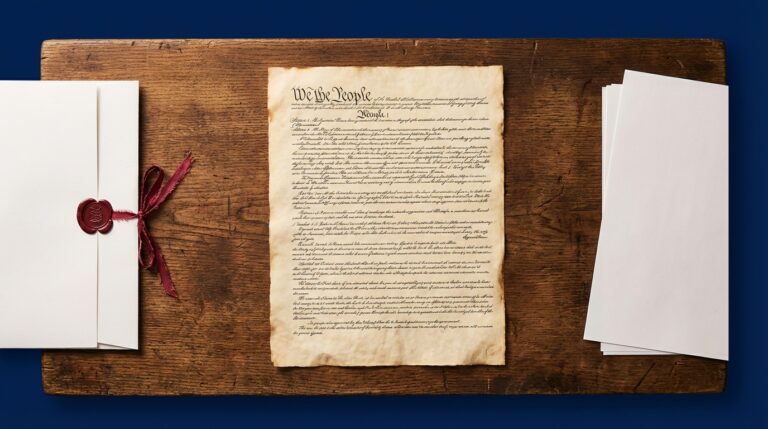
The First Amendment to the U.S. Constitution forbids Congress from making any law “abridging the freedom of speech, or of the press,” and that constitutional wording is the starting point for understanding first amendment freedom of expression, not an automatic permit for all speech.National Archives, Bill of Rights transcription
Join the campaign and stay informed
The First Amendment text protects a wide range of public expression while the courts decide the legal boundaries through doctrine and precedent.
Courts read the short constitutional line in light of history and legal doctrine to determine what counts as protected expression and what counts as a lawful restriction, according to legal overviews that summarize the framework used by judges.Cornell Law School Legal Information Institute overview

That means the amendment gives a clear rule on government power: it limits government action against speech. How the rule applies in any case depends on judicial interpretation and the factual record.
First amendment freedom of expression in context: how courts build doctrine from the text
The Supreme Court plays the central role in turning the First Amendment’s short text into operational legal rules that lower courts apply as precedent, and those precedents create workable tests for judges and litigants.Cornell Law School Legal Information Institute overview
Lower courts follow the Supreme Court’s tests and categories when they decide whether particular speech is protected or may be restricted. Over time these categories form doctrine that lawyers and judges cite in briefs and opinions.
Major doctrinal categories include incitement, obscenity, defamation, true threats, and fighting words. Each category uses specific legal elements rather than a single rule, which helps courts apply the text to varied factual settings.
Major unprotected categories under first amendment freedom of expression and the tests courts use
Although the First Amendment protects broad expression, courts have long identified narrow classes of speech that may be unprotected or subject to restriction, and they use multi-part tests to evaluate claims.
Incitement
Incitement is evaluated under the modern Brandenburg standard, which asks whether speech is directed to producing imminent lawless action and is likely to produce that action. Courts treat this test as a high bar for restriction to protect controversial advocacy.
Applying the test requires examining speaker intent, the immediacy of the threatened action, and the likelihood that listeners will act, with courts often focusing on the specific circumstances surrounding the speech.Brandenburg v. Ohio case summary
Freedom of expression under the First Amendment means the constitutional prohibition on Congress abridging speech or the press, interpreted by courts through precedent that defines narrow unprotected categories and the tests used to apply the text.
Obscenity, defamation, true threats, and fighting words
Obscenity, as a category, is judged under the Miller framework, which looks to community standards and whether material lacks serious value; defamation involving public officials requires proof of actual malice; and true threats and fighting words are narrow exceptions applied in limited situations.Miller v. California case summary
These categories are not limitless. They are tools courts use to balance the amendment’s protection against competing government interests like public safety and order.
Major unprotected categories under first amendment freedom of expression and the tests courts use
This section provides short sub-explanations so readers can distinguish likely protected from likely unprotected speech.
Incitement
The key rule for incitement is that advocacy of illegal action can be restricted only when it is intended to produce imminent lawless action and when it is likely to do so; mere advocacy of illegal ideas at some indefinite time is not enough to satisfy the test.Brandenburg v. Ohio case summary
Courts look for clear evidence that a speaker meant to provoke immediate unlawful behavior and that the context made such behavior realistically likely. Absent those facts, advocacy is typically protected.

Obscenity, defamation, true threats, and fighting words
For obscenity, the Miller test requires three elements: the material must appeal to prurient interest under contemporary community standards, depict sexual conduct in a patently offensive way, and lack serious literary, artistic, political, or scientific value.Miller v. California case summary
Defamation involving public officials or public figures turns on whether the plaintiff can prove the defendant acted with actual malice, meaning knowledge of falsity or reckless disregard for the truth, a standard set by a long-standing Supreme Court decision.New York Times Co. v. Sullivan case summary
Incitement and the Brandenburg test: when advocacy crosses the line
The Brandenburg test asks three related questions: was the speech intended to produce imminent lawless action; was the action likely to occur; and did the speech encourage immediate unlawful behavior. Courts treat all three as essential to justify a restriction.Brandenburg v. Ohio case summary
Examples help show the line. A speaker privately urging violence at an unnamed future time will usually be protected, while a public call during a rally that urges an immediate violent act at a nearby location is more likely to be unprotected if the context makes action likely.
Context matters and small differences can change the legal outcome.
Defamation and the public-official standard: New York Times Co. v. Sullivan
New York Times Co. v. Sullivan established that public officials must prove actual malice to recover for defamation, a rule that protects robust debate about public figures and public conduct while still allowing recovery for knowingly false statements.New York Times Co. v. Sullivan case summary

Practically, the actual malice standard raises the evidentiary bar in defamation suits involving officials and many public figures, which affects reporting and political speech by making successful claims harder to prove.
Journalists, commentators, and campaign communicators often cite the Sullivan rule when assessing risks of publishing aggressive criticism or investigative claims about public officials.
Journalists, commentators, and campaign communicators often cite the Sullivan rule when assessing risks of publishing aggressive criticism or investigative claims about public officials.

Obscenity and the Miller test: what courts consider offensive or unprotected
Miller v. California set a three-part obscenity test that still guides courts: local or contemporary community standards, patently offensive sexual content, and lack of serious value combine to define obscenity that is not protected.Miller v. California case summary
Community standards pose particular challenges for online and national media because standards vary by place and evolve over time, so courts and litigants often debate which community’s view should control in a given case.
Because the Miller test asks about serious artistic or scientific value, courts sometimes consider expert testimony on the work’s context, though outcomes remain fact-dependent and contested.
Other exceptions: true threats, fighting words, and narrow categories of unprotected speech
quick reader checklist to identify narrow unprotected speech
Use as initial screening
True threats are statements where the speaker intends the statement to be understood as a serious expression of intent to commit an act of violence, and courts treat them as outside First Amendment protection in limited circumstances.
Fighting words are direct, face-to-face insults likely to provoke an immediate breach of the peace; courts apply this category narrowly and only in specific contexts where the speech is likely to incite immediate physical retaliation.
These narrow categories sometimes overlap with incitement or defamation, and judges resolve difficult cases by focusing on intent, context, and whether the speech actually threatens harm or provokes violence.
How courts balance expression with public safety and order
When courts review speech restrictions, they weigh the government’s asserted interest-such as public safety, order, or protecting reputation-against the expressive interest, using the particular legal test that applies to the category at issue.Cornell Law School Legal Information Institute overview
Different categories use different standards; strict tests protect political and expressive speech more strongly, while narrower exceptions allow government action when speech poses an immediate and serious risk that meets a recognized test.
Because outcomes depend on the legal standard and the factual record, similar restrictions can survive or fail depending on how judges assess facts like intent, immediacy, and actual likelihood of harm.
first amendment freedom of expression and modern platforms: content moderation and amplification
The First Amendment constrains government actors, not private companies, so social media platforms generally may set and enforce their own content rules without triggering First Amendment limits, though this difference raises practical and policy questions about speech environments.
Ongoing debates in 2024 to 2026 center on platform liability, algorithmic amplification, and whether new laws or court rulings will change how traditional First Amendment principles apply to online ecosystems, an unsettled area to watch.Pew Research Center analysis of public views
Because private moderation is not governed by the First Amendment in the same way as government action, public conversation about platform governance often focuses on policy, user norms, and legislative proposals rather than established constitutional doctrine.
Decision criteria: how to evaluate whether speech is likely protected or unprotected
Use a short checklist to evaluate a speech claim: identify who the speaker is, whether the target is a public official or private person, whether the speech aims to provoke immediate unlawful action, and which legal test applies.
When assessing a claim, consult the primary sources for the applicable test, such as the Brandenburg, Sullivan, and Miller opinions, and rely on trusted legal overviews for context before drawing conclusions.Brandenburg v. Ohio case summary
Avoid absolute language. If a claim depends on unsettled law or new facts, note the uncertainty and point readers to primary sources rather than treating a contested point as settled.
Typical errors and pitfalls when people discuss freedom of expression
Common errors include treating private moderation as a government First Amendment violation and asserting that slogans or campaign rhetoric are legally binding statements rather than political speech that often enjoys broad protection.Cornell Law School Legal Information Institute overview
Another frequent mistake is using absolute phrasing like always or never when describing judicial outcomes; courts decide cases on facts and precedent, and outcomes can vary with small factual differences.
To avoid mistakes, cite primary sources such as the constitutional text and relevant Supreme Court opinions when making legal claims and make clear when an area of law is unsettled.
Practical scenarios: applying tests to real-world examples
Scenario 1: A speaker at a political rally urges supporters to take property from a nearby building immediately. Under the Brandenburg test, courts would examine whether the statement was intended to produce imminent lawless action and whether the context made such action likely; if both are present, restriction is possible.Brandenburg v. Ohio case summary
Scenario 2: An online post repeats a false allegation about an elected official. If the official is a public figure, the plaintiff must meet the actual malice standard to recover for defamation, which requires proof that the publisher knew the statement was false or acted with reckless disregard for the truth.New York Times Co. v. Sullivan case summary
Scenario 3: Explicit sexual material is sold online. Courts would apply the Miller factors to determine whether the material is obscene under community standards and whether it lacks serious redeeming value, a fact-specific inquiry often involving expert evidence.Miller v. California case summary
Tracking developments: where to find primary sources and reliable updates
Monitor primary sources: the constitutional text from archival records, Supreme Court opinions via reliable case summaries, and legal overviews such as the Cornell LII to follow doctrinal change and interpretation.National Archives, Bill of Rights transcription
For public attitudes and empirical context, trusted polling organizations publish analyses that show how public support for free expression can coexist with support for certain limits, which is useful background when following policy debates.Pew Research Center analysis of public views
Watch for new federal and state statutes and 2024 to 2026 court decisions that address platform governance and amplification, as these developments may affect how doctrine is applied to online speech.
Conclusion: what to remember about first amendment freedom of expression
Remember that the First Amendment’s text is the constitutional foundation for first amendment freedom of expression and that Supreme Court precedent defines important limits and tests used in modern law.Cornell Law School Legal Information Institute overview
Many issues remain unsettled, especially those involving private platforms and algorithmic amplification, so follow primary sources and recent rulings and avoid absolute statements when describing speech law.
The First Amendment protects a wide range of speech and press activity from government restriction, while established exceptions allow narrow limits for categories like incitement, obscenity, and true threats; exact boundaries are shaped by case law.
No. The First Amendment restricts government actors; private platforms generally set their own content rules, though laws and court decisions can affect platform practices indirectly.
You can read the opinions and case summaries on reliable legal resources and court archives; consult the cited sources such as official case summaries and legal overviews for full texts and analysis.
For voter information on candidates and campaign positions, consult campaign websites and public filings when summarizing stated priorities or biographical information.
References
- https://www.archives.gov/founding-docs/bill-of-rights-transcript
- https://www.law.cornell.edu/wex/first_amendment
- https://www.law.cornell.edu/wex/brandenburg_test
- https://www.oyez.org/cases/1968/492
- https://www.oyez.org/cases/1972/70
- https://www.oyez.org/cases/1963/39
- https://michaelcarbonara.com/contact/
- https://www.pewresearch.org/
- https://proceedings.nyumootcourt.org/2022/12/the-inadequacy-of-brandenburgs-imminence-incitement-regulation-in-the-internet-era/
- https://jolt.richmond.edu/2023/11/28/can-the-government-restrict-incitement-content-on-social-media/
- https://michaelcarbonara.com/issue/constitutional-rights/
- https://michaelcarbonara.com/issue/educational-freedom/
- https://michaelcarbonara.com/news/
{"@context":"https://schema.org","@graph":[{"@type":"FAQPage","mainEntity":[{"@type":"Question","name":"What does freedom of expression mean in the First Amendment?","acceptedAnswer":{"@type":"Answer","text":"Freedom of expression under the First Amendment means the constitutional prohibition on Congress abridging speech or the press, interpreted by courts through precedent that defines narrow unprotected categories and the tests used to apply the text."}},{"@type":"Question","name":"What does the First Amendment protect?","acceptedAnswer":{"@type":"Answer","text":"The First Amendment protects a wide range of speech and press activity from government restriction, while established exceptions allow narrow limits for categories like incitement, obscenity, and true threats; exact boundaries are shaped by case law."}},{"@type":"Question","name":"Do private social media platforms have to follow the First Amendment?","acceptedAnswer":{"@type":"Answer","text":"No. The First Amendment restricts government actors; private platforms generally set their own content rules, though laws and court decisions can affect platform practices indirectly."}},{"@type":"Question","name":"Where can I read the Supreme Court decisions mentioned?","acceptedAnswer":{"@type":"Answer","text":"You can read the opinions and case summaries on reliable legal resources and court archives; consult the cited sources such as official case summaries and legal overviews for full texts and analysis."}}]},{"@type":"BreadcrumbList","itemListElement":[{"@type":"ListItem","position":1,"name":"Home","item":"https://michaelcarbonara.com"},{"@type":"ListItem","position":2,"name":"Blog","item":"https://michaelcarbonara.com/news/%22%7D,%7B%22@type%22:%22ListItem%22,%22position%22:3,%22name%22:%22Artikel%22,%22item%22:%22https://michaelcarbonara.com%22%7D]%7D,%7B%22@type%22:%22WebSite%22,%22name%22:%22Michael Carbonara","url":"https://michaelcarbonara.com"},{"@type":"BlogPosting","mainEntityOfPage":{"@type":"WebPage","@id":"https://michaelcarbonara.com"},"publisher":{"@type":"Organization","name":"Michael Carbonara","logo":{"@type":"ImageObject","url":"https://lh3.googleusercontent.com/d/1eomrpqryWDWU8PPJMN7y_iqX_l1jOlw9=s250"}},"image":["https://lh3.googleusercontent.com/d/1vTKXS_xMqhRIgaL0G1iNfkiiAmAwm-CD=s1200","https://lh3.googleusercontent.com/d/1zRmDXOAnlF2PIZVFhJJdeQoft1qINtqD=s1200","https://lh3.googleusercontent.com/d/1eomrpqryWDWU8PPJMN7y_iqX_l1jOlw9=s250"]}]}