The aim is neutral explanation and good sources, not political persuasion. The article relies on primary texts and trusted legal summaries so readers can follow up on official opinions and the amendment's exact wording.
Where the Tenth Amendment fits among all ten amendments
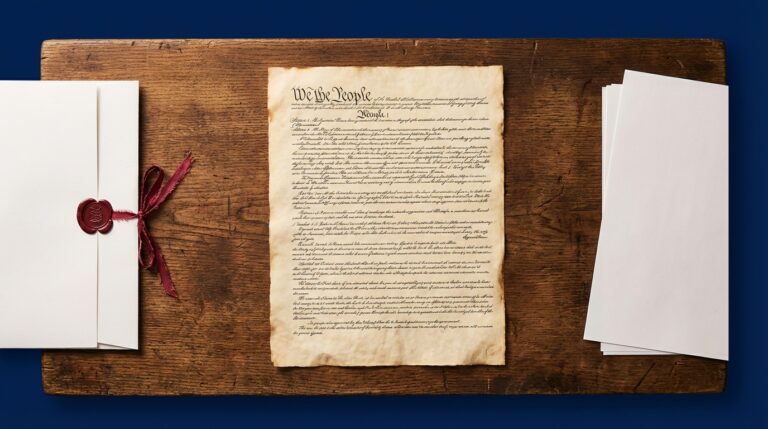
The Tenth Amendment appears near the end of the Bill of Rights and offers a short statement about the balance of power between the national government and the states. Its wording says that powers not delegated to the United States by the Constitution, nor prohibited to the States, are reserved to the States respectively, or to the people, and the authoritative text is available from the National Archives transcription of the Bill of Rights, which records the amendment in full National Archives transcription.
The amendment is one line in a larger set of protections and limits that voters see when they review all ten amendments. Instead of creating a long list of state powers, the Tenth Amendment works as a reminder that federal authority is limited to the powers the Constitution actually grants to the national government Legal Information Institute overview.
Stay informed about Michael Carbonara's campaign updates and community engagement
Read the short summary above and the official text if you want the exact wording; the language is intentionally brief and meant to frame federalism questions rather than resolve them by itself.
The phrase “reserved to the States respectively, or to the people” has been read in different ways over time, but its core idea is simple: unless the Constitution gives a power to the federal government, or forbids states from using it, that power remains with state governments or with the people. This phrasing helps explain why students often study the Tenth Amendment while reviewing all ten amendments: it speaks to how constitutional powers are divided.
Why the Tenth Amendment was added: historical context
At the time of the founding, many Americans worried that a strong national government might overpower state governments and individual rights. Those worries led to a set of proposals and promises that helped secure ratification of the Constitution.
The Tenth Amendment was added as part of the Bill of Rights to make clear that the federal government would not assume powers beyond those delegated in the Constitution, a point repeated in encyclopedia summaries that place the amendment in its historical setting Encyclopaedia Britannica entry.
Founding-era debates show that framers and early Americans wanted a visible reminder that the national government is one of limited, enumerated powers. Legal overviews note that the amendment reflects that intent and serves as a constitutional touchstone for federalism discussions Legal Information Institute overview.
What the text actually says and how to read it simply
Exact text: “The powers not delegated to the United States by the Constitution, nor prohibited by it to the States, are reserved to the States respectively, or to the people.” You can read the exact wording at the National Archives transcription of the Bill of Rights National Archives transcription.
Put plainly, the Tenth Amendment says that any authority not specifically given to the national government remains with state governments or with individuals. The sentence is short, and that brevity is purposeful: the amendment is a structural statement, not a detailed list of state powers Legal Information Institute overview.
The Tenth Amendment reminds readers that powers not given to the federal government remain with the states or the people; courts interpret how that principle applies alongside other constitutional powers, and key cases have limited federal directives that would compel states or state officials to act.
The short text does not, by itself, tell us which particular state powers are protected in every modern dispute. Courts use the amendment alongside other constitutional provisions to decide where federal authority ends and state authority begins. For that reason, readers should be cautious about drawing broad policy conclusions from the sentence alone Legal Information Institute overview.
How courts have treated the Tenth Amendment: rule of construction and limits
Modern courts have often treated the Tenth Amendment as a guide to reading the Constitution rather than as an independent source of a broad suite of state powers. In other words, courts use it as a rule of construction that helps define federalism within the overall constitutional text Legal Information Institute overview.
That rule of construction means the amendment must be read with other clauses, like the Commerce Clause and the Necessary and Proper Clause, because those provisions can grant federal power that limits what states may do. When conflicts arise, judges balance these provisions on a case-by-case basis rather than applying a single, sweeping rule Encyclopaedia Britannica entry.

Because outcomes depend on the legal context, the amendment is often a starting point for argument rather than the final word. Legal reference works describe the Tenth Amendment as a structural protection of state sovereignty that functions in dialogue with other constitutional norms Legal Information Institute overview.
Landmark cases that shaped modern Tenth Amendment doctrine
New York v. United States, decided in 1992, is a leading case about limits on how the federal government can influence state lawmaking. The decision rejected federal requirements that would have forced states to enact federal policy in a way that the Court considered incompatible with state sovereignty Oyez summary of New York v. United States.
Printz v. United States, decided in 1997, addressed whether the federal government could impose interim requirements on state officers to carry out federal programs. The Court held that certain interim directives that conscripted state officials were unconstitutional under the structural principles tied to the Tenth Amendment Oyez summary of Printz v. United States.
where to find case texts and official opinions
start with official opinions
Murphy v. National Collegiate Athletic Association, decided in 2018, reaffirmed the anti-commandeering doctrine by holding that the federal government cannot conscript state officials to enforce federal law in the context of sports betting regulation. That ruling built on the principles from the 1990s cases and applied them in a modern regulatory setting Supreme Court opinion of Murphy v. NCAA.
Together, these cases show a continuing judicial theme: the federal government cannot simply order states or their officers to do the work of enforcing federal policy when that would cross constitutional lines. Each decision frames the limits differently, so legal practitioners look at the precise holdings and reasoning when applying them to new disputes Oyez summary of New York v. United States.
Practical effect: what anti-commandeering does and does not do
The anti-commandeering principle prevents the federal government from forcing state legislatures or state officials to enact or administer federal regulatory programs. Courts have struck down federal directives that would require states to pass laws or perform duties that are effectively federal responsibilities Oyez summary of New York v. United States. See the Library of Congress essay on the anti-commandeering doctrine Anti-Commandeering Doctrine | Library of Congress.

That limit does not mean federal law is powerless. When Congress writes laws that regulate private conduct and individuals directly, those laws can apply across states without violating the anti-commandeering rule. The distinction is between commanding state governments and regulating private actors directly Oyez summary of Printz v. United States.
For citizens, the practical effect is that some federal programs will rely on federal enforcement or on state choices to cooperate, and courts will evaluate the legal form of a federal requirement to decide whether it illegally commandeers states or lawfully governs individuals directly Supreme Court opinion of Murphy v. NCAA.
Open legal questions and modern debates about the Tenth Amendment
Scholars and courts continue to debate how far anti-commandeering reaches in new regulatory contexts, such as complex partnerships between federal agencies and state regulators or conditional federal funding that influences state choices Legal Information Institute overview.
Another open question is how the Tenth Amendment interacts with broad federal powers like the Commerce Clause as policy areas evolve. Courts often resolve these issues one dispute at a time, so doctrine develops incrementally rather than by a single, sweeping rule Encyclopaedia Britannica entry. Commentary on these debates appears on SCOTUSblog.
Through 2026, observers expect litigation to address new applications of federal authority in areas such as data regulation, environmental partnerships, and modern economic programs, with the Tenth Amendment arguments accompanying other constitutional claims Legal Information Institute overview.
Common misunderstandings about the Tenth Amendment
A frequent mistake is to treat the Tenth Amendment as an absolute shield against federal laws. It is not. The amendment does not automatically invalidate federal statutes that regulate individuals or commerce; it instead helps define the relationship between national powers and state sovereignty Legal Information Institute overview.
Another misunderstanding is thinking the amendment creates a concrete list of state powers. It does not. The constitutional text provides a framework, and courts and scholars identify specific boundaries through cases and careful legal analysis Encyclopaedia Britannica entry.
When you see strong political claims about the Tenth Amendment in headlines or social posts, check whether they cite relevant Supreme Court precedent or offer primary texts. Rhetoric about state sovereignty can overstate the amendment’s independent legal force Legal Information Institute overview. The Brennan Center has analysis on strategic uses of the 10th Amendment.
Everyday scenarios: how the Tenth Amendment might matter to citizens
Health and safety regulation often involves both state and federal roles. For example, if a federal law directly regulates manufacturers or private businesses, that law can apply nationwide. If instead a federal law sought to force state legislatures to enact certain safety rules, anti-commandeering concerns would arise Oyez summary of Printz v. United States.

If a state chooses to regulate an area differently from federal preferences, courts may be asked to decide whether the federal law regulates individuals directly or improperly commands the state to act. The outcome depends on statutory design and constitutional analysis Supreme Court opinion of Murphy v. NCAA.
When conflicts reach courts, expect judges to examine whether federal action crosses the line into commandeering or instead exercises valid national authority under clauses like the Commerce Clause. These cases can take years and often shape how officials design future regulations Legal Information Institute overview. See related posts on the site this site.
How to read a primary source or Supreme Court opinion about the Tenth Amendment
Start with the exact text of the Tenth Amendment on the National Archives site and then read the majority opinion in any cited case to see the Court’s reasoning. Official opinions and transcripts are the best primary sources for understanding holdings and limits National Archives transcription.
Look for anti-commandeering language in holdings that discuss whether the federal government is ordering states or state officials to act. Pay attention to concurring opinions, too, because they can indicate alternative legal approaches that may influence future cases Oyez summary of New York v. United States.

Reliable places to find case texts and helpful summaries include Oyez for accessible case overviews and the Supreme Court website for official opinions. Legal encyclopedias provide context and plain-language summaries that help nonlawyers interpret decisions Oyez summary of Printz v. United States.
Quick checklist: deciding whether a claim about the Tenth Amendment is accurate
Check one: does the claim cite a specific Supreme Court case or the amendment’s text? If not, be skeptical and look for the primary opinion or the National Archives transcription National Archives transcription.
Check two: is the claim about state action or about individual regulation? Anti-commandeering protects states from certain federal orders, but it does not automatically block federal laws that regulate private conduct Legal Information Institute overview.
Check three: if the issue seems new or technical, assume the question may be unresolved and that a court would decide the outcome case by case. Look for recent opinions or trusted legal summaries to see how judges are applying the amendment today Encyclopaedia Britannica entry.
Final takeaways: what to remember about the Tenth Amendment
The Tenth Amendment is a short but important constitutional reminder that powers not given to the federal government remain with states or with the people. Read the exact words at the National Archives transcription for the primary text National Archives transcription.
Courts have used the amendment as a structural tool and have developed an anti-commandeering doctrine that limits certain federal directives to states, as seen in key Supreme Court cases from the 1990s and in 2018 Oyez summary of New York v. United States.
If you want to read more, start with official case opinions and trusted legal encyclopedias or my about page.
It says that any power not given to the federal government by the Constitution, and not forbidden to the states, belongs to the states or the people.
No. It does not automatically block federal laws that regulate individuals; it mainly prevents the federal government from forcing states to carry out federal policies in certain ways.
Anti-commandeering is a legal principle from Supreme Court cases that bars the federal government from compelling state legislatures or officials to implement federal programs in specific circumstances.
This piece is informational and aims to help readers evaluate claims about federalism using primary sources and the best available legal overviews.
References
- https://www.archives.gov/founding-docs/bill-of-rights-transcript
- https://www.law.cornell.edu/wex/tenth_amendment
- https://www.britannica.com/topic/Tenth-Amendment
- https://www.oyez.org/cases/1991/91-393
- https://www.oyez.org/cases/1996/95-1478
- https://www.supremecourt.gov/opinions/17pdf/16-476_db8f.pdf
- https://constitution.congress.gov/browse/essay/amdt10-4-2/ALDE_00013627/
- https://www.scotusblog.com/2017/08/symposium-time-abandon-anti-commandeering-dont-count-supreme-court/
- https://www.brennancenter.org/our-work/analysis-opinion/fair-weather-federalism-strategic-uses-10th-amendment
- https://michaelcarbonara.com/issue/constitutional-rights/
- https://michaelcarbonara.com/
- https://michaelcarbonara.com/about/
- https://michaelcarbonara.com/contact/