
What the Twenty-First Amendment says: text, ratification, and core ideas
Full text and ratification process
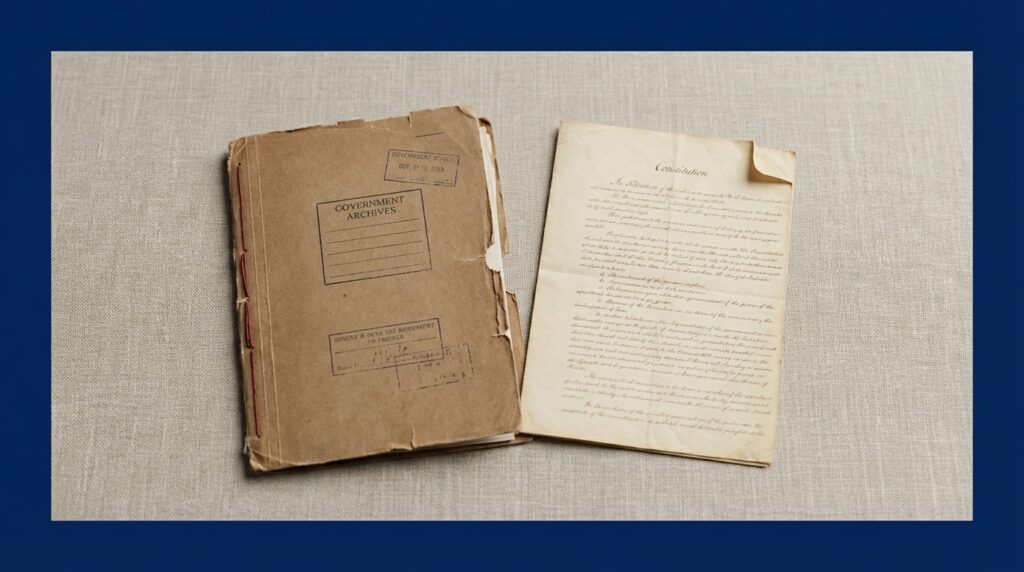
The Twenty-First Amendment formally repealed the Eighteenth Amendment and ended nationwide Prohibition when it was ratified in 1933, a fact recorded in primary archival materials and milestone documents. National Archives
The Amendment was sent to the states for ratification and adopted state by state under the procedures in Article V. The Constitution Annotated provides a modern legal summary of the Amendment and its text for readers who want the authoritative version of the clauses and ratification steps. Constitution Annotated
Three operative ideas in the Amendment
At its core the Amendment does three things: it repeals the national prohibition, it reserves to states the power to regulate or prohibit alcohol within their borders, and it implements a ratification clause that enacted the change state by state. These operative elements are apparent in the Amendment text and in legal commentary. Legal Information Institute
How primary sources record the repeal
The primary text and the ratification records show the Amendment was drafted to restore regulatory flexibility to the states rather than to create a single federal alcohol policy. Readers who want to quote the operative clauses should consult the original text at the National Archives or the annotated Constitution entry for exact wording. National Archives

How the Amendment shifted regulatory power to the states
Section 2 and state authority in plain language
Section 2 of the Twenty-First Amendment restored substantial regulatory authority over alcoholic beverages to the states, allowing them to license, prohibit, or control alcohol within their borders. This reservation is the constitutional basis states cite when they adopt different licensing regimes or bans. Constitution Annotated
In plain language Section 2 means a state can choose how to handle manufacture, distribution, and retail sales inside its borders. That authority has often been described as part of the states exercise of police powers, and legal summaries explain how it contrasts with a nationwide ban. Legal Information Institute

Practically speaking states use the power differently. Some operate control systems that run sales directly through state agencies, while others rely on private licensing and regulation. The choice is constitutional under Section 2 and has persisted precisely because the Amendment left room for local variation. Constitution Annotated

For state-level questions, review the primary Amendment text and your state code to understand local rules.
Stay informed and connected to campaign updates
For state-level questions, review the primary Amendment text and your state code to understand local rules.
Examples of state choices: prohibition, licensing, control systems
Control states maintain direct state involvement in the sale of certain categories of alcohol, while license states issue permits and rely on private retailers. Both options are legally viable under Section 2, which the Constitution Annotated explains as leaving regulatory design to each state. Constitution Annotated
States may also create local dry areas or restrict certain types of sales. Those choices reflect policy differences and local preferences rather than a uniform federal rule, and the Amendment is the legal foundation states invoke when they adopt such measures. Legal Information Institute
Why scholars see this as a federalism turning point
Legal summaries and historians view the Amendment as a turning point because it explicitly shifted a national policy question back to state control, altering the balance of federal and state authority on alcohol regulation. That shift has long-term implications for how courts review state laws that touch on interstate commerce. See a recent law review discussion.
The Amendment is often cited in discussions of federalism because it created a clear textual basis for differing state approaches instead of a single national regime. Analysts use this history to explain why state-by-state variation on alcohol rules is constitutionally tolerated. Legal Information Institute
How courts have interpreted state authority under the Amendment
Major Supreme Court rulings that mention the Amendment
Court decisions have considered the Amendment when state alcohol laws intersect with federal constitutional limits. The Constitution Annotated summarizes judicial approaches to reading Section 2 alongside other constitutional provisions. Constitution Annotated
Granholm v. Heald and interstate shipping rules
Granholm v. Heald (2005) is a key Supreme Court case that directly addressed state laws limiting direct-to-consumer wine shipments and clarified how the Commerce Clause and state authority can collide in practice. The case summary sets out the Court reasoning about discrimination against out-of-state sellers. See the Supreme Court opinion and a scholarly discussion of the decision. Oyez case summary
It repealed national Prohibition and returned authority over alcohol regulation to the states, allowing a variety of licensing, control, and prohibition choices that vary by state.
Tension between the Commerce Clause and Section 2
Court decisions balance Section 2s reservation of state power with the federal Commerce Clause. That balancing means states can regulate within limits, but laws that discriminate against out-of-state economic actors may face heightened scrutiny under Commerce Clause principles as explained in court summaries. Constitution Annotated
When courts assess conflicts they look to whether a state law protects legitimate local interests without unjustifiably favoring in-state businesses. Granholm illustrates how that analysis plays out when states limit direct shipments or apply different rules to in-state sellers. Oyez case summary
Why repeal happened and immediate historical effects
Enforcement problems and social pressures in the 1920s and early 1930s
Historians and reference sources commonly link the repeal to weak enforcement of Prohibition, rising political pressure, and changing public sentiment during the late 1920s and early 1930s. These explanations appear across reputable summaries of the period. Encyclopaedia Britannica
Enforcement difficulties included gaps in policing and widespread illicit markets that made national enforcement costly and contested. Those practical problems shaped the political environment that produced ratification of the Twenty-First Amendment. Library of Congress reference guide
Guide to primary historical sources for the Twenty-First Amendment
Use these sources for original documents
Political shifts that enabled ratification
Political change in the early 1930s made repeal feasible as lawmakers responded to public opinion and economic questions of the Great Depression era. Reference summaries outline the legislative path that led states to ratify the Amendment. Encyclopaedia Britannica
State-by-state ratification allowed diverse jurisdictions to accept or reject the change on their own timetables, a design reflected in the Amendment text and in archival ratification records. Primary documents record how the process unfolded across different states. National Archives
Short-term changes after repeal
After repeal many states moved quickly to write new licensing systems or revive pre-Prohibition regulatory structures, and the immediate market effects included the rapid reestablishment of legal manufacture and sale in jurisdictions that permitted it. Reference accounts describe these shifts without treating them as uniform across the country. Encyclopaedia Britannica

Scholars note declines in some harms associated with bootlegging while also showing that long-term social effects are contested. Readers should consult historical summaries and primary records for detailed regional accounts. Library of Congress reference guide
How the Amendment matters today: the modern regulatory patchwork
Control states versus license states today
In 2026 the Amendment still underpins a patchwork of regulatory regimes. Some states operate control systems for certain beverage categories, while others use a license-and-regulate model; both approaches are rooted in the Amendment text. Constitution Annotated
That patchwork means residents can see very different rules depending on their state, from differences in where alcohol is sold to how revenues are distributed. Legal summaries describe this variation and its constitutional basis. Legal Information Institute
Direct-to-consumer shipping and state restrictions
Direct-to-consumer shipping remains one of the most visible areas where state rules diverge. Courts have addressed these issues when they implicate both Section 2 and the Commerce Clause, most notably in cases like Granholm. Oyez case summary
Because states differ on shipment permissions, consumers and businesses must check state law before relying on cross-border delivery. Those differences can affect small wineries or retailers that depend on interstate e-commerce. Legal Information Institute
How state rules differ for businesses and consumers
Businesses face licensing requirements, reporting obligations, and sometimes quotas or limits depending on the state. Consumers may encounter age-verification procedures, shipping blocks, or local dry areas. The constitutional basis for these options is the same reservation of state power in Section 2. Constitution Annotated
For practical compliance businesses typically consult state liquor boards and the annotated Constitution or court summaries when interstate questions arise. Those sources explain how state rules are shaped by both local policy and national constitutional constraints. Legal Information Institute
Common misunderstandings and legal limits
What the Amendment does not do
The Amendment does not create a federal right to unrestricted alcohol commerce; it instead allows states to regulate or prohibit alcohol within their borders. That distinction is important when interpreting state laws that limit certain out-of-state sales. Constitution Annotated
Mistakes people make when citing Section 2
People sometimes assume uniformity across states or read Section 2 as a broad freedom clause; both readings miss the point that the Amendment preserves state discretion. Checking primary sources helps avoid these errors. Legal Information Institute
How to check primary sources before repeating claims
Primary documents such as the National Archives text and annotated summaries from the Library of Congress or Constitution Annotated are the best initial checks for factual claims about the Amendment and its limits. Use those records before amplifying a contested legal claim. National Archives
Practical scenarios: how the Amendment affects real situations
Buying and shipping alcohol across state lines
If you order wine from another state outcomes depend on the destination state rules. Courts have described how discriminatory state laws can run into Commerce Clause problems, but states retain authority to set many shipping conditions under Section 2. Oyez case summary
A plain-language approach is to check the seller state and the buyer state rules: some states allow direct shipments with permits; others block shipments or require a local license. These practical differences stem from the Amendments allocation of responsibility to the states. Legal Information Institute
State-level bans or dry areas and what they mean for residents
A state or a local jurisdiction can lawfully prohibit sale within its borders under Section 2, and that prohibition stands unless challenged successfully under other constitutional provisions. Residents in such places face local restrictions even though national prohibition ended in 1933. Constitution Annotated
Those local bans illustrate how the Amendment enabled varied local choices after repeal. Practical consequences for residents include restricted retail access and limits on in-state production or tasting rooms depending on local law. Encyclopaedia Britannica
How businesses navigate different state rules
Businesses that operate in multiple states typically register with state liquor authorities, obtain required licenses, and follow labeling and shipping rules. When interstate tensions arise they may rely on case law and constitutional summaries to assess risk. Constitution Annotated
Because the regulatory patchwork can be complex, trade groups and legal counsel often consult the Constitution Annotated and recent court decisions to plan compliance across state lines. That approach reflects how Section 2 continues to shape business choices. Legal Information Institute
Conclusion: key takeaways and where to read the primary sources
Three quick takeaways
The Twenty-First Amendment repealed the Eighteenth Amendment, returned regulatory authority to the states, and created a framework that allows state-by-state variation in alcohol policy. National Archives
Primary documents and reputable summaries to consult
Good starting points for primary texts and legal summaries are the National Archives text and the Constitution Annotated entry, with additional context available from the Library of Congress reference guide. Constitution Annotated
How to follow updates in case law and state policy
To track developments watch recent Supreme Court decisions and state legislative changes; legal summaries and case pages will note shifts that affect interstate shipping and state regulatory choices. Oyez case summary
No. The Amendment repealed national Prohibition but explicitly lets states regulate, license, or prohibit alcohol within their borders.
Yes. Section 2 allows states to prohibit or tightly regulate alcohol within their borders, subject to any other constitutional limits.
State rules vary; courts have balanced Section 2 against the Commerce Clause in cases about direct-to-consumer shipments, so outcomes depend on the specific state laws and recent rulings.
References
- https://www.archives.gov/milestone-documents/twenty-first-amendment
- https://constitution.congress.gov/constitution/amendment-xxi/
- https://www.law.cornell.edu/constitution-conan/amendment-21
- https://michaelcarbonara.com/contact/
- https://www.oyez.org/cases/2004/03-1114
- https://www.britannica.com/topic/Twenty-first-Amendment
- https://www.loc.gov/rr/program/bib/ourdocs/21stamendment.html
- https://michaelcarbonara.com/constitution-federal-republic-article-vii-2/
- https://michaelcarbonara.com/issue/constitutional-rights/
- https://michaelcarbonara.com/events/
- https://repository.law.uic.edu/cgi/viewcontent.cgi?article=1281&context=lawreview
- https://lawreview.law.miami.edu/federalism-and-alcohol-a-resurgence-of-state-power-to-regulatealcohol-in-e-commerce-on-granholms-twentieth-anniversary/
- https://supreme.justia.com/cases/federal/us/544/460/



