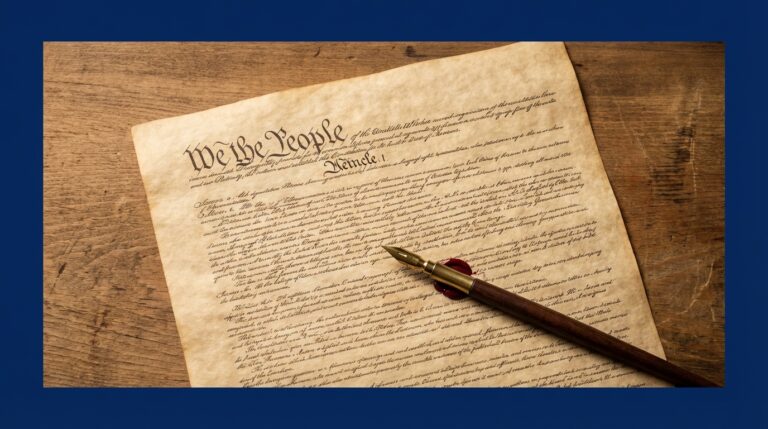
The summary here is grounded in official federal transcriptions and archival records. Where the article uses specific facts about amendment counts or dates, it attributes those facts to primary sources such as the National Archives and Congress.gov.
Quick answer: How many amendments are in the Constitution?
Short factual answer, amendments to the constitution 1 10
The United States Constitution has 27 ratified amendments as of 2026, a fact reflected in official federal transcriptions and archives National Archives amendments page. The full Constitution text is available from the National Archives The Constitution (National Archives).
The most recent amendment ratified is the 27th Amendment, adopted in 1992, which addresses limits on changes to Congressional pay; official records list its text and ratification date in full Congress.gov Constitution transcription.
The U.S. Constitution has 27 ratified amendments. The National Archives and Congress.gov host the authoritative transcriptions and ratification records for verification.
For readers who want the exact texts and state-by-state ratification dates, the National Archives and Congress.gov provide itemized transcriptions and ratification records for each amendment National Archives amendments page and our constitutional rights page for related content.
What counts as an amendment: definitions and legal difference from ordinary law

A constitutional amendment is a change to the Constitution that has completed both the proposal step and the ratification step specified in Article V of the Constitution; it is not the same as an ordinary federal statute, which is passed by Congress and becomes law under the standard legislative process Congress.gov Constitution transcription.
By contrast, ordinary statutes are subject to later repeal or modification by ordinary legislative votes, while constitutional amendments change the governing text itself and remain in force unless another amendment alters them; legal reference sources host readable transcriptions that show these distinctions clearly Legal Information Institute Constitution resource.

Major amendment milestones in U.S. history
The first ten amendments, commonly known as the Bill of Rights, were adopted together in 1791 and established foundational protections; authoritative summaries and the amendment texts are available through the National Archives National Archives amendments page.
After the Civil War, the Reconstruction amendments, the 13th through the 15th, were adopted between 1865 and 1870 and addressed slavery, citizenship, and voting rules; these milestones are documented in federal transcriptions and historical summaries Britannica amendments overview and in congressional historical records House history resources.
The 19th Amendment, ratified in 1920, extended voting rights to women, and the 26th Amendment, ratified in 1971, lowered the voting age to 18; readers can consult the official transcriptions for each amendment text and ratification date Congress.gov Constitution transcription.
Finally, the 27th Amendment, ratified in 1992, is the most recent addition and concerns changes to Congressional compensation; primary records and explanatory notes appear in the National Archives and related congressional resources National Archives amendments page.
Read the primary texts and ratification records on the federal sites mentioned
For the original amendment texts and the official ratification timeline, consult the primary federal transcriptions listed in this article to read each amendment in its full form and context.
How an amendment is proposed under Article V
Article V sets two ways to propose amendments: one is a two-thirds vote in both the House and the Senate, the other is a national convention called when two-thirds of state legislatures apply for one; both routes are described in official constitutional materials Congress.gov Constitution transcription and in the Library of Congress guidance Library of Congress guide on amendments.
The congressional route is the one most frequently used, but Article V preserves an alternative path that would convene delegates if the required number of state applications is reached; the Library of Congress provides an overview of those two methods and their historical treatments Library of Congress guide on amendments.
How amendments are ratified: state legislatures and conventions
Ratification requires approval by three quarters of the states, and that approval can occur either through votes in state legislatures or through state ratifying conventions; Congress specifies which ratification mode will apply when it proposes an amendment Congress.gov Constitution transcription.
Because the mode of ratification and the three quarters threshold are constitutional requirements, official repositories keep records of state actions and the dates on which states completed ratification, which is essential for verifying an amendment’s status National Archives amendments page.

Why there have been long gaps between amendments
The need for a broad national consensus, expressed as the three quarters ratification threshold and substantial proposal majorities, makes constitutional amendments comparatively rare and explains why multi-decade gaps occur between successful proposals National Constitution Center explanation and in other Constitution Center materials Constitution Center amendments overview.
The passage from the 26th Amendment in 1971 to the 27th Amendment in 1992 illustrates that political and procedural factors, not mere timing, shape when and whether proposals become ratified amendments; authoritative summaries discuss these patterns and the challenges they pose Britannica amendments overview.
The national convention route: prospects and concerns
Article V allows a national convention to be called on application of two thirds of state legislatures, but scholars and analysts note uncertainties about how such a convention would be organized and what rules would govern its scope Library of Congress guide on amendments.
Debates among experts focus on whether a convention could be limited to a single subject or might open broader revisions; the National Constitution Center and other institutions collect arguments and historical context that illustrate why the convention option raises procedural questions rather than settled legal outcomes National Constitution Center explanation.
A quick checklist for checking state amendment applications and ratification records
Check dates and official state records for accuracy
Common misconceptions and counting pitfalls
A frequent error is to count proposed amendments or advocacy measures as if they were ratified; only amendments that have completed ratification are part of the Constitution, and official lists distinguish proposals from ratified changes National Archives amendments page.

Another pitfall is confusing statutory or administrative reforms with constitutional amendments; statutes can change policy but do not alter the Constitution’s text unless an amendment is properly proposed and ratified under Article V Congress.gov Constitution transcription.
How to read an amendments list: text, ratification dates, and annotations
Official transcriptions and listings generally include the amendment text, the ratification date, and notes on state ratification actions; Congress.gov and the National Archives show these fields consistently so readers can verify wording and chronology Congress.gov Constitution transcription.
When interpreting a list, look for the recorded ratification date and any annotations about effective dates or state-by-state actions; scholarly and legal resources often provide explanatory notes to clarify how to cite and reference the official transcriptions National Archives amendments page.
A concise list of all 27 amendments with one-line summaries
The items below are the 27 ratified amendments in order, with brief neutral summaries and ratification years where applicable; these are the ratified changes and do not include unratified proposals or advocacy items. For full texts consult the official sources listed earlier National Archives amendments page.
Amendment I: Protects free speech, religion, press, assembly, and petition (1791).
Amendment II: Addresses the right to keep and bear arms (1791).
Amendment III: Restricts quartering of soldiers in private homes in peacetime (1791).
Amendment IV: Protects against unreasonable searches and seizures and sets warrant standards (1791).
Amendment V: Provides due process protections, double jeopardy and self-incrimination rules (1791).
Amendment VI: Guarantees speedy and public trial, counsel, and confrontation of witnesses (1791).
Amendment VII: Preserves the right to jury trials in civil cases under federal law (1791).
Amendment VIII: Prohibits excessive bail, fines, and cruel and unusual punishment (1791).
Amendment IX: Confirms that enumerated rights do not deny other retained rights to the people (1791).
Amendment X: Reserves powers not delegated to the federal government to the states or the people (1791).
Amendment XI: Limits suits against states by citizens of another state or foreign country (1795).
Amendment XII: Revises the presidential election procedure and the Electoral College process (1804).
Amendment XIII: Abolishes slavery and involuntary servitude except as punishment for a crime (1865).
Amendment XIV: Defines citizenship, equal protection, and due process at the state level (1868).
Amendment XV: Prohibits denying the vote based on race, color, or prior condition of servitude (1870).
Amendment XVI: Authorizes Congress to enact an income tax (1913).
Amendment XVII: Establishes direct election of U.S. Senators by popular vote (1913).
Amendment XVIII: Instituted prohibition of intoxicating liquors (ratified 1919, later superseded by Amendment XXI).
Amendment XIX: Prohibits denying the vote on the basis of sex, extending suffrage to women (1920).
Amendment XX: Sets terms and succession dates for federal elected officials and clarifies presidential succession timing (1933).
Amendment XXI: Repeals the Eighteenth Amendment, ending national prohibition (1933).
Amendment XXII: Limits presidents to two elected terms (1951).
Amendment XXIII: Grants District of Columbia electors in the Electoral College (1961).
Amendment XXIV: Prohibits poll taxes in federal elections (1964).
Amendment XXV: Clarifies presidential succession and procedures for incapacity (1967).
Amendment XXVI: Lowers the voting age to 18 in federal and state elections (1971).
Amendment XXVII: Limits congressional pay changes and was ratified in 1992 (1992).
What drives modern calls for new amendments
Contemporary amendment proposals often focus on structural and policy topics such as voting rules, campaign finance, and institutional reforms; constitutional centers and scholarly outlets catalogue the range of active ideas and explain the process obstacles they face National Constitution Center explanation.
Because the amendment process requires broad agreement across federal and state institutions, many modern calls for change emphasize either gradual statute-based reforms or movement-building aimed at meeting the Article V thresholds rather than relying solely on single-legislature action Library of Congress guide on amendments.
How citizens and state governments can participate in the amendment process
Citizens can engage by contacting their members of Congress, participating in public discussion, and working through state legislative processes to press for applications or ratification votes; authoritative procedural guidance is available from the Library of Congress and civic institutions Library of Congress guide on amendments.
State governments can formally apply for a convention under Article V or vote on proposed amendments through their legislatures or conventions; records of state applications and ratifications are maintained in federal and state archives and should be consulted for verification Congress.gov Constitution transcription.
Authoritative sources and how to cite them
The primary sources for amendment texts and ratification records are the National Archives and the Congress.gov transcription of the Constitution; both provide official wording and dates that reporters, students, and researchers should cite when referencing amendment language National Archives amendments page.
For accessible legal explanations and citation formats, the Legal Information Institute at Cornell Law School and the Library of Congress are reliable secondary resources that summarize constitutional provisions and offer guidance for academic and journalistic citation Legal Information Institute Constitution resource. See About for author background.
Key takeaways and where to learn more
There are 27 ratified amendments to the U.S. Constitution, Article V defines the proposal and ratification paths, and the official transcriptions at the National Archives and Congress.gov are the primary places to verify text and ratification dates National Archives amendments page. For recent commentary and updates see our news page.
For further reading on process issues and contemporary debates about conventions or new amendment proposals, the Library of Congress and the National Constitution Center provide balanced explanatory materials and historical context National Constitution Center explanation.
The Constitution has 27 ratified amendments.
Article V sets two proposal methods for amendments and requires ratification by three quarters of the states.
The National Archives and Congress.gov provide official transcriptions and ratification records for all amendments.
References
- https://www.archives.gov/founding-docs/amendments
- https://www.archives.gov/founding-docs/constitution
- https://constitution.congress.gov/
- https://www.law.cornell.edu/constitution
- https://www.britannica.com/topic/United-States-Constitution/Amendments
- https://history.house.gov/Exhibitions-and-Publications/BAIC/Historical-Data/Constitutional-Amendments-and-Legislation/
- https://constitutioncenter.org/interactive-constitution/amending-the-constitution
- https://constitutioncenter.org/the-constitution/amendments
- https://www.loc.gov/constitution/?fa=subject:amendments
- https://michaelcarbonara.com/contact/
- https://michaelcarbonara.com/issue/constitutional-rights/
- https://michaelcarbonara.com/about/
- https://michaelcarbonara.com/news/