
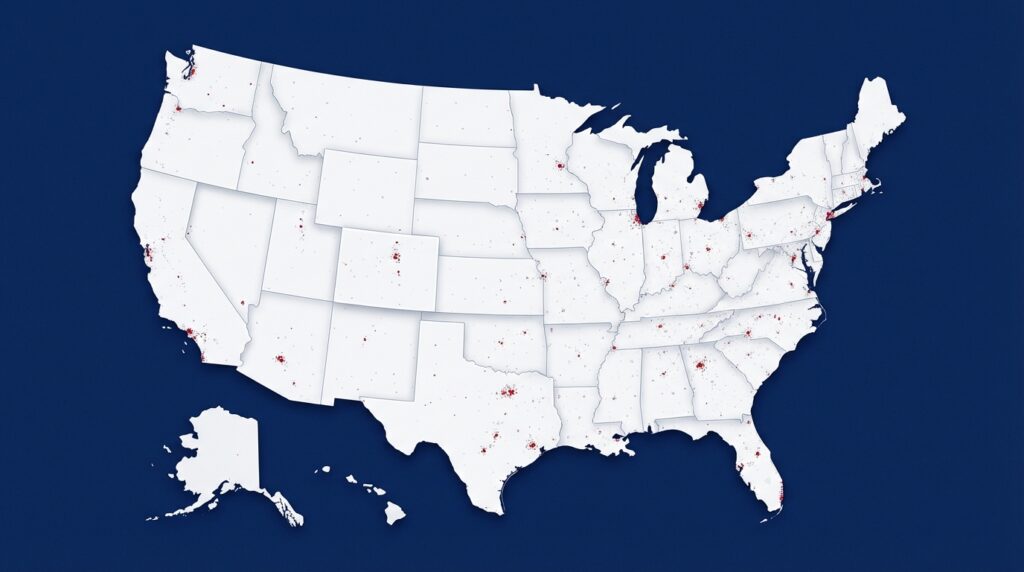
It explains the data sources, the basic methodology behind short-term estimates, and the main uncertainties to watch.
Short answer: a plain estimate for how many people live in the USA in 2026
One-sentence headline number
About 339 million people is a reasonable mid-2026 estimate for the United States, with a plausible range of roughly 337 to 341 million, according to recent Census-based extrapolations and international projections.
That central figure reflects an evidence-based extrapolation from the Census Bureau’s recent resident population totals and is intended as a short-term estimate rather than a final vintage number from the Census Bureau’s official 2026 release, which will be definitive when published Census annual estimates page.

Quick caveats and authoritative sources
Use the Census as the primary reference for official totals, and treat UN and World Bank series as independent cross-checks that usually sit within a few million of Census-based short-term totals World Population Prospects 2024.
Early midyear snapshots or live counters provide useful context, but the Census vintage release for 2026 will be the final public record for that year once published Population Clock.
Which sources matter and why: Census, Population Clock, UN and World Bank
What the Census Population Clock is and how it is used

The U.S. Census Bureau maintains a live Population Clock that offers an up-to-date resident estimate and that analysts often consult for immediate figures; for formal reporting, the annual resident population estimates and their methods are the authoritative baseline Population Clock.
Journalists and researchers typically cite the Census annual tables when they need a reproducible, dated figure because those tables show the vintage totals, release dates, and the methodology behind each national estimate Census annual estimates page (see the news index).
How UN and World Bank projections compare
The United Nations publishes country-level projections in its World Population Prospects, which are useful as an independent projection and international standard for comparison; the UN medium-variant numbers for 2026 tend to fall within a few million of short-term Census extrapolations World Population Prospects 2024.
World Bank population series draw on national and international sources and align closely with both the Census and UN short-term estimates, making them a helpful secondary validation when cross-checking 2026 totals World Bank population series and accessible summaries on World Population Review.
Stay informed with campaign updates and ways to help
For the most current live snapshot, check the Census Population Clock to see the Census Bureau's running resident estimate and note the access date for citation.
How analysts estimate the 2026 total: components of change and methods
Components of change: births, deaths, net international migration
Demographers build annual resident totals from three components: births, deaths, and net international migration, and the Census Bureau explains how these components combine in its national components tables National population components tables.
Recent vital statistics indicate that natural increase, the difference between births and deaths, has weakened in the most recent years while net international migration has become the larger contributor to U.S. growth, a shift that raises short-term uncertainty in projections National Vital Statistics System.

How annual growth rates are extrapolated from recent trends
Analysts start with the latest Census vintage or annual estimate as a baseline and apply observed recent growth rates from the components of change to estimate short-term totals; this is the method behind many midyear extrapolations to 2026 Census annual estimates page.
Because migration and late-reported vital events can change year-to-year, different reasonable assumptions about recent rates produce slightly different mid-2026 totals, so analysts present a central estimate plus a plausible range to reflect that uncertainty World Population Prospects 2024.
An evidence-based estimate and why published ranges differ
Central estimate and plausible range
Using the Census 2024 baseline and recent growth trends, an evidence-based central estimate for mid-2026 is about 339 million, with a plausible range of roughly 337 to 341 million to account for methodological differences and data uncertainty Census annual estimates page (see my homepage for updates).
This range is consistent with independent international projections from the UN, which provides a medium-variant projection for 2026 that typically sits within a few million of Census-based short-term extrapolations and so serves as a useful cross-check World Population Prospects 2024.
Quick checklist for checking 2026 population figures
Use the Census vintage table for final citation
Why the Census extrapolation and UN projection can differ
Differences come from the baseline vintage used, how migration is modeled, and the timing of vital statistics updates; the Census uses national administrative inputs and postcensal adjustments while the UN applies its own modeling choices, so short-term totals can diverge by a few million World Population Prospects 2024. See the CBO demographic outlook for additional context CBO Demographic Outlook.
Analysts and reporters should therefore label numbers clearly as “Census-based estimate” or “UN projection” and include the release or access date so readers know which vintage or projection was used Census annual estimates page.
Key uncertainties and what to watch in 2026
Timing and revision of vital statistics
One major uncertainty is late or revised reporting of births and deaths, since the Census and NCHS sometimes update counts after initial releases, and those revisions can change short-term totals when the Census issues a vintage release National Vital Statistics System.
When tracking the 2026 total, look for the Census vintage release and accompanying methodology notes, because the bureau documents revisions and clarifies what changed compared with earlier snapshots or extrapolations National population components tables (and consult the About page for author context).
Migration estimation and reporting lags
Net international migration has been the larger source of U.S. growth in recent years, and migration estimates often arrive with lags or are revised as border and administrative records are reconciled, which increases short-term projection uncertainty National population components tables.
Because migration policy and global flows can shift quickly, small year-to-year differences in migration assumptions can move a midyear population estimate by a few million and therefore expand the plausible range for 2026 estimates World Population Prospects 2024.
How to check, cite, and link the official 2026 number
Using the Population Clock and the annual estimates tables
To get the latest live snapshot, check the Census Population Clock and record the access date; for a formal citation, use the Census annual estimates tables and cite the specific table name and release date Population Clock (other live counters such as Worldometer can provide context).
When citing a published vintage total, include the exact table title, the publication or vintage year, and the access date or release date so readers can locate the same source later Census annual estimates page.
Citation best practices for journalists and students
Prefer primary sources: use the Census table or Population Clock for resident totals, and label UN or World Bank figures as independent projections when you include them for comparison World Population Prospects 2024.
When publishing a number, note whether it is a Census vintage, a Population Clock snapshot, or an independent projection, and avoid implying that projections are final vintage totals until the Census publishes the 2026 release World Bank population series.
Common mistakes and how to avoid them
Mixing projections and official estimates
A common mistake is treating a Population Clock snapshot or a UN projection as a finalized Census vintage estimate; instead, label the figure clearly and cite the source and date so readers understand the status of the number Population Clock.
Another error is rounding without attribution or removing the range; if you round, state the rounding approach and keep the plausible range visible so readers can see the underlying uncertainty Census annual estimates page.
Short-term changes can reflect reporting lags or methodological updates rather than sudden demographic shifts, so avoid dramatic interpretation and instead check the components of change to see whether births, deaths, or migration drove the movement National Vital Statistics System.

For careful reporting, compare multiple authoritative series and explain methodological differences instead of presenting a single number as definitive World Population Prospects 2024.
Takeaway: what the best evidence says now and next steps for updates
One-paragraph summary
The best current evidence supports a central mid-2026 estimate near 339 million people in the United States, with a plausible range of about 337 to 341 million based on Census extrapolation and independent UN validation, and the Census Bureau’s 2026 vintage release will be the definitive public record when it appears Census annual estimates page.
Where and when to look for final official numbers
Monitor the Census Population Clock for live updates and check the Census annual estimates tables for the official vintage; record the table title and release date for proper citation and treat early midyear figures as provisional until the Census publishes the 2026 vintage Population Clock.
The U.S. Census Bureau is the primary official source for national population totals; use the Census annual estimates tables for vintage totals and the Population Clock for live snapshots.
They use independent modeling choices and different baselines, so short-term projections can diverge slightly; label such numbers as projections and cite the source.
The Census Bureau's official 2026 vintage release will be the definitive public record; until then, midyear estimates and projections are provisional.
Until the official vintage appears, treat midyear estimates and projections as provisional and label your source clearly.
References
- https://www.census.gov/data/tables/time-series/demo/popest/2020s-national-total.html
- https://www.census.gov/popclock/
- https://population.un.org/wpp/
- https://data.worldbank.org/indicator/SP.POP.TOTL?locations=US
- https://michaelcarbonara.com/contact/
- https://worldpopulationreview.com/countries/united-states
- https://www.cdc.gov/nchs/nvss/index.htm
- https://michaelcarbonara.com/news/
- https://www.census.gov/data/tables/time-series/demo/popest/2020s-national-components.html
- https://michaelcarbonara.com/
- https://www.cbo.gov/system/files/2026-01/61879-Demographic-Outlook.pdf
- https://www.worldometers.info/world-population/
- https://michaelcarbonara.com/about/



