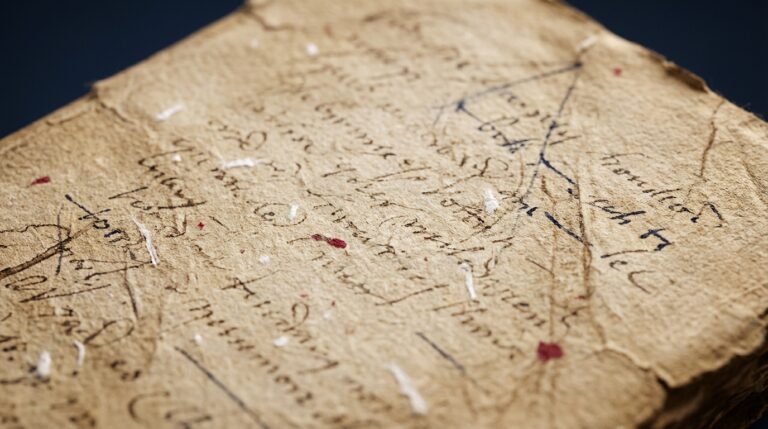
The treatment is source-centered and cautious about causal claims. Where possible the article relies on primary transcriptions and standard documentary collections so readers can follow the evidence themselves.
anti federalist bill of rights: what the Anti-Federalists argued
The phrase anti federalist bill of rights sums a central claim from the ratification era: Anti-Federalists insisted that the proposed Constitution must include explicit protections for individual liberties and clearer limits on federal authority, or risk concentrating power in a distant government Avalon Project Anti-Federalist collection.
Anti-Federalist critics highlighted a set of specific risks, including the lack of an express bill of rights and the possibility that provisions authorizing federal powers might be read broadly to justify standing armies or encroachments on state authority, concerns that appear across pamphlets and convention speeches Library of Congress Bill of Rights primary documents.

Historians and primary-source collections link the Anti-Federalists extra attention to rights with later amendment proposals, while treating direct causal claims carefully; the sequence from debate to amendment is documented but scholars note interpretive limits National Constitution Center essay on why the Bill of Rights was added.
Who were the Anti-Federalists? Voices and pamphlets
The Anti-Federalist movement included anonymous pamphleteers who wrote under names such as Brutus and Cato, and named political figures who spoke in state conventions or published essays, including Patrick Henry and George Clinton Avalon Project Anti-Federalist collection.
These voices appeared in pamphlets, newspapers, and records of ratifying convention speeches, and many of those texts are preserved in modern repositories that scholars consult for primary evidence Library of Congress Bill of Rights primary documents.

Key Anti-Federalist arguments and common themes
Concentration of federal power
Anti-Federalists argued the Constitution concentrated powers in a distant federal government that might override state authority and local liberties, a theme repeated in pamphlets and convention testimony Avalon Project Anti-Federalist collection.
They singled out clauses such as the necessary and proper clause and the supremacy clause as potential sources of broad federal authority, and they warned that without express limits those clauses could be used to expand national power in ways authors found dangerous Library of Congress Bill of Rights primary documents.
Demand for explicit rights and limits
Across their writings Anti-Federalists consistently demanded explicit protections for freedom of speech, assembly, trial protections, and limits on military powers; their aim was to make guarantees visible in constitutional text rather than rely solely on structural checks National Archives Bill of Rights transcription.
These demands were sometimes framed as procedural protections and sometimes as broader assertions of state sovereignty, a diversity that scholars emphasize when reviewing Anti-Federalist arguments Oxford Research Encyclopedia Bill of Rights entry.
Stay informed about campaign updates and civic resources
For readers who want to follow primary texts, consult the documentary collections mentioned in this article to read pamphlets and convention records directly.
How Anti-Federalist pressure led to amendment proposals in Congress
State ratifying conventions and widely read Anti-Federalist pamphlets created political pressure that Federalists could not ignore, producing a climate in which demands for explicit rights became a central topic of public debate National Constitution Center essay on why the Bill of Rights was added.

Timeline: from the ratification debates to the 1791 ratification
1787 Constitutional convention drafts the document that will be submitted to the states for ratification; the subsequent public discussion spills into 1788 with vigorous ratification debates across state conventions Avalon Project Anti-Federalist collection.
1788 State ratifying conventions proceed and in many cases voters and delegates express concern about the absence of an explicit bill of rights; those debates form the immediate political backdrop for later congressional action Library of Congress Bill of Rights primary documents.
Anti-Federalist objections to the lack of explicit rights and to broad federal powers created public and political pressure that helped persuade Congress to propose a package of amendments in 1789, which were ratified as the Bill of Rights in 1791; precise textual origins for each amendment often require detailed archival research.
1789 The new Congress considers amendment proposals; James Madison drafts and introduces a set of amendments in the House as a measured response to the ratification debates National Archives Bill of Rights transcription.
1791 State legislatures complete the ratification process for the first ten amendments, and those amendments become the Bill of Rights as commonly cited today National Constitution Center essay on why the Bill of Rights was added.
Which Anti-Federalist ideas appear in specific amendments?
Several amendments reflect concerns raised by Anti-Federalist writers, for example the First Amendment protections for speech and assembly and the Tenth Amendment emphasis on residual state authority, all of which echo themes in Anti-Federalist critiques National Archives Bill of Rights transcription.
At the same time, historians caution that drawing a direct line from a single pamphlet to a single amendment is often interpretive; shared language and timing suggest influence but specific textual origins require detailed archival work Oxford Research Encyclopedia Bill of Rights entry.
Sources and archives to consult: National Archives, Library of Congress, Avalon Project
The National Archives provides a transcription of the Bill of Rights and related founding documents that is useful for verifying amendment text and ratification dates National Archives Bill of Rights transcription.
The Library of Congress hosts primary-document collections and guides for researchers seeking pamphlets and convention records, including searchable transcriptions and contextual descriptions Library of Congress Bill of Rights primary documents.
quick search steps for locating Anti-Federalist pamphlets
start with author then narrow by convention
The Avalon Project at Yale Law School offers a curated collection of Anti-Federalist pamphlets and ratification debate materials that is convenient for classroom use and citation Avalon Project Anti-Federalist collection.
Common misunderstandings and pitfalls when reading Anti-Federalist material
One common mistake is to treat the Anti-Federalists as a single, uniform movement; scholars highlight striking ideological diversity, from narrow procedural demands to broad assertions of state power Oxford Research Encyclopedia Bill of Rights entry.
Another pitfall is to assume a specific pamphlet directly produced a specific amendment; while influence is plausible, proving a one-to-one causal link usually requires careful archival comparison of congressional debates and convention records Avalon Project Anti-Federalist collection.
How historians assess Anti-Federalist influence today
Most contemporary scholars see Anti-Federalist pressure as a decisive factor in producing an explicit Bill of Rights, though they debate the degree to which single pamphlets determined particular amendment language National Constitution Center essay on why the Bill of Rights was added.
That assessment rests on primary documents preserved in major repositories and on syntheses that compare pamphlet themes with state convention outcomes and congressional discussion Library of Congress Bill of Rights primary documents.
Practical tips for reading Anti-Federalist texts and using them in research

Cross-reference pamphlet arguments with state ratifying convention records and the Congressional record to trace whether specific lines of argument surfaced in legislative debate or amendment drafts National Archives Bill of Rights transcription.
Case studies: Brutus, Cato, and Patrick Henry in context
Brutus and Cato represent a pamphleteering style that raised constitutional and liberty concerns in print, while Patrick Henry is an example of a public orator who made similar objections in state convention settings Avalon Project Anti-Federalist collection.
These case studies show different argument styles: sustained printed essays that circulated widely versus speeches that shaped local political choices, and both forms fed into the broader demand for explicit rights protections Encyclopaedia Britannica Anti-Federalists overview.
How to use primary sources in classroom assignments or reporting
When assigning readings, pair a short Anti-Federalist pamphlet with a Federalist response and ask students to identify shared concerns and differences, citing transcriptions from the Avalon Project or the Library of Congress Avalon Project Anti-Federalist collection.
For reporting, cite the transcription source and avoid paraphrasing rhetorical claims as settled causal facts; present them as attributed arguments and note where scholars point to open questions National Archives Bill of Rights transcription.
Quick comparison: Federalist versus Anti-Federalist views on rights
Federalists tended to rely on structural checks and the design of national institutions to protect liberties, whereas Anti-Federalists emphasized explicit textual guarantees and stronger state authority Avalon Project Anti-Federalist collection.
These contrasting approaches created the political space in which a compromise took shape: Federalists agreed to consider amendments and Anti-Federalist pressure pushed the conversation toward explicit protections National Constitution Center essay on why the Bill of Rights was added.
Conclusion: what we can reliably say about Anti-Federalists and the Bill of Rights
Evidence from pamphlets, convention records, and congressional proceedings supports the judgment that Anti-Federalist pressure was decisive in producing an explicit Bill of Rights, while direct attribution of specific amendment language to a single pamphlet often remains interpretive National Archives Bill of Rights transcription.
Readers who want to verify claims should consult the National Archives, Library of Congress, and Avalon Project transcriptions and follow the archival leads discussed in this article Library of Congress Bill of Rights primary documents and first ten amendments.
They wanted explicit constitutional protections for individual liberties and clearer limits on federal power, rather than relying only on institutional checks.
Scholars generally agree Anti-Federalist pressure was decisive in creating political space for amendments, though direct links between single pamphlets and specific amendment text are debated.
Major online repositories such as the Avalon Project, the Library of Congress, and the National Archives provide transcriptions and scanned documents of Anti-Federalist pamphlets and ratification debates.
This overview aims to be a reliable starting point for students, reporters, and civic readers who want to read the sources behind major scholarly interpretations.
References
- https://avalon.law.yale.edu/subject_menus/antifed.asp
- https://www.loc.gov/rr/program/bib/ourdocs/billofrights/
- https://michaelcarbonara.com/contact/
- https://constitutioncenter.org/blog/why-was-the-bill-of-rights-added
- https://www.archives.gov/founding-docs/bill-of-rights
- https://oxfordre.com/americanhistory/view/10.1093/acrefore/9780199329175.001.0001/acrefore-9780199329175-e-xxx
- https://www.britannica.com/topic/Anti-Federalists
- https://michaelcarbonara.com/issue/constitutional-rights/
- https://michaelcarbonara.com/bill-of-rights-full-text-guide/
- https://michaelcarbonara.com/bill-of-rights-1-10/
- https://teachingamericanhistory.org/document/brutus-i/
- https://history.nycourts.gov/about_period/antifederalist-papers/
- https://oll.libertyfund.org/pages/1787-brutus-essay-ii-pamphlet