This article explains the procedural steps behind the label, points to primary sources you can check, and outlines why historians still discuss editorial choices and political context when interpreting the early amendment process.
Quick answer: Why the Bill of Rights means the first ten amendments
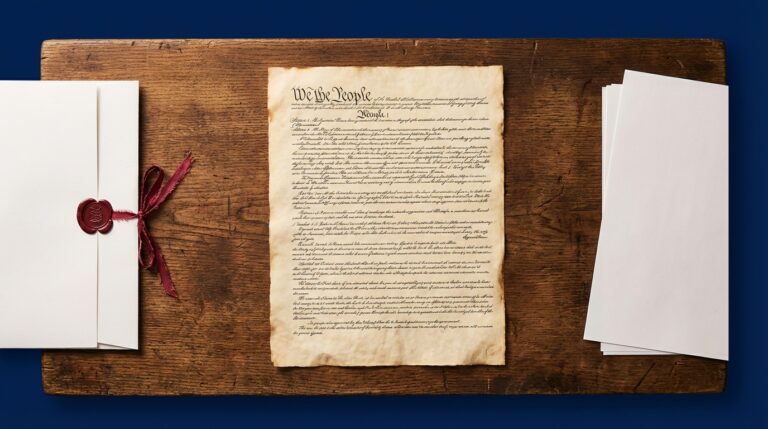
The phrase “Bill of Rights” refers to the first ten amendments because those were the amendments Congress transmitted and that the states completed by ratification in 1791, creating the set now known by that name, as shown in official transcripts and the ratification roll National Archives transcript of the Bill of Rights.
Congress had approved a set of proposed amendments in 1789 and sent a group of twelve to the states; ten were ratified in time and are the ones commonly called the Bill of Rights Avalon Project collection of drafts and proposals.
Read on for the historical steps that turned Madison’s proposals and congressional edits into the ten amendments that the public and institutions refer to as the Bill of Rights.
Join Michael Carbonara's campaign updates and news
What people mean by ‘Bill of Rights’ – definition and historical context
In common and institutional use, the Bill of Rights names the first ten amendments to the Constitution, adopted together through the 1789 to 1791 amendment process, rather than a legal cap on later amendments National Archives transcript of the Bill of Rights.
The label is a historical descriptor tied to the pattern of congressional transmission and state ratification, and institutional collections such as the Library of Congress present the documents and background that explain why those ten are grouped under that phrase Library of Congress Bill of Rights collection. Learn more about Michael Carbonara
Why calls for a bill of rights mattered during the 1787-1788 ratification debates
During ratification, Anti-Federalist delegates and state conventions frequently demanded explicit individual protections, arguing the new Constitution needed clearer limits on federal power; these objections are visible in ratifying-convention records and shaped later promises to add protections Library of Congress primary documents and context.
Those calls were an important political factor: several states approved the Constitution with the understanding that amendments would follow to secure individual rights, a pattern scholars and institutional summaries identify as key to the early amendment efforts CRS historical background and ratification overview.

James Madison’s role: drafting and proposing amendments in 1789
Madison prepared and presented a set of amendments to Congress in 1789, in part responding to the ratification debates and the demand for explicit protections; his drafts and related exchanges are preserved in documentary collections Avalon Project drafts and proposals.
Madison’s choices reflected both principle and political calculation: he had earlier opposed a bill of rights in general terms but later framed amendments as a way to fulfill promises made during state ratifying conventions and to stabilize the new government Avalon Project drafts and proposals.
Because Congress transmitted a set of proposed amendments drawn from Madison's 1789 proposals and the states ratified ten of them by 1791, producing the group now commonly called the Bill of Rights.
Madison’s 1789 proposals were the starting point for what became the Bill of Rights; the next section explains how Congress edited them before sending a set to the states.
How Congress edited the proposals and transmitted twelve amendments to the states
In 1789 Congress reviewed Madison’s proposals, debated wording and consolidation, and ultimately approved twelve proposed amendments to transmit to the states in December of that year, a process visible in congressional records and transcriptions Avalon Project on congressional drafting and transmitted amendments. The Senate also provides a concise summary of that submission Congress Submits the First Constitutional Amendments to the States.
Congress’s edits combined some related suggestions and adjusted language to address concerns about overlap or redundancy with the Constitution’s structure, reasons evident in the drafting record and modern summaries of the congressional process National Archives Bill of Rights transcription.

Ratification by the states: how ten received approval by 1791
The constitutional amendment process requires approvals by the states; by 1791 ten of the twelve amendments transmitted by Congress had gained the necessary state ratifications and thus became part of the Constitution, a timeline verified in the official ratification roll and archival records National Archives ratification roll and transcript. For related site coverage see the news page.
State ratifications occurred at different times and in different conventions or legislatures, and institutional transcriptions lay out the order and dates that led to the ten amendments being treated as adopted by 1791 Avalon Project ratification timeline and documents.
The two exceptions: the apportionment proposal and congressional compensation
Of the twelve transmitted amendments, two did not achieve timely ratification: one addressed congressional apportionment and the other addressed congressional compensation, and both stood apart from the ten that were ratified in 1791 Avalon Project on the twelve transmitted amendments.
The compensation provision later reemerged and became the 27th Amendment after a long ratification gap, while the apportionment proposal remains unratified, a history traced in constitutional summaries and institutional accounts National Constitution Center review of the pay amendment and the apportionment item. The House history provides additional context on the Twenty-seventh Amendment The Twenty-seventh Amendment | US House of Representatives.
Quick primary source checklist for readers
Use these sources to verify key claims
Why some proposed items were dropped or consolidated
Scholarly work finds several practical reasons why Congress and later practice omitted or merged items: redundancy, overlapping language, and drafting economy all played roles, as scholars summarize when analyzing the editorial choices of 1789 CRS overview and scholarly context.
Historians also note political compromise: members of Congress balanced differing views and sought wording that could secure state support, so some proposals were folded together or rephrased to increase the chances of ratification Oxford Research Encyclopedia discussion of scholarly perspectives.
Scholarly debates: what remains uncertain about congressional choices

While there is agreement on the basic procedural steps, scholars disagree about specific motives behind editorial choices, including how much strategy versus principle guided particular consolidations or wording changes; summaries of these debates present the range of interpretations CRS historiography and contested questions.
These debates matter for historians but do not change the procedural explanation for why the Bill of Rights equals the first ten amendments: Congress sent a set, the states ratified ten, and that combination gave rise to the familiar label Oxford Research Encyclopedia perspectives.
Common misunderstandings about the Bill of Rights
A frequent misunderstanding is that the Bill of Rights is the only set of constitutional protections; in reality later amendments also affect rights and governance, so the label is historical shorthand rather than a constitutional ceiling on amendments National Archives explanation and documents.
Another misconception is that the ten amendments were intended to settle every rights question; institutional histories and primary records show the framers and later actors expected additional constitutional developments and legal interpretation would refine protections over time Library of Congress contextual materials.

At the same time, scholars and educators remind readers not to let the label obscure the role of later amendments, judicial interpretation, and statutory law in shaping rights, a point emphasized in modern overviews of constitutional development CRS discussion of modern implications.
Primary sources and how to check them yourself
Key sources to consult are the National Archives transcription of the Bill of Rights, the Library of Congress primary documents collection, and the Avalon Project drafts and proposals; these resources let readers verify congressional transmissions and the ratification timeline National Archives transcript for direct verification.
Those institutional collections include documentary evidence such as Madison’s proposals, congressional records, and the ratification roll, which are the primary basis for the procedural account of how the first ten amendments became known as the Bill of Rights Avalon Project collection of drafts and proposals.
The 27th Amendment and how it changed the story
The later ratification of the compensation provision as the 27th Amendment in 1992 shows that the amendment process can span centuries, and constitutional histories track how that particular proposal resurfaced and gained ratifications long after 1791 National Constitution Center account of the 27th Amendment.
This postscript illustrates that while the Bill of Rights refers to the first ten ratified amendments, other transmitted proposals can have separate trajectories and sometimes reappear in later debates or ratification efforts Avalon Project records of the original transmitted amendments.
Conclusion: a procedural origin with lasting impact
The short explanation is procedural: the term Bill of Rights has stuck to the first ten amendments because Congress transmitted a set of amendments after Madison’s 1789 proposals and the states ratified ten of them by 1791, producing the group now called the Bill of Rights National Archives summary and transcription. See the congressional essay for another authoritative overview Intro.6.2 Bill of Rights (First Through Tenth Amendments).
For readers who want to follow up, the National Archives, the Library of Congress, and the Avalon Project provide the primary documents and modern transcriptions that underlie this account and that let users review the drafts, congressional edits, and ratification record in detail Library of Congress Bill of Rights collection. See the site’s constitutional rights hub for related material.
Congress transmitted twelve proposed amendments in 1789; ten received the state ratifications by 1791 and thus became the set commonly called the Bill of Rights.
Later amendments affect rights and governance, but the label 'Bill of Rights' historically denotes the ten amendments ratified together in the 1789 to 1791 process.
Yes. The congressional compensation provision transmitted in 1789 was ratified in 1992 as the 27th Amendment, showing the amendment process can span long time periods.
For deeper reading, consult the National Archives, the Library of Congress, and the Avalon Project collections referenced in this article.
References
- https://www.archives.gov/founding-docs/bill-of-rights-transcript
- https://avalon.law.yale.edu/18th_century/const03.asp
- https://www.loc.gov/collections/bill-of-rights/about-this-collection/
- https://crsreports.congress.gov/product/pdf/R/R46118
- https://oxfordre.com/americanhistory/view/10.1093/acrefore/9780199329175.001.0001/acrefore-9780199329175-e-99
- https://constitutioncenter.org/blog/why-the-bill-of-rights-has-ten-amendments
- https://michaelcarbonara.com/contact/
- https://www.senate.gov/about/origins-foundations/senate-and-constitution/congress-submits-first-amendments-to-states.htm
- https://michaelcarbonara.com/news/
- https://history.house.gov/HistoricalHighlight/Detail/35665
- https://michaelcarbonara.com/about/
- https://constitution.congress.gov/browse/essay/intro-3-2/ALDE_00000681/
- https://michaelcarbonara.com/issue/constitutional-rights/