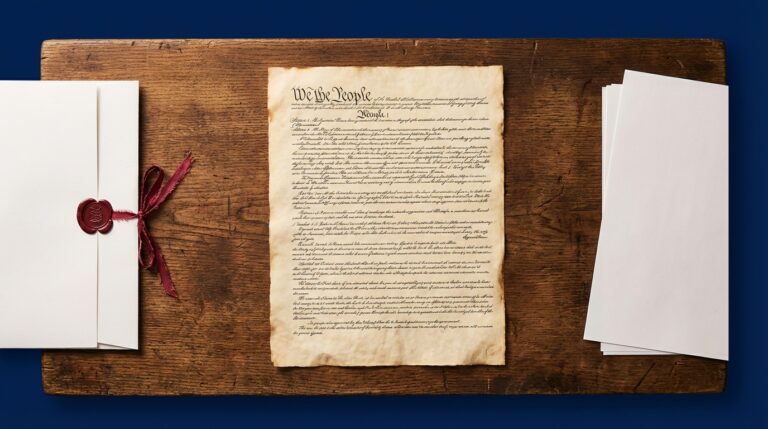
You will find step by step advice on which primary sources to consult, how to use annotated guides, and what to check when you need current legal tests. The approach is source first and practical for voters, students, journalists, and civic readers.
What the Bill of Rights is and why it matters
Definition and basic facts, bill of rights
The bill of rights is the collective name for the first ten amendments to the U.S. Constitution, ratified and made effective in 1791. For exact wording readers should consult the transcription held by the National Archives, which preserves the original text.
These ten amendments were added early in the republic to limit federal power and to protect certain individual liberties as a check on central authority, a context preserved in primary documents and early commentary held by the Library of Congress.
Join the campaign to stay informed about civic matters and candidate updates
Read the verbatim text and authoritative transcriptions below to check exact wording and historical notes.
Even though interpretation has evolved through centuries of court decisions, the verbatim text itself has not changed since ratification, so quoting the primary transcription is essential when precision matters.
Why this matters today is practical: the amendments set the baseline language courts use when testing statutes and executive actions for constitutional limits, and scholars still return to the original text and early records to trace how those tests developed.
Why the first ten amendments were added
During ratification of the Constitution many states and leaders called for explicit protections of certain rights, prompting the Framers and the new Congress to draft and propose ten amendments that would be submitted to the states for ratification.
The Library of Congress holds primary-source material that documents debates, proposals, and early ratification records which explain the political and legal pressure that produced the Bill of Rights.
Where to read the full Bill of Rights verbatim
Primary sources to consult

For a canonical, copyable transcription of the full Bill of Rights, the National Archives provides a faithful transcription of the first ten amendments suitable for quoting in research and reporting.
Congress.gov also publishes the Constitution text alongside the Constitution Annotated, which pairs the transcription with clause level notes and citations to important cases.
How to cite the original text
When accuracy matters, quote the National Archives transcription and cite it directly; that transcription is treated as the authoritative wording for the amendments.
For legal or academic citation, include the amendment number, the source transcription, and a URL to the primary transcription; use Congress.gov for complementary contextual citation when you need clause level references.
Clause-by-clause guide: the ten amendments explained
First Amendment overview
The First Amendment protects freedoms including speech, religion, press, assembly, and petition; courts parse these protections through doctrinal tests that evolve over time, and clause level explanations are available in annotated guides.
For a clause-by-clause explanation and citations to leading cases consult the Constitution Annotated and plain language summaries from Cornell LII.
Second Amendment overview
The Second Amendment addresses the right to keep and bear arms; modern scholarship and major court decisions have shaped whether that right is read as individual or collective, as summarized in annotated sources and case summaries.
Primary case summaries provide context on how courts weigh regulations against the amendment text.
Third Amendment overview
The Third Amendment limits the quartering of soldiers in private homes in peacetime and is rarely the subject of modern litigation, but it remains part of the original ten protections and the primary text is the reference point for any inquiry.
Annotated guides note its historical context while showing that it has had limited practical application in recent jurisprudence.
Fourth Amendment overview
The Fourth Amendment protects against unreasonable searches and seizures and establishes the warrant requirement; courts interpret the amendment through tests about expectation of privacy and reasonableness.
To understand current standards and exceptions, follow clause summaries that cite controlling Supreme Court opinions and statutory rules.

Fifth Amendment overview
The Fifth Amendment includes protections against self-incrimination, double jeopardy, and it requires due process of law; it also contains the Takings Clause which limits government seizures of private property.
Annotated sources are useful for tracing how each clause has been applied in criminal and civil contexts over time.
Sixth Amendment overview
The Sixth Amendment guarantees criminal defendants rights such as a speedy and public trial, an impartial jury, the right to confront witnesses, and the assistance of counsel.
Because procedural protections are frequently litigated, clause level notes and case citations help explain how those rights operate in practice.
Seventh Amendment overview
The Seventh Amendment preserves the right to a jury trial in certain civil cases and sets boundaries on reexamining facts found by a jury; it remains important in understanding the role of juries in civil litigation.
For modern application, consult annotated references that point to relevant federal statutes and case law.
Eighth Amendment overview
The Eighth Amendment prohibits excessive bail and fines and forbids cruel and unusual punishment; courts have interpreted what counts as excessive or cruel through evolving standards and constitutional tests.
Readers should pair the amendment text with summaries of controlling opinions to see how limits are applied in specific types of cases.
Ninth and Tenth Amendments overview
The Ninth Amendment notes that the enumeration of certain rights does not deny others retained by the people, while the Tenth reserves powers not delegated to the federal government to the states or the people; both play roles in federalism debates and in arguments about unenumerated rights.
Annotated guides and historical documents help explain how these provisions were intended and how courts have treated their scope over time.
How modern courts interpret the Bill of Rights
Where to find authoritative case summaries
Supreme Court decisions and their summaries are pivotal to understanding how the amendments apply in modern contexts; resources like the Constitution Annotated collect clause level citations to those opinions and explain doctrinal tests. See our news page for commentary.
Case summary sites specialize in accessible explanations of major rulings and of how specific tests are applied across fact patterns.
Quick reference to interactive case and annotation tools
Use these tools together for context
Examples of evolving doctrine
Several amendments have seen substantial doctrinal development, for example the Second Amendment where the individual rights reading is explained in major case summaries and educational explainers.
To follow doctrinal changes, read case summaries and then check the linked controlling opinions for precise holdings and legal tests.
Using annotated guides: Constitution Annotated and Cornell LII
What each guide offers
The Constitution Annotated provides clause level explanations and extensive citations to Supreme Court decisions, making it a valuable reference when you need to track the legal tests courts apply to specific language in the amendments.
Cornell Law School’s Legal Information Institute offers plain language summaries and links to relevant statutes and cases, which helps readers who want a clearer initial explanation before diving into primary opinions.

How to use them together
Start with the verbatim text, consult the Constitution Annotated for doctrinal history and key citations, and use Cornell LII for accessible summaries and statutory links so you can find primary cases and related laws.
Cross checking annotations against the original text and recent opinions helps prevent misreading or paraphrasing that alters legal meaning. See our constitutional-rights hub.
Historical background: drafting and early adoption
Key framers and debates
Demand for explicit rights grew during state ratification debates and certain leaders pushed for amendments as a condition of support for the Constitution; the Library of Congress preserves letters and drafts that trace those conversations.
Those primary documents show the political compromises and the types of protections framers prioritized, which helps explain the structure of the first ten amendments.
Ratification process and early interpretation
After Congress proposed the amendments to the states, ratification completed the process and the amendments became part of the Constitution in 1791; early state reactions and writings recorded at the time shed light on how the amendments were first understood.
Consulting original drafts and correspondence in primary collections is especially useful when scholars or lawyers seek to place a clause in its historical context.
Common misconceptions and mistakes when reading the Bill of Rights
Misunderstanding incorporation and state applicability
One common error is treating the original text as if it always applied to the states; incorporation of rights against states occurred over time through doctrine and cases documented in annotated guides.
Annotated resources and case citations show which clauses have been incorporated and how courts reached those conclusions, so they are the correct starting point for questions about state applicability.
Confusing slogans with textual provisions
Another frequent mistake is treating slogans or paraphrases as if they were the verbatim amendment text; when wording matters you should quote the primary transcription rather than a paraphrase.
Paraphrases can be useful for quick explanation, but avoid them in any context that requires legal precision or exact citation.
Practical examples and scenarios
How to check what the text says
If you have a concrete question, for example about free speech online, identify the relevant amendment text, quote the precise clause from the primary transcription, and then move to annotated summaries to find controlling cases that applied the clause to similar facts.
Using clause level notes in the Constitution Annotated will show the doctrinal framework courts use to analyze speech claims and direct you to the most relevant opinions.
Finding relevant case law for a real question
Begin by searching the Constitution Annotated for the clause and keywords related to your fact pattern, then use case summaries on sites that catalogue opinions to read the holdings and tests those courts applied.
After you identify relevant opinions, read the controlling Supreme Court text and check any linked statutes to understand how courts combined constitutional principles with statutory rules.
How to verify current legal status: tests, limits, and recent cases
Checking for recent Supreme Court rulings
To verify current doctrine, consult the Constitution Annotated for recent updates and use case summary sites for accessible explanations of how new rulings altered legal tests or limits.
When a recent opinion refines a doctrinal standard, the annotated guides update their entries with citations that point to the exact passages in the opinions where tests are articulated.
Interpreting tests and doctrinal standards
Doctrinal terms such as strict scrutiny or rational basis describe the level of judicial review and are explained in annotated entries so readers can see how a test affects the outcome of constitutional challenges.
Understanding those terms and the practical tests courts apply is essential before drawing conclusions about how a law will fare under constitutional challenge.
When to consult a lawyer or primary legal sources
Limits of summaries and encyclopedias
Summaries and annotated guides are educational and useful for research, but they are not a substitute for legal advice in a specific case; a licensed attorney can apply the law to unique facts and offer counsel tailored to a dispute.
For high stakes situations like criminal charges, complex regulatory compliance questions, or litigation strategy, rely on licensed counsel and on primary opinions rather than encyclopedic summaries.
Situations requiring legal advice
Examples that typically require a lawyer include a criminal indictment, a civil suit that risks large penalties, or state and federal regulatory actions that could impose fines or restrictions on conduct.
In those contexts use the annotated guides only to prepare questions for counsel and to identify key cases and statutory references you will want your lawyer to review.
Further reading and primary sources list
Direct links to key authoritative sources
Start with the National Archives transcription for the verbatim text and use Congress.gov’s Constitution Annotated for clause level citations and explanatory notes.
Cornell LII provides plain language summaries and links to statutes and cases, while resources such as Oyez and the National Constitution Center offer accessible case summaries and interactive explanations.
Recommended annotated guides and case collections
Use the Constitution Annotated for detailed clause level history and citations, Cornell LII for approachable summaries, and case summary sites for concise explanations of major rulings and holdings.
For historical research consult Library of Congress collections of drafts, letters, and early commentary to see how the amendments were proposed and ratified.
Quick reference: the text in one place
Copyable transcription guidance
When copying or quoting the Bill of Rights, use the National Archives transcription as your source for accurate wording and include a citation to the transcription when publishing or filing work that requires precision.

Include amendment numbers and the source transcription in citation lines and link to the primary transcription for readers who need to confirm the exact words.
How to quote accurately
Do not paraphrase when exact language matters; instead quote the transcription verbatim and cite the source so readers can verify the context and punctuation used in the original text.
Remember that the application of the text can change through court decisions even when the words remain the same, so pair verbatim quotes with recent annotated citations when accuracy matters.
Common questions readers ask about the Bill of Rights
Short answers and where to read more
Questions about whether provisions apply to states, how courts test restrictions, and where to find full texts are best answered by combining the primary transcription with the Constitution Annotated and Cornell LII for doctrine and plain language support.
For the most current legal posture check recent Supreme Court opinions and their summaries after reading the clause in the primary transcription.
Pointers to authoritative explanations
The Constitution Annotated and Cornell LII are the two go to annotated resources, while Oyez and the National Constitution Center provide user friendly case summaries and interactive discussions.
Use those resources together to move from the verbatim text to cited opinions and to recent doctrinal updates.
Conclusion: how to use this guide responsibly
Read the verbatim text first, then consult the Constitution Annotated for clause level history and citations, and use Cornell LII for plain language summaries; together these steps form a repeatable workflow for careful research. See About.
When describing historical context or current doctrine attribute claims to primary documents or annotated guides and consult counsel for any legal advice required by a specific fact pattern.
Some amendments have been applied to the states over time through incorporation doctrine; annotated guides document which clauses have been incorporated and explain the controlling cases.
Use the National Archives transcription for the verbatim wording and Congress.gov for complementary context and clause level notes.
Consult a licensed attorney for high stakes matters such as criminal charges, major civil suits, or complex regulatory compliance where tailored legal advice is required.
This guide is intended to help readers find reliable sources and to encourage careful citation of primary materials when exact wording matters.
References
- https://www.archives.gov/founding-docs/bill-of-rights-transcript
- https://constitution.congress.gov/
- https://constitutioncenter.org/bill-of-rights-resources
- https://michaelcarbonara.com/news/
- https://michaelcarbonara.com/issue/constitutional-rights/
- https://michaelcarbonara.com/about/
- https://michaelcarbonara.com/contact/