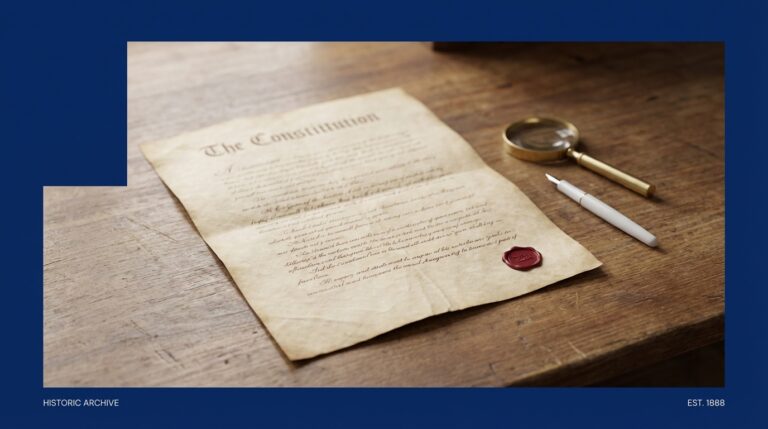
It summarizes the core protections, the historical reasons the amendments were added, and practical examples of how courts apply these rights.
Bill of Rights in simple terms: what it is and why it matters
The phrase first ten amendments to the U.S. Constitution, ratified in 1791 to protect individual liberties and to limit the federal government according to the National Archives transcription National Archives transcription.
The basic purpose of these amendments was to respond to Anti-Federalist concerns about concentrated federal power and to make clear that certain individual freedoms would be protected, a point summarized in Library of Congress materials on the rights provisions Library of Congress overview.
The Bill of Rights covers the first ten amendments, including freedoms like religion and speech, criminal-procedure protections, and clauses on state powers; the National Archives provides the exact text.
The name itself is historical: people began calling the first ten amendments the Bill of Rights because they were bundled together and ratified early in the republic to address those concerns about federal authority, as the primary documents record National Archives transcription.
Why the first ten amendments were added: a short history
The amendments were proposed after the Constitution’s initial adoption when state ratifying conventions and political leaders debated the balance of power between the new federal government and the states, and the need to reassure citizens about basic liberties is described in primary collections Library of Congress overview.

Plainly put, Anti-Federalists argued that the Constitution, as written, left too much power at the federal level and could threaten individual freedoms unless specific protections were added; historians point to this political context in explaining why the amendments were drafted and sent to state legislatures for ratification National Archives transcription.
The proposal and ratification process followed the constitutional route: Congress proposed a series of amendments and the required number of state legislatures ratified them, producing the first ten amendments by 1791, as the record of adoption shows Library of Congress overview.
The First Amendment in plain language: religion, speech, press, assembly, petition

The First Amendment covers five distinct protections: religion, speech, the press, assembly, and petition, and it forms the foundation for most modern free-expression cases as explained in legal overviews First Amendment overview.
In simple terms: freedom of religion means the government cannot establish a national church or stop people from practicing their faith; freedom of speech protects spoken and written expression; freedom of the press protects reporting and commentary; freedom of assembly covers peaceful public gatherings; and petition allows people to ask government for remedies, a framework summarized in legal commentary First Amendment overview.
Everyday examples make this concrete: protests and demonstrations illustrate assembly, news reporting illustrates press freedom, and online posts raise speech questions that courts and commentators continue to examine in current cases First Amendment overview.
Read primary texts and trusted explainers on constitutional rights
For the exact wording and reliable legal primers, consult the primary text and a reputable First Amendment explainer to see how the five protections read in full and how courts have interpreted them.
Key modern questions often ask how the five freedoms apply to new settings, such as social media platforms, and legal sources note that courts analyze those issues using established principles and case law First Amendment overview.
The Second Amendment in simple terms: right to keep and bear arms
The Second Amendment states a right to keep and bear arms; in plain language it protects private citizens’ ability to possess and use weapons, and legal guides explain that its contemporary scope has been shaped by Supreme Court decisions and ongoing litigation National Constitution Center guide.
Courts have clarified some limits and protections in recent decades, which is why debates about regulation, public-safety laws, and access to particular weapons regularly reach higher courts, according to constitutional summaries Encyclopaedia Britannica.
When people discuss gun rules today they are often referring to how courts balance individual rights under the Second Amendment with state and federal interests in public safety, a balance that remains contested in litigation and legal commentary National Constitution Center guide.
Amendments three through eight, simply: criminal procedure and protections
Amendments three through eight collect protections that govern criminal procedure and private homes: the Third limits quartering of soldiers, the Fourth guards against unreasonable searches and seizures, and the Fifth through Eighth set standards for due process, protection from self-incrimination, speedy jury trials, and limits on cruel punishment, as the primary text and legal overviews summarize National Archives transcription.

In everyday terms the Fourth Amendment means police usually need probable cause or a warrant before entering a private home, while the Fifth provides that people cannot be forced to testify against themselves; such protections shape routine criminal procedures and police practices, as legal guides note First Amendment overview.
The Sixth Amendment guarantees prompt, public trials and jury review in many criminal cases, and the Seventh preserves jury trial rights in civil cases in federal courts; the Eighth forbids cruel and unusual punishment, a standard courts interpret in context Encyclopaedia Britannica.

These protections historically limited federal action first, and over time most have been read to limit state action as well through the incorporation doctrine discussed in later sections, a legal evolution described in case summaries and doctrine overviews National Archives transcription.
The Ninth and Tenth Amendments: rights retained and state powers
The Ninth Amendment says that listing certain rights does not mean other rights do not exist, and the Tenth reserves powers not delegated to the federal government to the states or the people; both are short but important lines in the Bill of Rights that inform debates about federalism Library of Congress overview.
These clauses are interpreted through court decisions and legal commentary, and scholars note that they function as reminders about the limits of federal authority and the possible existence of unenumerated rights Encyclopaedia Britannica.
How the Bill of Rights applies to states: the incorporation doctrine
Incorporation is the legal idea that most protections in the Bill of Rights apply to state governments through the Fourteenth Amendment, so state actions can be limited by federal constitutional rights as explained in doctrine summaries Oyez incorporation overview, incorporation doctrine, and the congressional essay on selective incorporation Modern Doctrine on Selective Incorporation.
As a practical matter, incorporation means that rights such as free speech, many criminal-procedure protections, and other guarantees have been made enforceable against the states through Supreme Court decisions and case law, an evolution summarized in legal resources First Amendment overview and in doctrinal discussions on incorporation incorporation doctrine.
a short tracker to remind readers which sources to check for incorporation updates
Check official opinions regularly
This doctrine explains why local or state policies sometimes prompt federal constitutional challenges and why watching court rulings matters for understanding where protections apply, a point covered in accessible case summaries Oyez incorporation overview.
How courts interpret these rights today: process and principles
Court interpretation often uses a mix of approaches: examining the original text, following precedent, and applying balancing tests that weigh individual rights against public interests, a pattern legal commentators describe in doctrine reviews Encyclopaedia Britannica.
Major shifts in how a right applies usually come from Supreme Court decisions, which set precedents lower courts follow until a higher court revisits the issue, so readers who want to track changes should watch published opinions and summaries; recent Supreme Court opinion collections are available from the court here and on official case sites.
Interpretive tools matter because the same amendment text can support different outcomes depending on the legal test used, and plain-language summaries help non-lawyers see why courts sometimes reach different results on similar facts Encyclopaedia Britannica.
Common misunderstandings: five mistakes people make when talking about the amendments
Mistake one is assuming the text has a single, unchanging meaning; in practice courts interpret the words in light of precedent and current facts, so meaning can evolve as decisions accumulate First Amendment overview.
Mistake two is thinking the Bill of Rights only limits federal action; incorporation has extended most protections to states, so state laws can face constitutional limits, a point legal summaries explain Oyez incorporation overview.
Other errors include treating slogans as legal outcomes or assuming every right is absolute; context, statutory details, and precedent determine how rights work in practice, as legal guides advise Encyclopaedia Britannica.
Practical modern scenarios: online speech, gun rules, and search-and-seizure
Online speech raises First Amendment questions about content moderation, platform rules, and government involvement; courts and legal commentators are still developing how traditional free-speech principles apply in digital spaces First Amendment overview.
Gun-rights litigation under the Second Amendment often reaches higher courts because laws that restrict weapons or regulate possession can conflict with constitutional protections, and authoritative guides describe how courts weigh those claims National Constitution Center guide.
Fourth Amendment issues now include digital searches of phones and online data, and courts balance privacy expectations and law enforcement needs when determining what counts as an unreasonable search, as legal resources explain Encyclopaedia Britannica.
How to read the text: one-sentence plain summaries of each amendment
Amendment I: The government cannot make a national religion and must respect freedoms of speech, press, assembly, and petition as stated in the primary text National Archives transcription.
Amendment II: People have a right to keep and bear arms under the Constitution, with scope shaped by court decisions and legal analysis National Constitution Center guide.
Amendments III-VIII: These protect privacy in the home, guard against unreasonable searches and seizures, provide due process and protections against self-incrimination, guarantee speedy jury trials and counsel, and limit cruel and unusual punishment National Archives transcription.
Amendments IX-X: The Ninth notes that listed rights do not exclude others retained by the people, and the Tenth reserves powers not given to the federal government to the states or the people Library of Congress overview.
When rights conflict: how courts balance competing interests
Courts resolve conflicts by applying legal tests and standards that weigh one interest against another rather than using a single rule, and commentators describe these balancing approaches in accessible summaries Encyclopaedia Britannica.
For example, a free-speech claim may be limited when it poses a clear and present danger or when other important government interests are shown, and outcomes depend on specific facts and precedent rather than slogans First Amendment overview.
How to follow changes: tracking cases and trustworthy sources
To stay informed, read the primary text at the National Archives and consult reliable legal explainers such as Cornell Law for constitutional overviews and Oyez for case summaries National Archives transcription and our full text guide.
Use official court opinion sites and reputable case trackers rather than unchecked social posts to monitor how important decisions develop, and follow summaries from recognized legal resources for context Oyez incorporation overview.
Quick takeaway one: the Bill of Rights is the common name for the first ten amendments and was ratified in 1791 to protect individual liberties and limit federal power National Archives transcription.
Conclusion: key takeaways and what readers can do next
Quick takeaway two: courts and the incorporation doctrine mean many of these rights now limit state as well as federal action, so state laws can be reviewed under federal constitutional standards Oyez incorporation overview.
Quick takeaway three: for accurate understanding, read the primary texts and consult trusted legal explainers rather than relying on slogans or social summaries First Amendment overview.
The Bill of Rights refers to the first ten amendments and protects freedoms like speech, religion, and criminal-procedure safeguards.
Yes, through incorporation under the Fourteenth Amendment most protections have been applied to the states by court decisions.
The National Archives provides the authoritative transcription of the Bill of Rights and is the best primary source for exact wording.
References
- https://michaelcarbonara.com/first-ten-amendments-to-the-constitution/
- https://www.archives.gov/founding-docs/bill-of-rights-transcript
- https://www.loc.gov/collections/constitution-and-constitutional-convention/about/rights/
- https://www.law.cornell.edu/wex/first_amendment
- https://michaelcarbonara.com/contact/
- https://www.law.cornell.edu/wex/incorporation_doctrine
- https://constitution.congress.gov/browse/essay/amdt14-S1-4-3/ALDE_00013746/
- https://www.oyez.org/issues/376
- https://www.supremecourt.gov/opinions/URLs_Cited/OT2021/20-843/20-843-1.pdf
- https://constitutioncenter.org/interactive-constitution/interpretation/amendment-ii/clauses/703
- https://www.britannica.com/topic/Bill-of-Rights
- https://michaelcarbonara.com/bill-of-rights-full-text-guide/
- https://michaelcarbonara.com/issue/constitutional-rights/