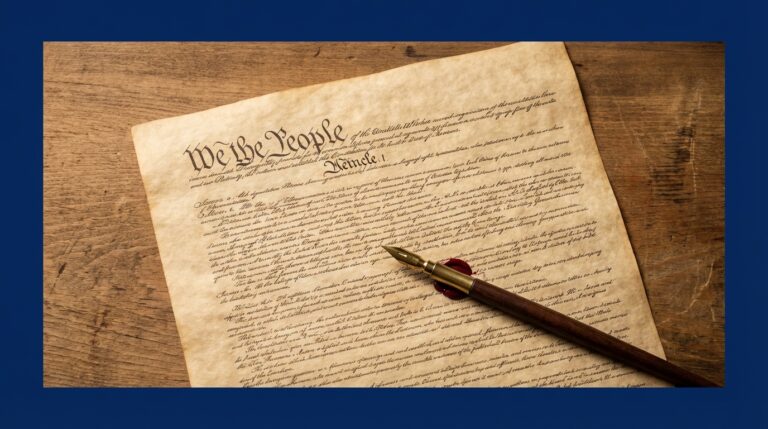
The piece summarizes each amendment with short examples and points readers to authoritative sources for clause-level detail or case-law updates.
A simple definition: what the Bill of Rights is and why it matters
Quick answer: bill of rights meaning
The bill of rights meaning is the common name for the first ten amendments to the U.S. Constitution, proposed in 1789 and ratified in 1791; the official text is available from the National Archives for readers who want the primary transcript National Archives transcript.
The Bill of Rights is the common name for the first ten amendments to the U.S. Constitution, ratified in 1791, that enumerate core individual liberties and set limits on federal power.
Why it was added
Those ten amendments were added to limit the scope of the new federal government and to enumerate core individual liberties such as speech, religion, and protections in criminal prosecutions, a purpose reflected in early congressional records and archival collections Library of Congress overview and an overview at the National Archives National Archives Bill of Rights page.

The limits matter because they shape public discourse, define basic protections during criminal procedure, and help set boundaries between federal and state authority in ordinary civic life.
Brief history: how the Bill of Rights was proposed and ratified
Proposal in the first Congress
After the Constitution was sent to the states, concerns about centralized federal power prompted calls for clearer guarantees of individual rights. James Madison played a central role in proposing amendments during the first Congress as part of a compromise to secure broader support for the new framework, a process summarized in primary collections and reference histories Library of Congress overview and in scholarship on the topic scholarship.
Congress proposed a set of amendments in 1789 that were sent to the states for ratification; public records and archival documents show how the proposals were debated and revised before state legislatures voted.

Ratification and early purpose
The states completed ratification in 1791, and the resulting first ten amendments sought to address the specific political concern that the federal government needed limits on certain powers; readers can review the original wording in the archival transcript for exact phrasing National Archives transcript.
Early commentary and encyclopedic summaries explain that the amendments served a dual function: to protect individuals and to reassure states and citizens about the new national government’s reach, a context useful for understanding the amendments without assuming a single motive Encyclopaedia Britannica overview.
The First Amendment: clause-by-clause, in plain language
Religion
The First Amendment names five protections, starting with religion, which covers both an establishment restriction and a protection for religious practice; plain-language explainers help readers see how these two items work together in civic life Legal Information Institute First Amendment summary.
An everyday example: the clause allows individuals to follow or not follow a faith and generally bars the government from creating an official national church, while detailed questions about specific policies are resolved through later case law.
Speech, press and assembly
The amendment protects speech and a free press, and it protects the right to gather peacefully; these freedoms support public debate and reporting, such as when a local outlet publishes a report about municipal decisions, an instance that civic summaries commonly use to illustrate the clause’s function Encyclopaedia Britannica overview.
The protections are broad but not absolute; for example, some speech categories and certain narrowly defined public-safety rules have been limited by later rulings, so readers should treat simple examples as illustrations rather than exhaustive legal rules.
Stay informed about the campaign
This section explains the five First Amendment protections in plain language and points readers to legal summaries for clause-level detail.
Petitioning the government
The First Amendment also protects petitioning the government for redress, which means people can make requests or complaints to public officials without fear of government punishment; civic explainers and legal summaries show how this right operates alongside other political speech protections Legal Information Institute First Amendment summary.
Everyday examples include contacting elected representatives, filing complaints about local services, or joining a peaceful demonstration to express policy preferences.
Amendments two through eight: bearing arms and criminal-procedure protections
Second Amendment: bearing arms
The Second Amendment addresses a right to keep and bear arms; short legal summaries describe the clause and the range of debates about its scope, making such sources a first stop for readers who want the current plain-language framing Congress.gov constitutional annotations.
In everyday terms, the amendment has been interpreted in different ways over time, and modern application depends on case law that clarifies who may possess arms and under what conditions.
Fourth through Sixth: search, counsel, speedy and jury trial
The Fourth Amendment protects against unreasonable searches and seizures, typically requiring a warrant supported by probable cause in many situations; summaries use the warrant example to show how the clause operates in police interactions Congress.gov constitutional annotations.
The Fifth and Sixth Amendments cover due process, protection against compelled self-incrimination, the right to counsel, a speedy trial, and trial by jury in criminal prosecutions; these items collectively shape how the justice system treats defendants and are often the focus in legal summaries used for basic civic education Congress.gov constitutional annotations.
Seventh and Eighth: civil jury, bail and punishments
The Seventh Amendment preserves jury trials in certain civil cases, and the Eighth restricts excessive bail and cruel or unusual punishment; reference explainers and annotations highlight how these protections function as part of broader procedural safeguards Encyclopaedia Britannica overview.
Simple scenarios help: for the Fourth, a police search typically needs a warrant; for the Sixth, a defendant may request counsel and a speedy trial; for the Eighth, courts review whether a punishment is disproportionate, though detailed outcomes depend on case law.
The Ninth and Tenth Amendments: unenumerated rights and federalism
Ninth Amendment: other rights
The Ninth Amendment explains that listing certain rights in the Constitution does not mean that other rights do not exist, a clause often cited to caution against treating the written list as exhaustive; readers can consult primary texts and reputable overviews for the exact wording and context National Archives transcript.
In practice the Ninth has been cited in discussions about unenumerated rights, but how it applies in specific disputes is a matter for courts and legal analysis rather than a simple summary.

Tenth Amendment: reserved powers
The Tenth Amendment reserves powers not delegated to the federal government to the states or the people, a provision that frames the constitutional structure of federalism and points readers to discussions about the balance between state and national authority Congress.gov constitutional annotations.
This reservation helps explain why some protections and regulations differ between states and why legal outcomes can vary depending on state laws and courts. See the constitutional rights hub for related posts.
How the Bill of Rights is applied today: courts and limits
Role of the Supreme Court and case law
The modern scope of many clauses depends on Supreme Court decisions and other case law that interpret the text, and readers seeking up-to-date rulings should consult trusted legal trackers and annotated constitutional resources for current summaries Congress.gov constitutional annotations.
Because interpretations change over time, this article provides orientation rather than an exhaustive analysis; for recent controversies or clarifications, primary court opinions and current legal commentary are the correct sources.

Because interpretations change over time, this article provides orientation rather than an exhaustive analysis; for recent controversies or clarifications, primary court opinions and current legal commentary are the correct sources.
How state protections interact with federal rights
State constitutions and state courts may provide protections that differ from or expand on federal guarantees, so application varies across jurisdictions and often depends on how states elect to interpret similar language in their own charters National Constitution Center explainer.
Readers should remember that a federal guarantee sets a floor in many areas, but states can offer broader protections, and checking state-level summaries is necessary for specific local questions. You can also read more on the About page.
Common mistakes readers make when discussing the Bill of Rights
Treating slogans as legal guarantees
A common mistake is to treat political slogans or campaign language as equivalent to legal rights; readers should attribute policy claims to the speaker and verify legal status in the primary text rather than assuming slogans reflect constitutional rules Encyclopaedia Britannica overview.
Quick checks include reading the original transcript and consulting plain-language explainers before accepting summary claims as legal truth.
Quick verification steps for readers who want to check primary sources
Use primary sources first
Assuming federal protections always apply the same at state level
Another error is assuming federal protections apply identically across all states; because of differences in state constitutions and varying case law, protections can differ in practice and require local checking National Constitution Center explainer.
When in doubt about a local situation, consult state court summaries or a licensed attorney for case-specific guidance rather than relying on a short civic overview.
Practical examples and scenarios: how to read clauses for everyday questions
Everyday examples that map to each amendment
Concrete examples help map the text to daily life: a newspaper publishing a local report illustrates how press protections work in principle, while a police officer generally needing a warrant for a home search illustrates a Fourth Amendment application; these kinds of examples are standard in reputable explainers and educational guides Encyclopaedia Britannica overview.
Other examples: contacting an elected official or joining a peaceful demonstration shows petition and assembly protections, and a criminal defendant requesting counsel demonstrates Sixth Amendment protections in practice.
When to look up case law or seek legal advice
When to look up case law or seek legal advice
This article or any plain-language guide is a starting point; readers should look up recent case law or consult legal counsel when the outcome of a specific dispute matters, since courts decide how clauses apply to new facts and technologies National Constitution Center explainer.
Resources to consult include the National Archives for the primary text, the Legal Information Institute for plain-language descriptions, and annotated constitutional collections for clause-level tracking and our news page.
The Bill of Rights is the common name for the first ten amendments to the U.S. Constitution, ratified in 1791, that list core individual liberties and limits on federal power.
The National Archives provides the authoritative transcript of the Bill of Rights, which is the best source for the original wording of the first ten amendments.
No; the Ninth Amendment clarifies that other rights may exist beyond those listed, and state constitutions or courts may recognize additional protections.
References
- https://www.archives.gov/founding-docs/bill-of-rights-transcript
- https://www.loc.gov/collections/bill-of-rights/about/
- https://www.archives.gov/founding-docs/bill-of-rights
- https://virginialawreview.org/articles/becoming-the-bill-of-rights-the-first-ten-amendments-from-founding-to-reconstruction/
- https://www.britannica.com/topic/Bill-of-Rights
- https://www.law.cornell.edu/constitution/first_amendment
- https://www.congress.gov/constitution-annotated/amendment-1
- https://constitutioncenter.org/interactive-constitution/interpretation/bill-of-rights
- https://michaelcarbonara.com/contact/
- https://michaelcarbonara.com/issue/constitutional-rights/
- https://michaelcarbonara.com/about/
- https://constitutioncenter.org/the-constitution/white-papers/the-declaration-the-constitution-and-the-bill-of-rights
- https://michaelcarbonara.com/news/