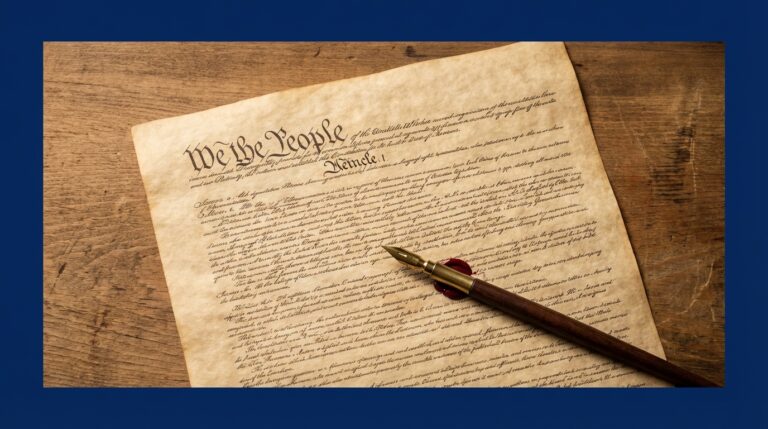
The goal is pragmatic: explain the core differences between domestic constitutional bills and international charters, summarize four key texts, and provide a checklist readers can use to form their own conclusion.
How to answer the question: which Bill of Rights matters most
What readers will get from this article
A clear method for deciding which Bill of Rights matters most for your aim. Early on we use the phrase bill of rights meaning to keep the question focused on what these documents actually do.
First, a Bill of Rights is a codified set of fundamental rights and limits on government power; that definition frames the comparison and points readers to the primary documents that state those rights National Archives Bill of Rights transcript.
Why the answer depends on your criterion
The short answer is there is no single ‘most important’ Bill of Rights. Which document you prioritize changes depending on whether you care about historical influence, enforceability inside a given legal system, or the normative reach of international texts. (See the constitutional-rights hub.)
Stay informed about civic resources and updates
Use the three axes below to pick the one that matches your goal, then check the primary texts and an empirical index for the real-world picture.
Why the answer depends on your criterion
This article lays out criteria and then profiles four key texts so you can apply the framework to your own question.
Quick definition and context: what “Bill of Rights” means
Core definition
In plain terms, ‘Bill of Rights’ refers to a written set of fundamental rights and limits on government power. That description covers domestic constitutional bills and international charters that declare basic rights Universal Declaration of Human Rights.

Differences between domestic bills and international charters
Domestic bills of rights are often part of a country’s constitution or its amendments and can be directly enforced in courts, while international instruments establish norms that require treaty mechanisms or domestic adoption for enforceability OHCHR ICCPR page.
Examples we consider include the English Bill of Rights of 1689, the U.S. Bill of Rights ratified in 1791, the UDHR of 1948 and the ICCPR of 1966.
Historical roots: the English Bill of Rights (1689) and its legacy
What the English Bill of Rights introduced
The English Bill of Rights of 1689 is an early modern settlement that limited royal power and affirmed certain parliamentary and civil protections, serving as a template for later documents in common-law jurisdictions British Library English Bill of Rights.
There is no single most important Bill of Rights; the answer depends on whether you prioritize historical influence, legal enforceability in a given jurisdiction, or practical protection as measured by institutions.
How it influenced later constitutional designs
Legal historians point to the 1689 text as an influence on later bills because it showed how a written statement of rights could be used to transfer some powers from a sovereign to representative institutions; influence is best understood as contributory rather than determinative.
The U.S. Bill of Rights: content and legal enforceability
What the first ten amendments cover
The U.S. Bill of Rights refers to the first ten amendments to the U.S. Constitution, ratified in 1791, and it is widely treated as the primary source for many civil liberties in the United States National Archives Bill of Rights transcript.
How they function as enforceable law in the United States
Those amendments operate within the U.S. legal system through judicial interpretation and the court process, which is why their practical effect depends on courts and institutional capacity. (see Yale Law Journal.)


When asking about the bill of rights meaning in a U.S. context, the key point is that constitutional amendments are part of enforceable law but require judicial mechanisms to protect rights in practice.
International instruments: UDHR and ICCPR – norms versus enforceability
Scope and purpose of the UDHR
The Universal Declaration of Human Rights is a global statement of principles adopted by the U.N. General Assembly in 1948; it sets broad normative expectations for member states but is not itself a binding treaty Universal Declaration of Human Rights.
How the ICCPR works as a treaty
The ICCPR, adopted in 1966, is a treaty with monitoring mechanisms; states that ratify it accept certain obligations, but those obligations usually need domestic implementation to be enforceable in local courts OHCHR ICCPR page.

In short: the UDHR supplies moral authority and a shared vocabulary; the ICCPR supplies treaty obligations that depend on state action to matter on the ground.
How rights are secured in practice: institutions and enforcement mechanisms
Judicial capacity and legal remedies
Comparative scholars emphasize that a written bill of rights by itself does not guarantee protection; independent courts, accessible remedies, and enforceable procedures are central to turning text into rights in practice Comparative Constitutions Project and scholarly analyses Human Dignity and Judicial Interpretation of Human Rights.
Legislative and administrative implementation
Implementing legislation, administrative capacity, and clear remedies matter: even binding texts require domestic law and institutions that can carry out protections for people to benefit from them.
Measuring protection: what indexes and data tell us
World Justice Project and practical enforcement
Empirical indices like the World Justice Project Rule of Law Index document wide differences in real-world enforcement of rights across countries; the index highlights that outcomes vary significantly between jurisdictions World Justice Project Rule of Law Index 2024.
Limitations of cross-country comparisons
Indices are useful but limited by data coverage, legal tradition differences, and measurement choices; they should be one input among primary documents and institutional descriptions when assessing protection. See empirical work such as Compliance with Aspects of the \”International Bill of Rights\”.
A simple framework to decide which Bill of Rights is most important for your question
Three decision axes: influence, enforceability, practical protection
The framework compares documents along three axes: historical influence, legal enforceability, and practical protection as measured by institutions and indices.
A short checklist to score and compare bills of rights
Copy and use to rank documents
How to weigh the axes
Choose weights that match your aim: a historian might give heavy weight to influence, a lawyer to enforceability, and an advocate to measured protection outcomes. Then apply the checklist to each document and add the scores.
Decision criteria explained: when to favor history, law, or practical protection
Favoring historical influence
Prioritizing historical influence makes sense when your goal is to trace ideas and institutional origins; texts like the English Bill of Rights often matter most in that kind of scholarship British Library English Bill of Rights.
Favoring legal enforceability
If you care about rights that can be invoked in court within a jurisdiction, favor domestic constitutional texts such as the U.S. Bill of Rights, because they are part of the national constitution and operate through judicial channels National Archives Bill of Rights transcript.
Favoring real-world protection
When immediate protection in everyday life is the priority, look at empirical measures and institutional descriptions: the presence of rights text matters less than whether courts, legislatures, and administrations enforce them World Justice Project Rule of Law Index 2024.
Typical mistakes and pitfalls when comparing Bills of Rights
Confusing slogans with legal substance
A common error is to treat political rhetoric or slogans as if they have the same status as codified rights; always check primary documents rather than press statements when making claims about legal protections Universal Declaration of Human Rights.
Overreliance on single metrics
Relying on one index or one metric can mislead because indices have limitations; combine indexes, judicial decisions, and implementing legislation for a fuller picture Comparative Constitutions Project.
Practical comparisons: short profiles of the English, U.S., UDHR and ICCPR
English Bill of Rights – historical template
The English Bill of Rights played a formative role in early constitutional developments by limiting monarchical power and signaling how written rights could structure political authority British Library English Bill of Rights.
U.S. Bill of Rights – enforceable constitutional amendments
The U.S. Bill of Rights, as the first ten amendments to the U.S. Constitution, is the canonical example of a domestic bill that operates within a national legal system and is enforceable through courts National Archives Bill of Rights transcript.
UDHR and ICCPR – global norms and treaty mechanisms
The UDHR offers a shared set of principles adopted by a global body, while the ICCPR provides treaty obligations that rely on ratification and domestic implementation to have legal effect Universal Declaration of Human Rights.
How to apply the framework to a local question: an example for a voter or student
A step-by-step application
Suppose you are a voter deciding which set of rights matters most for local legal questions. Give enforceability higher weight, list the documents that apply locally, check recent court cases and the World Justice Project ranking for your country, and then score each document on the checklist World Justice Project Rule of Law Index 2024 (see news).
Sample conclusion and how to justify it with sources
Your sample conclusion might favor a domestic bill because it is enforceable in local courts; justify that choice by citing the primary text and recent judicial decisions or implementation laws that show how the text works in practice.
What this means for citizens, advocates and educators
Using the framework responsibly
Citizens and advocates should ground claims in primary documents and treat indices as context rather than proof; connect text to institutional capacity when making arguments about rights.
What to look for in primary sources
When reading a primary text, note whether it is legally binding, how courts have interpreted it, and whether there is implementing legislation or administrative practice that supports enforcement Comparative Constitutions Project.
Conclusion: there is no single answer – choose the criterion that matches your aim
Recap of the three axes
To recap, answers depend on whether you prioritize historical influence, legal enforceability, or measured practical protection; apply the checklist to be explicit about your preference.
Final reading and source checklist
Primary texts and indices to consult next include the U.S. Bill of Rights transcription, the English Bill of Rights collection entry, the UDHR text, the ICCPR page, the World Justice Project index, and comparative constitutional datasets National Archives Bill of Rights transcript (see about).
A Bill of Rights is a written set of fundamental rights that constrains government power and outlines protections; domestic bills can be enforceable in courts while international declarations set norms.
The UDHR is a normative declaration adopted by the UN; it sets global standards but is not itself a binding treaty and typically requires domestic action for enforceability.
Enforcement differs because of variation in judicial independence, implementing legislation, administrative capacity, and the willingness of governments to follow obligations.
If you want to explore further, start with the primary documents and a current rule-of-law index to see how texts translate into practice.
References
- https://www.archives.gov/founding-docs/bill-of-rights-transcript
- https://www.un.org/en/about-us/universal-declaration-of-human-rights
- https://www.ohchr.org/en/instruments-mechanisms/instruments/international-covenant-civil-and-political-rights
- https://www.bl.uk/collection-items/english-bill-of-rights-1689
- https://michaelcarbonara.com/contact/
- https://comparativeconstitutionsproject.org/
- https://worldjusticeproject.org/our-work/research-and-data/wjp-rule-law-index-2024
- https://michaelcarbonara.com/issue/constitutional-rights/
- https://michaelcarbonara.com/news/
- https://michaelcarbonara.com/about/
- https://scholarship.law.upenn.edu/cgi/viewcontent.cgi?article=1068&context=faculty_articles
- https://yalelawjournal.org/index.php/note/the-judicial-enforceability-and-legal-effects-of-treaty-reservations-understandings-and-declarations
- https://academic.oup.com/ejil/article/19/4/655/349356