The method prioritizes transparency and local validation, so readers can produce a shortlist that fits their personal priorities and then confirm neighborhood conditions before moving.
What the phrase “cheapest cities to live in usa” actually means
The phrase “cheapest cities to live in usa” can refer to several different things depending on the data you use and the costs you prioritize. According to the BEA, broad price levels vary across states and metros and are measured by Regional Price Parities, which help show where everyday goods and services cost more or less on average BEA Regional Price Parities and FRED RPP series
For many people “cheapest” is really about housing and rent. Observed rent series and Census housing cost estimates commonly explain most of the affordability gap between places, so looking at housing data is essential Zillow Research rent data
There is no single definitive list. Use a combined approach that pairs BEA RPP or a verified COLI with ACS housing and income data, a recent rent series, and FBI and BJS crime figures, then validate neighborhoods locally.
When people add “safest” they mean places with relatively low violent and property crime rates as recorded by official statistics. The FBI Crime Data Explorer provides the headline city and metro crime figures, but those numbers need context from victimization surveys and local reporting notes FBI Crime Data Explorer
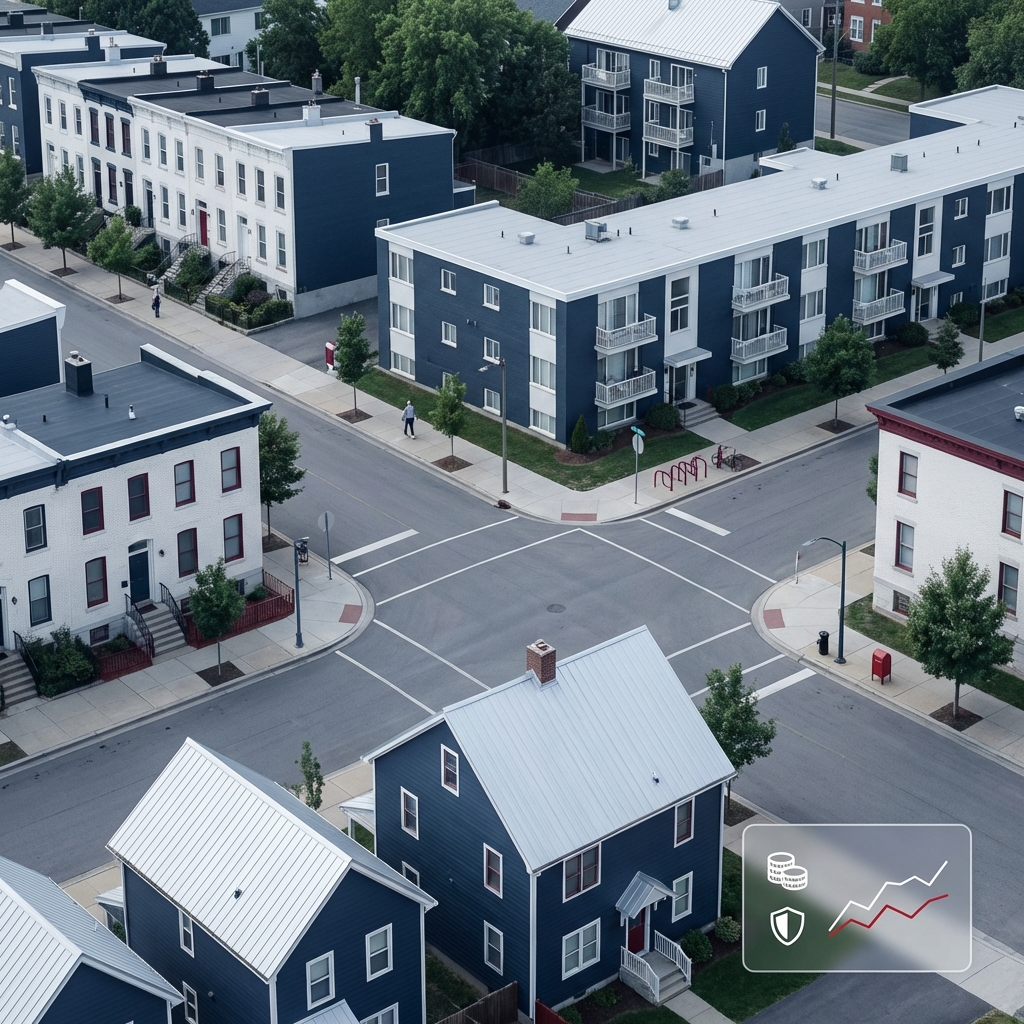
Because no single dataset captures both cost and safety fully, a combined assessment is required: pair a price-level benchmark or a verified cost-of-living index with housing and rent series and then add official crime data and local validation steps. This layered approach reduces the chance of misleading conclusions from a single list or headline ranking American Community Survey
Different price indexes measure different baskets. Official BEA Regional Price Parities provide a broad price-level benchmark, while private cost-of-living indexes use varied weights and baskets that shift rankings depending on whether they emphasize goods, services, or housing C2ER COLI methodology and a related analysis from the Federal Reserve Bank of San Francisco FRBSF
Official RPPs are useful for comparisons at the state and metro level, but they do not replace a focused housing check. Housing and rent metrics explain most intercity affordability differences, so analysts combine RPPs with rent series and Census housing estimates for a clearer picture BEA Regional Price Parities
The American Community Survey provides median income and housing cost fields that help show whether low prices actually translate into affordability for local residents. Use ACS housing and income estimates to see the relationship between local wages and housing costs American Community Survey
Crime statistics and victimization surveys tell a separate part of the story. FBI city and metro figures give rates for violent and property crime, while the Bureau of Justice Statistics’ victimization data supplies context about unreported incidents and national trends BJS criminal victimization report
Why you need multiple measures: price indexes, housing data, and crime stats
Different price indexes measure different baskets. Official BEA Regional Price Parities provide a broad price-level benchmark, while private cost-of-living indexes use varied weights and baskets that shift rankings depending on whether they emphasize goods, services, or housing C2ER COLI methodology
Official RPPs are useful for comparisons at the state and metro level, but they do not replace a focused housing check. Housing and rent metrics explain most intercity affordability differences, so analysts combine RPPs with rent series and Census housing estimates for a clearer picture BEA Regional Price Parities
The American Community Survey provides median income and housing cost fields that help show whether low prices actually translate into affordability for local residents. Use ACS housing and income estimates to see the relationship between local wages and housing costs American Community Survey
Crime statistics and victimization surveys tell a separate part of the story. FBI city and metro figures give rates for violent and property crime, while the Bureau of Justice Statistics’ victimization data supplies context about unreported incidents and national trends BJS criminal victimization report
A practical 5-step framework to find the cheapest cities to live in usa that are also safe
Step 1: Set your priorities. Decide how much weight you give to housing, income, and safety before you pull data. For example, a renter may give housing 60 percent weight, safety 30 percent, and other costs 10 percent.
Step 2: Pull official price and housing figures. Use BEA RPPs for a broad price-level comparison and ACS and Zillow for housing specifics. These sources together let you separate broad cost differences from the housing-driven parts of affordability BEA Regional Price Parities
Step 3: Add crime data and local context. Pull FBI violent and property crime rates and consult BJS victimization estimates to understand reporting gaps and context FBI Crime Data Explorer
simple composite score to rank metros by cost and safety
–
points
normalize inputs before use
Step 4: Score and shortlist. Normalize each metric to a common scale, apply your weights, and produce a composite score. Keep the top 10 to 20 metros that meet your threshold for both cost and safety. See the shortlist and consider joining campaign volunteers for local insights join
Step 5: Ground-truth neighborhoods. After a shortlist, check local police maps, news, and vacancy or permit data before visiting or committing. Neighborhood checks prevent surprises hidden by metro averages Zillow Research rent data
Data checklist: exact sources and metrics to collect
Price-level fields: pull BEA RPP values for states and metros, including the overall RPP and component breakdowns where available. These give a consistent baseline for cross- metro price comparisons BEA Regional Price Parities
COLI components: if you use a private cost-of-living index, note its basket and weight differences so you can reconcile divergent rankings. Methodology differences explain why lists change between providers C2ER COLI methodology
Housing and rent fields: collect ACS median gross rent, median owner costs, and median household income along with a recent rent series such as ZORI to capture current rent trends. These fields show how housing pressure compares to local incomes American Community Survey
Crime fields: extract violent crime rate, property crime rate, and counts from the FBI Crime Data Explorer. Note metadata about reporting practices and any caveats included with local agencies FBI Crime Data Explorer
How to weight housing, income, and crime for your priorities
Weights translate your preferences into numbers. A simple template is to assign points to housing, income, safety, commute, and services, then convert those points to percentages before scoring places.
Example weightings: a single renter could set Housing 60, Safety 25, Income 5, Commute 10. A family might set Safety 40, Housing 30, Income 20, Commute 10. A retiree could set Housing 50, Safety 30, Healthcare access 20. Use median household income and housing cost ratios from ACS to interpret those weights in practical terms American Community Survey
Join the campaign to get the printable checklist and updates
Download the printable 5-step checklist and data checklist to run this method yourself.
Taxes and commute matter too. Some cost components in RPP service measures can proxy for regional tax and service differences, and commute time changes effective affordability if you work outside the neighborhood BEA Regional Price Parities
Decision criteria and red flags: when not to move
If local FBI figures show sudden year-on-year spikes, treat them as a red flag and check local police reports before assuming the trend is permanent. Reporting changes or one-off events can distort short-term rankings FBI Crime Data Explorer
Low cost with low median incomes can be an affordability trap. If wages are low and services are weak, the apparent savings may come with tradeoffs in local opportunity and amenities; use ACS income and employment fields to check this American Community Survey
Watch for neighborhood hotspots masked by safe metro averages. A metro can look safe overall while containing higher-risk neighborhoods, so always examine block- or tract-level data when possible BJS criminal victimization report
Common mistakes and data pitfalls to avoid
Relying on a single list is a common mistake. Different cost-of-living indexes use different baskets and weights, which can flip rankings depending on what they emphasize C2ER COLI methodology
Housing mix and age distort median signals. Areas with older housing stock or a high share of single-family units can show different median costs than places with many new apartments, so check housing stock fields in the ACS and recent permit activity American Community Survey
Cross-check FBI crime figures with BJS victimization data when you suspect underreporting or unusual local reporting patterns. Victimization surveys provide context for understanding reporting gaps BJS criminal victimization report

Example shortlists: the kinds of mid-sized metros that commonly appear in combined affordability and safety checks
When analysts combine price-level benchmarks, ACS housing measures, rent series, and FBI crime figures, mid-sized metros in parts of the Midwest and South frequently appear on practical shortlists. This pattern reflects generally lower regional price levels and moderate housing costs in those regions BEA Regional Price Parities and is visible in purchasing-power comparisons such as the Tax Foundation map Tax Foundation
Structural reasons include lower overall RPPs and local housing markets that are not as rent-pressed as large coastal metros. But the exact list changes with weighting choices, recent rent trends, and local crime movements, so treat any shortlist as provisional Zillow Research rent data
Metro averages hide neighborhood variation. Even in mid-sized metros that look promising, you must check specific neighborhoods for schools, services, and localized crime patterns before deciding American Community Survey
Neighborhood checks and local validation steps before you commit
Ask local police for recent trend summaries and for maps that show hotspots by neighborhood. Police departments often publish monthly or quarterly crime maps that reveal whether problems are concentrated or spread across a metro FBI Crime Data Explorer

Check planning department data for permits, vacancy rates, and recent development activity. A surge in permits can signal change that affects affordability and services, and ACS proxies like housing vacancy help track market tightness American Community Survey
Use local news, community boards, and neighborhood social pages for recent, on-the-ground context that statistics may lag in showing. These sources help confirm whether recorded crime trends align with resident experience.
Sample relocation scenarios: how the framework plays out for different households
Scenario 1, single renter. Priorities: low rent, transit access, nightlife. Weight housing high, safety medium, commute and services lower. Use ZORI rent trends and tract-level ACS renter percentages to score candidate neighborhoods Zillow Research rent data
Scenario 2, family household. Priorities: school safety, commute, and community services. Weight safety and commute higher, examine violent crime rates at the tract level and median household incomes from ACS to assess school funding proxies American Community Survey
Scenario 3, retiree. Priorities: low housing cost, healthcare access, and walkable services. Weight housing and healthcare access more heavily and check local service availability and commute proxies that affect living convenience.

How to compare final choices and make the move: a short decision checklist
Final comparison fields should include a normalized cost score, crime score, median household income, typical commute time, and current housing availability. These fields summarize how a place performs on the main tradeoffs and help compare finalists side by side BEA Regional Price Parities
Moving costs and timeline: factor in one-time moving expenses, lease break or closing costs, and a timeline for visits and short stays. Keep a backup shortlist and test a short stay if feasible to confirm neighborhood fit before a full move.
Trusted sources and next steps: where to get the latest data
Main primary sources to consult are BEA RPP for price levels, the FBI Crime Data Explorer for crime rates, the ACS for housing and income, Zillow ZORI for rent trends, and BJS for victimization context. Re-run your queries when each source publishes new releases to keep rankings current BEA Regional Price Parities and consult the author page for context Michael Carbonara
Refresh routine: update your rent series and ACS annual estimates each year, and check FBI annual crime releases for changes in rates. Local police and planning offices may publish monthly updates useful for quick checks FBI Crime Data Explorer
Conclusion: practical takeaways for finding the cheapest and safest place to live
Combining RPP or a verified COLI with ACS housing figures, a rent series like ZORI, and FBI and BJS crime data produces the most reliable shortlists for cheapest cities to live in usa. This layered method reduces the risk of misleading single-list conclusions BEA Regional Price Parities
Top three next steps: set your personal weights, pull the BEA/ACS/ZORI/FBI fields listed in the data checklist, and ground-truth the top neighborhoods before moving. Treat any shortlist as provisional until local validation is complete.
Compare a broad price-level measure such as BEA Regional Price Parities with housing-specific fields like median rent and owner costs from the ACS and a rent series to see current trends.
FBI crime rates are a primary source for city comparisons but should be used with victimization surveys and local police data to account for reporting differences and recent local changes.
For most relocations, housing and rent metrics are the single most important fields because they drive most affordability differences between places.
References
- https://www.bea.gov/data/prices-inflation/regional-price-parities-state-and-metro-area
- https://fred.stlouisfed.org/series/DCMPRPPALL
- https://www.zillow.com/research/data/
- https://cde.ucr.cjis.gov/LATEST/webapp/#/pages/explorer/crime
- https://www.census.gov/programs-surveys/acs
- https://coli.org/methodology/
- https://bjs.ojp.gov/content/pub/pdf/cv22.pdf
- https://michaelcarbonara.com/contact/
- https://www.frbsf.org/research-and-insights/publications/economic-letter/2025/04/changing-disparity-in-prices-across-states/
- https://taxfoundation.org/data/all/state/purchasing-power-real-value-100/
- https://michaelcarbonara.com/join/
- https://michaelcarbonara.com/news/
- https://michaelcarbonara.com/
{"@context":"https://schema.org","@graph":[{"@type":"FAQPage","mainEntity":[{"@type":"Question","name":"Where can I find cheap cities that are also safe in the United States?","acceptedAnswer":{"@type":"Answer","text":"There is no single definitive list. Use a combined approach that pairs BEA RPP or a verified COLI with ACS housing and income data, a recent rent series, and FBI and BJS crime figures, then validate neighborhoods locally."}},{"@type":"Question","name":"How do I measure affordability across cities?","acceptedAnswer":{"@type":"Answer","text":"Compare a broad price-level measure such as BEA Regional Price Parities with housing-specific fields like median rent and owner costs from the ACS and a rent series to see current trends."}},{"@type":"Question","name":"Can FBI crime rates be trusted for local decisions?","acceptedAnswer":{"@type":"Answer","text":"FBI crime rates are a primary source for city comparisons but should be used with victimization surveys and local police data to account for reporting differences and recent local changes."}},{"@type":"Question","name":"What is the single most important data field to check?","acceptedAnswer":{"@type":"Answer","text":"For most relocations, housing and rent metrics are the single most important fields because they drive most affordability differences between places."}}]},{"@type":"BreadcrumbList","itemListElement":[{"@type":"ListItem","position":1,"name":"Home","item":"https://michaelcarbonara.com"},{"@type":"ListItem","position":2,"name":"Blog","item":"https://michaelcarbonara.com/news/%22%7D,%7B%22@type%22:%22ListItem%22,%22position%22:3,%22name%22:%22Artikel%22,%22item%22:%22https://michaelcarbonara.com%22%7D]%7D,%7B%22@type%22:%22WebSite%22,%22name%22:%22Michael Carbonara","url":"https://michaelcarbonara.com"},{"@type":"BlogPosting","mainEntityOfPage":{"@type":"WebPage","@id":"https://michaelcarbonara.com"},"publisher":{"@type":"Organization","name":"Michael Carbonara","logo":{"@type":"ImageObject","url":"https://lh3.googleusercontent.com/d/1eomrpqryWDWU8PPJMN7y_iqX_l1jOlw9=s250"}},"image":["https://lh3.googleusercontent.com/d/1BZsRCiGgmWBtOWTPPX6lOp1i0M3IqCgM=s1200","https://lh3.googleusercontent.com/d/14g2jGctCnKgcOJUao0lOO15uV8iQmdEO=s1200","https://lh3.googleusercontent.com/d/1eomrpqryWDWU8PPJMN7y_iqX_l1jOlw9=s250"]}]}