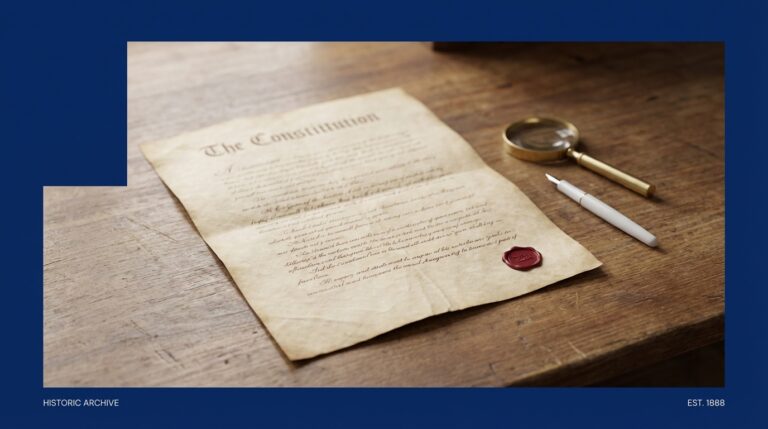
The focus is on reliable, primary materials such as the Constitution transcription and the Constitution Annotated, with supporting policy briefings. The goal is to give voters, students, and civic-minded readers a clear frame for understanding how Congress's authority over the capital works in practice.
What Article I, Section 8, Clause 17 says – the text and a plain-language reading
Article I, Section 8, Clause 17 of the U.S. Constitution appears in the list of powers granted to Congress. The Clause itself reads: “To exercise exclusive Legislation in all Cases whatsoever, over such District (not exceeding ten Miles square) as may, by Cession of particular States, and the Acceptance of Congress, become the Seat of the Government of the United States, and to exercise like Authority over all Places purchased by the Consent of the Legislature of the State in which the Same shall be, for the Erection of Forts, Magazines, Arsenals, dock-Yards, and other needful Buildings.” This text is the Constitution transcription held by the National Archives, which is the primary source for the clause’s wording National Archives constitution transcription.
In plain language, the District Clause gives Congress exclusive legislative authority over a federal district set aside to be the national seat of government. The Constitution Annotated explains that this provision places the capital under national control rather than state control, and it frames the Clause as territorial in scope rather than a general grant of federal regulatory power Constitution Annotated – Article I, Section 8, Clause 17.
Follow primary sources and legislative updates on the District Clause
For direct comparison, consult the Constitution transcription and the Constitution Annotated to read the Clause and its official annotation before moving to historical and legal explanations.
The Clause is targeted at governing the seat of government and related federal property, not at creating a broad federal police power that reaches beyond territory devoted to federal purposes. When readers see references to “exclusive Legislation,” the point is territorial control over the district and designated federal sites rather than a general grant to regulate ordinary state affairs Constitution Annotated – Article I, Section 8, Clause 17.
Why the Framers included the District Clause – history and Framers’ intent
The Framers debated where to place the national capital and how to prevent any single state from exerting undue influence over federal institutions. Convention records and scholarly analysis show the Framers worried that state control of the seat of government could threaten federal independence, a rationale frequently cited in law review and historical work The District Clause and the Framers’ Design for the Capital.
The Constitution Annotated summarizes this history and notes that the Clause was adopted so the national government would not be subject to a state’s laws or political pressures in the location where federal powers operate. That interpretation is the standard explanation used in legislative and legal contexts when discussing the Clause’s origin Constitution Annotated – Article I, Section 8, Clause 17.
Scholars caution, however, about overstating what historical records can prove about individual framers’ motives. The best practice is to attribute the general purpose to preventing state control of the capital, while noting that finer points of intent are drawn from fragmentary records and scholarly interpretation The District Clause and the Framers’ Design for the Capital.
How the District Clause differs from the Commerce Clause
Textually and functionally, the District Clause and the Commerce Clause operate on different planes. The District Clause is territorial: it vests Congress with legislative authority over the national seat and certain federal properties. The Commerce Clause, by contrast, grants Congress the power to regulate interstate commerce and is not about territorial governance U.S. Constitution – Article I (with clause explanations). For additional clause context, see the Constitution Annotated entry for Clause 17 Constitution Annotated clause entry.
Put simply, a question about who can make or change local laws in Washington, D.C. normally raises the District Clause; a question about regulating trade between states raises the commerce clause of the constitution. Keeping these distinctions clear helps avoid common legal errors and misreadings of constitutional text Constitution Annotated – Article I, Section 8, Clause 17.
Quick checklist to decide which clause applies
Use sequentially to guide closer review
For example, a dispute over a D.C. law on local zoning would typically be evaluated under the District Clause and the statutes Congress has passed about D.C. governance, not under the Commerce Clause. Conversely, a law about tariffs or discrimination in interstate shipments would fall under the Commerce Clause and related judicial tests U.S. Constitution – Article I (with clause explanations). The Cornell Constitutional Commentary also discusses the Clause in its clause-specific analysis Power Over Places Purchased (Conan annotation).
How Congress has exercised and delegated its authority over the capital
Congress retains ultimate authority under the District Clause but has long delegated many day-to-day functions to local institutions. The most prominent statutory example is the District of Columbia Home Rule Act, which created a locally elected D.C. Council and mayor while preserving congressional review and oversight powers described in legislative analyses The District of Columbia: Home Rule and Congressional Authority (CRS In Brief).
The Constitution Annotated notes that delegation through statutes such as the Home Rule Act does not extinguish Congress’s constitutional powers. Congress can review, amend, or override local legislation through the procedures and authority it retains under the Clause Constitution Annotated – Article I, Section 8, Clause 17.

Practically, delegation has meant D.C. residents have local governance for many services while Congress continues to control federal appropriations affecting the District and can exercise oversight through committee review and legislative action, as CRS briefings explain The District of Columbia: Home Rule and Congressional Authority (CRS In Brief).
Key court rulings and how courts treat the District Clause
Courts that address the District Clause typically concentrate on the relationship between federal authority and local D.C. institutions. Judicial decisions tend to analyze limits on local authority, the scope of congressional oversight, and the constitutional basis for federal intervention, with case summaries collected in authoritative annotations and legal commentaries Constitution Annotated – Article I, Section 8, Clause 17.
Legal commentary and clause summaries emphasize that judicial treatment has not turned the District Clause into a general federal police power; rather, courts review specific statutory or constitutional claims about D.C.’s governance and the boundaries of congressional control U.S. Constitution – Article I (with clause explanations).
The Clause vests Congress with exclusive legislative authority over a federal district designated as the seat of government and over certain federal properties, which allows Congress to legislate for the District while it may delegate local functions by statute.
Because case law on the Clause is specialized, readers should consult annotated compilations like the Constitution Annotated when they want a reliable list of relevant opinions and analysis rather than relying on isolated summaries in secondary sources Constitution Annotated – Article I, Section 8, Clause 17.
Modern debates: D.C. statehood, autonomy, and constitutional consequences
Proposals for D.C. statehood or changes in autonomy necessarily implicate the District Clause because the Clause assigns Congress authority over the seat of government. Policy briefs and legal analyses frame statehood questions by asking how Congress would reallocate or retain the jurisdiction the Clause assigns to it The District of Columbia: Home Rule and Congressional Authority (CRS In Brief).
Think tanks and analysts describe trade-offs such as how statehood or altered status would affect congressional oversight, federal property, and constitutional allocations of power. These discussions do not resolve the legal questions, but they identify the statutory and constitutional steps that such proposals would likely require Congress and the District of Columbia: Federal Authority and Local Governance.
Because outcomes depend on congressional action and potential litigation, mainstream positions treat statehood as a mix of political choices and constitutional questions rather than as a simple legal prescription. Readers should evaluate analyses by checking whether they rely on CRS, Constitution Annotated, or peer-reviewed law journals for their legal framing The District of Columbia: Home Rule and Congressional Authority (CRS In Brief).
What congressional oversight means in practice for D.C. residents
For residents, congressional oversight can affect local budgets, the scope of city laws, and certain approvals that require congressional review. CRS and the Constitution Annotated note that Congress has tools such as appropriations riders, review periods, and committee oversight that can alter or delay local policy implementation The District of Columbia: Home Rule and Congressional Authority (CRS In Brief).
One practical outcome is that while D.C. provides many municipal services through its council and mayor, federal funding decisions and congressional legislation can influence those services directly. The dual structure means local policy often operates within a framework where Congress can intervene in specified ways Constitution Annotated – Article I, Section 8, Clause 17.

To follow congressional actions that affect D.C., residents can watch committee schedules, review appropriations language, and consult CRS reports and Constitution Annotated entries that document legislative changes and oversight activities The District of Columbia: Home Rule and Congressional Authority (CRS In Brief).
Common misunderstandings and pitfalls when readers research the Clause
A common mistake is to conflate the District Clause with unrelated federal powers such as the Commerce Clause. The District Clause is territorial and about the seat of government; the Commerce Clause is about regulating interstate commerce, and mixing them can lead to incorrect legal conclusions U.S. Constitution – Article I (with clause explanations).
Another frequent error is assuming delegation of local functions to D.C. institutions removes congressional authority. Statutes like the Home Rule Act delegate functions but retain congressional oversight, so delegation does not equal relinquishment of the Clause’s core powers Constitution Annotated – Article I, Section 8, Clause 17.
Readers should prefer primary sources and authoritative annotations over unsourced commentary. When discussing Framers’ intent, attribute claims to recognized scholarly work or to the Constitution Annotated rather than presenting speculative accounts as fact The District Clause and the Framers’ Design for the Capital.
How to read and use primary sources: Constitution, Constitution Annotated, and CRS reports
The Constitution text is the primary document for any constitutional claim; use the National Archives transcription to quote exact wording and citation details. For annotation and legislative history, the Constitution Annotated provides Congress-published context and links to relevant cases and statutes National Archives constitution transcription.
CRS reports offer concise, nonpartisan briefings on policy and legal questions, including the history and practical mechanisms of D.C. governance. For contemporary questions, check CRS for up-to-date legal and policy summaries that cite statute and precedent The District of Columbia: Home Rule and Congressional Authority (CRS In Brief).

When verifying a citation, note the date of the annotation or report and cross-check any case law referenced in the Constitution Annotated. This helps ensure that readers rely on the latest summaries rather than older analyses that may not reflect recent statutory changes Constitution Annotated – Article I, Section 8, Clause 17. For practical reading help on where to find the Constitution online, see this guide on where to read the Constitution read the Constitution.
A simple framework to evaluate proposals that affect the District
Step 1: Identify whether a proposal changes territorial status or local governance. If it alters the District’s territorial boundaries, representation, or statutory powers, the District Clause is likely implicated and Congress’s role is central Constitution Annotated – Article I, Section 8, Clause 17.
Step 2: Check statutory delegations and congressional actions. Look for relevant statutes like the Home Rule Act and any appropriations or committee actions that affect the proposal’s mechanics; CRS reports are especially useful here The District of Columbia: Home Rule and Congressional Authority (CRS In Brief).
Step 3: Distinguish Clause issues from other constitutional powers. Use the checklist above to decide if the commerce clause of the constitution or another constitutional grant is the right frame. If the issue is territorial or concerns federal property, the District Clause is the more relevant authority U.S. Constitution – Article I (with clause explanations).
Examples and scenarios – how the Clause would matter in practice
Hypothetical 1: If Congress included language in an appropriations bill that blocked the D.C. Council from implementing a local regulation, that action would reflect use of legislative authority and review mechanisms recognized in CRS and Annotated summaries. Such a move would be an exercise of congressional oversight within the scope of statutes that implement the Clause The District of Columbia: Home Rule and Congressional Authority (CRS In Brief).
Hypothetical 2: A path toward altered status or statehood would likely require congressional statutes to change governance, clear decisions about federal property and the seat of government, and possible litigation over how the Clause applies to any reallocation of territory. Analysts use CRS and Brookings to map the likely legislative steps and constitutional questions such proposals raise Congress and the District of Columbia: Federal Authority and Local Governance.

Both scenarios illustrate the conditional nature of outcomes. Whether Congress acts, how it drafts statutes, and how courts interpret those statutes are the key variables that determine how the Clause operates in practice Constitution Annotated – Article I, Section 8, Clause 17.
Quick reference: where to find authoritative explanations and primary documents
National Archives: the Constitution transcription is the primary text to cite for Article I, Section 8, Clause 17 and should be used for exact wording and citation National Archives constitution transcription.
Constitution Annotated: the Congress-published annotation provides clause-by-clause explanation, links to relevant cases, and legislative history useful for legal and civic research Constitution Annotated – Article I, Section 8, Clause 17.
CRS and policy analysis: CRS briefings provide up-to-date legal and policy summaries, while policy centers like Brookings offer context and implications for governance and reform debates The District of Columbia: Home Rule and Congressional Authority (CRS In Brief).
Conclusion – what the District Clause does, and the questions that remain
The District Clause vests Congress with exclusive legislative authority over the national seat of government, and over certain federal properties, placing the capital under federal control rather than state authority. The Constitution Annotated and CRS briefs together explain how Congress has used that power and how delegation of local functions operates in practice Constitution Annotated – Article I, Section 8, Clause 17.
Importantly, the District Clause is distinct from the commerce clause of the constitution; modern debates such as D.C. statehood turn on congressional choices and statutory design, and they raise open questions that depend on how Congress and the courts would act. For reliable updates, consult the Constitution Annotated and CRS reports as primary, authoritative starting points The District of Columbia: Home Rule and Congressional Authority (CRS In Brief).
It vests Congress with exclusive legislative authority over a federal district designated as the seat of government and over certain federal properties, placing the capital under national control.
No. The District Clause is territorial and concerns the seat of government; the Commerce Clause authorizes Congress to regulate interstate commerce.
Check the Constitution transcription at the National Archives, the Constitution Annotated for clause-by-clause notes, and CRS reports for policy briefings.
This explainer avoids forecasting legal outcomes and instead points to the statutory and constitutional steps that would be involved if Congress or courts change the capital's status.
References
- https://www.archives.gov/founding-docs/constitution-transcript
- https://constitution.congress.gov/browse/essay/artI-S8-CL17/ALDE_00000125/
- https://www.harvardlawreview.org/2019/09/the-district-clause-and-the-framers-design/
- https://www.law.cornell.edu/constitution/articlei
- https://constitution.congress.gov/browse/article-1/section-8/clause-17/
- https://www.law.cornell.edu/constitution-conan/article-1/section-8/clause-17/power-over-places-purchased
- https://crsreports.congress.gov/product/pdf/IF/IF12345
- https://www.brookings.edu/research/congress-and-the-district-of-columbia/
- https://michaelcarbonara.com/contact/
- https://michaelcarbonara.com/powers-of-congress-article-i-section-8/
- https://michaelcarbonara.com/issue/constitutional-rights/
- https://michaelcarbonara.com/us-constitution-exact-words-where-to-read/