This article explains the tools Southern states used to limit the 14th Amendment in practice and points to archives and secondary works that document those choices.
What people meant by the confederate bill of rights in the postwar South
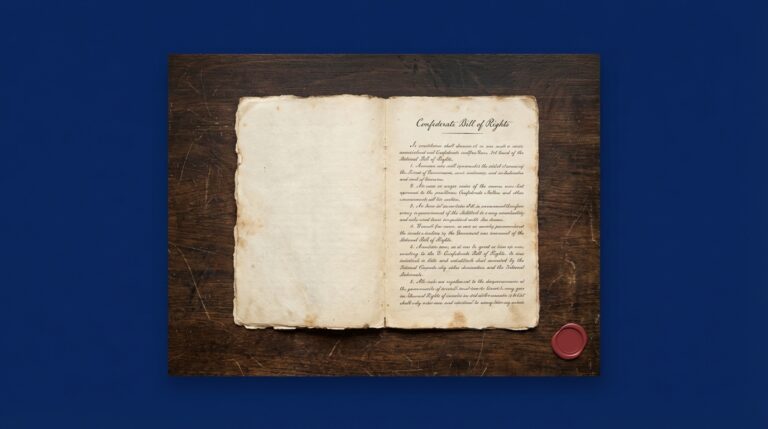
In the immediate postwar period some Southern politicians and newspapers used the phrase confederate bill of rights as shorthand for demands that state authority and local legal control be protected against federal Reconstruction measures.
That phrase did not describe a single, formal document in most places, but rather a bundle of political positions and proposed constitutional language meant to signal resistance to federal power during Reconstruction, often tied to debates in state legislatures and conventions, as described in Library of Congress collections on Reconstruction Library of Congress reconstruction collections.
Join the campaign for updates and local events
Readers who want the original constitutional debates will find archival state convention records and congressional materials useful; this article points to those collections later.
Contemporaries used the wording to frame legal objections to federal enforcement and to justify proposed state rules that would preserve prewar social and political arrangements.
Records show that some Reconstruction legislatures and delegates debated alternative constitutional language and postponed formal compliance as a political tactic to contest measures such as the 14th Amendment, a pattern scholars discuss in foundational histories.

How Black Codes limited the 14th Amendment in practice
Black Codes were state laws enacted immediately after the Civil War that restricted freedpeople’s labor, movement, and civil status, and thus limited how the 14th Amendment’s guarantees operated on the ground, according to summaries of these laws Black Codes (Encyclopaedia Britannica).
Common provisions in Black Codes required labor contracts, allowed vagrancy prosecutions for those without work, and restricted legal claims that freedpeople could make in courts; these measures functionally constrained freedoms that the 14th Amendment aimed to secure in citizenship and equal protection language.
Historians have documented how such laws varied by state but shared core goals of restoring labor systems and limiting freedpeople’s social autonomy, a pattern examined in detailed Reconstruction scholarship Eric Foner’s Reconstruction history.
Because Black Codes were enacted at the state level they often presented direct tensions with federal constitutional principles, and enforcement gaps meant that the protections of the 14th Amendment did not immediately translate into equal rights in practice.
Formal resistance: delayed ratification and alternative state constitutions
Several Southern legislatures delayed or resisted formal ratification of the 14th Amendment and debated state constitutional language that would assert local control over civil and political rules, actions historians describe in collections of Reconstruction records Library of Congress reconstruction collections.
These delays and debates were often political signals intended to contest Reconstruction policies rather than purely procedural objections, and they appear in state convention minutes and correspondence preserved in archival collections.
They combined state laws like Black Codes and voter qualification rules, delayed ratification and alternative state constitutional language, and used intimidation and violence; some federal laws tried to respond but key court rulings limited national enforcement.
When delegates discussed alternative wording, they sometimes proposed clauses that emphasized state police powers or local sovereign prerogatives; scholars note these moves as part of a broader pattern of Reconstruction resistance documented in foundational histories Eric Foner’s Reconstruction history.
Reading those debates in primary documents helps clarify whether actions were legal maneuvers, political posturing, or both, because the same phrases could serve legislative, electoral, and public relations aims.
Voter suppression laws: poll taxes, literacy tests, and grandfather clauses
After Reconstruction many Southern states adopted statutes and constitutional provisions such as poll taxes, literacy tests, and grandfather clauses that removed voting power from large numbers of Black citizens and thereby diluted the 14th Amendment‘s practical promise of equal political participation; these measures are widely described in scholarship and legal histories Eric Foner’s Reconstruction history.

Poll taxes required a payment to vote, literacy tests assessed reading and interpretation abilities often applied subjectively, and grandfather clauses exempted some white voters from restrictions; together these rules were embedded in state constitutions and election laws and proved effective at reducing Black participation.
Because electoral administration was run locally and state laws set voting qualifications, these measures operated at the state level to shape who could vote, how elections were run, and which parties retained power during the late 19th century.
Extra legal measures: paramilitary violence and intimidation
Paramilitary groups and militias, most notably chapters of the Ku Klux Klan, used threats, beatings, and killings to intimidate Black voters and Republican officials, reinforcing legal barriers to political participation and prompting federal enforcement efforts in the early 1870s National Park Service overview of Klan violence.
Groups used night raids, public threats, and targeted attacks to suppress turnout and to pressure local officials who might enforce Reconstruction laws, making legal guarantees difficult to realize at the local level.
Research checklist for paramilitary violence sources
Start with federal reports
Federal legislation and prosecutions sought to respond to this violence, but the combination of local intimidation and inconsistent enforcement meant that many communities faced prolonged suppression of civil rights.
Federal responses and key legal setbacks
Congress passed Enforcement Acts and other measures in the early 1870s to protect civil rights and to allow federal prosecution of violent interference with voting and civil liberties, as described in archival documents and overviews National Archives documentation on the 14th Amendment.
At the same time a sequence of Supreme Court decisions in the 1870s and 1880s, including United States v. Cruikshank and the Civil Rights Cases, narrowed federal authority to act against private violence and limited federal remedies against state-level suppression, framing how the 14th Amendment could be enforced through national courts United States v. Cruikshank case summary.
Those rulings reduced the range of federal options and increased reliance on state courts and officials for protection of rights, which often produced uneven results where local political institutions were hostile to Reconstruction aims.
In response Congress and administrations sometimes attempted renewed enforcement, but the legal landscape created by court decisions constrained consistent federal intervention for decades.
From rollback to Jim Crow: combined effects and long term outcomes
The combined effect of state statutes, delayed ratification strategies, extra legal violence, and narrower judicial interpretations produced a substantial rollback of Reconstruction gains and paved the way for the Jim Crow system of racial segregation and exclusion, a synthesis described in foundational histories and archival records Eric Foner’s Reconstruction history and reports such as the Brennan Center analysis.
As local and state institutions reasserted control, Black political representation and civil rights protections were sharply reduced in many Southern states, and those changes became encoded in law and practice across the region.
Later in the 20th century federal actions, including civil rights legislation and new judicial interpretations, reopened enforcement pathways and addressed many but not all of the structural gaps that emerged after Reconstruction, according to archival overviews National Archives documentation on the 14th Amendment.
How historians and primary sources help us see the confederate bill of rights
To study the phrase confederate bill of rights and the range of resistance strategies, start with major secondary overviews and then consult primary collections such as congressional records, state convention minutes, and archival legal documents held by the Library of Congress and the National Archives Library of Congress reconstruction collections, and resources such as Gilder Lehrman or classroom materials on Jim Crow and segregation Library of Congress classroom materials.
Foundational histories offer synthesized narratives that explain how statutes, constitutional drafts, and local acts fit together, while primary sources let readers test those interpretations against the original language and votes recorded in state conventions.
When reading primary texts pay attention to dates, who introduced a clause, and how courts and local officials applied a provision in practice; those details help separate rhetorical claims from enacted law and from everyday enforcement.
What this history means for understanding constitutional protections today
Studying how Southern actors limited the 14th Amendment in practice highlights the difference between constitutional text and on the ground enforcement: law alone does not guarantee equal application without institutions and political will to uphold it National Archives documentation on the 14th Amendment.
That historical lesson is not a direct prediction about modern law, but it does show why debates about federal enforcement powers, judicial interpretation, and local administration of rights remain central to constitutional politics.
For readers interested in deeper work, the article’s sources and the primary collections it cites offer a documented trail for independent study and classroom use.
Historically it referred to statelevel political language and proposals used by some Southern actors to assert local authority against federal Reconstruction measures, not a single formal national document.
Many Black Codes were enacted under state authority and created practical limits on freedpeople's rights despite the 14th Amendment; federal enforcement at the time was inconsistent and uneven.
Federal legislation and later court rulings and civil rights laws reduced these statelevel restrictions over time, but change was gradual and uneven across states.
For further engagement with this subject, start with the archival collections and secondary histories cited in the article.
References
- https://www.loc.gov/collections/reconstruction-1865-to-1877/
- https://www.britannica.com/topic/Black-codes
- https://wwnorton.com/books/9780393346188
- https://michaelcarbonara.com/14th-amendment-simple-what-it-is/
- https://michaelcarbonara.com/what-was-the-main-point-of-the-fourteenth-amendment/
- https://michaelcarbonara.com/contact/
- https://www.nps.gov/articles/ku-klux-klan.htm
- https://www.archives.gov/milestone-documents/14th-amendment
- https://www.oyez.org/cases/1850-1900/92us542
- https://www.brennancenter.org/media/80/download/Report_A-New%20Birth-of-Freedom.pdf?inline=1
- https://www.gilderlehrman.org/history-resources/essays/reconstruction-amendments-official-documents-social-history
- https://www.loc.gov/classroom-materials/jim-crow-segregation/
- https://michaelcarbonara.com/issue/constitutional-rights/