The goal is to provide a neutral, sourced guide for voters, students, and researchers who want to trace how presidential pardons, constitutional text, and congressional action combined to change eligibility across states.
What people mean by confederate bill of rights in this context
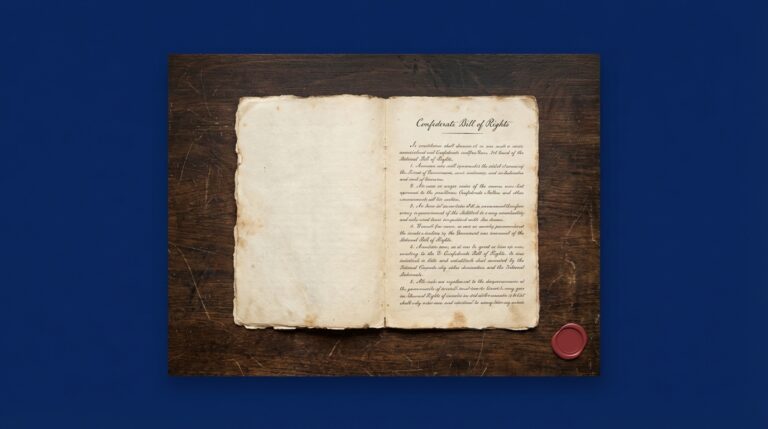
Readers often use the phrase confederate bill of rights to ask whether men who fought for the Confederacy were permanently barred from voting or holding office after the Civil War. That phrase is not a formal legal title. Instead, the key constitutional text that created a disqualification was Section 3 of the Fourteenth Amendment, which set limits on holding federal office for those who had engaged in insurrection, and which Congress or the President could later address.
The term confederate bill of rights can be misleading because it suggests a single law or document that granted or restored rights to former Confederates. In practice, restoration happened through a sequence of presidential pardons, individual pardons, and later congressional legislation, each working within the constitutional framework set by the Fourteenth Amendment National Archives’ text of the Fourteenth Amendment. For readers wanting deeper legal analysis, see a detailed account of amnesty and Section Three Amnesty and Section Three.
View primary sources on pardons and amnesty
For readers interested in the primary documents cited here, see the links below to the constitutional text, major proclamations, and the congressional statute.
Scholars and reference works usually describe this process with terms like amnesty, pardon, and the Amnesty Act of 1872, rather than a single “confederate bill of rights,” and they treat the topic as a mix of constitutional law and political history Eric Foner’s Reconstruction overview. For related site guidance on constitutional topics, see our hub on constitutional rights constitutional rights.
The core legal texts to read: Fourteenth Amendment, presidential proclamations, and the Amnesty Act
The operative starting point is the Fourteenth Amendment, ratified in 1868, and specifically Section 3, which disqualified people who had taken an oath to support the Constitution and then engaged in insurrection from holding federal office unless Congress removed the disability; that text is the constitutional basis for postwar disqualifications National Archives’ text of the Fourteenth Amendment. Readers may also consult the Constitution Annotated discussion of Section 3 Overview of the Insurrection Clause for an annotated treatment.
For executive actions, the main published set of documents are the proclamations of amnesty and pardon issued by President Andrew Johnson beginning in 1865, which provided a route for many former Confederates to seek a pardon or have their disabilities lifted before Congress acted Yale’s Avalon Project collection of Johnson’s proclamations.
The principal congressional statute that followed these executive actions was the Amnesty Act of May 22, 1872, which Congress passed to remove most political disabilities imposed by the Fourteenth Amendment for many former Confederates; readers can consult the congressional text for legal detail Congress’s published text of the Amnesty Act of 1872.
How presidential pardons worked in the 1860s and their practical effect
Presidential proclamations and individual pardons were an early path to restoring civic rights after the war. President Lincoln began limited amnesty steps in 1863, and President Andrew Johnson issued a more extensive series of proclamations in 1865 and after to define who could obtain pardon and how to apply; these proclamations set procedures and categories for executive relief Yale’s Avalon Project collection of Johnson’s proclamations.
Johnson’s proclamations sometimes required that applicants take an oath of allegiance or submit an individual petition, and the scope varied by class of former Confederate official or combatant. That meant some people regained civil rights quickly while others needed to apply and wait for individual pardons Johnson’s proclamations collection.
Section 3 of the Fourteenth Amendment initially disqualified those who had engaged in insurrection, but presidential pardons in the 1860s and the congressional Amnesty Act of 1872 removed most disabilities so that by the early 1870s many former Confederate soldiers could vote and hold office in practice.
Executive pardons did not erase the text of Section 3 itself, but in many cases they restored rights in practice before Congress acted; historians note that executive relief and later congressional measures together shaped who could register and serve in office during Reconstruction Eric Foner’s Reconstruction synthesis.
The Amnesty Act of 1872 and what it changed
Congress responded to the mixed effects of executive pardons by passing the Amnesty Act on May 22, 1872, which removed most political disabilities that Section 3 had imposed on former Confederates; the statute is the central congressional action that broadly reenfranchised many ex-Confederates Congress’s published text of the Amnesty Act of 1872.
The Amnesty Act’s language removed disabilities for most people who had previously been barred from holding federal office, while leaving room for specific exceptions or later congressional or judicial actions in narrow cases; scholars point out the act’s broad effect even where precise legal limits remained a matter for interpretation Eric Foner’s Reconstruction overview.
When did former Confederate soldiers actually regain the right to vote in practice
Many former Confederate soldiers began to regain civic rights during the 1860s through presidential pardons, and the Amnesty Act of 1872 removed most remaining federal disabilities, so by the early to mid 1870s a large share of former Confederates could vote or hold office in practice Text of the Amnesty Act of 1872.

That practical reenfranchisement contributed to the political process historians call Redemption, where many Southern state governments returned to conservative or prewar-aligned leadership in the 1870s as former Confederates reentered politics; historians treat this as a complex political shift rather than a single legal event Eric Foner’s Reconstruction synthesis.
Readers should remember that the national statutes and proclamations set legal possibilities, but the timing and experience of regaining the vote varied by state and locality, because local officials and state registration rules affected who could register and when Library of Congress primary-source collections.
State and local variation: why timing differed across the South
Federal amnesty and the Amnesty Act created a legal pathway, but state voter registration laws, local enforcement, and political decisions produced significant variation in reenfranchisement across Southern states Library of Congress collections of state documents.
Some states imposed additional registration barriers or used local officials to delay or shape who could vote, and those administrative practices sometimes worked differently in adjoining counties, so the real experience of Confederate soldiers seeking to vote depended on local rules and politics Primary-source collections at the Library of Congress.
How Section 3 operated in legal and practical terms
Section 3 of the Fourteenth Amendment set a clear disqualification in constitutional text for persons who had previously taken an oath to support the Constitution and then engaged in insurrection, creating a legal disability that required congressional or executive action to overcome in many cases National Archives’ text of the Fourteenth Amendment.
Because Section 3 is constitutional language, Congress had the power to remove disabilities either for individuals or by general statute, and it later used that power both in individual acts and in the wider Amnesty Act of 1872, so the disqualification was not strictly permanent if removed by the political branches Congress’s published text of the Amnesty Act of 1872. For contemporary discussions of the disqualification clause and its application, see an annotated essay at the Constitution Annotated site Fourteenth Amendment Section 3 – Constitution Annotated and recent commentary on modern applications The 14th Amendment’s Disqualification Provision and the Events of Jan 6.
Tools and sources for readers who want to check primary documents themselves
Readers who want to inspect primary texts should start with the constitutional text at the National Archives, presidential proclamations at collections such as Yale’s Avalon Project, and the congressional statute at Congress.gov; these repositories host authoritative copies of the documents cited in this article National Archives’ Fourteenth Amendment text.
For state-level records, the Library of Congress collections, state archives, and state legislative journals are the best places to find registration laws, voter rolls, and gubernatorial proclamations that show when reenfranchisement took effect locally Library of Congress primary-source collections. You can also consult our state-focused timeline template on the site for structuring local research Fourteenth Amendment resources.

Short timelines for selected states and what to watch for
A simple timeline template to adapt for a state query runs from 1865 to 1875: 1865 presidential proclamations and individual pardons; 1866 to 1868 application of Reconstruction laws and the Fourteenth Amendment; 1872 congressional Amnesty Act; and early 1870s local registration as pardons and statute effects were implemented Congress’s text of the Amnesty Act of 1872.
To verify dates in state records, check voter rolls and registration lists for changes in names or status, consult state legislative journals for laws altering registration, and search local newspapers for announcements or contested elections that record when former Confederates were allowed to register and vote Library of Congress state collections.
Common misconceptions and mistakes when researching this topic
One frequent error is treating phrases like confederate bill of rights as if they name a legal document; that phrase is shorthand and not a formal statute or constitutional amendment, so researchers should look to the Fourteenth Amendment, pardon proclamations, and the Amnesty Act instead National Archives’ Fourteenth Amendment text.
Another mistake is assuming national uniformity. Even after the Amnesty Act, state and local variation meant implementation differed across regions, and relying on a single secondary summary without checking state records can miss important local details Library of Congress primary-source collections.
How historians explain the political consequences of reenfranchisement
Historians argue that the combination of executive pardons and the broad congressional amnesty helped restore many former Confederates to political rights, and that this restoration was a key factor in the political process labeled Redemption in the 1870s Eric Foner’s Reconstruction synthesis. For background on constitutional forms and republican government see our explanatory page on constitutional republic concepts constitutional republic.
Scholars also connect reenfranchisement to later practices that reduced Black political power in many Southern states, noting that the return of prewar elites reshaped state politics even as the precise causal links are debated among experts Encyclopaedia Britannica’s Reconstruction overview.
How to read and cite the primary documents mentioned here
For the Fourteenth Amendment, a short citation might read: U.S. Const. amend. XIV, sec. 3, with a link to the National Archives copy. For Johnson’s proclamations, cite the proclamation date and the collection such as Yale’s Avalon Project. For the Amnesty Act, cite the congressional bill and provide the Congress.gov link for the statute text National Archives’ Fourteenth Amendment text.
When quoting legal language, reproduce the text exactly and provide a direct link to the primary source. When making interpretive claims about political effects, attribute those interpretations to historians or to the specific documents cited rather than asserting them as uncontested facts Eric Foner’s Reconstruction overview.
Short case studies: examples where pardons or the 1872 Act mattered
A useful case-study outline for local research is: identify a named individual or county, search state pardon records or gubernatorial files for a dated pardon, check voter rolls or registration lists for that name, and consult local newspapers for reports of contested registration or election results; these documents show how pardons or the 1872 Act affected a real person’s eligibility Library of Congress primary-source collections.
Another model is to trace a county’s registration books across 1868 to 1874 and note when formerly barred names reappear on rolls, then connect those changes to any available federal pardons or to the timing of the Amnesty Act; that sequence reveals how legal relief translated into practical voting access Congress’s text of the Amnesty Act of 1872.
Conclusion and next steps for readers who want to research further
In short, Section 3 of the Fourteenth Amendment created the initial disqualification, presidential proclamations and individual pardons restored rights to many former Confederates in the 1860s, and the Amnesty Act of 1872 removed most remaining disabilities for a broad class of ex-Confederates National Archives’ Fourteenth Amendment text.
For deeper research, begin with the Fourteenth Amendment text, Johnson’s proclamations, the 1872 Amnesty Act, and major scholarly syntheses such as Eric Foner’s Reconstruction; for state-specific questions consult state archives and the Library of Congress collections named above Eric Foner’s Reconstruction overview.
No. The Constitution's Section 3 created a disqualification, but presidential pardons and the Amnesty Act of 1872 removed disabilities for many former Confederates, so the bar was not permanent in practice.
The Amnesty Act of 1872 was a congressional statute that removed most political disabilities imposed by Section 3 of the Fourteenth Amendment for many former Confederates.
Consult the National Archives for the Fourteenth Amendment text, Yale's Avalon Project for presidential proclamations, Congress.gov for the Amnesty Act, and the Library of Congress for state records.
References
- https://www.archives.gov/milestone-documents/14th-amendment
- https://wwnorton.com/books/9780393320068
- https://avalon.law.yale.edu/19th_century/johnson.asp
- https://www.congress.gov/bill/42nd-congress/senate-bill/37
- https://www.loc.gov/collections/civil-war-and-reconstruction-pamphlets/about/
- https://www.britannica.com/event/Reconstruction-United-States-history
- https://michaelcarbonara.com/contact/
- https://constitutionalcommentary.lib.umn.edu/article/amnesty-and-section-three-of-the-fourteenth-amendment/
- https://constitution.congress.gov/browse/essay/amdt14-S3-1/ALDE_00000848/
- https://www.lawfaremedia.org/article/14th-amendments-disqualification-provision-and-events-jan-6
- https://michaelcarbonara.com/issue/constitutional-rights/
- https://michaelcarbonara.com/us-constitution-14th-amendment-text/
- https://michaelcarbonara.com/constitutional-republic-definition-explained/