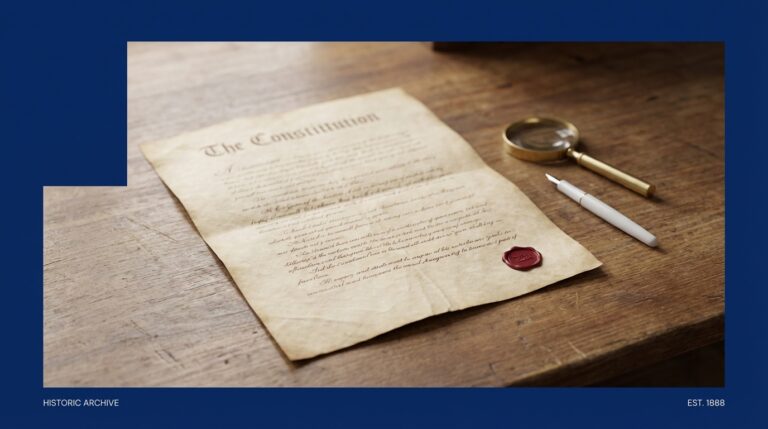
This explainer summarizes why the constitution was created, what it does today and where readers can consult the authoritative consolidated text and reliable reference works.
Quick answer: What Constitution Day commemorates and why it matters
Short summary definition
Constitution Day Mexico marks the promulgation of the Political Constitution of the United Mexican States on February 5, 1917, the foundational legal outcome of the Mexican Revolution and the document that serves as the countrys supreme law Día de la Constitución – Gobierno de México
A short checklist to locate the official consolidated constitution text
Start with the Chamber of Deputies site
Immediate relevance for readers
The date is used as a civic occasion for education and public memory, and it is a practical reminder of where to find the authoritative consolidated text and amendment history for legal or research questions Chamber of Deputies consolidated text
For readers who need a quick reference, the constitution sets the basic structure of government and the rights that underlie many laws and public programs, so Constitution Day functions as a prompt to consult primary sources and reliable overviews Constitution of Mexico – Britannica

How the 1917 constitution came about: brief history and context
The Mexican Revolution and constitutional writing
The Political Constitution of the United Mexican States was written in the aftermath of the Mexican Revolution and promulgated on February 5, 1917, as the legal outcome meant to respond to the social and political upheavals of the preceding decade Chamber of Deputies consolidated text
Promulgation on February 5, 1917
The constitutional convention gathered delegates seeking a durable legal framework that would address land tenure, labor rights and the role of the state in key economic areas, and the resulting 1917 text reflected those priorities in its articles Constitution of Mexico – Britannica

The constitution’s core purposes and functions
Federal structure and distribution of powers
At its core the constitution defines Mexico as a federation and allocates authority among an executive branch, a bicameral legislature and an independent judiciary, setting the legal framework for how public powers are exercised and constrained Mexico – The World Factbook
Stay connected with campaign updates and events
Consult the official consolidated text for exact article language and annotations that explain how specific provisions are applied.
Those structural rules matter because they determine which level of government has responsibility for services, regulation and enforcement, and because they provide the basis for constitutional review and intergovernmental relations Chamber of Deputies consolidated text
Fundamental rights and state obligations
The constitution also enumerates rights and sets obligations for the state, including civil and political guarantees as well as social provisions that shape labor law, land policy and public resource governance Constitution of Mexico – Britannica
These provisions provide the framework for later legislation and judicial decisions, but implementation typically depends on statutes, regulations and court rulings that give constitutional principles effect in practical matters Mexico – The World Factbook
Separation of powers and federal structure in practice
How powers are divided
The constitution assigns executive power to the president, legislative power to Congress and judicial power to the courts, and it establishes mechanisms for each branch to operate while subject to checks and balances from the others Chamber of Deputies consolidated text
Checks, balances and federal relationships
Federalism in Mexico means certain authorities are shared or divided between national and state governments, and the constitution provides the rules for that division while leaving space for political negotiation and legal interpretation Mexico – The World Factbook
In practice, courts and administrative institutions often clarify these relationships when disputes arise, and constitutional text is the reference point for resolving such conflicts Constitution of Mexico – Britannica
How the constitution expanded rights in 1917: labor, land and resources
Social rights introduced in 1917
The 1917 constitution is especially notable for early inclusion of social rights, including labor protections, principles for land reform and provisions that placed strategic natural resources under state control Chamber of Deputies consolidated text
Why these provisions were significant
Those elements distinguished the 1917 text from many earlier constitutions by embedding duties for the state to address economic and social inequalities, an approach scholars describe as social constitutionalism The Mexican Constitution of 1917: origins and legacy
The constitution establishes Mexico's federal structure, separates powers among branches and enumerates citizens rights and state obligations, including social provisions introduced in 1917.
The inclusion of explicit social rights shaped later policy debates about labor protections and resource governance and provided a constitutional basis for reformist legislation in the twentieth century Constitution of Mexico – Britannica
The constitution as a living document: amendments and consolidation
How amendments are recorded
The constitution has been amended repeatedly since 1917, and official consolidated texts and amendment records are published by the Chamber of Deputies and government portals to reflect current law and interpretations Chamber of Deputies consolidated text
Where to find consolidated texts
For researchers and practitioners the consolidated version is the practical starting point because it incorporates subsequent reforms and notes the dates and scope of changes to original articles Constitution of Mexico – Britannica

Ongoing reform efforts and judicial rulings continue to shape how constitutional provisions operate in practice, so consulting the consolidated text helps identify the current legal baseline for questions about rights and powers Mexico – The World Factbook
Constitution Day observances: civic education and public memory
How the day is marked
Constitution Day on February 5 is observed with commemorative events, official statements and educational programs that aim to explain the constitution’s origins and functions to the public Día de la Constitución – Gobierno de México
Educational uses of the observance
Schools, cultural institutions and media outlets commonly use the date to present accessible summaries of constitutional principles and to encourage civic reflection about rights and government responsibilities Constitution of Mexico – Britannica
For civic readers the observance is an entry point to primary texts and trusted summaries, and it offers a regular moment to review how constitutional language connects with everyday law and policy Chamber of Deputies consolidated text
Recent and ongoing reform debates: energy, judicial and federal relations
Reform areas currently discussed
In recent years major debates have focused on topics such as energy policy, judicial reform and the balance of power between federal and state governments, and scholars and officials discuss how these reforms alter constitutional practice Mexico – The World Factbook
How debates relate to constitutional interpretation
These conversations illustrate that constitutional reforms and provisions are often the starting point for political and legal contests, and different actors may rely on the same text to argue for distinct policy outcomes while courts and legislatures determine the details The Mexican Constitution of 1917: origins and legacy
These conversations illustrate that constitutional provisions are often the starting point for political and legal contests, and different actors may rely on the same text to argue for distinct policy outcomes while courts and legislatures determine the details The Mexican Constitution of 1917: origins and legacy
As of 2026 observers note that how recent reforms will change institutional behavior and resource governance remains an open question under active discussion No Checks on Power? The Effects of Mexico’s Judicial Reform
How constitutional provisions affect citizens’ rights in practice
Examples of rights implementation
Constitutional guarantees often require implementing statutes and administrative actions to create enforceable rights, so labor protections or land reform principles in the constitution typically translate into specific laws and programs that citizens can use in disputes Chamber of Deputies consolidated text
Limits and enforcement mechanisms
Enforcement depends on courts, regulatory agencies and legislation, and outcomes can vary depending on political priorities and institutional capacity, which is why readers should consult court rulings and official guidance for case specific questions Constitution of Mexico – Britannica
When people ask how the constitution affects everyday legal options, the short answer is that it sets the legal framework but does not substitute for statutes, administrative procedures or judicial remedies that carry the rules into practice Mexico – The World Factbook
Common misconceptions and interpretive pitfalls
Frequent misunderstandings
A common error is to assume that a constitutional provision by itself delivers a particular program or benefit; in most cases the constitution requires implementing legislation and administration to produce concrete effects Constitution of Mexico – Britannica
How to check claims against primary sources
Readers should verify summaries and political claims by consulting the official consolidated text and reputable reference works to see the exact wording, amendment history and authoritative annotations Chamber of Deputies consolidated text
A short checklist is to read the article language, note amendments and then look for enabling laws and court decisions that explain how the provision operates in practice Constitution of Mexico – Britannica
How the 1917 constitution compares with earlier and other constitutions
Key differences and influences
The 1917 text differed from earlier Mexican constitutions chiefly by embedding social rights and state responsibilities in areas such as labor and natural resources, which many scholars highlight as a distinctive feature of the document The Mexican Constitution of 1917: origins and legacy
Why historians and scholars note its legacy
Historians point to the document as influential in Latin America for its social constitutionalism and for shaping debates about the role of constitutions in addressing social inequality and economic organization Mexico: Government and Politics – A Country Study
Comparative reading helps show which elements of the 1917 text were innovative and which followed older legal traditions, offering perspective for readers who want deeper study The Mexican Constitution of 1917: origins and legacy
Practical scenarios: when the constitution matters for everyday issues
Labor and land questions
In a labor dispute the constitution may provide the broad guarantee for protections, but workers and employers rely on labor laws, administrative processes and labor courts to resolve claims and enforce rights Chamber of Deputies consolidated text
Public policy and resource governance
Disputes about natural resources or land can invoke constitutional provisions that assign state control or regulatory priorities, yet resolution commonly depends on implementing statutes and administrative decisions that apply those provisions to concrete cases Constitution of Mexico – Britannica
For individuals and communities the practical step is to identify the constitutional article at issue, then review relevant laws and court precedents that have interpreted the provision in similar circumstances Mexico – The World Factbook
Conclusion: why Constitution Day still matters and where to read more
Key takeaways
Constitution Day commemorates the 1917 promulgation of a constitution that defines the federal structure, separates powers and enumerates rights including notable social provisions that shaped twentieth century policy Chamber of Deputies consolidated text
Primary sources and reliable references
For readers who want to consult primary texts or authoritative summaries, the Chamber of Deputies consolidated text and trusted reference works such as Britannica provide reliable starting points for reading the full document and its amendments Constitution of Mexico – Britannica

It commemorates the promulgation of the Political Constitution on February 5, 1917, which established Mexico's modern constitutional framework.
Yes. The 1917 constitution remains the supreme law and has been amended; official consolidated versions record those changes.
Official consolidated texts are published by the Chamber of Deputies and government portals and provide the current wording and amendment history.
References
- https://www.gob.mx/presidencia/articulos/dia-de-la-constitucion-5-de-febrero
- https://www.diputados.gob.mx/LeyesBiblio/pdf/1.pdf
- https://www.britannica.com/topic/Constitution-of-Mexico
- https://oxfordre.com/latinamericanhistory/view/10.1093/acrefore/9780199366439.001.0001/acrefore-9780199366439-e-100
- https://www.cia.gov/the-world-factbook/countries/mexico/
- https://www.loc.gov/item/94043005/
- https://michaelcarbonara.com/contact/
- https://www.bakerinstitute.org/research/new-energy-system-mexican-constitution
- https://www.wilsoncenter.org/collection/constitutional-reforms-mexico
- https://www.csis.org/analysis/no-checks-power-effects-mexicos-judicial-reform-foreign-investment-and-usmca
- https://michaelcarbonara.com/issue/constitutional-rights/
- https://michaelcarbonara.com/separation-of-powers-in-the-constitution-explainer/
- https://michaelcarbonara.com/constitutional-republic-definition-explained/