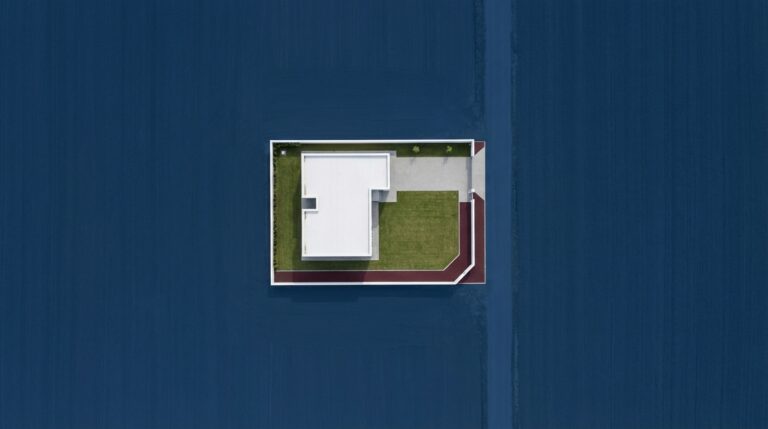
This article explains the legal concepts in clear terms, summarizes the main tests and Supreme Court decisions that shape the doctrine, and offers a practical workflow for assessing curtilage questions. It is meant as educational material using primary sources; it is not legal advice and readers should consult an attorney for case‑specific guidance.
Introduction: why curtilage matters for Fourth Amendment protection
Below we examine whether the curtilage 4th amendment protects the area immediately surrounding a home, how courts treat that area, and what practical steps matter when searches occur.
Courts treat the Fourth Amendment as the starting point for protecting homes and nearby areas because the Amendment protects “persons, houses, papers, and effects” and courts have long recognized that the area immediately surrounding a home can receive protection as curtilage, depending on the facts National Archives – Charters of Freedom.
The full introduction to this topic, including plain‑language definitions and a short roadmap of the legal approach, appears above the article in the introduction section provided for readers who want a quick grounding before the full legal discussion.
Join the campaign for updates on policy priorities and local news
The short guide below focuses on the legal tests courts use and practical steps homeowners and officers can take to document or assess curtilage questions.
This article then proceeds to define curtilage; explain the Open Fields doctrine and the Dunn factors; summarize how Jardines and related cases change how investigative tools are treated; list common exceptions; and offer a stepwise checklist practitioners use in most jurisdictions.
Definition and context: what courts mean by curtilage
When judges decide whether land next to a house is protected, they start with the constitutional text protecting “persons, houses, papers, and effects,” and then ask if the immediate area around the home shares the home’s privacy expectations National Archives – Charters of Freedom.
In practical terms, curtilage is the area immediately surrounding and intimately associated with the home. Courts describe it as the space where private life extends outside the four walls, like a front porch or a back yard that family members use for domestic activities, depending on the facts Curtilage – Wex Legal Encyclopedia.
By contrast, the Open Fields doctrine excludes wide, nonresidential land from Fourth Amendment protection. Open fields that are not closely connected to daily home life are generally outside the protection afforded to the house itself Hester v. United States.
To see the difference in simple terms: a family’s back yard used for barbecues and child play is more likely to be treated as curtilage than a distant pasture or crop field on the same property, but courts make that judgment case by case.

Legal framework and controlling doctrines
The Open Fields doctrine and the case law on the Fourth Amendment work together to set the outer limits of protection around the home. Open fields remain nonprotected land under long‑standing precedent, while curtilage can be protected if the specific facts point that way Oliver v. United States.
Because the curtilage inquiry is inherently factual, lower courts rely on a mix of constitutional text and prior opinions when weighing disputed searches. That means lawyers and judges often start with established tests before moving to exceptions and newer precedents.
Quick Dunn factors checklist to guide a fact specific curtilage analysis
Use sequentially and document evidence for each factor
When a search occurs, courts generally perform a two‑stage review: first decide whether the area qualifies as curtilage under the test courts use, then decide whether any recognized exception to the warrant requirement applies.
United States v. Dunn and the four-factor curtilage test
United States v. Dunn provided the widely used four‑factor test judges apply to decide curtilage: proximity to the home, whether the area is within an enclosure surrounding the home, how the area is used, and what steps the owner took to protect it from observation United States v. Dunn.
Each factor has a straightforward meaning: proximity asks how close the area is to the house; enclosure asks whether fences or walls link the area to the house; use asks if the area supports intimate activities of the home; and steps to protect addresses measures like screening or fencing to keep the area private.
Judges balance those factors. No single factor decides the case; a yard close to the house but used only for storage may receive less protection than a yard used daily for family life, while a porch directly attached to the front of a home will weigh heavily toward protection.
Yes, curtilage can be protected by the Fourth Amendment, but courts determine protection fact by fact using the Dunn factors and controlling precedents like Jardines.
To apply the test, courts document facts for each factor, often citing photographs, testimony, and the physical layout of the property. This fact‑based record is central to how judges explain either finding of protection or lack of it.
As a practical rule, proximity and use often carry significant weight because they directly connect the area to core home activities, but different circuits sometimes emphasize different elements when facts are close.
Key cases and recent developments, including Jardines
Florida v. Jardines is a key recent decision about how investigators approach a home’s curtilage. The Supreme Court held that bringing a drug‑sniffing dog onto a home’s front porch was a Fourth Amendment search because it involved a physical intrusion onto the curtilage combined with property‑based expectations of privacy, changing how some investigative techniques are treated Florida v. Jardines opinion.

Jardines emphasized that the Fourth Amendment protects both privacy and property interests at the home’s perimeter. The opinion did not say that every investigative tool used near a house is a search, but it made clear that physical intrusion onto curtilage can be decisive.
Older cases continue to shape limits on expectation of privacy in certain contexts. For example, investigative observations from public airspace or public roads have been treated differently under prior rulings, and judges continue to refine how those precedents apply alongside Jardines.
Because new surveillance techniques and sensors are now common, courts and commentators are still working out how those technologies intersect with existing curtilage doctrine in particular circuits. A recent law review on aerial surveillance discusses how aerial observations interact with property‑based Fourth Amendment arguments; see that analysis.
Common exceptions and limits to curtilage protection
Even when an area is curtilage, common exceptions can still permit officers to enter or search without a warrant. The main exceptions are consent, plain view, exigent circumstances, and searches incident to arrest, though courts apply each exception to the case’s specific facts and governing precedent Oliver v. United States.
Consent can come from an occupant’s clear and voluntary agreement, but courts look for verified proof of consent in the record. A homeowner who signs away access or tells a visitor to come in can change the analysis.
Plain view applies when officers lawfully are in a place and see evidence of a crime in plain sight. Exigent circumstances allow entry when there is an immediate need to act, for example to prevent harm or the destruction of evidence, but courts require a concrete showing of urgency.
Searches incident to arrest permit a limited search connected to an arrest, but the scope depends on the location, the timing, and whether the arrest happened inside or outside the curtilage. Courts often resolve close cases by looking carefully at both the curtilage factors and the asserted exception.
Practical step-by-step approach for courts, homeowners, and officers
Practitioners commonly follow a three‑step workflow: first apply Dunn’s four factors to identify whether the area is curtilage, next evaluate any claimed exception such as consent or exigency, and finally check controlling precedents like Jardines for limits on investigative techniques United States v. Dunn.
For courts, that means developing a fact record on each Dunn factor: maps or photos to show proximity and enclosure, testimony about how the area is used, and evidence of steps taken to protect privacy such as fences or screens.
Homeowners who want to document privacy expectations should document routine uses of the space (dates and photos showing family activities), preserve evidence of barriers, and note any interactions with visitors or officers that could show consent or the lack of it.
Officers who must justify an entry should contemporaneously record why any exception applies, for example articulating observed exigent facts, obtaining written consent when possible, and noting whether observations were made from public vantage points.
When new tools like dogs, sensors, or drones are involved, follow the most directly controlling precedent in your circuit and document the tool’s use carefully. Courts will compare the tool’s intrusiveness to the expectations the homeowner demonstrated through physical measures and use.
Typical errors, litigation pitfalls, and how courts reject weak claims
One common homeowner error is assuming that a fence alone creates curtilage. While enclosure is one Dunn factor, courts also require evidence about proximity and nature of use; a distant fenced area used for storage often fails to qualify as curtilage even if it is on the same property United States v. Dunn.
Police sometimes fail to document consents or exigent facts. Courts have suppressed evidence where officers could not show a voluntary consent or could not explain why exigent circumstances justified an immediate entry, so contemporaneous notes are important. See additional analysis in a law review piece How Far Is Too Far?.
Another pitfall is relying on generalized privacy claims without a fact record. Judges often reject curtilage arguments that rest only on a homeowner’s assertion that the area felt private when there is no corroborating evidence of use or screening.
When curtilage questions are close, judges typically explain their reasoning by mapping facts to each Dunn factor and by showing how any exception does or does not fill the legal gap.
Practical scenarios and short case studies
Scenario A, porch and drug dog: An investigator brings a drug‑sniffing dog onto a home’s front porch without a warrant. Applying Jardines, a court is likely to treat that as a search when the porch is attached to the home and used for intimate activities, because the physical intrusion onto curtilage implicates property and privacy expectations Florida v. Jardines opinion. A related appellate discussion appears in a Sixth Circuit opinion considering canine approaches.
Scenario B, open field versus backyard: Officers cross a distant pasture to observe a barn. The pasture functions as an open field and is likely nonprotected under the Open Fields doctrine, while a backyard directly adjacent to the house used for family life would be more likely to qualify as curtilage; older precedents on open fields remain controlling for noncurtilage land Hester v. United States.
Scenario C, fenced yard used daily: A backyard immediately behind a house, enclosed by a low fence but used daily for family activities and screened by hedges, may be treated as curtilage after balancing proximity, enclosure, use, and steps to protect, especially when evidence shows routine domestic use United States v. Dunn.
In each scenario, small changes in fact can shift the result. Judges look to objective evidence about layout and use, not to a homeowner’s general sense of privacy alone.
Conclusion: key takeaways and where to look next
Curtilage can be protected by the Fourth Amendment, but courts decide the question case by case using Dunn’s four factors and relevant precedents such as Jardines United States v. Dunn.
Common exceptions like consent, plain view, exigent circumstances, and searches incident to arrest may still permit warrantless entries, so always assess those issues after the curtilage analysis Florida v. Jardines opinion.
For deeper reading, consult the primary sources and legal encyclopedias cited in this guide to see full opinions and doctrinal discussion, and review controlling circuit authority for jurisdiction‑specific rules.
Curtilage is the area immediately surrounding and closely associated with a home where private activities typically occur; courts decide its status case by case.
No. Enclosure is one factor judges consider, but courts also weigh proximity to the house, how the area is used, and steps taken to protect it.
Bringing a drug‑sniffing dog onto a home’s porch has been held to be a Fourth Amendment search in a controlling Supreme Court opinion, though outcomes can depend on the facts and jurisdiction.
References
- https://www.archives.gov/founding-docs/amendments-11-27#fourth-amendment
- https://www.law.cornell.edu/wex/curtilage
- https://supreme.justia.com/cases/federal/us/265/57/
- https://supreme.justia.com/cases/federal/us/466/170/
- https://supreme.justia.com/cases/federal/us/480/294/
- https://www.supremecourt.gov/opinions/12pdf/11-564_p860.pdf
- https://michaelcarbonara.com/contact/
- https://www.capitallawreview.org/article/7273-drones-and-jones-rethinking-curtilage-flyover-in-light-of-the-revived-fourth-amendment-trespass-doctrine.pdf
- https://www.opn.ca6.uscourts.gov/opinions.pdf/20a0109p-06.pdf
- https://digitalcommons.law.ggu.edu/cgi/viewcontent.cgi?article=1432&context=ggulrev
- https://michaelcarbonara.com/
- https://michaelcarbonara.com/issue/constitutional-rights/