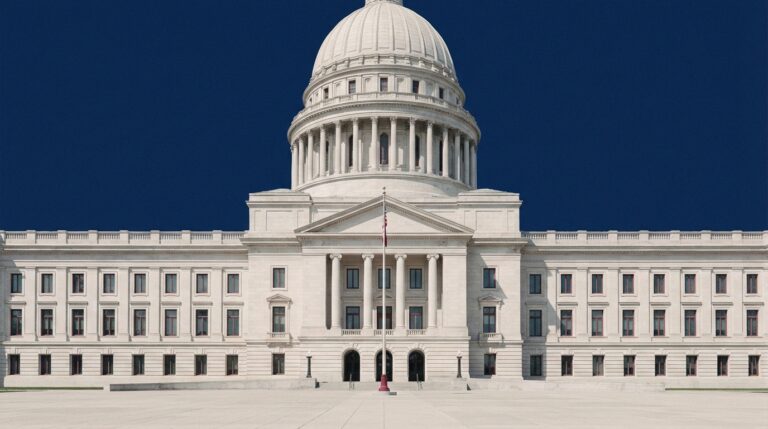
The aim is to give voters, students, and civic readers a reliable framework and pointers to original sources so they can verify claims and follow disputes about authority.
What does ‘different powers of government’ mean? A brief definition and context
The phrase different powers of government refers to the main legal and political sources that give public institutions authority to act. In practice this covers constitutional authority, statutory or legislative authority, judicial interpretation, administrative and regulatory power, executive discretion, and coercive or legitimacy power; these six categories are commonly used to describe where authority originates and how it is exercised.
Understanding different powers of government helps citizens, journalists, and students know where to look when tracing responsibility for a law, regulation, or official action. The U.S. Constitution provides the high-level structure for government, and other sources fill in the details that affect day-to-day policy and enforcement.

Many modern states use similar categories to map authority even if their texts and institutions differ. This article treats the U.S. as a primary example while noting these categories apply in many other democratic systems as well.

Why legal sources of power matter: constitutional versus statutory foundations
At the top of the legal hierarchy is the constitution, which sets the structure of government and high-level limits. Below that, legislatures pass statutes that create rights, duties, and often delegate detailed authority to agencies responsible for implementation, a process explained in guidance like How Our Laws Are Made on Congress.gov How Our Laws Are Made on Congress.gov.
For practical purposes, the difference matters because a constitutional provision will typically prevail over an ordinary statute when the two conflict, while statutes are the ordinary source for day-to-day legal rules and programs. Knowing whether a question is primarily constitutional or statutory tells a reader where to begin their search for authoritative text.
Constitutional power: what it is and how it allocates authority
Constitutional power is the primary legal source that allocates high-level authorities among branches of government; the U.S. Constitution is the central primary document for that arrangement and is preserved in the National Archives U.S. Constitution archive.
Join the campaign for updates and involvement
If you prefer original documents, the Constitution transcript and official archives are the right first stop for text and historical context.
The constitution defines structures such as the separation of powers and provides the procedures for amendment and high-level limits on government. Those rules shape how legislatures, courts, and executives can act, and they serve as the starting point for many disputes about public authority.
Constitutional claims often begin the argument when a policy appears to clash with basic structural rules. Because amendment is intentionally rigorous, constitutional text tends to remain the enduring legal baseline.
Statutory power: how legislatures create rights and delegate authority
Statutory power comes from laws passed by legislatures, which convert policy proposals into enforceable legal duties and often delegate implementation details to administrative agencies; Congress.gov provides a clear primer on how laws are made and published How Our Laws Are Made on Congress.gov.
Legislatures write statutes to establish programs, create offenses, or authorize spending. When a statute delegates authority, it gives agencies permission to write rules, issue guidance, or run adjudications that apply the statute in practice.
That delegation is important because agencies typically have specialized staffs and procedures for detailed rulemaking. The legislative text therefore matters both for the substantive rule and for the scope of agency discretion.
Judicial power: interpretation, precedent, and judicial review
Judicial power means courts interpret constitutions and statutes and can invalidate executive or legislative actions that conflict with higher law; the foundational U.S. example is Marbury v. Madison as summarized in case resources such as the Marbury v. Madison case summary on Oyez Marbury v. Madison case summary on Oyez.
Quick case-finding checklist for Marbury and related judicial review references
Use court summary sites for full opinions
Court opinions apply constitutional and statutory text to real disputes and develop precedent that later judges use to interpret similar issues. Judicial review is the mechanism by which courts assess whether an act of government fits within the law or constitution.
Judicial authority is powerful but bounded: courts rely on text, precedent, doctrine, and the cases that come before them. Their role often resolves specific conflicts rather than designing broad policy in the first instance.
Administrative and regulatory power: agencies, rulemaking, and adjudication
Administrative power is carried out by agencies acting under statutory delegations and is governed by procedures such as those set out in the Administrative Procedure Act; the APA codifies core rulemaking and adjudication steps in federal practice Administrative Procedure Act text.
Agencies use notices, proposed rules, public comment, and final rule documents to create the detailed regulations that implement statutes. Those actions are often published in the Federal Register where the public can see proposals, changes, and official notices.
Because agency rulemaking can affect broad sectors of the economy and public life, the APA and related processes provide transparency and a path for public input. Administrative decisions are also subject to judicial review where parties challenge legal bases or procedural fairness.
Executive and discretionary power: scope, practice, and limits
Executive or discretionary power covers actions taken by presidents, governors, or executive agencies under constitutional or statutory authority and includes tools such as executive orders, prosecutorial discretion, and administrative priorities; descriptions of executive rulemaking and the Federal Register offer context for how some executive actions are recorded About the Federal Register and Rulemaking.
Executive discretion operates where leaders make timely decisions or set enforcement priorities within the bounds of law. That discretion is shaped by statutes, precedent, and political practice, and scholars and courts frequently debate its proper scope.
Different powers of government identify the legal sources that authorize action: constitutional provisions define structure, statutes set rules and delegate authority, agencies implement rules, executives exercise discretion within legal bounds, courts interpret and review actions, and coercive power enforces decisions; together these sources create a system of checks and procedural paths for resolving conflicts.
Because courts and legislatures can check executive action, discretionary power is rarely absolute. Instead, it tends to be a mix of legal authority, established practice, and reviewable choices made public officials take to manage government operations.
Coercive power and legitimacy: policing, enforcement, and the monopoly on force
Coercive power refers to the state’s capacity to enforce laws and maintain public order, a concept tied in political theory to the idea of legitimate authority as discussed in resources like the Stanford Encyclopedia of Philosophy entry on authority Stanford Encyclopedia of Philosophy entry on Authority.
This source of power underpins policing, criminal enforcement, and other uses of state-sanctioned force, but legal authorization and oversight structures are intended to bound its exercise. Courts, statutes, and public accountability mechanisms all play roles in constraining coercive actions.
Discussions of coercive power often raise careful questions about legitimacy, proportionality, and oversight. These are persistent topics in scholarship and law, and they shape how societies balance order and rights.
How the six sources interact: checks, overlaps, and conflict resolution
The six sources do not operate in isolation; they overlap and check one another. For example, a statute may delegate rulemaking to an agency, the agency will issue rules under administrative procedures, and courts may later interpret the statute or review the agency action in light of constitutional limits, a sequence illustrated in many cases where judicial review resolves interbranch disputes Marbury v. Madison case summary on Oyez.
Checks and balances distribute authority so that no single institution has final, unchecked control in ordinary circumstances. Legislatures write laws, executives implement them, agencies fill in technical details, and courts review compliance with higher law.
In practice, resolution of disputes often involves multiple steps: administrative action, agency adjudication, and judicial review, sometimes accompanied by legislative clarification or executive adjustment. Understanding the interplay helps readers trace responsibility for outcomes.
How to evaluate which power applies: practical decision criteria
A simple decision framework helps determine which source of power is most relevant: start with constitutional text, then look for statutory authorization, check agency rules, examine executive orders or directives, and finally search for controlling case law; Congress.gov and the Federal Register are practical starting points for statutes and rules How Our Laws Are Made on Congress.gov.
Use this quick checklist when evaluating a claim: 1) Is there a constitutional provision on point? 2) Is there a controlling statute? 3) Has an agency issued a rule that implements the statute? 4) Has the executive issued a relevant order or guidance? 5) Are there court decisions interpreting the matter?
Searching primary sources gives the clearest answer. Start with the statute text, then read agency rules or notices and any related court opinions to see how the rules have been interpreted and applied.
Common mistakes and pitfalls when explaining sources of power
A frequent error is treating statutes or agency rules as equivalent to constitutional authority. The hierarchy matters: a constitutional provision can override a statute, and courts will reference that hierarchy when resolving conflicts, which is why judicial review remains central to disputes over power Administrative Procedure Act text.
Another pitfall is overstating the reach of judicial or executive power without checking the controlling text and precedent. Claims about authority should be grounded in primary sources and careful reading of applicable statutes or cases.
When explaining contentious matters, verify claims against the Constitution, the relevant statute, agency rules, and any recent court decisions to avoid misattribution of authority or effects.
Practical scenarios: U.S. examples that illustrate the six sources in action
Marbury v. Madison remains the classic example of judicial power shaping interbranch authority; the case identified the role of the judiciary in reviewing acts that conflict with higher law and is often cited when courts consider their review powers Marbury v. Madison case summary on Oyez.
Agency rulemaking under a statutory delegation shows administrative power in action: a law passed by Congress authorizes an agency to write regulations, the agency proposes rules, invites comment, and publishes final rules in the Federal Register where implementation details become public and legally enforceable.
Executive discretion also appears in practice when leaders set enforcement priorities or issue orders that direct agencies; those actions can be challenged in court if they exceed statutory or constitutional bounds, illustrating how executive choices are subject to legal limits and review.
Each scenario underscores the point that identifying the controlling authority requires looking to the relevant constitutional text, statute, agency action, and case law in sequence when disputes arise.
Conclusion: how to read sources of power and why it matters for civic readers
In summary, the six sources discussed here-constitutional authority, statutory or legislative authority, judicial interpretation, administrative and regulatory power, executive discretion, and coercive legitimacy-play distinct roles in how governments act. For readers tracing responsibility, start with primary documents such as the Constitution transcript preserved by the National Archives U.S. Constitution archive.
Knowing where to look-constitutional text, statutes on Congress.gov, the Administrative Procedure Act, agency notices in the Federal Register, and key cases-makes it possible to verify claims and understand who is authorized to act in a given situation. Civic readers who consult those sources will better assess legal bases and avoid common attribution errors.
Careful attribution and a stepwise approach help keep public discussion grounded in verifiable documents rather than rhetoric. That clarity supports accountability and informed civic engagement.
They are constitutional authority, statutory or legislative authority, judicial interpretation, administrative and regulatory power, executive or discretionary action, and coercive or legitimacy power.
Start with the Constitution transcript, the statutory text on Congress.gov, agency rules and notices in the Federal Register, and relevant court opinions for interpretation.
Begin with constitutional text, then check statutes, agency rules or guidance, executive orders, and finally controlling case law to see how courts have applied the law.
For civic readers, that verification supports clearer reporting, informed voting, and more precise public discussion.