
It aims to help readers tell which programs were enacted, which were proposals, and where to find primary sources.
Quick answer: What was FDR’s economic policy and the Economic Bill of Rights?
One-paragraph summary for readers in a hurry
Franklin D. Roosevelt’s economic policy, commonly called the New Deal, was a multi-year program aimed at relief, recovery, and reform in response to the Great Depression; the Roosevelt presidential library summarizes this threefold aim as the core definition of the New Deal FDR Presidential Library overview.
The 1944 proposal known as the Economic Bill of Rights was presented in FDR’s Annual Message to Congress and framed broader economic entitlements, but it remained a presidential proposal rather than an enacted federal statute 1944 transcript. (See also a transcription at USHistory.)
Find primary New Deal documents in archives
Use primary-source search terms
What this article covers and why it matters
This article outlines the New Deal’s structure and key programs, separates First and Second New Deal actions, summarizes the 1944 Economic Bill of Rights as a speech, and reviews the main scholarly debates. It points readers to archival transcripts and agency histories for verification.
For readers researching primary texts, the article links to presidential transcripts, agency histories, and archival summaries referenced below.
Definition and historical context: relief, recovery, and reform
Why policymakers called it the New Deal
Historians and contemporary records describe the New Deal as a set of policies and programs organized around relief for immediate needs, recovery of the broader economy, and reform of institutions to reduce future market failures, a summary reflected in archival accounts at the National Archives National Archives New Deal overview.
By 1933 the United States had experienced a major economic collapse following the 1929 stock market crash and a steep downturn through 1933; policymakers framed the New Deal as a response to collapsing output, widespread unemployment, and banking failures.
The New Deal was not a single law but a series of legislative acts, executive actions, and administrative programs carried out over many years. This patchwork approach reflected both emergency needs and experimentation with institutional reform.
Understanding the threefold framework helps readers see why some measures focused on immediate relief while others aimed to reshape federal roles in the economy.
First New Deal (1933-1934): emergency stabilization and job creation
Key programs and how they worked
The First New Deal prioritized emergency financial stabilization and short-term job creation through programs and regulatory changes, a characterization repeated in archival program summaries and historical overviews National Archives New Deal overview.
One early priority was banking stabilization. The administration moved quickly to restore public confidence through federal actions on bank holidays and new regulatory oversight to reduce the immediate risk of further runs and failures.

The Civilian Conservation Corps, or CCC, provided organized work for young men on conservation and infrastructure projects and was designed as a relief program to reduce unemployment while delivering tangible public works.
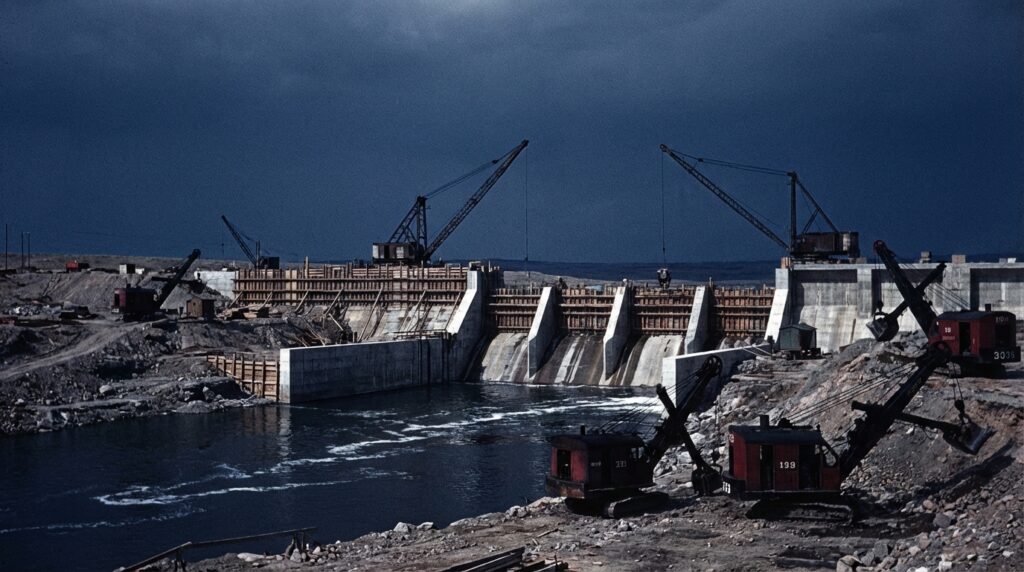
The Tennessee Valley Authority combined regional planning, power generation, and job creation in one program, aiming to modernize infrastructure and provide low-cost electricity in a defined watershed region.
The National Recovery Administration sought to stabilize prices and protect wages by coordinating industry codes, though it operated as a temporary experiment in managing competition and labor standards rather than a permanent regulatory regime.
Agricultural support and emergency relief were also major elements, with measures to address farm prices and direct assistance where harvest failures and low commodity values damaged rural incomes.
Stay informed and involved with Michael Carbonara's campaign updates
The primary sources and program descriptions are available in the archival records linked in this article for readers who want to follow the legislative texts and program reports.
Officials described these measures as immediate stabilization tools and short-run employment programs rather than permanent social insurance systems.
Second New Deal (1935 onward): large-scale reform and Social Security
WPA and broader social-policy measures
The Second New Deal shifted more toward long-term reform and social-policy measures, expanding federal involvement in employment and social insurance, a change reflected in agency histories and program records Social Security Administration history.
The Works Progress Administration was a major component of this phase, funding large-scale public-works projects, supporting artists and technical workers, and providing employment through a federal program with significant local and national footprints.
These efforts aimed to reduce unemployment by directly creating jobs and by building public assets, while also offering income to families through payrolls on projects that varied widely by location and need.
The Social Security Act of 1935 established a federal framework for old-age benefits and unemployment insurance that endures today as part of the U.S. social insurance architecture.

Rather than replacing all private provision, Social Security created a baseline of federal protection that states and localities could build on; the Social Security Administration notes that the 1935 law laid down institutional structures still active in modern programs.
The Second New Deal combined direct employment programs, regulatory reform, and a new social-insurance baseline to address longer-term economic security needs.
The 1944 Economic Bill of Rights: aims, text, and why it was aspirational
Core rights FDR proposed in 1944
In his January 1944 Annual Message to Congress, Roosevelt proposed what he called an Economic Bill of Rights, listing rights such as the right to employment, housing, adequate medical care, and economic security; the speech transcript records these proposals as presidential aims rather than enacted law 1944 transcript. See also the FD Roosevelt Library’s State of the Union at FDR Library.

The Economic Bill of Rights functioned primarily as an agenda-setting speech. It extended the administration’s rhetorical frame from immediate recovery and reform toward a broader vision of economic entitlements, but it did not itself become a single statute that created those rights across the federal code. For further context, see Michael Carbonara’s explainer.
Scholars and archival descriptions treat the 1944 message as influential in shaping later debates about the federal role in welfare and economic security, even though specific legislative outcomes relied on future Congresses and separate laws.
Readers should note the distinction between speech and statute when they encounter claims that the Bill of Rights created guaranteed federal entitlements; the original transcript makes clear it was a presidential proposal.
Effects and the scholarly debate: what changed and what remains disputed
Measured short-term effects and public-works employment
Contemporary program records and government summaries document large-scale public-works employment and institutional changes under New Deal programs, and these program outcomes are commonly noted in archival accounts National Archives New Deal overview.
Quantitative debate continues about how much of the overall macroeconomic recovery the New Deal alone produced. Many scholars emphasize that full recovery in output and unemployment was closely tied to wartime mobilization in World War II, an interpretation discussed in modern reviews of New Deal effects Brookings analysis of New Deal scholarship.
That debate rests on counterfactual questions about what would have happened without New Deal spending and institutions and how private and public sectors responded to both domestic policy and global conflict.
What is less disputed in archival and administrative records is the institutional legacy: programs like Social Security and agencies such as the TVA persisted and shaped subsequent policy choices.
Readers should approach statistical claims with attention to the methods used in each study, and consult primary program reports alongside modern scholarship to form a balanced view.
How to evaluate FDR’s economic policy: common mistakes and practical criteria
Three practical questions readers should ask
Evaluate claims by checking whether a statement refers to enacted law or to a presidential speech, since the Economic Bill of Rights was a proposal in the 1944 State of the Union rather than a statute.
Distinguish short-term outputs, like jobs created by public-works programs, from long-term causal attribution about macroeconomic recovery; recent syntheses discuss the wartime role in full recovery and advise careful causal inference Brookings analysis.
Common mistakes include treating slogans or presidential rhetoric as if they were enacted policy, and assuming that every New Deal program aimed for permanent social insurance when many early efforts were emergency relief and stabilization tools.
FDR's economic policy, known as the New Deal, combined emergency relief, economic recovery measures, and institutional reform; the 1944 Economic Bill of Rights was a presidential proposal that articulated broader economic goals but was not passed as a single federal law.
To read primary sources, begin with presidential transcripts and contemporary agency histories, then compare them to modern scholarly reviews that explain methods and limits of causal claims. Full text transcription is also available at Marist’s FDR Library.
Use the references in this article to locate primary documents and agency pages to verify specific program details. For site resources see Michael Carbonara’s site.
How to evaluate FDR’s economic policy: common mistakes and practical criteria
How to read primary sources and secondary analysis
Primary transcripts, program reports, and contemporary legislative texts show what was enacted and when; secondary analysis places those acts in broader economic and political context and often models alternative scenarios to estimate effects.
Read both kinds of sources to separate factual program details from interpretive claims about long-term impact and to avoid overstating causal links between any single policy package and complex economic outcomes.
Practical examples, legacy today, and a concise conclusion
Examples of New Deal institutions that persist
Concrete legacies of the New Deal include the Social Security framework established in 1935 and regional institutions such as the Tennessee Valley Authority; the Social Security Administration and congressional collections provide histories of these enduring institutions Social Security Administration history.
The TVA continues to inform discussions about regional development and public infrastructure, and many public-works assets created under New Deal programs remained part of local and federal infrastructure for decades.
In short, the New Deal enacted many programs and institutional changes that had lasting effects, while the Economic Bill of Rights remained a rhetorical and policy agenda articulated in 1944 rather than a single enacted code.
Readers who want to review primary documents should consult the linked transcripts, agency histories, and archival collections cited throughout this article, or visit the author’s about page.

No. The Economic Bill of Rights was a proposal in FDR's 1944 State of the Union and did not become a standalone federal law.
Yes. The Social Security Act of 1935 established a federal framework for old-age benefits and unemployment insurance that endures today.
Scholars debate this. Many note the New Deal created jobs and institutions, but full macroeconomic recovery is often linked to World War II mobilization.
Consult the linked transcripts and agency histories to verify specific program texts and legislative timelines.







