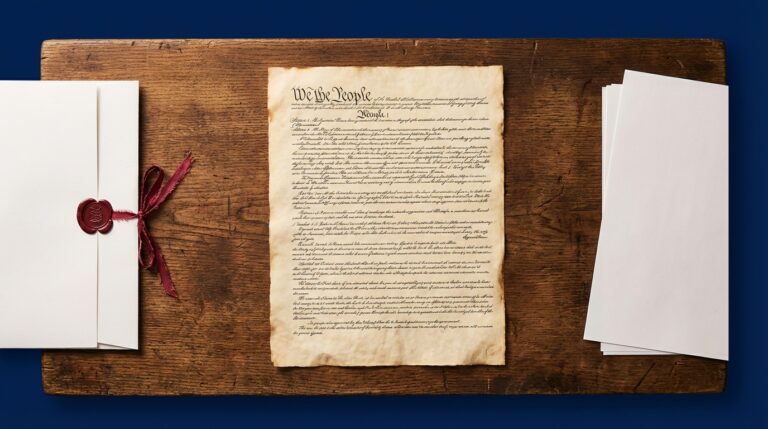
Understanding these basics helps voters, students, and local residents evaluate news, civic actions, and workplace issues without needing legal training. The piece points to primary texts and reliable guides so readers can check sources themselves.
What the First Amendment is and where it comes from, first amendment explained
The First Amendment protects five basic freedoms: speech, religion, press, assembly, and petition. The text appears in the Bill of Rights and names those categories as core protections, and the amendment text is the starting point for understanding modern free expression law, according to the National Archives transcription of the Bill of Rights National Archives Bill of Rights transcription.
The Amendment was ratified as part of the Bill of Rights in 1791 and it remains the constitutional baseline for many disputes about speech and religion. For a concise legal overview that explains how courts interpret those protections today, consult the Legal Information Institute’s summary of the First Amendment First Amendment overview at LII.
Join the Campaign for Updates and Local News
For primary text and plain summaries, read the Amendment itself and a trusted legal primer to see how the five freedoms are described and applied.
The five freedoms, one by one: a plain-terms breakdown
Speech, religion, press, assembly, and petition are the five freedoms named in the Amendment’s text. Each covers a distinct set of activities that people use to express ideas, organize, and seek redress.
Speech means expressing ideas, whether spoken, written, or shared online. An ordinary example is posting an opinion on social media or speaking at a community meeting. For user-focused examples and plain explanations, see the ACLU’s free speech guide ACLU free speech guide.

Religion covers two related protections: it restricts government from establishing religion and protects individuals who practice religion. An everyday example is requesting a workplace accommodation for a religious holiday. The Legal Information Institute summarizes those clauses and how courts treat them First Amendment overview at LII.
Press means that news organizations and reporters have special protections against government interference. A typical example is investigative reporting about local officials. Assembly covers gatherings like protests or marches, and petition covers formal requests to government such as signatures on a petition or filing a complaint. For practical illustrations of assembly and petition in daily life, see user-facing rights material ACLU free speech guide.
Quick reference for looking up case text on primary sources
Use official repositories for accuracy
Freedom of speech: broad protection and key legal limits

Freedom of speech is a core First Amendment protection, but it is not absolute. Courts test whether speech may be regulated when it falls into categories the law limits, and legal primers explain those boundaries in accessible terms First Amendment overview at LII.
Why speech is strongly protected
Courts generally start from a presumption in favor of open debate. That means most political, artistic, and critical speech is protected even when it is unpopular or offensive. This broad protection is central to how the Amendment operates in democratic self-government.
Brandenburg and the incitement test
The Supreme Court’s decision in Brandenburg v. Ohio set the modern test for punishing advocacy that encourages lawless action. Under that test, advocacy can be punished only if it is directed to inciting imminent lawless action and is likely to produce such action, summarized in the case text Brandenburg v. Ohio at LII. See the full opinion at Justia Brandenburg v. Ohio at Justia and a case summary at Columbia’s Global Freedom of Expression project Brandenburg v. Ohio – Global Freedom of Expression.
The First Amendment protects speech, religion, press, assembly, and petition, but courts have long held those rights are not absolute. Landmark cases define when speech or reporting may be restricted, and many modern disputes turn on factual details and evolving precedent.
Libel, public officials, and New York Times Co. v. Sullivan
When speech concerns false statements about public officials, the Court requires a higher standard for libel. In New York Times Co. v. Sullivan the Court held that public officials must show a statement was made with actual malice to recover for defamation, and the opinion explains that heightened protection for reporting about officials New York Times Co. v. Sullivan at LII.
An everyday illustration of these limits is that direct threats or speech that meets the Brandenburg incitement standard can be subject to criminal penalties, while harsh criticism of officials is generally protected. Legal summaries and user guides help distinguish protected criticism from punishable conduct First Amendment overview at LII.
Freedom of the press: prior restraints and reporting on public officials
The press receives strong protection against prior restraints, which are government actions that try to stop publication before it happens. Courts have long treated prior restraint as particularly suspect, and legal primers explain the high bar for allowing it First Amendment overview at LII.
For reporting about public officials, the Sullivan standard requires proof of actual malice to succeed in most libel claims. That standard protects investigative reporting and opinion about public conduct, and the Sullivan opinion itself explains that heightened protection New York Times Co. v. Sullivan at LII.
Practically, journalists and readers should understand that publication of factual reporting, serious investigative work, and clearly labeled opinion pieces are treated differently under the law than direct incitement or provable false statements made with malice. Solid legal summaries and newsroom guidance help reporters navigate these distinctions First Amendment overview at LII.
Religion and the First Amendment: Establishment and Free Exercise
The Amendment’s religion clauses include the Establishment Clause and the Free Exercise Clause, which raise different questions about government action and individual practice. The Amendment text and legal primers describe these clauses and how courts approach them National Archives Bill of Rights transcription.

Recent Supreme Court decisions and legal commentary in the 2020s have influenced how judges evaluate religious-accommodation claims and tensions between religious liberty and government policies. Analysts summarize those trends without treating all questions as settled, and legal analyses outline where courts are focusing attention SCOTUSblog religious liberty analysis.
Common scenarios include workplace requests for religious accommodation, disputes over religious displays, and questions about whether a neutral law unfairly burdens religious practice. Courts apply established tests and recent precedent to these facts, and secondary guides help nonlawyers understand likely next steps First Amendment overview at LII.
Assembly and protest: time, place, and manner limits
The right to assembly protects peaceful gatherings and demonstrations. Legal primers explain that assembly covers organized public gatherings and related conduct that expresses shared views First Amendment overview at LII.

Governments may impose reasonable time, place, and manner restrictions to protect public safety and order, such as permit requirements for large marches or noise limits near hospitals. Those rules must be content neutral and narrowly tailored, and user guides give practical advice for organizers and participants ACLU free speech guide.
A straightforward example is a peaceful street protest that requires a permit and a plan for traffic control. Organizers and participants should plan around known rules so the event stays lawful and safe while preserving expressive rights First Amendment overview at LII.
The right to petition: complaints, petitions, and civic remedies
The petition clause protects asking government to correct wrongs or to pass laws, and it covers formal filings as well as organized signature campaigns. Legal summaries explain that petitioning is a constitutional right closely linked to speech and assembly First Amendment overview at LII.
Common examples include filing complaints with a local agency, submitting petitions to an elected official, and using public comment processes. Those actions are protected, though they may be subject to procedural rules for filing and consideration ACLU free speech guide.
How courts balance conflicting rights and public interests
Courts resolve clashes between First Amendment protections and other public interests by applying established tests and precedent. Judges look to prior rulings and legal standards to weigh competing claims rather than adopting blanket rules, as explained in neutral legal overviews First Amendment overview at LII.
Two short examples illustrate the approach. First, speech that reaches the Brandenburg incitement threshold may be curtailed in the name of public safety. Second, a religious-accommodation request may be evaluated against neutral rules that serve important governmental interests, and recent commentary tracks how courts balance those claims SCOTUSblog religious liberty analysis.
Because outcomes turn on facts, people and organizations should treat precedent as guidance and consult primary sources or counsel when a dispute is imminent First Amendment overview at LII.
Modern challenges: social media, platforms, and algorithmic moderation
How First Amendment tests apply to private platforms is an open legal question that courts and scholars continue to resolve. The distinction between government action, which the Amendment limits, and private company policies is central to that debate, and legal primers note these unresolved issues First Amendment overview at LII.
Platforms can remove content under their terms of service without violating the First Amendment because they are private actors, but questions arise about government requests to platforms, platform partnerships with public agencies, and how algorithmic moderation affects public discourse. User guides explain practical steps when accounts or content are removed ACLU free speech guide. Scholarly analyses also examine online incitement and platform moderation, for example a law review discussion on criminalizing terrorist incitement on social media Fordham Law Review article.
Practical implications for users include saving copies of disputed content, checking platform appeal processes, and consulting primary-source updates when major court decisions or laws change the legal landscape First Amendment overview at LII.
Practical do’s and don’ts: applying the First Amendment in daily life
Do speak and write freely on matters of public concern, but avoid direct threats and speech that reasonably aims to produce imminent lawless action. For user-friendly guidance on safe exercise of speech rights, see the ACLU’s resources ACLU free speech guide.
Do plan protests with permits and safety measures in mind. Don’t assume a lack of formal permit means your gathering is automatically lawful in all settings. Organizers should check local rules and follow recommended practices First Amendment overview at LII.
For religious accommodation, do make a clear written request to an employer or official, explain the accommodation sought, and provide reasonable information. If a dispute arises, consult reliable legal summaries and consider public-interest organizations as a practical step before litigation SCOTUSblog religious liberty analysis.
Common myths and mistakes about the First Amendment
Myth: The First Amendment always protects rude or offensive speech. Correction: Many offensive statements are protected, but targeted threats or speech that meets established limits can be punished; see legal primers for nuance First Amendment overview at LII.
Myth: Private platforms must follow the First Amendment. Correction: The First Amendment constrains government action, not private company content moderation. For practical distinctions and examples, consult user guides ACLU free speech guide.
Mistake: Treating a news report or commentary as final legal authority. Correction: Court opinions and statutes are primary sources; secondary summaries help but do not replace reading the opinion or statute itself First Amendment overview at LII.
How to read primary sources: cases, statutes, and official texts
Start with the Amendment text at the National Archives, then read major opinions for facts, legal tests, holdings, and reasoning. The National Archives provides the authoritative Bill of Rights text National Archives Bill of Rights transcription. (See our constitutional rights hub.)
When reading a Supreme Court opinion, look for the factual background, the legal test the Court uses, the holding that resolves the case, and the reasoning that supports it. Reliable case texts are available from repositories such as the Legal Information Institute for public access Brandenburg v. Ohio at LII.
For accessible summaries and user-facing explanations, secondary resources like LII and the ACLU are practical starting points and can point readers to full opinions when more detail is needed ACLU free speech guide. For ongoing coverage and commentary, see our news page.
When to seek legal advice: simple decision criteria
Consider consulting a lawyer if you face criminal charges related to speech, an imminent enforcement action, or a complex employment dispute over religious accommodation. Neutral legal overviews explain when court involvement is likely and what to expect First Amendment overview at LII.
Before contacting counsel, gather primary documents such as communications, notices, and any official filings. Public-interest organizations and legal aid clinics can be an alternative resource for some civil rights matters ACLU free speech guide.
Further reading and reliable resources
Bookmark primary sources like the Bill of Rights at the National Archives and case texts available at the Legal Information Institute for direct access to opinions and statutes National Archives Bill of Rights transcription.
For accessible guides and ongoing analysis, reliable resources include Cornell’s LII for legal primers, the ACLU for user-facing rights pages, and SCOTUSblog for commentary on recent trends and decisions First Amendment overview at LII.
For local candidate information and contact options, readers may consult campaign pages and public filings to confirm biographical and campaign details as needed, or visit our About page.
No. The First Amendment protects most speech but not categories like direct threats or advocacy that meets the incitement test, and courts apply specific tests to decide when speech may be regulated.
No. The First Amendment restricts government actors; private companies set their own terms and policies, though some legal questions about government influence on platforms are still developing.
Start with the National Archives transcription of the Bill of Rights and reliable case texts at the Legal Information Institute, then consult user-friendly guides for plain summaries.
If you want to follow developments or learn more, the resources cited here provide accessible entry points to the text, major cases, and user-focused guidance.
References
- https://www.archives.gov/founding-docs/bill-of-rights-transcript
- https://www.law.cornell.edu/wex/first_amendment
- https://www.aclu.org/know-your-rights/free-speech
- https://www.law.cornell.edu/supremecourt/text/395/444
- https://www.law.cornell.edu/supremecourt/text/376/254
- https://www.scotusblog.com/2024/10/analysis-religious-liberty-and-the-courts/
- https://michaelcarbonara.com/contact/
- https://supreme.justia.com/cases/federal/us/395/444/
- https://globalfreedomofexpression.columbia.edu/cases/brandenburg-v-ohio/
- https://fordhamlawreview.org/wp-content/uploads/2017/10/Leibowitz_November_v86.pdf
- https://michaelcarbonara.com/issue/constitutional-rights/
- https://michaelcarbonara.com/news/
- https://michaelcarbonara.com/about/