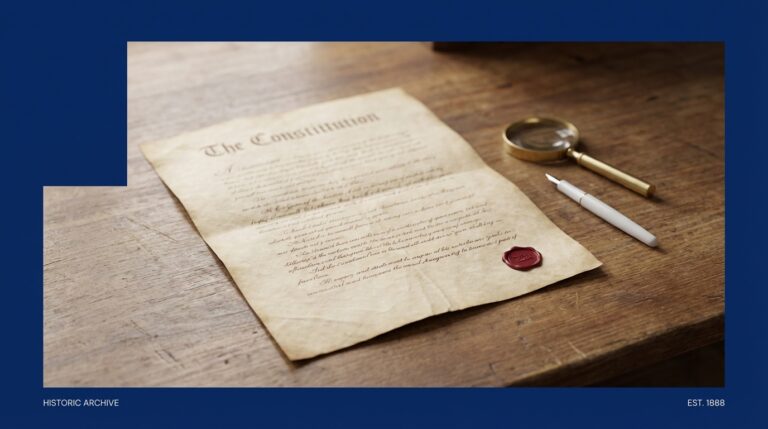
Follow the steps here to prepare a canonical copy of the amendment, build concise memory cues that work for you, and adopt a conservative spaced schedule that you tune from a simple error log.
Why memorize the first ten amendments to the constitution?
The First Amendment protects freedom of religion, speech, press, assembly, and petition, and its text is part of the U.S. Constitution that appears among the first ten amendments to the constitution; learning the exact wording can be useful for civic study and public speaking and helps ensure accurate quotation from a primary source National Archives Charters of Freedom.
Memorizing exact wording is different from understanding legal meaning. Verbatim recall is a technical skill: it helps in oral recitation, debate, or formal examinations where precise language matters, while comprehension requires reading case law and commentary to grasp how courts interpret that wording Legal Information Institute, Cornell Law School.
Common uses for memorizing this short constitutional text include civics classes, mock trials, debate, public readings, and personal civic literacy. For many learners, having the exact text memorized supports clearer explanation of how those five freedoms apply in practice without relying on paraphrase. (See a mnemonic example on ThoughtCo.)
Where to find the exact text: authoritative sources for the first ten amendments to the constitution
For verbatim memorization, use a single authoritative source and copy the exact wording to avoid transcription errors. The National Archives reproduction of the first ten amendments, the Library of Congress reproduction, and the Legal Information Institute at Cornell are standard primary or near-primary sources that preserve spelling, punctuation, and clause structure National Archives Charters of Freedom.
Save a canonical copy to one place: a printed page in a study binder or a bookmarked PDF on your device, and use that same copy each time you check recall. Making one canonical text reduces mistakes from comparing multiple versions and supports accurate encoding during the first learning sessions.
Get the canonical First Amendment text to start memorizing
Download or print a single canonical copy of the First Amendment text from primary government reproductions before you start memorizing.
When you copy the text, check punctuation and capitalization against the source before encoding. Small differences matter for verbatim recall, so a single reliable source helps you test precisely and correct errors during rehearsal.
Three evidence-based memory techniques that work
Three core techniques have consistent support in cognitive research: mnemonic devices (see a practical guide), visualization and elaborative imagery, and spaced repetition. Reviews of learning science conclude that mnemonics improve encoding when learners form meaningful associations, and that distributed practice beats massed study for long-term retention Psychological Science in the Public Interest review.
Spaced repetition is one of the most robust findings in memory research: scheduling review over increasing intervals produces larger durable gains than cramming, which makes it the backbone of any routine that aims to preserve exact wording over weeks or months Psychological Science spacing study.
quick review checklist for encoding and rehearsal
use before first study session
Visualization and elaborative imagery add retrieval cues that are not present in the text itself; by linking a phrase to a vivid scene, learners give their memory additional routes to retrieve the exact words, which is especially helpful for unusual clauses or formal punctuation Psychological Science in the Public Interest review.
A step-by-step routine to memorize the First Amendment
Day 0, prepare the exact text and materials. Open a primary source and copy the First Amendment word for word onto a single printed page that you will use throughout the routine; accuracy at this stage reduces downstream transcription errors and gives you one canonical reference to check against Legal Information Institute, Cornell Law School.

Also prepare a study notebook or a simple error log, three index cards or a flashcard app, and a quiet place to work. If you prefer paper, write the canonical text on one card and leave blank cards for practice reproduction and error notes.
Days 1 to 3, encoding with mnemonics and imagery. On day 1, read the exact text aloud once, then break it into five segments that map to the five protected freedoms: religion, speech, press, assembly, petition. Create a short mnemonic that lists those five anchors in order and attach a vivid single image to each anchor to represent its clause; use personal images that are easy to recall.
For each segment, form a concise link between the phrase and your image. Speak each segment aloud, imagine the image, then write the segment from memory. Compare your written attempt to the canonical text and note exact-word errors in your log. Repeat this encode-and-check cycle twice for each segment on day 1 to solidify the initial association.

Days 2 to 3, rehearse twice daily with short tests. Brief rehearsal sessions of five to ten minutes, focused on retrieval rather than rereading, outperform longer passive reading sessions. Use timed two-minute recall drills and instant correction against the printout; correct errors immediately and update your mnemonic or image if a phrase consistently slips.
Days 4 to 7, move to scheduled spaced rehearsal. Shift to one review every two days, then one every four days if error rates drop. The tested starting schedule that balances effort with retention is daily reviews for the first three days, then every other day for the next three sessions, then every four days, and finally weekly checks; tune intervals per your error log and increase or shorten gaps based on how often you miss exact words Psychological Science spacing study.
Weeks 2 to 4, increase interval length gradually. If you can reproduce the full text correctly on two successive scheduled reviews, double the interval length; if you miss more than one clause, shorten the interval and return to daily short tests. Keep logging errors and focus rehearsal on clauses that produce most mistakes.
Throughout this routine, prioritize retrieval practice and immediate correction rather than long passive reading. Combining an exact-text canonical source with mnemonic hooks and spaced rehearsals provides a practical starting routine grounded in memory science Psychological Science in the Public Interest review.

How to build mnemonics and imagery for the First Amendment
Start by mapping the five freedoms to short anchors you can say quickly. Two compact mnemonic examples: one is an initialism formed from the first letters of each freedom and another is a short phrase that strings the freedoms into a tiny story that preserves order and cueing. (See an academic exercise on memorizing the Bill of Rights at Trinity Digital Commons.)
Example 1, an initialism: take the first letters R, S, P, A, P and make a pronounceable sequence or a word-like chunk. Rehearse that chunk and then expand each letter into a vivid single-image cue for its clause; the initialism helps you recall order while images help you retrieve exact wording.
Example 2, a one-line phrase: craft a brief sentence that links the five freedoms in a meaningful way that you can imagine as a single scene. Keep the sentence short and personally relevant; a compact story that you can picture from left to right helps you reconstruct phrases in order when you attempt verbatim recall.

For specific phrases or awkward clauses, translate keywords into concrete objects or short actions you can picture. Instead of trying to visualize punctuation, anchor the clause to an image that implies the function of the words; a clear image for a clause often triggers the surrounding function words during retrieval.
Keep mnemonics brief and personal. If a device is too complex to reconstruct quickly, it will slow recall. Test each mnemonic with a quick write-from-memory attempt and simplify any hook that introduces errors.
Choosing tools and schedules: digital SRS versus paper flashcards
Digital spaced repetition systems offer automated interval scheduling and convenient daily review reminders; they reduce the bookkeeping of when to review and often show statistics about performance. These systems are useful when you want automated interval control and easy portability, but they have a learning curve and require a device for each session Psychological Science spacing study.
Paper flashcards remain a robust low-tech option. They offer tactile encoding benefits and fewer potential distractions than an app, and they let you inspect cards quickly without navigating menus. For verbatim legal text, paper cards can be ideal because you can write the exact canonical wording on one side and use the blank side for quick reproduction and error notes Psychological Science in the Public Interest review.
Evaluate schedules for verbatim legal text by tracking errors and adjusting intervals conservatively. Start with daily short tests for the first three sessions, then move to every other day, then to longer gaps as accuracy stabilizes; conservative defaults are supported by spacing research but should be tuned to your own retention curve.
If you try both methods, compare results over a two to four week trial and prefer the one that yields fewer exact-word errors with the least total study time. Many learners find a hybrid approach effective: paper for initial encoding and imagery, digital SRS for maintaining long-term review intervals.
Common mistakes and pitfalls when memorizing constitutional text
A frequent error is encoding a paraphrase rather than the exact wording. Paraphrase during initial study makes later verbatim recall unreliable, so always check your recollection against a primary source and correct deviations immediately National Archives Charters of Freedom.
A practical routine encodes the exact text from a primary source, attaches concise mnemonic or visual hooks for each clause, and rehearses retrieval with a conservative spaced schedule adjusted using an error log.
Another common pitfall is overloading a mnemonic with too many details. If an image or story has more elements than you can reconstruct quickly, simplify the cue to one or two defining features that trigger the clause rather than all the words in it.
Skipping spaced reviews and relying on massed practice is a third major mistake. Intensive single-session study often produces quick short-term gains but rapid forgetting; distributed rehearsal over days and weeks supports durable verbatim retention and reduces later relearning time Psychological Science spacing study.
Practice scenarios and short self-tests
Two-minute recall drill: sit with your canonical text hidden, set a two-minute timer, and recite the amendment from memory. After time is up, immediately compare your recitation to the printed source and mark exact-word errors in an error log. Use this drill at the end of each short review session to reinforce retrieval.
Write-from-memory timed test: give yourself five minutes to write the full text on a blank sheet. After writing, correct against the canonical copy and note which clauses produced the most errors. Use those notes to adjust mnemonics or imagery and to schedule the next review earlier for troublesome clauses.
Peer testing and oral correction: ask a study partner to listen as you recite, and have them read the printed text aloud phrase by phrase for correction if you pause or err. Peer testing adds accountability and can reveal omissions that you miss in solo practice.
Keep a concise error log that lists recurring mistakes and tracks when they stop appearing. Use the log to prioritize rehearsal: focus the next session on the clauses that generate the most consecutive errors rather than re-reading parts you already reproduce reliably.
Summary: a compact plan to memorize the First Amendment and next steps
Recap the combined approach in one line: copy one canonical primary-text source, create short mnemonic anchors with vivid images, and rehearse using a conservative spaced schedule that you tune from an error log. This combined routine balances accuracy, encoding strength, and long-term retention National Archives Charters of Freedom.
For further reading, consult primary reproductions of the amendment text and a contemporary review of learning techniques that summarizes mnemonics and distributed practice. Continue to iterate the schedule based on your error log and personal retention pattern; research indicates interval tuning per learner improves results over fixed rules Psychological Science in the Public Interest review. Also see recent site updates and related posts on the site news page.
Time varies by practice, but a focused 1 to 4 week routine with daily short reviews and spaced rehearsal usually yields reliable verbatim recall.
Both work; apps automate intervals while paper may reduce distraction. Choose the method that yields fewer exact-word errors in your trial period.
Mnemonics and imagery help recall words and order; always check a canonical text for precise punctuation and capitalization and correct errors in your log.
If you need primary documents, return to an authoritative reproduction and treat that page as your single canonical text for testing and correction.
References
- https://www.archives.gov/founding-docs/amendments-1-10#first
- https://www.law.cornell.edu/constitution/first_amendment
- https://journals.sagepub.com/doi/10.1177/1529100612453266
- https://journals.sagepub.com/doi/10.1111/j.1467-9280.2008.02009.x
- https://www.magneticmemorymethod.com/how-to-remember-the-amendments/
- https://digitalcommons.trinity.edu/cgi/viewcontent.cgi?filename=11&article=1334&context=educ_understandings&type=additional
- https://www.thoughtco.com/memorizing-the-bill-of-rights-amendments-1857303
- https://michaelcarbonara.com/issue/constitutional-rights/
- https://michaelcarbonara.com/issue/educational-freedom/
- https://michaelcarbonara.com/news/
- https://michaelcarbonara.com/contact/