The goal is to offer a clear, neutral guide that points readers to primary sources and reputable commentary. Readers who want candidate context should consult campaign sites and public filings for statements of priorities and background.
What people mean by the founding principles of the United States
The phrase founding principles of the united states refers to a set of political ideas and institutional commitments that informed the creation of the country in the late 18th century. In plain language, it names beliefs about natural rights, consent of the governed, limited government, separation of powers, federalism, and the rule of law. These terms serve as shorthand for a longer historical and legal conversation, and they are used by scholars and civic institutions to summarize the core claims that shaped the American founding. (see the National Archives’ Charters of Freedom National Archives’ Charters of Freedom)
Scholarly syntheses and primary archival documents treat the Declaration of Independence as the statement that articulates the claim that individuals possess natural rights and that legitimate government rests on popular consent. Readers can consult the original documents and archival context for the Declaration through the National Archives’ Charters of Freedom for the text and framing of that claim National Archives’ Charters of Freedom.
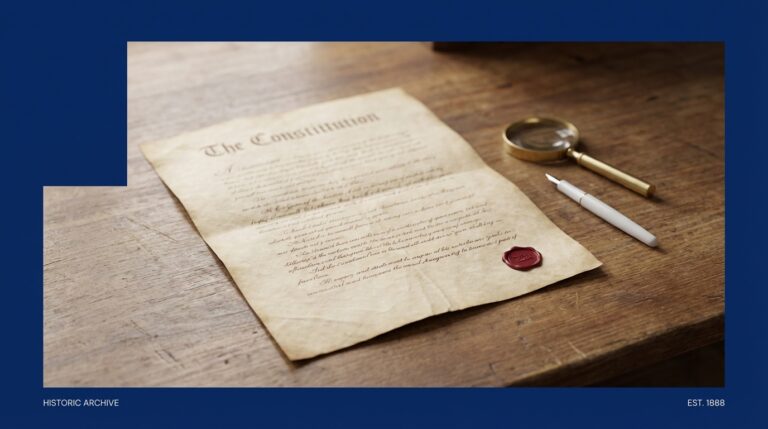
At the same time, legal and institutional scholars treat the U.S. Constitution as the implementing document that translates those principles into structures and rules. The Constitution provides enumerated powers, branch structure, and a federal design that together operationalize limits on authority and distribute responsibility across levels of government. For the canonical texts and the Constitution’s role in implementation, see the National Archives’ collection on founding documents National Archives’ Charters of Freedom.
For readers seeking candidate context rather than legal analysis, candidate profiles and public filings provide neutral information about who is running for office and what they have said. For a candidate profile and contact information, consult the campaign site and public filings.

How the Constitution puts founding principles into practice

The Constitution implements the founding principles by setting rules for who may do what and by whom. One central mechanism is enumerated powers, where certain authorities are assigned explicitly to the federal government while others remain with the states or the people. This structure operates as a textual limitation on federal authority in the constitutional framework, and it is a key way limited government is made concrete in practice. Readers can review the Constitution and explanatory notes in archival resources for the text and its framing National Archives’ Charters of Freedom.
Another core mechanism is the system of checks and balances across three branches. The Constitution divides legislative, executive, and judicial functions and provides instruments for each branch to constrain the others. This separation of powers aims to prevent concentration of authority and to preserve liberty through institutional counterweights. Contemporary interpretive guides discuss how those structural choices work in modern governance Interactive Constitution and Topic Guides.
Federalism also shapes how founding ideals are applied. The division of authority between federal and state governments creates a layered system where some powers are national and others remain local. That division affects policy areas such as education, infrastructure, and public health by assigning roles and responsibilities across governments. For interpretive discussions that connect text to practice, see clause-by-clause resources at constitution centers Interactive Constitution and Topic Guides.

Declaration of Independence: natural rights and consent of the governed
The Declaration of Independence names a moral and political claim at the heart of the founding. It states that individuals have certain rights and that governments derive their just powers from the consent of the governed. That passage functions as a rhetorical and philosophical foundation for the later constitutional project. For the original text and draft history, the Library of Congress provides archival material that traces how the Declaration was written and transmitted Declaring Independence: Drafting and Transmitting the Declaration.
Historians differentiate the Declaration’s rhetorical authority from the Constitution’s legal force. The Declaration articulates principles and justification for independence, and it shaped public understanding and political rhetoric. Yet constitutional law rests on the Constitution’s text, structure, and subsequent amendments and rulings. The National Archives preserves the founding texts that illuminate both the Declaration’s claims and their differing legal status National Archives’ Charters of Freedom.
Intellectual roots: Locke, Montesquieu, and the Federalist Papers
Enlightenment thinkers provided key ideas the American founders adapted. John Locke’s writings on natural rights and government by consent influenced how American political actors described rights and legitimate authority. For an overview of Locke’s political thought and its influence, see the Stanford Encyclopedia of Philosophy entry on John Locke John Locke (Stanford Encyclopedia of Philosophy).
Montesquieu contributed the idea that political liberty is linked to a structural division of powers, a concept that informed the American emphasis on separation of powers. That idea shaped how the founders thought about checks among branches and the need to prevent concentration of power. Scholars and constitutional commentators trace these intellectual connections in accessible summaries and academic resources John Locke (Stanford Encyclopedia of Philosophy).
Stay updated on campaign news and ways to get involved
Consult primary texts and authoritative summaries to see how Enlightenment ideas were adapted in American documents, rather than relying on secondhand summaries.
The Federalist Papers then translated these theoretical ideas into practical arguments for a mixed government and for mechanisms that would check power in the United States. Hamilton, Madison, and Jay argued that the proposed Constitution balanced competing interests and used institutional design to limit tyranny. The Avalon Project’s collection offers the Federalist essays and commentary for readers who want the original ratification-era arguments The Federalist Papers (selected essays and commentary).
Checks and balances in practice: Federalist arguments and constitutional design
The Federalist Papers include essays that explain why a separation of powers and a system of checks are necessary. Selected essays describe how differing powers and institutional checks would make it difficult for one faction or branch to dominate the government. For primary access to these ratification debates and their arguments, consult the Federalist collection in the Avalon Project The Federalist Papers (selected essays and commentary).
The practical intent behind the design was to prevent tyranny by distributing authority. The Federalist argument framed the Constitution as a set of interlocking limits. Those essays helped ratifying audiences see the Constitution as a functional plan rather than a theoretical text, and they remain a key source for understanding the framers’ justifications The Federalist Papers (selected essays and commentary).
How scholars and institutions interpret these principles today
Modern constitutional centers and educational organizations publish commentary and clause-by-clause guides that show how founding principles are read in current contexts. Such resources aim to explain the Constitution’s text and provide multiple scholarly perspectives on interpretation. A leading example of this approach is the Interactive Constitution, which pairs the text with essays from scholars across viewpoints Interactive Constitution and Topic Guides.
Public opinion research indicates that citizens and scholars disagree about how to apply founding principles to contemporary governance. Surveys and trend reports show varied views on the scope of government, judicial authority, and citizenship rights, which affects how principles are invoked in public debate. For recent public-attitude summaries and how they relate to constitutional questions, see public-opinion reporting from reputable research centers Public Attitudes Toward American Democracy and Institutions.
The founding principles provide a framework for assigning powers, protecting rights, and limiting concentration of authority through textual mechanisms like enumerated powers, separation of powers, federalism, and checks and balances.
Institutions differ on emphasis: some foreground individual liberty, others stress collective problem solving or institutional stability. That debate is ongoing, and it informs judicial reasoning, legislative choices, and civic education programs. For balanced interpretive materials, consult constitutional centers that present competing scholarly views Interactive Constitution and Topic Guides.
Questions the founding principles raise for modern governance
Applying long-standing principles to modern institutions prompts open questions. One persistent question concerns administrative governance and the extent to which limited government language constrains modern agencies. Interpretive resources present competing accounts of delegation, agency power, and oversight, and scholars use constitutional text and precedent to argue different positions Interactive Constitution and Topic Guides.
Another area of debate is judicial review and how courts interpret rights and distribute power across branches. Courts use precedent and constitutional text to decide how founding principles apply to new circumstances, and those decisions often generate further scholarly commentary and public response. Public-attitude research shows that these debates resonate with citizens and influence political priorities Public Attitudes Toward American Democracy and Institutions.
A short checklist to frame institutional questions about power and rights
Use this to structure research notes
These questions are not settled by the founding texts alone. They require interpretive work, empirical evidence, and public deliberation. Scholars and institutions differ in how much weight they assign to historical practice, textual wording, and pragmatic considerations when answering these questions.
Common misunderstandings and pitfalls when discussing founding principles
A frequent mistake is to treat patriotic slogans as legal statements. Phrases that function well in public rhetoric may not map directly onto constitutional obligations. Readers should check primary texts rather than assume that shorthand phrases equal legal commands. The National Archives’ reproduced texts are a reliable starting point for primary documents National Archives’ Charters of Freedom.
Another error is to read the Declaration as if it were identical to constitutional law. The Declaration expresses foundational claims and moral premises, but the Constitution is the legal framework with binding rules and mechanisms. For the distinction between rhetorical foundation and legal implementation, consult archival documents and explanatory resources at the Library of Congress and National Archives Declaring Independence: Drafting and Transmitting the Declaration.
Finally, readers should avoid relying on unsourced summaries in public discussion. Prefer institutionally grounded commentary and peer-reviewed work when available, and check citations and dates to understand interpretive shifts. The Interactive Constitution and similar centers provide dated essays and multiple perspectives that help readers evaluate claims Interactive Constitution and Topic Guides.
Practical scenarios: applying founding principles to policy questions
Consider a public-health scenario where individual liberty and collective action appear to conflict. Framing the question using founding principles helps identify trade-offs: which restrictions on behavior are consistent with constitutional protections, and how should public health needs be balanced against individual rights? Interpretive guides show how courts and scholars have approached similar tensions, though outcomes vary by context Interactive Constitution and Topic Guides.
Another example is federalism in infrastructure and education. The Constitution assigns certain national powers while leaving others to states, so practical choices often involve coordination across levels of government. Where federal funding, standards, or emergency responses are involved, the constitutional division of authority shapes the available policy tools. For constitutional context on federal-state relations, consult archival texts and contemporary guides National Archives’ Charters of Freedom. For related policy discussions, see site issues and positions policy issues.

These scenarios are prompts for deliberation rather than prescriptions. They illustrate that applying founding principles requires weighing rights, institutional capacity, and contextual facts. Scholars and institutions debate the proper balance, and readers should treat scenarios as starting points for further research Public Attitudes Toward American Democracy and Institutions.
How courts and civic institutions use founding principles
Courts interpret constitutional text and rely on precedent to decide how principles apply in particular disputes. Precedent and judicial doctrine influence the reach of rights and the allocation of power among branches. For the constitutional text and its application in courts, archival sources and constitutional centers offer foundational material and commentary National Archives’ Charters of Freedom.
Civic institutions, including archives and constitution centers, preserve original documents and provide educational programs. These resources make primary texts accessible and support civic literacy by offering context for how principles were expressed and later interpreted. For primary access and interpretive programming, see the National Archives and the Interactive Constitution Interactive Constitution and Topic Guides.
How to read primary sources and trustworthy commentary
Primary repositories for the founding documents include the National Archives and the Library of Congress. These institutions provide digitized texts, draft histories, and explanatory material that let readers see the documents in their original form. Start with archived texts when a claim depends on wording or draft history National Archives’ Charters of Freedom.
When using secondary commentary, prefer institutionally grounded essays and peer-reviewed scholarship. The Interactive Constitution pairs text with essays by scholars who note their interpretive stance and provide citations. Also consult established scholarly entries for intellectual history, such as the Stanford Encyclopedia of Philosophy on Locke, to trace philosophical sources of ideas John Locke (Stanford Encyclopedia of Philosophy).
Quick checks for source quality include: verify citations, prefer primary texts for direct claims, note the date and institutional affiliation of commentary, and look for multiple perspectives on contested questions. These practices reduce the risk of misreading slogans as legal rules Interactive Constitution and Topic Guides.
Frequently used phrases and how writers should attribute them
Safe phrasing helps keep reporting clear and neutral. For example, write, “According to the National Archives, the Declaration states that individuals possess certain unalienable rights,” when summarizing the Declaration’s text. Attribute public-attitude claims to specific reports, for example, “Public opinion research shows varied views on the scope of government,” and cite the reporting organization. These templates keep attribution explicit and verifiable National Archives’ Charters of Freedom.
Writers should avoid absolute language and use conditional phrasing where appropriate. Replace absolutes with attribution: instead of saying a document proves X, say, “Scholars interpret the text to suggest X,” or “The campaign states Y,” when summarizing candidate material. This approach aligns reporting with documentary evidence and preserves neutral tone Public Attitudes Toward American Democracy and Institutions.
When summarizing a campaign or candidate claim, use clear templates such as, “According to the campaign site, the candidate supports…” This keeps readers aware of the source and avoids implying that the claim is an uncontested fact.
Quick reference: canonical texts and guides
Foundational documents: Declaration of Independence and the U.S. Constitution. Access originals and explanatory notes at national repositories for authoritative texts National Archives’ Charters of Freedom and the Library of Congress’ drafting materials Declaring Independence: Drafting and Transmitting the Declaration.
Key interpretive resources: The Federalist Papers collection offers ratification-era arguments and is available in the Avalon Project collection The Federalist Papers (selected essays and commentary). For intellectual origins, consult the Stanford Encyclopedia of Philosophy on Locke for background on natural-rights theory John Locke (Stanford Encyclopedia of Philosophy). For contemporary clause-by-clause discussion and public education resources, see constitution center guides Interactive Constitution and Topic Guides. For public-opinion context, consult current research reports from reputable polling organizations Public Attitudes Toward American Democracy and Institutions.
Conclusion: how to think about founding principles in civic life
The founding principles of the united states name a cluster of ideas and institutional commitments that informed the country’s creation and continue to guide interpretation. They include natural rights, consent of the governed, limited government, separation of powers, federalism, and the rule of law. Readers should treat these principles as a framework for inquiry rather than a single policy prescription, and consult primary archives and balanced commentary to explore contested applications National Archives’ Charters of Freedom.
Debate over how these principles apply to new technologies, administrative governance, and polarized politics continues among scholars, courts, and civic institutions. For further reading, begin with the primary documents and then review institutional commentary to see how interpretation has evolved and how scholars differ on emphasis Interactive Constitution and Topic Guides.
They are core ideas such as natural rights, consent of the governed, limited government, separation of powers, federalism, and the rule of law, summarized from founding texts and scholarly syntheses.
No. The Declaration presents rhetorical and philosophical claims about rights and legitimacy, while the Constitution provides the legal framework and institutional rules that govern the United States.
Primary repositories include the National Archives and the Library of Congress, which provide digitized texts, draft materials, and explanatory resources.
If you are researching candidates or campaign positions, consult campaign statements and public filings to see how candidates reference these principles in their stated priorities.
References
- https://www.archives.gov/founding-docs
- https://www.loc.gov/exhibits/declaring-independence/
- https://constitutioncenter.org/interactive-constitution
- https://plato.stanford.edu/entries/locke/
- https://avalon.law.yale.edu/subject_menus/fed.asp
- https://www.pewresearch.org/politics/2024/11/05/public-attitudes-toward-american-democracy-and-institutions/
- https://michaelcarbonara.com/contact/
- https://michaelcarbonara.com/republican-candidate-for-congress-michael-car/
- https://michaelcarbonara.com/issue/constitutional-rights/
- https://michaelcarbonara.com/issues/
{"@context":"https://schema.org","@graph":[{"@type":"FAQPage","mainEntity":[{"@type":"Question","name":"How do the founding principles guide the structure and limits of U.S. government?","acceptedAnswer":{"@type":"Answer","text":"The founding principles provide a framework for assigning powers, protecting rights, and limiting concentration of authority through textual mechanisms like enumerated powers, separation of powers, federalism, and checks and balances."}},{"@type":"Question","name":"What are the founding principles in short?","acceptedAnswer":{"@type":"Answer","text":"They are core ideas such as natural rights, consent of the governed, limited government, separation of powers, federalism, and the rule of law, summarized from founding texts and scholarly syntheses."}},{"@type":"Question","name":"Are the Declaration and the Constitution the same kind of document?","acceptedAnswer":{"@type":"Answer","text":"No. The Declaration presents rhetorical and philosophical claims about rights and legitimacy, while the Constitution provides the legal framework and institutional rules that govern the United States."}},{"@type":"Question","name":"Where can I read the founding documents myself?","acceptedAnswer":{"@type":"Answer","text":"Primary repositories include the National Archives and the Library of Congress, which provide digitized texts, draft materials, and explanatory resources."}}]},{"@type":"BreadcrumbList","itemListElement":[{"@type":"ListItem","position":1,"name":"Home","item":"https://michaelcarbonara.com"},{"@type":"ListItem","position":2,"name":"Blog","item":"https://michaelcarbonara.com/news/%22%7D,%7B%22@type%22:%22ListItem%22,%22position%22:3,%22name%22:%22Artikel%22,%22item%22:%22https://michaelcarbonara.com%22%7D]%7D,%7B%22@type%22:%22WebSite%22,%22name%22:%22Michael Carbonara","url":"https://michaelcarbonara.com"},{"@type":"BlogPosting","mainEntityOfPage":{"@type":"WebPage","@id":"https://michaelcarbonara.com"},"publisher":{"@type":"Organization","name":"Michael Carbonara","logo":{"@type":"ImageObject","url":"https://lh3.googleusercontent.com/d/1eomrpqryWDWU8PPJMN7y_iqX_l1jOlw9=s250"}},"image":["https://lh3.googleusercontent.com/d/19blRy6S6KBKX9MzlolphX8gDVZkJjXfd=s1200","https://lh3.googleusercontent.com/d/1jxLsiKBA0VKKKFxXhVkfz7KKRB_4soCZ=s1200","https://lh3.googleusercontent.com/d/1eomrpqryWDWU8PPJMN7y_iqX_l1jOlw9=s250"]}]}