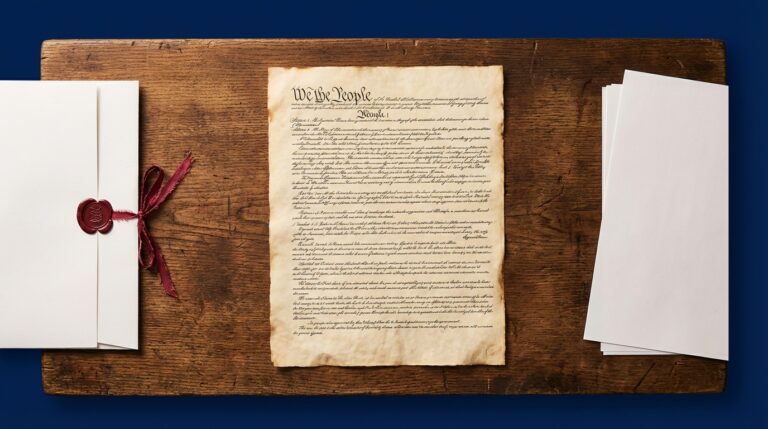
This primer explains the Amendment's text and purpose, outlines the core legal tests and key Supreme Court decisions, and shows why digital technologies have raised new questions for courts and lawmakers.
What the fourth am is: text and historical context
The phrase fourth am refers to the Fourth Amendment in the Bill of Rights, which protects people from unreasonable searches and seizures and connects most government searches to the warrant and probable cause standard.
The Amendment appears in the Bill of Rights and dates to 1791; readers can consult the original text for the precise wording and historical framing from the National Archives U.S. National Archives Bill of Rights transcript.
help readers compare the Amendment text with modern examples
Use this to focus reading
The Amendment’s basic purpose is concise: to limit how the government can search and seize persons, houses, papers, and effects, and to require a showing of probable cause for most warrants.
Because the text is the constitutional source for search and seizure protections, primary documents are the most reliable starting point for learning what the amendment covers.
Why people ask “what is the fourth am”: common questions and public relevance
People commonly ask what the fourth am protects when everyday encounters could involve searches, such as traffic stops, police at a home, or when a phone is taken during an arrest.
Digital technology has made these questions more frequent because phones, location records, and other data sources raise new privacy concerns that courts and lawmakers are still sorting out.
Understanding the Amendment helps people know when to ask officers whether they have a warrant, and when certain types of data may require additional legal process to access.

Core legal tests and framework behind the fourth am
Two doctrinal anchors guide most Fourth Amendment analysis: the reasonable expectation of privacy test and the warrant supported by probable cause rule.
The reasonable expectation of privacy test originated in Katz v. United States, where the Supreme Court set a framework for when government intrusions count as searches under the Amendment Katz v. United States (Katz opinion).
Stay informed about campaign updates and discussions
Reviewing core cases helps clarify when courts treat government actions as searches; key opinions explain the tests and the reasoning behind them.
Warrants supported by probable cause are the general rule; the warrant requirement means the government normally needs judicial approval based on a factual showing before conducting many searches.
It is important to note that courts treat these doctrinal anchors as starting points and apply them to specific facts in each case.
Key Supreme Court cases that shaped modern Fourth Amendment law
Katz v. United States (1967)

Katz reframed the Fourth Amendment around a person’s reasonable expectation of privacy rather than only physical trespass, creating a test courts still use to determine when a search has occurred Katz v. United States.
The Katz test asks whether the individual showed an actual expectation of privacy and whether that expectation is one society is prepared to recognize as reasonable.
Riley v. California (2014): cell phone contents and warrants
In Riley, the Supreme Court held that searching the digital contents of a cell phone incident to arrest generally requires a warrant, protecting the large quantities of personal information phones contain Riley v. California (analysis).
Riley is important because it treated digital data differently from other items incident to arrest due to the depth and breadth of information stored on modern phones.
Carpenter v. United States (2018): cell-site location records
Carpenter held that historical cell-site location information held by third-party carriers is typically a Fourth Amendment search that requires a warrant based on probable cause, narrowing the reach of the old third-party doctrine for that specific data type Carpenter v. United States (official opinion: Supreme Court PDF).
Carpenter does not mean all third-party data is protected the same way, but it created a clear example where the Court required a warrant for certain digital records because of their highly sensitive nature.
Commonly recognized exceptions to the warrant requirement
The warrant rule has recognized exceptions that allow searches without a warrant in certain circumstances; principal exceptions include consent, exigent circumstances, plain-view searches, and searches incident to arrest.
These exceptions are shaped and limited by case law so they apply in particular factual settings rather than as broad permissions.

Consent means a person voluntarily agrees to a search, and courts examine whether the consent was given freely and with knowledge of the right to refuse.
Exigent circumstances permit a warrantless search when there is an urgent need, such as to prevent imminent harm or the destruction of evidence, but courts evaluate the urgency and scope carefully.
The digital era: how courts have adapted and where questions remain
Riley and Carpenter show how the Court has adapted Fourth Amendment doctrine to digital data, with Riley protecting cellphone contents and Carpenter limiting some uses of historical location records (scholarly discussion).
Riley made clear that cell phone privacy is distinct because a phone’s contents can reveal a wide range of personal information, so officers generally need a warrant to search that material Riley v. California.

Carpenter limited the third-party doctrine for certain location records by holding that accessing extensive historical cell-site location information is generally a search requiring a warrant Carpenter v. United States.
Despite these decisions, courts and policymakers continue to debate how broadly Carpenter-style protections should extend to other categories of third-party data and new kinds of sensors, and that debate remains active through 2026.
How courts decide whether a search or seizure violates the fourth am
Judges and lawyers often follow a practical sequence to decide Fourth Amendment issues: first, is the challenged action government conduct; second, does the conduct count as a search or seizure; third, if it is a search does a reasonable expectation of privacy exist; fourth, was there a warrant supported by probable cause; and finally, if no warrant existed, does a recognized exception apply.
Context matters: the same action can be lawful in one factual setting and unlawful in another depending on facts such as where the search occurred, who consented, and whether exigent circumstances were present.
The Fourth Amendment protects people from unreasonable searches and seizures, and modern cases like Riley and Carpenter require courts to consider privacy expectations for digital contents and certain location records when deciding if a warrant is needed.
For example, a brief hypothetical can illustrate the steps: officers stop a car, ask to search, the driver refuses, and then officers find evidence in plain view; the court will consider whether the initial stop and subsequent search fit within constitutional rules and exceptions.
Because courts weigh facts heavily, precedent guides outcomes but does not automatically produce the same result in every case.
Typical mistakes, myths, and pitfalls when discussing the fourth am
A common mistake is treating the Fourth Amendment as absolute and saying it always prevents a specific government action; in reality courts apply tests and exceptions that can allow some warrantless searches in concrete circumstances.
Another frequent error is misapplying Carpenter or Riley to other technologies without examining whether the facts match the reasoning the Court used in those decisions.
Readers should consult primary sources and authoritative summaries for verification rather than relying solely on quick summaries, and reliable public resources can help check interpretations.
Practical scenarios: traffic stops, home searches, and phone data
Traffic stops often start with an officer’s temporary detention; officers may search a vehicle if they have probable cause, if the driver consents, or under some narrowly defined exceptions.
Home searches usually require a warrant because the home has a strong expectation of privacy, and exceptions such as exigent circumstances or consent are fact specific.
Phone data scenarios show how Riley and Carpenter can apply: officers may need a warrant to search phone contents, and accessing historical location records typically requires a warrant, but other categories of third-party digital data are still being litigated.
If you are stopped or searched: clear do’s and don’ts and how to talk about your rights
Stay calm and use short, neutral phrases such as asking whether you are free to leave and whether the officer has a warrant; these questions can help clarify the encounter without escalating it.
Document the interaction if it is safe to do so, note badge numbers or patrol units when possible, and consult an attorney afterward to evaluate whether your rights were respected because legal outcomes turn on facts and law.
For practical guidance and civil rights information, consult established resources that explain how to assert rights and when to seek legal help or contact us.
Policy debates and possible reforms affecting fourth am application
Lawmakers, courts, and privacy advocates debate how statutes might change access to certain data categories and how statutory reform would interact with constitutional doctrine.
Statutory changes could alter procedural rules or create new privacy protections, but such statutes would operate alongside constitutional analysis rather than automatically replacing it.
Following legislative tracking and court dockets is the best way to see how reforms develop in real time.
How to read the key cases and primary sources yourself
When reading Supreme Court opinions, focus on the majority reasoning and the legal tests the Court adopts, and note the year because doctrine can shift over time.
Reliable public sources for primary documents and summaries include the Cornell Legal Information Institute for opinions and the National Archives for foundational texts Legal Information Institute Fourth Amendment overview and our constitutional rights hub.
Conclusion and suggested next reads
Core takeaways are straightforward: the fourth am protects against unreasonable searches and seizures, the warrant and probable cause rule is the general baseline, and key modern cases like Riley and Carpenter show how courts apply the Amendment to digital data.
Readers who want direct sources should consult the Amendment text and the Supreme Court opinions discussed above and follow ongoing litigation for developments in how the law applies to new technologies or see recent updates on our news page.
No. The Fourth Amendment generally requires a warrant supported by probable cause, but courts recognize specific exceptions such as consent, exigent circumstances, plain-view, and search incident to arrest.
Riley held that searching the digital contents of a phone incident to arrest generally requires a warrant, though narrow, fact specific exceptions and later developments can affect particular situations.
Carpenter narrowed the third-party doctrine for historical cell-site location records, but courts have not applied the same rule uniformly to all third-party data and debates continue.
References
- https://www.archives.gov/founding-docs/bill-of-rights-transcript
- https://www.law.cornell.edu/supremecourt/text/389/347
- https://www.law.cornell.edu/supremecourt/text/573/373
- https://www.law.cornell.edu/supremecourt/text/138/2206
- https://michaelcarbonara.com/contact/
- https://www.law.cornell.edu/wex/fourth_amendment
- https://www.supremecourt.gov/opinions/17pdf/16-402_h315.pdf
- https://btlj.org/data/articles2019/34_4/10_Wang_WEB.pdf
- https://lawreview.uchicago.edu/print-archive/myth-fourth-amendment-circularity
- https://michaelcarbonara.com/issue/constitutional-rights/
- https://michaelcarbonara.com/news/