The goal is to give voters and civic readers a clear, neutral explanation of where legal protections apply and what practical steps are available when content is moderated. The article draws on primary sources and neutral policy analyses for attribution.
What freedom of expression and social media means: definitions and scope
Key terms: state actor, private platform, moderation, content takedown – freedom of expression and social media
When readers ask whether freedom of expression and social media overlap, the first point is definition. Freedom of expression is a legal and human-rights concept that protects speech from undue state restriction; the Office of the United Nations High Commissioner for Human Rights describes how those protections apply online and why the term matters for platform rules UN OHCHR.
In practical online settings, two distinct actors matter. A state actor is a government or official body whose actions can trigger constitutional or human-rights limits. A private platform is a company that hosts user content and enforces terms of service. The difference is central because constitutional guarantees typically constrain only state action, while private platforms normally set and enforce their own rules.
The scope of moderation follows from that distinction. Platforms publish community standards and remove or label content under those rules; those choices shape what users see and what counts as allowed speech on a given service.
A checklist of primary sources to consult before challenging a moderation decision
Start with platform notices
How the legal framework divides responsibilities: government versus private platforms
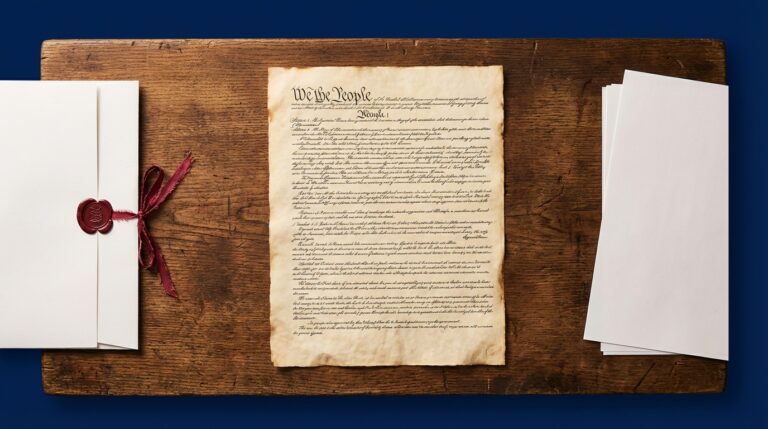
In the United States, constitutional free-speech protections restrict government censorship (see constitutional rights) but generally do not require private companies to host specific content; this core point underlies modern analysis of online speech and its limits Packingham v. North Carolina opinion.
Private platforms therefore operate under their terms of service and community standards, not the First Amendment, unless a platform action is directed or coerced by a government actor. That means many moderation disputes start as contract or policy questions rather than direct constitutional claims.
Separate from constitutional law, statutory rules and litigation shape practical remedies. Debates over platform intermediary liability and statutory immunities influence how platforms write and enforce rules and how users can respond.
How platforms write and enforce moderation rules
Major platforms group disallowed content into categories such as illegal content, hate speech, and harassment, and they often treat public-figure or newsworthy content with different considerations; the specifics and enforcement steps are typically described in company community standards and transparency reports Digital Services Act page. See the European factpage on user rights under the DSA user rights under the DSA.
Enforcement varies by company and region, and appeals processes are inconsistent. Some services publish regular transparency reports that explain takedowns and appeals in aggregate, but the level of detail differs markedly.
Stay informed about moderation rules and campaign updates via the Join page
Check the platform's community standards and appeals page to understand what rules applied and the available internal review steps.
Because policies are written by private actors, users who want to contest a takedown usually must follow the platform’s listed appeal route first. If a platform provides a formal appeal or escalation path, it is typically the required initial step before seeking external remedies.
U.S. law and policy trends: Section 230, litigation, and open questions
Section 230 is widely discussed because it provides platforms with immunity for most third-party content and gives them latitude to moderate without being treated as publishers in many lawsuits; policy analyses explain how that immunity affects moderation incentives CRS report on Section 230.
Recent litigation and legislative proposals continue to shape what remedies users may realistically pursue. Courts can limit state censorship, but they have not held that private moderation decisions are directly governed by the First Amendment unless state action can be shown.

Open questions for 2026 include cross-border enforcement, algorithmic transparency, and how changing statutory frameworks may alter platform incentives and user remedies.
The European approach: what the Digital Services Act (DSA) changes for users
The Digital Services Act established binding obligations for very large online platforms, including duties on transparency, notice-and-action procedures, and mandatory user redress mechanisms for people in the EU European Commission DSA overview.
Practically, the DSA requires platforms meeting its thresholds to provide clearer explanations for content decisions, offer complaint and appeal routes, and publish transparency reporting about systemic risks and enforcement practices.

For EU users this creates statutory avenues that do not exist in the same form for many users elsewhere, giving individuals a defined regulator-driven path if a platform does not resolve a complaint adequately. See examples of out-of-court dispute settlement bodies User Rights.
International human-rights guidance on online expression
UN human-rights guidance emphasizes that states must protect online freedom of expression and ensure that platform policies and enforcement respect principles of legality, necessity, and proportionality UN Special Rapporteur mandate page.
The guidance advises states to adopt safeguards so that moderation does not unduly restrict lawful expression and recommends due-process elements for appeals and transparency. While influential, the guidance is not itself a binding law that directly changes platform terms.
User remedies and appeals: what differs between regions and platforms
EU users gain specific statutory redress routes and procedural transparency under the DSA, while U.S. users more often rely on internal appeals, platform policies, and litigation in limited circumstances DSA overview. See further discussion of notice and action mechanisms here.
Internal appeals vary: some companies offer multi-step review processes, others provide a single appeal channel. Transparency reports and terms of service help users understand how decisions were made, but they may not supply full factual detail.
Constitutional protections generally restrict state action, so private platforms can set and enforce terms of service; statutory rules like the EU DSA and human-rights guidance affect remedies and expected standards.
If a platform’s internal appeal is unsuccessful, users outside the EU may consider litigation or regulator complaints depending on jurisdiction and cost, while EU users can often invoke the DSA’s formal complaint pathways and regulator oversight.
Common moderation categories and where disputes commonly arise
Most platform policies separate illegal content, hate speech, harassment, and misinformation as distinct categories; how each concept is defined and enforced varies by service and jurisdiction CRS analysis of platform rules.
Disputes commonly arise when context matters, for example when a public-figure quote, news reporting, or academic discussion contains disallowed language. Platforms sometimes apply public-figure or newsworthiness exceptions that alter enforcement decisions.
What Packingham and other U.S. cases do-and do not-say about online speech
Packingham v. North Carolina held that a broad criminal restriction on access to social media raised serious First Amendment concerns because the law targeted access to important sites of public discourse Packingham opinion.
That holding protects against state censorship of social-media access in certain contexts, but it does not by itself require private companies to host specific views or users. The case draws a clear line between state action and private moderation.
Practical steps if your content is removed or restricted
If your content is removed, start by reading the notice the platform sent and the relevant community standard. That notice often explains why content was removed and which rule the platform cites.
Follow the platform’s internal appeal process and save all evidence. If you are in the EU, check the DSA complaint options; if you are in another jurisdiction, document the action and consider whether regulatory or legal remedies are realistic given cost and likely outcomes CRS report on remedies.

Also consult platform transparency reports and the terms of service to understand enforcement patterns and to gather context for any complaint or legal step. See our terms of service.
Decision criteria: when to pursue an appeal, a regulator complaint, or litigation
Decide based on jurisdiction, likely remedies, costs, and evidence. Internal appeals are usually the lowest-cost first step. If you are in the EU and the platform is covered by the DSA, regulatory complaints may be a reasonable next step.
Litigation is typically slower and more costly and is therefore often reserved for cases with clear legal claims and sufficient evidence. Consulting a lawyer can clarify prospects, but most disputes begin with internal appeal routes and documented regulator complaints.
Typical mistakes and misconceptions about free speech and social media
A common error is assuming the First Amendment applies to private platforms the same way it applies to government actors. In the United States the constitutional protection limits government censorship but does not automatically bind private companies Packingham opinion.
Another mistake is treating platform policies as uniform or equivalent to legal prohibitions. Policies differ across services and regions and should be checked on a case-by-case basis. Public attitudes and surveys can show popular views about moderation but do not determine legal rights Pew Research Center analysis.
Conclusion: what users should take away and where to look for updates
The main takeaway is simple: freedom of expression protections apply differently depending on the actor and the law; government censorship is constrained by constitutional and human-rights rules, while private platform moderation largely follows company terms unless specific statutes or regulations apply UN OHCHR guidance.
For updates, check primary sources: platform terms and transparency reports, the European Commission’s DSA materials for EU users, and regulator pages or court opinions in your jurisdiction. These primary pages show latest rule changes and enforcement practices. See our news.
No. The First Amendment limits government actions, not private companies. Private platforms generally enforce their own terms of service.
Yes. The DSA requires covered platforms to provide transparency and user redress routes, which give EU users statutory complaint options that many other jurisdictions do not provide.
Read the platform's removal notice, follow its appeal process, save all evidence, and check whether a regulator or legal remedy applies in your jurisdiction.
References
- https://www.ohchr.org/en/special-procedures/sr-freedom-opinion-and-expression
- https://www.supremecourt.gov/opinions/16pdf/15-1191_k5fm.pdf
- https://commission.europa.eu/strategy-and-policy/digital-services-act-ensuring-safer-and-more-open-digital-space_en
- https://michaelcarbonara.com/issue/constitutional-rights/
- https://crsreports.congress.gov/product/pdf/LSB/LSB10741
- https://digital-strategy.ec.europa.eu/en/factpages/user-rights-under-digital-services-act
- https://www.crowell.com/en/insights/client-alerts/notice-and-action-mechanisms-in-the-dsa-balancing-the-removal-of-illegal-content-and-the-freedom-of-expression
- https://www.user-rights.org/en/about-us
- https://michaelcarbonara.com/contact/
- https://michaelcarbonara.com/terms/
- https://michaelcarbonara.com/news/
- https://www.pewresearch.org/internet/2024/06/26/publics-attitudes-on-free-expression-online/
{"@context":"https://schema.org","@graph":[{"@type":"FAQPage","mainEntity":[{"@type":"Question","name":"Does freedom of expression protect speech on privately run social media platforms?","acceptedAnswer":{"@type":"Answer","text":"Constitutional protections generally restrict state action, so private platforms can set and enforce terms of service; statutory rules like the EU DSA and human-rights guidance affect remedies and expected standards."}},{"@type":"Question","name":"Does the First Amendment protect speech on private social media platforms?","acceptedAnswer":{"@type":"Answer","text":"No. The First Amendment limits government actions, not private companies. Private platforms generally enforce their own terms of service."}},{"@type":"Question","name":"Do EU users have stronger rights to challenge content moderation?","acceptedAnswer":{"@type":"Answer","text":"Yes. The DSA requires covered platforms to provide transparency and user redress routes, which give EU users statutory complaint options that many other jurisdictions do not provide."}},{"@type":"Question","name":"What should I do first if my content is removed?","acceptedAnswer":{"@type":"Answer","text":"Read the platform's removal notice, follow its appeal process, save all evidence, and check whether a regulator or legal remedy applies in your jurisdiction."}}]},{"@type":"BreadcrumbList","itemListElement":[{"@type":"ListItem","position":1,"name":"Home","item":"https://michaelcarbonara.com"},{"@type":"ListItem","position":2,"name":"Blog","item":"https://michaelcarbonara.com/news/%22%7D,%7B%22@type%22:%22ListItem%22,%22position%22:3,%22name%22:%22Artikel%22,%22item%22:%22https://michaelcarbonara.com%22%7D]%7D,%7B%22@type%22:%22WebSite%22,%22name%22:%22Michael Carbonara","url":"https://michaelcarbonara.com"},{"@type":"BlogPosting","mainEntityOfPage":{"@type":"WebPage","@id":"https://michaelcarbonara.com"},"publisher":{"@type":"Organization","name":"Michael Carbonara","logo":{"@type":"ImageObject","url":"https://lh3.googleusercontent.com/d/1eomrpqryWDWU8PPJMN7y_iqX_l1jOlw9=s250"}},"image":["https://lh3.googleusercontent.com/d/1JuMGfowYisi1gctsxNR2lLtsI8nf9UFH=s1200","https://lh3.googleusercontent.com/d/1RdTX7KaJjP_l-FAOKHjm-SmLltmfjLU0=s1200","https://lh3.googleusercontent.com/d/1eomrpqryWDWU8PPJMN7y_iqX_l1jOlw9=s250"]}]}