Readers will find concrete examples, a short legal checklist to evaluate speech, and guidance on where to read primary sources if they want to confirm holdings or language for a specific dispute. The focus is on practical understanding, not litigation advice.
What counts as freedom of speech? freedom of speech examples and legal roots
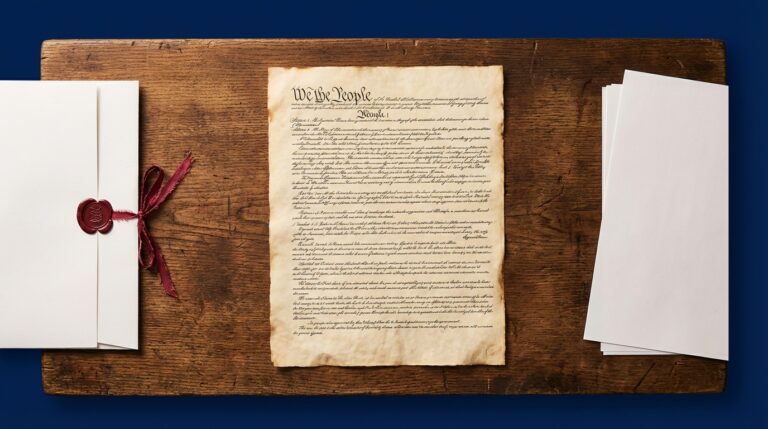
According to the Bill of Rights, the First Amendment provides the foundational legal protection for freedom of speech in the United States, but that protection is not absolute. Bill of Rights: A Transcription
In everyday life, protected speech commonly includes political speech, opinion, news reporting, and symbolic acts such as protest signs or silent vigils. These categories are typical examples of expression that courts have long treated as strongly protected, though context matters and some limits apply.
When people ask what counts as freedom of speech, they often mean whether a given statement can be punished by the government. The short answer is that many forms of expression are protected, but the law draws lines for certain harms and narrow categories.
Key Supreme Court tests that shape limits and examples
The courts use a few principal tests to decide when speech falls outside the First Amendment. One is the Brandenburg imminent-incitement standard, which allows government restriction only when speech is directed to incite imminent lawless action and is likely to produce that action. Brandenburg v. Ohio opinion
Under that test, a general statement supporting unlawful ideas is usually protected, while a specific, timed call for immediate violence could fail the test. For example, urging a crowd to commit violence at that moment would be more likely to meet the Brandenburg threshold than expressing a violent ideology in abstract terms.

Another key ruling is New York Times Co. v. Sullivan, which set the actual malice standard for defamation claims brought by public officials and makes such suits harder to win. The case holds that public-figure plaintiffs must show the speaker knew a statement was false or acted with reckless disregard for the truth. New York Times Co. v. Sullivan opinion
Finally, Miller v. California established a three-part obscenity test that can remove highly explicit sexual material from First Amendment protection. The test looks at community standards, whether the work depicts sexual conduct in an offensive way, and whether the work lacks serious literary, artistic, political, or scientific value. Miller v. California opinion
Quick steps to read a Supreme Court opinion
Read the full opinion to see the court reasoning
How courts treat threats, incitement, and ‘true threats’
Speech that amounts to a true threat or a targeted criminal threat is not protected and may be prosecuted, while advocacy of ideas generally remains protected. Courts distinguish between protected advocacy and statements that are meant to and likely to produce immediate unlawful acts. Brandenburg v. Ohio opinion
Stay informed about the campaign
If you want to check the primary case language for incitement or threats, consult the court opinions and repositories listed later in this article.
To see the difference in practice, consider two examples. At a political rally, saying that the country should change its laws expresses an idea and is usually protected. By contrast, directing a named group to attack a specific person at a specific time may be a prosecutable threat and could meet the Brandenburg standard.
Legal guidance and civil liberties groups also note that the line between protected speech and criminal threats depends on context, including who is speaking, whether the target is identified, and whether the speech is likely to produce immediate unlawful action. The practical effect is that specific, targeted threats are treated differently from broad political advocacy. ACLU Free Speech overview
When private platforms and employers can limit speech
Constitutional free speech protections generally constrain government actors and do not prevent private platforms or employers from setting and enforcing their own rules. That means a social network or a company can lawfully remove content or discipline an employee even if the speech would be constitutionally protected against government censorship. Executive Order 14149

In practice, users will see platform community standard enforcement, algorithmic moderation, or account suspension as private actions rather than government censorship. Employers may discipline staff for workplace speech that violates company policies or creates a hostile work environment.
Civil liberties organizations and legal commentators emphasize that private moderation rules are separate from constitutional law, and readers should check platform policies and employer handbooks when assessing likely outcomes for non-governmental moderation. ACLU Free Speech overview
Recent federal actions and the conversation about platform rules
In 2025, a presidential action directed attention to federal policy toward platforms and prompted public debate about the federal role in content moderation. That executive action is a federal policy signal but does not replace or change Supreme Court precedent set by cases like Brandenburg, Sullivan, or Miller. Executive Order 14149
Executive actions can influence agency priorities, funding, and public debate, but constitutional standards remain set by court decisions. When assessing legal protection, readers should keep in mind the difference between a policy directive and a court holding.
For example, a federal policy encouraging transparency about platform policies does not change the legal test for incitement or the actual malice standard for defamation; those remain judicially developed doctrines applied by the courts.
A practical checklist: How to judge whether a statement is likely protected
Use four quick legal guideposts to evaluate speech: (1) is the speaker a government actor; (2) is there intent and a likelihood of imminent lawless action; (3) does the speech meet defamation or obscenity standards; (4) are there narrower statutory restrictions that apply. These guideposts help separate likely protected expression from categories that may lose protection. Brandenburg v. Ohio opinion
Freedom of speech is a foundational First Amendment protection that covers a wide range of expression but is not absolute; courts apply tests like Brandenburg for incitement, Sullivan for defamation of public figures, and Miller for obscenity, and private platforms may set their own rules.
Apply the checklist step by step: first ask whether a government official or agency is the actor; then ask whether the language calls for immediate illegal acts; next consider whether the content fits defamation or obscenity tests; finally check for specific statutes, such as public-order or national security laws, that might restrict speech.
As a concrete start, test a social media post by asking those four questions before assuming it is protected. For borderline or high-stakes matters, consulting the primary cases or legal counsel is the safe approach. New York Times Co. v. Sullivan opinion
Examples in practice: news reporting, political speech, and satire
Political reporting and commentary tend to receive strong protection; reporters and commentators commonly rely on the actual malice standard when discussing public officials, which raises the bar for defamation claims by public figures. New York Times Co. v. Sullivan opinion
Satire and parody are often protected because courts look at context and whether a reasonable reader would take the statements as factual claims. A clearly satirical piece that does not make false factual claims about a real person is typically treated differently from knowingly false assertions presented as news.
At the same time, reporting can raise legal risk where false statements about a public official are published with knowledge of falsity or reckless disregard for the truth, as the actual malice standard describes. Readers should note that protection for commentary does not remove civil liability when the higher defamation threshold is met.
When speech may lose protection: obscenity, defamation, and targeted threats
Obscenity is outside First Amendment protection under the Miller test, which uses community standards, offensiveness, and lack of serious value as criteria. Material that is purely pornographic with no redeeming value may be excluded from protection under that test. Miller v. California opinion
Defamation claims remain possible, but public officials and public figures must meet the higher Sullivan standard to prevail. That means false statements made with actual malice can be actionable, while careless but nonmalicious errors are less likely to succeed in court. New York Times Co. v. Sullivan opinion
True threats and targeted criminal threats can be prosecuted and are not protected speech when they amount to a serious expression of intent to commit violence. These prosecutions depend on context, and courts examine whether a reasonable person would view the statement as a serious intent to harm. ACLU Free Speech overview
Algorithmic amplification, AI content, and open legal questions
New technologies raise unsettled legal questions about how established doctrines apply to algorithmic recommendation and generative AI content. Courts are still developing answers about whether algorithmic amplification by a private platform could ever qualify as government action. Executive Order 14149
Existing Supreme Court standards remain the baseline for constitutional claims, but applying those tests to new forms of distribution or AI-generated speech is an active area of litigation and commentary. Readers should watch recent decisions and legal analysis to see how courts address these technology-specific questions. See research on algorithmic personalization for further context. Algorithmic Personalization Features and Democratic Values
For practical searches, try queries that pair doctrinal names with technology terms, such as the Brandenburg test and algorithmic amplification, to find recent court opinions and commentary on the topic. See the analysis arguing that AI outputs may not be protected speech and related scholarship. AI Outputs Are Not Protected Speech Social media, expression, and online engagement
Common misunderstandings and typical mistakes when talking about free speech
A frequent error is treating constitutional protection as a shield against private moderation. Many readers assume that if speech is constitutionally protected then platforms cannot remove it, but private companies are not bound by the First Amendment in the same way as government actors. ACLU Free Speech overview
Another mistake is assuming a statement is protected regardless of context, intent, or likely result. Legal protection often turns on details like timing, audience, and whether the speech was meant to produce imminent unlawful action.
A third common pitfall is relying on slogans or campaign language as legal definitions. For accuracy, consult primary sources and court rulings rather than political statements about rights or censorship.
How to cite primary sources: where to find cases and federal materials
Reliable repositories include the National Archives for the constitutional text and the Legal Information Institute for Supreme Court opinions; use those sources to verify holdings and exact language. Bill of Rights: A Transcription
The White House publishes executive orders and federal policy statements on its official site, which is the right place to check for federal actions and directives. Executive Order 14149

For plain-language overviews, civil liberties groups provide summaries and guides, but always cross-check those summaries against case texts to confirm precise legal standards. ACLU Free Speech overview
Reliable primary sources and related resources are collected on the site’s constitutional rights hub for readers who want more material. constitutional rights hub
Short scenarios: applying the checklist to real-life situations
Scenario 1: A speaker at a rally says protesters should take unspecified action to disrupt an event next week. Apply the checklist: the speaker is not a government actor, there is no clear call for immediate lawless action, and the statement reads as advocacy of ideas. Under the Brandenburg framework, this is likely protected absent more immediate and likely incitement. Brandenburg v. Ohio opinion
Scenario 2: A viral post falsely accuses a public official of a crime, published with a claim that the poster knew the statement was false. The post raises defamation concerns and, for a public official, would face the actual malice standard described in Sullivan. That makes a successful defamation suit dependent on proof of knowledge or reckless disregard for truth. New York Times Co. v. Sullivan opinion
For both scenarios, readers should treat the checklist as a starting point and consult primary sources or counsel for high-stakes or ambiguous disputes. If you need direct assistance, reach out via the site’s contact page. contact page
Summary and practical takeaways for readers
The bottom-line rules are these: the First Amendment is the foundational protection for speech but is not absolute; key Supreme Court tests like Brandenburg, Sullivan, and Miller define important limits; and private platforms and employers can set their own rules. Bill of Rights: A Transcription
When in doubt about a high-risk situation, consult primary case texts or legal counsel rather than relying on slogans or secondhand summaries. Accurate, source-based checks are the best way to judge whether particular speech is likely protected. For ongoing commentary and updates, see the site’s news section. news
A simple checklist: is the speaker a government actor, does the speech call for imminent lawless action, does it meet defamation or obscenity standards, and are there specific statutes that apply.
Yes. Constitutional free speech rules limit government action but do not prevent private platforms from setting and enforcing their own content rules.
Consult a lawyer for high-stakes situations such as threats, potential defamation suits, or cases where criminal charges or major civil liability could arise.
For general civic questions or local campaign matters, check primary filings and reputable local sources before drawing firm legal conclusions.
References
- https://www.archives.gov/founding-docs/bill-of-rights-transcript
- https://www.law.cornell.edu/supremecourt/text/395/444
- https://www.law.cornell.edu/supremecourt/text/376/254
- https://www.law.cornell.edu/supremecourt/text/413/15
- https://www.aclu.org/issues/free-speech
- https://www.whitehouse.gov/briefing-room/presidential-actions/2025/01/20/executive-order-restoring-freedom-of-speech-and-ending-federal-censorship/
- https://michaelcarbonara.com/contact/
- https://escholarship.org/content/qt96b9x2c4/qt96b9x2c4.pdf
- https://wustllawreview.org/2024/11/05/ai-outputs-are-not-protected-speech/
- https://www.frontiersin.org/journals/communication/articles/10.3389/fcomm.2025.1565289/pdf
- https://michaelcarbonara.com/issue/constitutional-rights/
- https://michaelcarbonara.com/news/
{"@context":"https://schema.org","@graph":[{"@type":"FAQPage","mainEntity":[{"@type":"Question","name":"What is considered freedom of speech in the United States?","acceptedAnswer":{"@type":"Answer","text":"Freedom of speech is a foundational First Amendment protection that covers a wide range of expression but is not absolute; courts apply tests like Brandenburg for incitement, Sullivan for defamation of public figures, and Miller for obscenity, and private platforms may set their own rules."}},{"@type":"Question","name":"What is a simple test to see if speech is protected?","acceptedAnswer":{"@type":"Answer","text":"A simple checklist: is the speaker a government actor, does the speech call for imminent lawless action, does it meet defamation or obscenity standards, and are there specific statutes that apply."}},{"@type":"Question","name":"Can a social media site remove content that would be constitutionally protected?","acceptedAnswer":{"@type":"Answer","text":"Yes. Constitutional free speech rules limit government action but do not prevent private platforms from setting and enforcing their own content rules."}},{"@type":"Question","name":"When should I consult a lawyer about speech issues?","acceptedAnswer":{"@type":"Answer","text":"Consult a lawyer for high-stakes situations such as threats, potential defamation suits, or cases where criminal charges or major civil liability could arise."}}]},{"@type":"BreadcrumbList","itemListElement":[{"@type":"ListItem","position":1,"name":"Home","item":"https://michaelcarbonara.com"},{"@type":"ListItem","position":2,"name":"Blog","item":"https://michaelcarbonara.com/news/%22%7D,%7B%22@type%22:%22ListItem%22,%22position%22:3,%22name%22:%22Artikel%22,%22item%22:%22https://michaelcarbonara.com%22%7D]%7D,%7B%22@type%22:%22WebSite%22,%22name%22:%22Michael Carbonara","url":"https://michaelcarbonara.com"},{"@type":"BlogPosting","mainEntityOfPage":{"@type":"WebPage","@id":"https://michaelcarbonara.com"},"publisher":{"@type":"Organization","name":"Michael Carbonara","logo":{"@type":"ImageObject","url":"https://lh3.googleusercontent.com/d/1eomrpqryWDWU8PPJMN7y_iqX_l1jOlw9=s250"}},"image":["https://lh3.googleusercontent.com/d/1ekDumgicpnr9Y9MqmNEVaGKzkP17qwN8=s1200","https://lh3.googleusercontent.com/d/1beGydhw8LEtGsGiewkX3f4DbozEdpO4V=s1200","https://lh3.googleusercontent.com/d/1eomrpqryWDWU8PPJMN7y_iqX_l1jOlw9=s250"]}]}