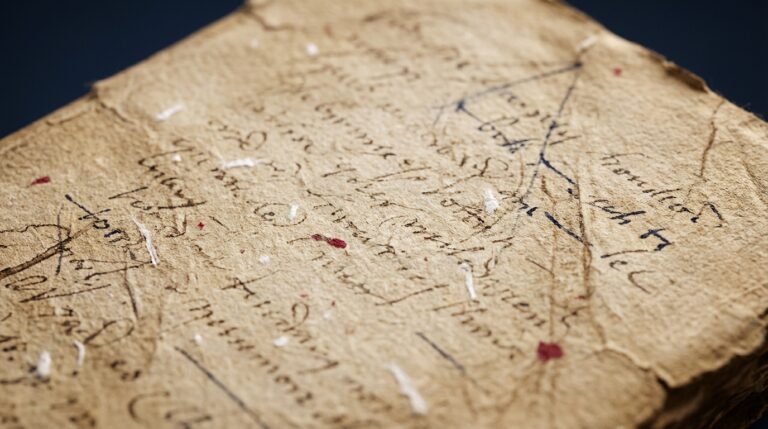
The text draws on the Constitution transcript and authoritative summaries to show how courts have analyzed implied authority and why those distinctions matter in everyday disputes over federal power. It aims to be neutral and factual and to point readers to the primary documents they can consult for verification.
What implied powers of congress means
The phrase implied powers of congress refers to authorities not listed word for word in the Constitution but understood as necessary for Congress to carry out its listed duties, according to plain constitutional reading and legal summaries Legal Information Institute explanation of the Necessary and Proper Clause.
These powers are not a separate grant of authority; they are derivative of the Constitution’s written grants, and they are typically evaluated by how closely a law serves an enumerated power Constitution Annotated on Article I, Section 8, Clause 18.
Read the primary sources and campaign statements
For readers checking sources, consult the Constitution transcript and the Constitution Annotated to read the clause text and official annotations without interpretation.
A useful starting point is to distinguish the phrase from the explicit list of powers in Article I, which sets out the enumerated powers such as taxing, spending, and regulating commerce, while implied powers explain how Congress may implement those authorities in practice Constitution transcript at the National Archives.
Why this distinction matters is practical: implied powers have historically allowed Congress to create institutions and carry out regulatory schemes that are not spelled out line by line in the Constitution, but those measures remain tied to a written grant rather than standing on their own Encyclopaedia Britannica on the Necessary and Proper Clause.
How the Necessary and Proper Clause supports congressional authority
The text commonly identified as the constitutional foundation for implied powers is Article I, Section 8, Clause 18, often called the Necessary and Proper Clause, which authorizes Congress to make laws needed to execute its enumerated powers Constitution transcript at the National Archives.
Authoritative annotations, including the Constitution Annotated from the Congressional Research Service, treat the clause as the primary textual basis for implied authority and summarize how courts assess laws claimed to rest on that clause Constitution Annotated.
The clause’s role has evolved: early practice and congressional measures used it to build institutions and fill gaps in federal authority, while later judicial decisions clarified limits and tests for when a statute qualifies as a proper means of executing an enumerated power Legal Information Institute overview. See related commentary from the Federalist Society Necessary and Proper Clause.
McCulloch v. Maryland and the core judicial test
McCulloch v. Maryland is the foundational Supreme Court decision that established the principle that Congress may use implied powers when the chosen means are reasonably related to an enumerated constitutional end McCulloch v. Maryland opinion.
The case addressed whether Congress could create a national bank as part of implementing its fiscal and regulatory powers, and Chief Justice John Marshall explained that the Constitution grants implied authority to adopt measures appropriate and plainly adapted to constitutional ends McCulloch v. Maryland opinion.
It means Congress relies on powers inferred from those explicitly written in the Constitution, justified under the Necessary and Proper Clause and assessed by courts against precedent to determine whether the means are proper to an enumerated end.
Courts have treated McCulloch as setting the standard that judges should review whether the means chosen by Congress are rationally related to an enumerated power rather than accepting broad claims of unlimited authority, a point emphasized in modern summaries and annotations Constitution Annotated.
That review function means implied powers are not immune from judicial check; courts weigh how the statute advances a constitutional end and whether the means fit the end without overstepping other constitutional protections Legal Information Institute explanation.
How modern courts apply the Necessary and Proper analysis
A recent example showing contemporary application is United States v. Comstock, where the Supreme Court upheld a federal statute under the Necessary and Proper Clause after finding a sufficient link between the law and an enumerated power United States v. Comstock opinion.
Modern courts typically frame the inquiry by asking whether a statute is a means reasonably adapted to a legitimate enumerated end and whether there is a sufficient nexus between the law and the constitutional grant, as described in authoritative commentary and case law summaries Constitution Annotated.
At the same time, decisions show courts limit implied authority when the connection to an enumerated power is weak or when separation of powers principles or other constitutional constraints suggest caution, a trend noted in both case law and reference works Encyclopaedia Britannica discussion.
A practical framework to evaluate whether a law relies on implied powers
To evaluate claims about implied authority, start with a short checklist: identify the enumerated power at issue (see Article I, Section 8), assess how the statute functions as a means to that end, and consult controlling precedents and authoritative annotations for similar analyses Constitution Annotated.

Step 1 is locating the relevant constitutional text: find the enumerated power in Article I and read the statute to see whether its stated purpose aligns with that power, using the Constitution transcript and statute text for the primary comparison Constitution transcript.

Step 2 is mapping the functional link: ask whether the law’s mechanisms are directed to accomplishing the constitutional end and whether the means are proportionate and tailored to that objective, an approach grounded in the judicial tests derived from McCulloch and later cases McCulloch v. Maryland opinion.
Step 3 is checking precedent and annotations: look for controlling Supreme Court decisions and consult the Constitution Annotated, LII, and other legal summaries to see how courts evaluated similar statutes and to note any doctrinal limits courts applied Constitution Annotated.
Enumerated versus implied powers: similarities and differences
Enumerated powers are the specific authorities listed in Article I of the Constitution, such as taxing, borrowing, and regulating interstate commerce, and those provisions are the starting point for any implied authority claim Constitution transcript.
Implied powers are derived: they are justified because they enable Congress to carry out an enumerated function when the Constitution does not spell out every necessary instrumentality, a distinction explained in reference works and legal commentary Encyclopaedia Britannica on implied powers.
In practice, the two overlap because many regulatory schemes involve both an explicit constitutional grant and implied authorities to make that grant workable, and courts often decide questions at the edge where implementation meets constitutional limits Constitution Annotated.
Common misconceptions about implied congressional authority
A common mistake is treating the word implied as if it means unlimited or unchecked power, but judicial doctrine requires a connection between the statute and a specific enumerated power and subjects the law to review Constitution Annotated.
quick steps to verify statutory claims
Search by clause and case name
Another error is confusing policy goals with constitutional authority: a statute might pursue a valuable public purpose, but that purpose does not by itself supply constitutional power unless it is a means to a listed grant Legal Information Institute guidance.
To avoid shorthand slogans, attribute claims about power to a named source such as a campaign statement, a statute, or a court opinion and then test that claim against the constitutional text and controlling cases rather than accepting the slogan as proof of authority Constitution Annotated.
How implied powers have historically enabled federal institutions and laws
Early uses of implied powers include measures taken to organize the national government and its functions, like the debates and actions around the national bank that were central to McCulloch v. Maryland McCulloch v. Maryland opinion.
Reference works note that implied authority has supported institution-building and broader regulatory activities where Congress needed tools not spelled out in detail in the Constitution, always subject to the question whether those tools serve an enumerated end Encyclopaedia Britannica.
In each case, the legislative and judicial branches have balanced practical governance needs with constitutional text, and courts have retained the role of deciding when a measure exceeds the necessary connection to a constitutional grant Constitution Annotated.
Recent debates and open questions after 2024-2026 decisions
Debates since 2024 continue to center on how far implied powers can reach, particularly where delegation and administrative authority intersect with the Necessary and Proper analysis, a discussion tracked by the Constitution Annotated and legal commentary Constitution Annotated; see recent commentary on separation of powers A return to the separation of powers.
Cases like Comstock show the Court can uphold statutes under the clause when the nexus to an enumerated power is adequate, but commentators note that doctrinal tests and emphasis on limits have evolved and merit attention in new decisions United States v. Comstock opinion; recent opinion PDFs and dockets are available from the Supreme Court opinion PDF.
Readers should watch how courts frame necessity, proportionality, and the permissible scope of congressional tools in upcoming cases and legislative debates, since those formulations determine how implied powers are applied in practice Encyclopaedia Britannica commentary.
How readers can verify claims about Congress’s authority
Primary sources are the best starting point: read the Constitution transcript for the exact clause language and consult Supreme Court opinions for controlling legal interpretation Constitution transcript. See related site material on constitutional rights.
Authoritative secondary sources help with explanation: the Constitution Annotated provides annotated analysis of clause applications, and LII offers accessible summaries that guide readers to the primary law passages to check directly Constitution Annotated.
A simple verification checklist is: identify the enumerated power, read the statute and its stated purpose, search for controlling Supreme Court decisions, and compare the fact pattern to precedent and annotations to form a reasoned view about whether the statute relies on implied power Legal Information Institute guide.
Examples and applied scenarios
McCulloch-style example: when Congress authorized a national bank, the Court asked whether the bank was a suitable means to the fiscal and regulatory powers Congress possessed, and it concluded the bank was within the range of implied authority necessary to operate the national government McCulloch v. Maryland opinion.
Comstock-style example: the Court evaluated a modern federal statute dealing with civil confinement and found the law could be upheld under the Necessary and Proper Clause when the statute had a sufficient connection to an enumerated power and the law’s means were reasonable and limited United States v. Comstock opinion.
Hypothetical walkthrough: imagine Congress enacts a statute to regulate a new form of interstate infrastructure; the analysis would ask which Article I power covers the subject, whether the law’s provisions are tailored to that aim, and whether precedent supports the inference that such measures are proper means to the enumerated end Constitution Annotated.
Arguments and doctrines that limit implied powers
Judicial limits often rest on tests that look for a genuine functional connection between the law and an enumerated power and reject statutes whose link is speculative or attenuated, an approach described in authoritative annotations Constitution Annotated.
Separation of powers and delegation concerns are central to modern limits, because courts may narrow implied authority where a statute shifts core constitutional functions or delegates excessive discretion to executive agencies without clear congressional guidance Encyclopaedia Britannica discussion.
When courts reverse or narrow authority, they typically explain how the statute’s means failed the necessary relation test or intruded upon other constitutional structures, and readers can consult the cited opinions to see the reasoning applied in concrete terms Constitution Annotated.
Conclusion: what ‘implied’ means in Congress and why it matters
In short, implied powers are derivative authorities the Constitution allows Congress to use when those measures are necessary and proper to execute enumerated powers, a baseline supported by the clause text and legal annotations Constitution transcript.

Landmark decisions such as McCulloch v. Maryland and modern applications like United States v. Comstock remain central reference points for how courts evaluate these claims, and readers should check those opinions and the Constitution Annotated to follow evolving doctrine McCulloch v. Maryland opinion.
Implied powers are authorities not spelled out in the Constitution but inferred as necessary for Congress to carry out its enumerated powers.
The Necessary and Proper Clause in Article I, Section 8, Clause 18 is the textual basis commonly cited for implied powers.
Start with McCulloch v. Maryland and United States v. Comstock, and consult the Constitution Annotated for annotated guidance.
For local readers tracking candidate positions on constitutional questions, campaign statements should be treated as claims to verify against the Constitution and controlling case law.
References
- https://www.law.cornell.edu/wex/necessary_and_proper_clause
- https://constitution.congress.gov/constitution-annotated/article-1/section-8/clause-18/
- https://www.archives.gov/founding-docs/constitution-transcript
- https://www.britannica.com/topic/Necessary-and-Proper-Clause
- https://www.law.cornell.edu/supremecourt/text/17/316
- https://www.law.cornell.edu/supremecourt/text/560/126
- https://michaelcarbonara.com/contact/
- https://michaelcarbonara.com/powers-of-congress-explainer/
- https://michaelcarbonara.com/powers-of-congress-article-i-section-8/
- https://michaelcarbonara.com/issue/constitutional-rights/
- https://fedsoc.org/ttd-topics/necessary-and-proper-clause
- https://www.scotusblog.com/2026/02/a-return-to-the-separation-of-powers/
- https://www.supremecourt.gov/opinions/25pdf/24-1287_4gcj.pdf