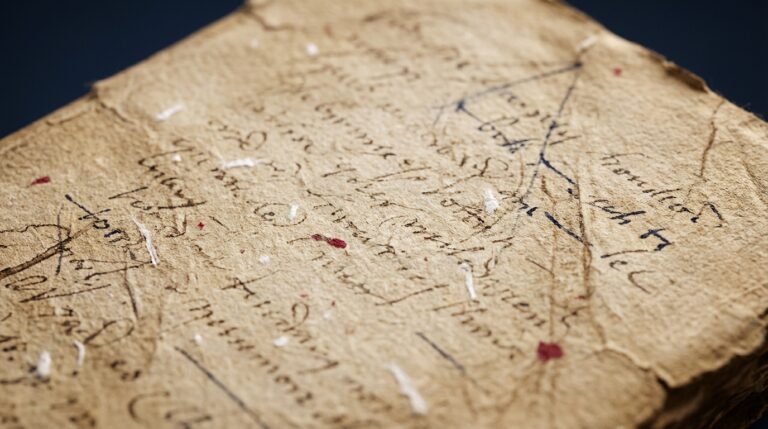
The goal is to help readers choose precise language, find authoritative texts, and understand how courts and archives treat the text differently. If you need the exact wording, this guide points you to the primary repositories that preserve the enrolled resolution and early transcriptions.
What people mean when they say the Bill of Rights
The phrase bill of rights document is used in different ways, and that can cause confusion for readers trying to be precise. The simplest factual definition is that the Bill of Rights names the first ten amendments to the U.S. Constitution, adopted on December 15, 1791, a point recorded in archival transcripts preserved for public reference National Archives Bill of Rights: A Transcription.
People commonly mean one of three things when they call the Bill of Rights a document: a physical enrolled resolution or manuscript from the ratification period, a printed or collected text used in reference works, or the set of legal amendments that now form part of the Constitution. For the historical and documentary senses, the Library of Congress provides primary materials and context about the drafting and early distribution of the text Library of Congress Bill of Rights resources.
Quick steps to find archival transcripts of the amendments
Use exact titles when searching
Scholars and educational centers also warn that calling the Bill of Rights a single document can blur legal and historical senses, so writers should choose wording that matches their purpose National Constitution Center analysis.
Common public uses of the phrase
In news reporting and classroom talk, calling the Bill of Rights a document often signals people mean the familiar printed text that lists rights such as free speech and due process; this shorthand is common in public discourse and easy to understand without implying a separate legal instrument Library of Congress Bill of Rights resources.

Three different senses: legal, historical manuscript, and collected text (bill of rights document)
The three-sense framework helps: in the legal sense the Bill of Rights refers to amendments that are part of the Constitution; in the manuscript sense it refers to enrolled resolutions or early copies; and in the collected-text sense it refers to modern printings or transcriptions used for reference National Archives Bill of Rights: A Transcription.
How the Bill of Rights exists in law: amendments, not a separate constitution
Legally, the Bill of Rights is treated as the first ten amendments to the U.S. Constitution, not as an independent constitution or separate legal instrument, a point reflected in standard legal reference works Legal Information Institute Bill of Rights entry.

That amendment status matters for how courts cite and interpret the provisions. Judges and lawyers refer to amendment numbers or to the constitutional text itself when they address claims about rights, rather than citing a separate standalone document with its own legal status Encyclopaedia Britannica Bill of Rights overview.
Because the Bill of Rights is integrated into the Constitution, its provisions carry the same constitutional force as other amendments. This affects citation style in briefs and opinions and guides judges when they analyze scope, precedent, and the relationship between amendments and statutes Legal Information Institute Bill of Rights entry.
Where the original texts are: the enrolled resolution and archival transcriptions
The original enrolled joint resolution and contemporaneous transcriptions that record the amendments are preserved as historical documents by the National Archives, and those transcriptions provide an authoritative text for researchers and the public National Archives Bill of Rights: A Transcription.

Contemporaneous printed copies and transcriptions circulated at the time of ratification may differ in formatting or punctuation from later reprints, so researchers who need exact wording should consult the archival transcript or the primary printed materials held by repositories such as the Library of Congress Library of Congress Bill of Rights resources and examples of contemporaneous printings Amendments I-X: The Bill of Rights.
Yes in the historical sense: archival enrolled resolutions and transcriptions exist as documents. Legally, the Bill of Rights is the collective name for the first ten amendments to the Constitution and functions as amendments rather than as a separate legal instrument.
Primary-source transcripts matter when precise wording is at issue, for example when quoting the text in a legal brief or a scholarly article, because later summaries or paraphrases can introduce small differences that matter in careful analysis National Archives Bill of Rights: A Transcription.
How the Bill of Rights was drafted: Madison, the 1789 proposals, and ratification
The drafting origin of the Bill of Rights traces to James Madison s proposal process in 1789, followed by debate and amendment during the ratification period; this sequence is the standard historical account in primary records and foundational scholarship Library of Congress Bill of Rights resources.
Madison introduced a set of proposed amendments to address ratification-era objections and to clarify protections that some state ratification debates had sought, a process historians and legal scholars describe in narrative and analysis of the amendment proposals and votes Akhil Reed Amar overview of Bill of Rights history.
The timeline from 1789 proposals to formal adoption in 1791 involved state ratifications of the amendment text, and researchers use both governmental records and contemporary publications to document how the final first ten amendments were selected and approved Library of Congress Bill of Rights resources.
How courts and legal practice treat the Bill of Rights today
Modern courts apply the Bill of Rights as provisions of the Constitution, and judicial practice includes doctrines such as incorporation that govern how certain amendments apply to state governments as well as the federal government, a legal context explained in reputable legal references Legal Information Institute Bill of Rights entry.
When judges write opinions they normally cite the text of an amendment or refer to it by name and clause, rather than invoking a separate document title; this pattern affects legal citation and how lawyers prepare briefs and memos Encyclopaedia Britannica Bill of Rights overview.

Legal research tools and encyclopedias summarize how courts have treated each amendment, and they provide both doctrinal context and links to leading cases for readers who want to trace how particular provisions have been interpreted over time Legal Information Institute Bill of Rights entry. For broader contextual reading see the National Archives presentation of founding documents Founding Documents at the Archives and milestone descriptions of the Bill of Rights Bill of Rights (1791) milestone.
Common misconceptions and typical errors when calling it a document
A frequent error is to treat the Bill of Rights as if it were a separate constitution with distinct legal standing; in fact the first ten amendments are part of the Constitution and receive the same constitutional force as other amendments, a caution noted by legal and educational sources Legal Information Institute Bill of Rights entry.
Another mistake is assuming a single original manuscript controls legal meaning; while the enrolled resolution and archived transcriptions are authoritative for wording, legal practice looks to the amendment text as incorporated into the Constitution, not to a private manuscript as an independent source National Archives Bill of Rights: A Transcription.
Writers often conflate the familiar printed text in reference books with the archival record. To avoid error, attribute the wording you quote to the correct repository or to the constitutional amendment number as appropriate, a practice recommended by educational analysts National Constitution Center analysis.
Practical examples: when to call it a document and how to phrase it
For a general audience, a clear phrasing is: “The Bill of Rights is the name given to the first ten amendments to the U.S. Constitution, adopted in 1791.” This phrasing communicates both the historical date and the legal status without implying a separate constitution National Archives Bill of Rights: A Transcription.
In a legal brief, prefer precise citation: cite the amendment by number and include the exact wording quoted from an authoritative transcript or a recognized reporter. That way the reader sees the legal source and the exact text relied upon Legal Information Institute Bill of Rights entry. For concise background on related constitutional topics see our page on constitutional rights.
When writing for archival or scholarly audiences, explicitly note whether you are quoting the enrolled joint resolution or a printed contemporaneous copy; use repository citations when possible to make your source traceable and verifiable Library of Congress Bill of Rights resources.
How to find and cite authoritative sources on the Bill of Rights
Start with the National Archives transcription for an authoritative text of the enrolled resolution, and use the Library of Congress collections for contextual documents and early printed copies; both repositories maintain public-facing pages that help researchers locate items and verify wording National Archives Bill of Rights: A Transcription.
For legal context and citation practice consult reputable legal encyclopedias and reference entries that summarize judicial treatment and provide links to case law; these resources explain how to reference amendments in briefs and academic writing primary printed materials and reference entries such as the Legal Information Institute Legal Information Institute Bill of Rights entry.
When citing archival transcriptions, include the repository, the document title, and the URL or archival identifier where available, and when citing the amendments in a legal context, cite the amendment number and any reporter or official source used in your jurisdiction Library of Congress Bill of Rights resources.
Conclusion: short answers for different meanings and next steps
Short answer: yes, the Bill of Rights can be considered a document in the historical sense because the enrolled resolution and transcriptions are physical records, but legally it functions as the first ten amendments to the Constitution rather than as a separate legal instrument National Archives Bill of Rights: A Transcription.
For writers and readers the practical rule is to match phrasing to purpose: attribute to the National Archives or the Library of Congress when quoting the exact text, and cite amendment numbers in legal or doctrinal contexts; foundational scholarship can provide deeper drafting history if needed Akhil Reed Amar overview of Bill of Rights history.
Want campaign updates and civic news?
Please consult the National Archives transcript or the Library of Congress reproduction for exact wording before quoting the amendments in scholarly or public writing.
When you need short attribution lines, use phrases like “according to the National Archives” or “transcribed in the Library of Congress collections” to make clear which documentary source you are using without overstating legal conclusions National Archives Bill of Rights: A Transcription.
No. While an enrolled resolution and contemporaneous transcriptions exist as historical manuscripts, legal practice treats the Bill of Rights as the first ten constitutional amendments rather than a separate single constitution.
Consult the National Archives transcription and Library of Congress collections for primary-source transcriptions and reproductions of the enrolled resolution and early printed copies.
Cite the amendment by number and quote exact wording from an authoritative transcript or recognized legal reporter, and include repository details when using archival transcriptions.
References
- https://www.archives.gov/founding-docs/bill-of-rights-transcript
- https://www.loc.gov/rr/program/bib/ourdocs/billofrights.html
- https://constitutioncenter.org/blog/what-is-the-bill-of-rights
- https://www.law.cornell.edu/wex/bill_of_rights
- https://www.britannica.com/topic/Bill-of-Rights
- https://yalebooks.yale.edu/book/9780300072051/bill-rights
- https://michaelcarbonara.com/issue/constitutional-rights/
- https://michaelcarbonara.com/bill-of-rights-first-10-amendments/
- https://michaelcarbonara.com/bill-of-rights-full-text-guide/
- https://www.archives.gov/milestone-documents/bill-of-rights
- https://visit.archives.gov/whats-on/founding-documents
- https://teachingamericanhistory.org/document/amendments-i-x-the-bill-of-rights/
- https://michaelcarbonara.com/contact/