What the Fourth Amendment requires
Quick answer
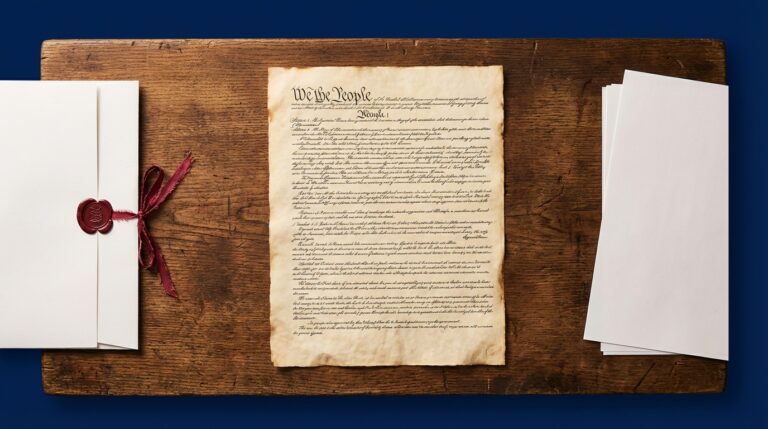
iv amendment: The Fourth Amendment creates a baseline rule that government searches and seizures generally require a warrant supported by probable cause, subject to a set of judicially created exceptions that courts apply case by case.
Courts and legal guides summarize the constitutional text and its basic effect as a starting point for any question about bag searches; for a clear reference to the amendment text, see the National Archives and a compilation of Supreme Court search and seizure cases.
Why warrants matter

The warrant requirement is intended to limit discretionary searches by government agents and to ensure a neutral decision maker evaluates probable cause before intrusions into private property occur. That baseline rule comes from the constitutional text and is the touchstone for later exceptions adjudicated by courts, according to a federal overview.
Federal baseline and state differences
Although the Fourth Amendment sets the federal floor for search protections, state constitutions can be more protective. States interpret their own search and seizure provisions and sometimes provide broader rights than the federal baseline, which means outcomes can vary by jurisdiction.
Many practical guides and legal summaries explain how federal and state law interact when a person asks whether police can search a bag without a warrant. See educational summaries.
Short answer: Can police search your bag without a warrant?
Plain-language summary
Short answer: Generally, police need a warrant supported by probable cause to search a bag, but courts recognize several limited exceptions that allow warrantless searches in specific circumstances.
Those exceptions commonly include consent, search incident to arrest, Terry stops limited to weapons searches, plain view or plain touch discoveries, exigent circumstances, and inventory searches after arrest or impound; digital devices are treated under a separate line of cases.
When the short answer changes
The existence and scope of an exception depend on the facts of the encounter. Courts consider whether consent was voluntary, whether an item was within the person’s immediate control at the time of arrest, or whether officers faced an immediate threat or exigency that made obtaining a warrant impractical.
If the situation involves a cell phone or other digital device, courts direct a different analysis because modern data raises distinct privacy concerns.
Common legal exceptions that allow warrantless bag searches
Consent
Consent remains one of the most frequent bases officers cite for a warrantless bag search. Courts evaluate consent by looking at the totality of the circumstances to decide whether the agreement was voluntary rather than coerced.
Practical legal guidance stresses that whether consent is voluntary is a fact-specific inquiry and that people may lawfully refuse a search; civil liberties resources provide suggested scripts and steps to preserve rights after a consent encounter.
Search incident to arrest
A search incident to arrest permits officers to search areas within an arrestee’s immediate control so they can remove weapons and preserve evidence. That rule allows searching containers that are within reach at the time of arrest, subject to later case law that limits vehicle and container searches in some settings.
Arizona v. Gant and later interpretations narrowed some prior assumptions about vehicle searches incident to arrest, so container searches near an arrestee require careful analysis of the facts and of controlling precedent.
Terry stops and frisks
Terry authority allows an officer to stop and briefly detain someone based on reasonable, articulable suspicion of criminal activity and to perform a limited frisk for officer safety when the officer reasonably suspects the person is armed and dangerous.
That limited frisk is focused on weapons; it does not authorize a broad search of a bag for evidence absent additional justification that satisfies the applicable legal standard.
Plain view and exigent circumstances
When officers lawfully observe contraband or instruments of a crime in plain view, they may seize those items without a warrant. Similarly, exigent circumstances can justify a warrantless search if officers face an immediate threat, a risk evidence will be lost, or other urgent conditions make a warrant impractical.
Both doctrines are highly fact specific and often contested in court, so whether they apply to a bag search depends on the concrete details of the encounter and the jurisdiction.
Inventory searches after arrest
Police departments commonly perform inventory searches of an arrestee’s property following impound or custodial procedures. Those administrative searches are conducted under department policy and are treated differently than searches based on probable cause.
Because they are administrative, courts examine whether the search followed standardized policy rather than whether the officer had probable cause to believe the item contained evidence.
Special rules: vehicles, digital devices, and items near an arrestee
Stay informed and get involved with Michael Carbonara
If you have a specific, time sensitive concern about a search of your vehicle or device, consult a qualified attorney or a primary source for the governing precedent.
Vehicle search rules and Arizona v. Gant
Vehicle-related searches are governed by distinct case law because of vehicles’ mobility and the reduced expectation of privacy courts historically assign to them. Arizona v. Gant narrowed one category of vehicle searches incident to arrest by limiting when officers may search a vehicle incident to a recent occupant’s arrest. See the Court’s opinions at law.cornell.edu.
In practice, Gant means officers can no longer automatically search every area of a vehicle after arrest; instead, courts require a connection between the arrestee’s access to the vehicle at the time of the search or a reasonable basis to believe the vehicle contains evidence related to the arrest.
Digital devices: Riley and the need for separate analysis
Searches of cell phones and other data devices require a separate analysis under modern Supreme Court precedent. The Court has recognized that digital devices store a vast amount of personal information, and it directs courts to treat them differently from ordinary physical containers.
Because of that distinct approach, a warrantless search of a phone found in a bag will often be scrutinized under different standards than a search of a physical container, and courts look to the controlling digital search decisions for guidance.
Items that are within an arrestee’s immediate reach at the time of arrest may be searched incident to the arrest to protect officer safety and preserve evidence, but courts limit that authority by considering the actual reachability and the timing of the search.

When officers cross the line from a safety search to a full evidentiary sweep, courts may later find the search exceeded permissible bounds and suppress improperly seized evidence.
How courts and police assess consent and voluntariness
What courts look at when evaluating consent
Courts apply a totality of the circumstances test to determine whether consent to search a bag was voluntary. Factors can include the person’s age, education, whether officers used force or threats, how the request was phrased, and the length of the encounter.
Because the voluntariness inquiry depends on many small facts, two different encounters that look similar at first glance can yield different legal outcomes in court.
Examples from legal guidance and cases
Guides for people who interact with law enforcement emphasize stating that you do not consent to a search when you wish to preserve your rights, and they recommend calmly and clearly communicating refusal rather than physically resisting.
Those practical tips aim to reduce escalation during an encounter while preserving legal options for challenge later, according to established rights materials.
How state law can change the analysis
State constitutions and courts can give broader protection than the federal baseline. For example, Florida’s constitution has its own search and seizure provision that state courts may interpret to provide greater protection in some cases, which can affect whether a bag search is lawful under state law.
Because of those differences, the same facts may lead to different results in federal court and in a state court that applies a more protective state constitutional standard.
What to do if an officer asks to search your bag
Calm refusal scripts you can use
If an officer asks to search your bag and you do not want to consent, you can say a brief, calm refusal such as: “I do not consent to a search.” Keep the language short and polite to avoid escalating the situation.
Another neutral script is to ask: “Am I free to leave?” That question can clarify whether you are being detained and may affect your legal options during the encounter.
Generally no. Officers typically need a warrant supported by probable cause to search a bag, but exceptions like voluntary consent or exigent circumstances can permit a warrantless search depending on the facts.
How to record and document the encounter
If you can do so safely, take notes or use your phone to record the time, location, and officers’ identifying information. Ask for names and badge numbers and request a copy of the police report or the body worn camera footage after the encounter.
Documenting these facts promptly helps preserve evidence for a later legal review and can be important if you plan to consult an attorney afterwards.
What to do afterwards
After the encounter, consider contacting a lawyer and ask how to obtain official records such as the police report or body camera footage. Legal guidance recommends avoiding physical resistance during the stop and using formal post-encounter channels to seek remedy.

Typical mistakes and common legal misunderstandings
Myths about consent and broad permission
One common myth is that giving limited consent allows officers to search without boundaries. In reality, the scope of consent matters; agreeing to let an officer look in one pocket does not automatically allow a full search of every bag or container.
Courts examine the scope and circumstances of any consent to determine whether officers exceeded what was allowed.
Confusing pocket searches, bags, and phones
People sometimes assume a pocket search, a bag search, and a phone search are all treated the same. In truth, phones receive special consideration under modern case law and may require different legal analysis than a physical bag or clothing.
Because that distinction matters in court, it is important to note which type of item was searched when seeking legal advice.
Misreading state versus federal protections
Another misunderstanding is assuming federal rulings apply identically in every state. State constitutional provisions or state court precedents can provide additional protections that change how an encounter is evaluated locally.
Always check the applicable state law for the most relevant standard in your jurisdiction.
How to challenge an unlawful search and where to find help
Collecting and preserving evidence for court
If you believe a bag was searched unlawfully, preserve any evidence you have about the encounter, including notes, recordings, witness contact information, and the police report number. That information supports motions and complaints later in court.
Legal remedies may include seeking suppression of improperly obtained evidence or filing a civil claim, but outcomes depend on the law and the specific facts of the case.
Filing complaints and requesting records
You can ask the department for records such as the police report and body worn camera footage. Many jurisdictions have formal records request procedures and internal affairs or civilian review complaint channels for concerns about officer conduct.
Using formal channels preserves a record of your request and can be an important step before filing a court motion or seeking counsel.
Resources for legal aid and next steps
Neutral legal guides and civil liberties organizations provide information about rights during stops and about how to find counsel. Those resources can help you understand whether you have grounds to challenge a search and where to look for assistance.
quick steps to preserve evidence after a search
Keep copies in two places

Closing thoughts for readers
The iv amendment sets a clear baseline: warrants supported by probable cause are required for most searches, but courts recognize limited exceptions that apply in tightly defined circumstances. Whether an individual bag search is lawful depends on which exception, if any, applies to the facts.
If you face a specific incident, consult primary sources and a qualified attorney to review the facts in your jurisdiction and preserve evidence promptly for any legal challenge.
Yes. You can calmly refuse consent to a search. Saying no may preserve legal options later, and civil liberties guides recommend polite, short refusals and avoiding physical resistance.
Not always, but courts treat phones differently because they store extensive personal data. Recent Supreme Court precedent requires separate analysis and often higher protection for digital devices.
If you believe a search was unlawful, preserve details of the encounter, request records, and consult an attorney about possible motions to suppress evidence or other remedies.