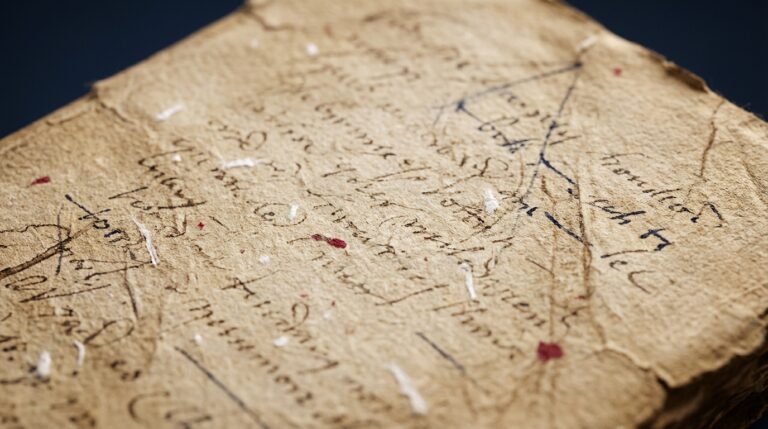
First, it refers to the first ten amendments to the U.S. Constitution as proposed in 1789 and ratified in 1791. Second, it can refer to surviving physical artifacts such as the engrossed copy, working drafts, and printed broadsides that document the ratification process.
What the phrase original Bill of Rights means
The term original bill of rights most commonly refers to the first ten amendments to the U.S. Constitution, which were proposed in 1789 and ratified in 1791, and it also serves as a label for surviving physical documents that record that process, such as engrossed copies, drafts, and early printed broadsides, so readers should expect two related meanings in historical writing and archival descriptions National Archives Charters of Freedom page. For exhibit details see National Archives Museum founding documents.
In legal use, the phrase points to the text of the first ten amendments as adopted by the states and entered into the record of the U.S. Constitution; legal reference sites and constitutional transcriptions provide the canonical wording that courts and scholars cite LII Bill of Rights page.
When used for physical artifacts, the same phrase can mean the engrossed official document on display, draft manuscripts used in drafting, or printed broadsides and state copies that circulated around 1791; each category is different in purpose and in evidentiary value for researchers Library of Congress description of Madison papers.

The engrossed Bill of Rights at the National Archives
The engrossed Bill of Rights is the formally written and signed copy that the National Archives treats as an official museum artifact and includes it as part of its Charters of Freedom collection on public display in the Rotunda in Washington, D.C., which is the primary location visitors associate with the original engrossed document National Archives Charters of Freedom page. See the National Archives Museum site National Archives Museum for visitor orientation.
In archival terms, ‘engrossed’ means a formally prepared, neatly inscribed copy intended as the authoritative record rather than a working draft, and that status is why the engrossed version is exhibited as an artifact rather than a draft for study National Constitution Center overview of the Bill of Rights.
guide to using the National Archives exhibition viewer and catalog
Use institutional viewers for detail
James Madison’s drafts and the working manuscripts
James Madison’s drafts and related papers survive as the working manuscripts behind the amendments and are preserved in institutional collections that scholars consult to see proposal changes and editorial notes, making them central to historical study Library of Congress description of Madison papers.
Drafts show how language evolved, which clauses were proposed, and what revisions were considered before the adopted text; they are distinct from the engrossed, official copy and therefore serve a different research purpose, namely tracing process rather than representing the final enacted text National Archives transcription page.
Find primary sources and ways to get involved
For readers who want direct access to primary sources, consult the Library of Congress collection pages and the National Archives transcriptions to read Madison’s drafts and compare them with the adopted text.
Researchers often use these manuscripts to confirm earlier wording, understand intentional phrasing, and place marginal notes in historical context, and archivists treat them as working papers rather than the final legal record Library of Congress description of Madison papers.
Early printed broadsides and state ratification copies
Printed broadsides and state ratification copies were tools for distributing the proposed amendments and recording ratification steps in the 1790s; they were often produced quickly and in multiple editions and therefore can vary in layout and provenance Library of Congress holdings overview.

Surviving examples of these printed items are held by the Library of Congress, university libraries, and special-collections repositories; catalog records and digitized images in those collections are the best place to start when tracking a specific copy or edition National Constitution Center research resources.
Scholars note that provenance for some broadsides remains an open research area, so researchers should consult institutional catalog metadata and, when necessary, contact curators for additional documentation rather than assuming that any online copy is a contemporary original Library of Congress description of manuscript and printed holdings.
Digital transcriptions and online images of the originals
High-quality transcriptions and digital images of the Bill of Rights and many related manuscripts are available online from the National Archives and the Library of Congress, and these resources are accurate starting points for most readers who do not need to see the physical object in person National Archives transcription page. The Archives founding documents landing is at America’s Founding Documents.
Legal-reference sites also publish authoritative transcriptions that scholars and students use to check wording and citations, which can speed research when comparing versions LII Bill of Rights page.
The original Bill of Rights most commonly means the first ten amendments to the U.S. Constitution as proposed in 1789 and ratified in 1791; it can also refer to the physical documents that record that process, including the engrossed copy at the National Archives and working manuscripts in the Library of Congress.
When using images and transcripts, check the hosting institution, the item’s catalog record, and any editorial notes that explain how the transcription was produced to confirm its suitability for your purpose National Archives Charters of Freedom page.
How scholars evaluate originals and provenance
Archivists and historians use provenance, ownership history, and institutional cataloging as primary criteria when evaluating whether a manuscript or printed copy is an original, because those documentary traces show how an item moved from creator to repository Library of Congress description of manuscripts.
Physical signals such as paper type, ink, handwriting comparison, and notations are used alongside catalog records to assess authenticity, and institutions document these features in their finding aids and item records National Constitution Center on documentary evidence.
Provenance research is ongoing for some broadsides and copies, so catalog records, curator notes, and institutional publications remain the best primary evidence for claims about originality and date Library of Congress holdings information.
Practical steps for viewing originals in person
To see the engrossed Bill of Rights in person, visitors must go to the National Archives Rotunda in Washington, D.C., and follow the Archives’ published guidance on visiting hours, security procedures, and exhibit rules before planning travel National Archives Charters of Freedom page.
If you plan to consult manuscripts such as Madison drafts at the Library of Congress or other research libraries, expect to make an appointment, request items in advance, and follow handling policies in reading rooms; contact the repository for exact procedures and any photographic or handling restrictions Library of Congress research services page. You can also use the site contact page for questions contact.

Before traveling, check digitized alternatives and institutional catalogs to confirm the item’s location and any access limitations; many repositories also offer high-resolution images that remove the need for on-site consultation for routine wording checks National Archives transcription page.
Typical errors and misconceptions to avoid
A common error is to confuse the legal text, which is the adopted first ten amendments, with a single physical original; drafts and broadsides are related but different kinds of evidence and must be described precisely in citations LII Bill of Rights page.
Another mistake is treating any online image as an original without checking the hosting institution’s catalog record; reproductions and later printings exist and repositories make that distinction in their metadata Library of Congress item descriptions.
Practical examples and research scenarios
Scenario one: a student compares the National Archives transcription of the Bill of Rights with a Madison draft to see whether wording shifted during drafting; the Archives’ transcript and the Library of Congress manuscripts are the appropriate primary sources for that comparison National Archives transcription page.

Scenario two: a researcher finds a ratification-era broadside in a university catalogue and inspects the catalogue record for publication details, annotations, and provenance notes; if records are thin, the next step is to contact the special-collections curator for more context Library of Congress guide to manuscripts.
Key takeaways: the phrase original Bill of Rights commonly denotes the first ten amendments as legal text and also refers to several surviving physical artifacts, including the engrossed copy in the National Archives and working manuscripts in the Library of Congress National Archives Charters of Freedom page.
For further study, begin with the National Archives and the Library of Congress digital collections and use legal-reference transcriptions to confirm wording; consult catalog records and contact archivists for provenance questions before assuming any copy is an original LII Bill of Rights page. See a concise guide to the Bill of Rights Bill of Rights full text guide.
The engrossed Bill of Rights is exhibited in the National Archives Rotunda in Washington, D.C.; consult the Archives’ visitor guidance for hours and exhibit rules.
No. Madison’s drafts are working manuscripts that show proposals and revisions; they are preserved separately and used for scholarly study of the drafting process.
Check the hosting institution’s catalog record and editorial notes; many images are trustworthy reproductions, but provenance and catalog metadata indicate originality.
For basic reading and quotation, widely used transcriptions from reputable legal-reference sites and the National Archives provide reliable text for citation and classroom use.
References
- https://www.archives.gov/founding-docs/bill-of-rights
- https://visit.archives.gov/whats-on/founding-documents
- https://www.law.cornell.edu/constitution/billofrights
- https://www.loc.gov/collections/james-madison-papers/about/
- https://constitutioncenter.org/interactive-constitution/interpretation/bill-of-rights
- https://visit.archives.gov/
- https://www.archives.gov/founding-docs/bill-of-rights/transcript
- https://www.archives.gov/founding-docs
- https://michaelcarbonara.com/contact/
- https://michaelcarbonara.com/issue/constitutional-rights/
- https://michaelcarbonara.com/bill-of-rights-first-10-amendments/