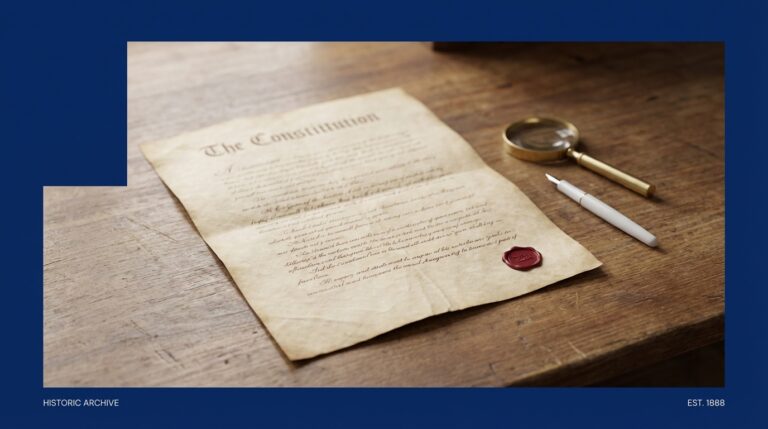
The piece is intended as neutral, informational content from Michael Carbonara's campaign web team to help voters, collectors and local readers understand how founding-era documents are treated by archivists and valuers. It does not offer legal advice and encourages consultation with accredited professionals for specific cases.
Short answer: Is the original Constitution for sale?
Quick definition of the engrossed 1787 manuscript
The single engrossed 1787 Constitution is the single parchment on display as part of the Charters of Freedom and it is owned and curated by the National Archives, so it is not a market asset and has no public sale price, according to the National Archives and Records Administration Charters of Freedom: The Constitution.
Stay informed and involved
For primary documentation about custody and public display, see the National Archives Charters of Freedom page and related institutional records.
Practical takeaway for owners and readers: if you mean the single engrossed manuscript, there is no commercial price because the document is in federal custody and is exhibited as a public trust, not offered for sale.
Immediate practical takeaway for owners and readers
People who ask the price of an “original” often mean something else, such as a printed 1787 pamphlet, a delegate’s draft or a later facsimile, and those other categories can carry market values in certain circumstances.

What people mean by ‘original’ – four distinct categories
The engrossed parchment, the single handwritten manuscript signed in 1787, is distinct from printed copies that circulated in 1787 and 1788; those printed, contemporaneous sheets are physically and legally different from the engrossed manuscript and sometimes appear in private markets or institutional collections Library of Congress notes on the Constitution. See our guide to read the US Constitution online.
The single engrossed parchment
The engrossed parchment is a single physical object created for ratification and later preserved as part of the Charters of Freedom; it remains in public custody and is treated as a national collection item. This status affects legal ownership and the possibility of sale.
Contemporary printed copies from 1787-1788

Printed copies, such as broadsides and early pamphlet editions distributed to the states, were made in larger numbers and appear occasionally at auction; they are materially different from the engrossed parchment and can and do have market prices when clear legal title exists Market guides on collecting historical documents.
Delegates’ drafts, annotations and related manuscripts
Drafts, annotated copies or working papers created by delegates are another category. These items carry value when provenance, condition and authorship are clear, and they sometimes enter the market through institutional deaccession or private consignments.
Facsimiles and later reproductions
Facsimiles and later printed reproductions are not originals in the documentary sense and typically have little collector value compared with genuine eighteenth century copies or manuscripts.
Who actually owns the engrossed 1787 manuscript?
The National Archives and Records Administration acts as custodian of the Charters of Freedom and curates the engrossed 1787 Constitution as part of the federal historical collection, and NARA describes the document as held in public trust and available for exhibition under institutional terms Charters of Freedom: The Constitution.
Federal custody means the item is not a market-traded object; ownership by a federal institution brings legal restrictions on sale, transfer and export that remove the engrossed manuscript from ordinary valuation or auction processes. See federal regulations at 36 CFR part 1256.
The single engrossed 1787 Constitution is held by the National Archives and has no public sale price; owners of other founding-era materials should secure authentication, an accredited appraisal, conservation review and clear legal title before pursuing insurance, loans or sale.
Public exhibition or rotation in displays does not imply that the item can be sold, transferred or consigned to private parties without specific legal authority and formal procedures.
How valuation professionals assess historic manuscripts
Valuation of founding-era documents follows a professional framework used by conservators, accredited appraisers and auction specialists that emphasizes provenance, condition, rarity, market comparables and clear legal title as the core determinants of value Christie’s guide to valuing manuscripts.
Experts involved typically include manuscript appraisers, forensic handwriting analysts, conservators and auction specialists; each brings a narrow skill set and a professional expectation of documentation before a market opinion is offered.
Five key drivers that determine price for founding-era documents
Below are the five primary factors professionals cite when estimating market value. Each factor affects the likely price and the steps an owner should take to document and protect an item.
Provenance and chain of custody
Provenance shows who owned an item and how it passed from hand to hand. Strong, documented provenance can increase buyer confidence and raise market value, while gaps reduce buyer interest.

Physical condition and completeness
Condition covers ink stability, parchment or paper integrity, repairs, staining and any losses. Missing text, heavy damage or modern repairs can sharply reduce value compared with a complete, well-preserved example.
Rarity and uniqueness
Rarity matters because fewer comparable items make an object more desirable to specialized collectors or institutions; unique annotations or signatures can increase interest substantially.
Market comparables and demand
Past sales of similar items provide the best available data for setting a price expectation, but the number of premium sales is limited, which widens the likely price range for any single item Smithsonian Magazine on valuing founding documents.
Legal title and transferability
Even a document in excellent condition with a flawless provenance may have no market value if legal title is unclear or if donor restrictions, deeds of gift or federal ownership block sale.

Auction comparables and historical sale examples
Collectors and appraisers use auction records for founding-era items such as original printed Constitutions, delegates’ letters and other primary materials to estimate what a comparable item might fetch, but headline sales are not exact matches for every object and should be treated as directional rather than definitive Heritage Auctions market guide.
The practical limit is that a small number of premium sales means comparables are thin; differences in condition, marginalia or provenance can change a realized price by large amounts even when items appear similar on the surface.
Practical steps owners or custodians should take next
Owners or institutional custodians who want to understand value or prepare an item for insurance, loan or sale should follow clear, sequential steps: authentication, written appraisal, conservation assessment and legal title review. If you need professional help, start via our contact page.
A short preparatory checklist for owners seeking professional services
Use this list to organize initial outreach
Step 1, authentication: obtain handwriting and material analysis plus provenance research to confirm the item’s origin and authorship. Step 2, written appraisal: commission an accredited manuscript appraiser to prepare a formal market opinion that insurers and buyers will accept. Step 3, conservation and insurance: secure a conservator review and establish replacement or market value for insurance purposes before any transport or consignment ASA appraisal standards for manuscripts and autographs.
Major auction houses and specialist dealers generally require these documents as part of their pre-sale due diligence, and presenting full documentation improves the chances of a considered marketing process rather than a rushed transaction.
Legal and institutional constraints that often remove items from the market
Federal custody, deeds of gift and donor restrictions are common legal conditions that prevent commercial sale; institutions frequently accept items with terms that limit transfer or sale and those terms travel with the object and its accession record Charters of Freedom: The Constitution. See NARA laws and authorities and related federal restrictions in the Federal Register restrictions on the use of records.
Owners should investigate title documents and any donor agreements early. Export rules and cultural property laws in the United States and elsewhere can also constrain international sale or movement of twentieth and earlier cultural objects.
Authentication, appraisal and conservation: what specialists will do
Authentication commonly uses handwriting comparison, ink and substrate analysis, and provenance research to form an opinion about an item’s date and creator; conservators often inspect the physical object to identify repairs or later interventions that matter to both value and display.
A formal appraisal from an accredited professional typically includes a detailed description, provenance summary, condition note, market comparables and an opinion of probable sale value under specified conditions, and insurers will generally request such a document to set policy limits Guide to valuing manuscripts.
Options for selling or consigning high-value documents
Sellers considering a transaction should evaluate typical channels: top-tier auction consignments, specialist dealer sales, private treaty transactions or institutional transfers. Each route has different fee structures, timelines and audience reach, and none is appropriate without prior authentication and appraisal.
Consignment terms vary widely, including reserve pricing, seller guarantees and commission schedules; owners should obtain and compare written terms and allow time for marketing to appropriate collecting communities rather than expecting immediate sale.
Insurance, security and custody considerations before any sale or loan
Insurers require a written appraisal and may ask for conservation notes before agreeing to cover a high-value document; accurate insurance depends on a documented market opinion that reflects the item’s specific condition and comparables.
Transport and handling require secure packaging, vetted couriers and, for loans, detailed loan agreements that spell out responsibility for damage, transit insurance and environmental requirements during exhibition.
Why price estimates can vary so widely
Price volatility stems from limited high-end comparables, fluctuating collector demand and small differences in condition or provenance that disproportionately affect buyer willingness to pay, so two items that look similar may sell at very different price points Smithsonian Magazine analysis.
Because premium sales are rare, appraisers often offer a range rather than a single figure, and that range can be wide because comparables are few and every unique feature carries outsized influence on final bids.
Common pitfalls, scams and mistakes to avoid
Owners should be wary of unverified certificates of authenticity, unverifiable online provenance claims and offers that demand immediate payment or removal of documentation; such signs often indicate scam activity or inexperienced intermediaries Christie’s guidance on due diligence.
Avoid rushing to sell without an independent appraisal and documented chain of custody; quick private deals often leave sellers with unresolved title questions and lower realized prices than careful marketing can achieve.
Conclusion and realistic next steps for owners
Key takeaway: the single engrossed 1787 Constitution held by the National Archives is not a market asset and has no public sale price, while other items described as original, such as printed copies or delegates’ drafts, may have market value if legal title and condition support sale Charters of Freedom: The Constitution.
Checklist of immediate actions: confirm legal title and donor restrictions, obtain professional authentication, commission a written appraisal, get a conservation assessment and insurance, and consult appropriate sale channels only after documentation is complete. See our constitutional rights resource for related content.
No. The engrossed 1787 Constitution is in federal custody at the National Archives and is not available for private sale.
Collectors often mean printed contemporary copies, delegates' drafts, or annotated sheets; those items can sometimes enter the market if title, condition and provenance are clear.
You should have documented legal title, a professional authentication report, a written appraisal and a conservator's condition assessment before pursuing sale or loan.
For general public records and descriptions of the engrossed Constitution, consult the National Archives Charters of Freedom resources and professional appraisal standards for manuscripts.