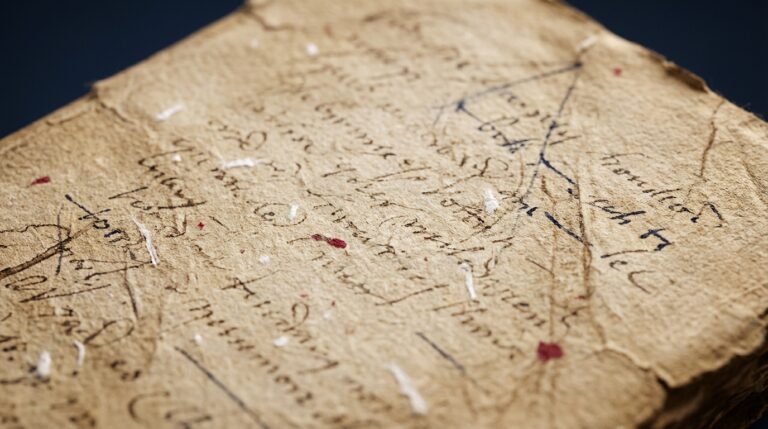
The article is organized around three overlapping influence streams and uses archival transcriptions and curated collections as the evidence base. Readers will find short exercises and recommended transcriptions to compare wording across documents.
What the Bill of Rights is and why it matters
Basic facts: text, ratification date, and scope
A quick archival search checklist for primary transcriptions
Use official transcriptions where possible
The Bill of Rights is the first ten amendments to the United States Constitution, ratified in 1791 and recorded in official transcriptions that are widely available to researchers. The National Archives maintains a reliable transcript of the Bill of Rights that provides the authoritative text used by historians and educators National Archives Bill of Rights transcript.
Why historians trace origins
Tracing the origins of the Bill of Rights matters because the framers used earlier texts and practices as models when they chose language and procedures to protect rights. Scholars compare wording, recorded debates, and earlier state declarations to identify textual echoes and explicit influences, typically relying on archival transcriptions and primary-document collections for precision Library of Congress primary documents on the Bill of Rights.
Careful comparison helps show why certain protections appear where they do, and it clarifies whether an amendment responded to a legal precedent, a philosophical argument, or a lived colonial grievance. That method guides much recent scholarship and public-facing summaries.

Three overlapping influence streams that inspired the Bill of Rights
Modern scholarship identifies three overlapping streams that shaped the Bill of Rights: English constitutional and legal precedents, Enlightenment political philosophy, and colonial state declarations and local grievances. Each stream supplied different kinds of material, from procedural templates to rights vocabulary and specific complaints.
Primary sources and state declarations are essential for linking particular amendment language to earlier texts. By looking for direct phrasing parallels, cited precedents in debates, and the presence of similar concerns in state documents, researchers can construct evidence-based connections between an amendment and its antecedents Virginia Declaration of Rights transcription.

Historians continue to discuss how much weight to assign each stream. While connections are documented, the exact proportional influence of English precedent, Enlightenment ideas, and colonial practice remains an area of active study.
English precedents: Magna Carta and the English Bill of Rights
The English legal tradition provided long-standing procedural concepts that colonial lawyers and later American framers knew well. Texts such as the Magna Carta and the 1689 English Bill of Rights supplied models for trial procedures, habeas corpus, and limits on standing armies that appear in American protections.
For detailed transcriptions and to compare language, readers can consult an Avalon Project transcription of the English Bill of Rights. That document helped shape debates about standing armies and the rights of individuals against government encroachment Avalon Project English Bill of Rights transcription.
Magna Carta contributed concepts like trial by jury and protections against arbitrary detention that entered common law and colonial legal culture over centuries. Legal traditions carried these procedural expectations into American argument and law, forming part of the constitutional backdrop.
Stay updated with Michael Carbonara
Consult transcriptions from official archives and university projects to read exact wording and see how English procedural models were adapted in colonial and early American documents.
Enlightenment ideas and John Locke’s influence
Enlightenment political philosophy provided the vocabulary and justification for enumerating rights. John Locke, in particular, argued for natural rights and government by consent, ideas that American advocates often invoked when calling for explicit protections.
Locke’s emphasis on natural rights and limits on arbitrary power appears in the language and rationale of several state declarations and later in arguments for enumerated protections, as reflected in primary collections and scholarly summaries Stanford Encyclopedia of Philosophy entry on Locke.
Scholars treat Locke as an important influence while noting that framers combined his ideas with legal precedent and practical colonial experience. That nuance is important for understanding why the Bill of Rights reads as both philosophical and procedural.
Colonial experience and state declarations, especially Virginia
The lived experience of the colonies produced specific complaints that later map onto amendment text. Common grievances included opposition to writs of assistance, forced quartering of troops, and broad search powers, all of which helped shape protections against arbitrary searches and quartering.
The Virginia Declaration of Rights, adopted in 1776, contains protections and phrasing that closely align with several amendments, making it a direct model for framers seeking to enumerate rights at the federal level National Archives Virginia Declaration of Rights transcription and teaching resources such as Khan Academy primary source excerpts.
The Bill of Rights was inspired by a mix of English legal precedents, Enlightenment political philosophy, and colonial state declarations and grievances; researchers use primary transcriptions to trace direct wording and procedural models.
Primary transcriptions of state declarations let readers compare exact wording and see how colonial complaints became formal protections in the 1791 amendments. That comparative approach often reveals near-verbatim echoes and shared legal vocabulary.
State declarations varied, but together they formed a repertoire of rights language that delegates to the federal convention and later proponents of amendments could draw upon when proposing specific clauses.
How specific grievances and precedents map to individual amendments
Examples: Third and Fourth Amendments
The Third Amendment, which restricts quartering of troops in private homes, reflects colonial opposition to forced billetings that many colonists recorded in complaints and state resolutions. Those complaints became part of the rationale for an explicit federal protection in 1791.
The Fourth Amendment’s protection against unreasonable searches and seizures grew out of opposition to general warrants and writs of assistance, practical legal instruments that colonial litigants and pamphleteers criticized. Comparing the amendment with state complaints shows a clear line from grievance to constitutional text National Archives Bill of Rights transcript.
Procedural amendments: jury, habeas corpus, and limits on standing armies
Procedural protections such as the right to a jury trial and habeas corpus echo concepts long present in English law. These practices entered colonial legal culture and later reappeared in federal protections as framers sought to secure familiar legal processes against future abuse.
English precedents supplied templates for these procedures, while colonial practice kept them central to local legal expectations. That combination helps explain why procedural guarantees occupy a visible place among the early amendments Avalon Project English Bill of Rights transcription.
Methods for tracing origins: using primary documents and archival collections
Comparative textual research begins with primary-document transcriptions. Researchers line up the wording of the Bill of Rights with state declarations, colonial petitions, and English documents to look for shared phrases and legal concepts. Using official transcriptions avoids errors introduced by excerpted or paraphrased secondary accounts Library of Congress primary documents on the Bill of Rights and resources such as the Guide to Law Online.

Key repositories for this work include the National Archives for founding documents, the Library of Congress for curated primary collections, and the Avalon Project for English transcriptions. Each provides searchable transcriptions that simplify side-by-side comparison.
For readers who want to test parallels themselves, start by selecting a clause from the Bill of Rights and then search state declarations and English documents for similar phrasing. Note exact words rather than paraphrases, because small differences can change legal meaning. For a quick reference to the ten amendments, see a local guide to the first ten amendments.
Common misconceptions and scholarly debates
A common misconception is to attribute the Bill of Rights to a single source. In reality, English precedent, Enlightenment philosophy, and colonial declarations all contributed, and scholars continue to debate the proportional weight of each influence.
Another mistake is to treat framers’ language as a direct promise of modern policy outcomes. The amendments articulate rights and procedures relevant to their historical context, and careful study uses original texts to interpret intent and application, not to predict contemporary policy results Avalon Project English Bill of Rights transcription.
Recent archival work and reliable transcriptions give readers access to the documents scholars use for nuanced interpretation. That transparency helps prevent oversimplified accounts that privilege one influence over others without evidence.
Practical examples and short readings to explore next
Short, focused readings make it easier to see textual echoes. Start with the Bill of Rights transcript, then read the Virginia Declaration of Rights and the English Bill of Rights to notice recurring phrases and concerns National Archives Bill of Rights transcript.
A simple exercise: take the Fourth Amendment text and place it next to a colonial complaint about writs of assistance. Note shared terms and the ways each document frames government authority. Using official transcriptions ensures you compare exact words.
Conclusion and where to find reliable primary sources
The Bill of Rights emerged from a mix of English legal precedent, Enlightenment political theory, and colonial state declarations. Each stream contributed language and reasoning that framers and advocates used when they wrote and defended the amendments.
For deeper research, consult the National Archives, the Library of Congress, and the Avalon Project transcriptions to read the primary documents themselves. These repositories provide the authoritative transcriptions scholars rely on when tracing the origins of the Bill of Rights Avalon Project English Bill of Rights transcription.
Scholars point to English legal precedents, Enlightenment political writings, and colonial state declarations, with the Virginia Declaration frequently cited as a direct model.
Authoritative transcriptions are available from the National Archives and the Library of Congress, which host reliable copies of the 1791 text.
No. Locke provided influential ideas about natural rights and consent, but the Bill of Rights combined those ideas with legal precedents and colonial grievances.
Scholars continue to refine assessments of relative influence, but the National Archives, the Library of Congress, and the Avalon Project provide the transcriptions that make careful comparison possible.