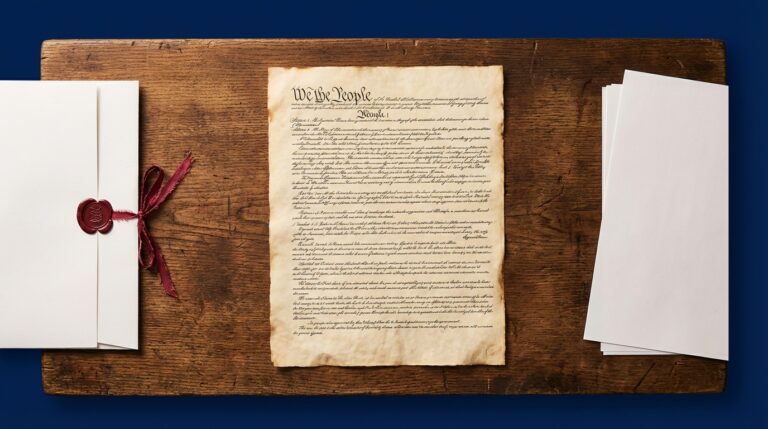
It is grounded in the constitutional text and in authoritative summaries so readers can verify claims in primary sources.
What the phrase powers of Congress means: definition and constitutional basis
Textual anchor: Article I and Section 8
The phrase powers of Congress describes the authorities the Constitution assigns to the national legislature and the broader practices that grow from those authorities. The Constitution names core grants in Article I, Section 8; for the text and arrangement, see The Constitution at the National Archives for the original framing and enumerated items The Constitution.
Legal commentators and congressional resources treat the written grants in Article I as the starting point, and then describe additional practice, rules and interpretation that shape how those grants operate in practice. For a current, annotated discussion that tracks how the text has been read and applied, the Constitution Annotated provides chaptered analysis and citations Constitution Annotated.
Quick reference to find primary constitutional and statutory texts
Start with the Constitution Annotated
How scholars and reference works define congressional power
Reference works distinguish enumerated powers, which appear in the constitutional text, from the broader concept of congressional authority that includes implied powers and chamber procedures. The Constitution Annotated summarizes these categories and their interpretive history Constitution Annotated.
That two-part distinction helps readers separate what the Constitution expressly assigns from how courts, statutes and chamber rules expand or limit Congress s practical authority in governance.

Enumerated powers: key authorities Congress is explicitly given
Examples from Section 8: taxation, commerce, coinage, war
Article I, Section 8 lists specific powers often cited in statutory authority, including the power to lay and collect taxes, to regulate commerce among the states, to coin money, and to declare war, among others. For the canonical list, consult the constitutional text and annotated commentary Constitution Annotated.
These enumerated powers are the legal foundation for many federal statutes: tax laws rest on the power to tax, federal trade and regulatory statutes rest on the commerce clause, and fiscal and defense statutes often draw on the war and coinage grants. Lawyers and lawmakers trace individual statutes back to these text-based authorities when assessing constitutionality.
How enumerated powers guide congressional statutes
When Congress drafts a law, drafters and committees commonly cite the enumerated clause that best supports the intended action, and congressional reports typically explain the statutory basis. Readers seeking the primary text and legislative context can compare the constitutional clause with committee reports and the Constitution Annotated for full treatment Constitution Annotated.
Implied powers and the Necessary and Proper Clause
McCulloch v. Maryland and the origin of implied powers
The Necessary and Proper Clause gives Congress the ability to choose means that are appropriate to carry out its enumerated functions, a principle the Supreme Court recognized in McCulloch v. Maryland, which affirmed that implied powers follow from constitutional grants when reasonably related to an enumerated end McCulloch v. Maryland.
In practice, courts assess whether a statutory means is rationally related to an enumerated power and whether the means fit within constitutional limits; the Constitution Annotated discusses this line of cases and how it has shaped congressional drafting Constitution Annotated.
Congress has enumerated powers in Article I, Section 8 and additional implied powers under the Necessary and Proper Clause; it also has non-legislative roles like impeachment and confirmation, while judicial review and federalism limit its reach.
Practical examples where implied powers are invoked
Implied powers are most visible when Congress addresses modern problems that the constitutional text did not foresee, for example creating institutions or regulatory regimes that support an enumerated objective. Analysts and the Annotated Constitution trace those examples to show how implied authorities have been used rather than to claim new, unlimited powers Constitution Annotated.
These judicially guided boundaries mean implied powers expand congressional reach in some contexts but remain subject to judicial review and textual limits in others.
Non-legislative powers: impeachment, advice and consent, and treaty functions
House and Senate roles in impeachment
Congress has important roles beyond making statutes, including constitutional procedures for impeachment and removal. The House may bring charges of impeachment, and the Senate holds trials to decide removal and related penalties; the Senate provides procedural descriptions and historical context for these powers U.S. Senate impeachment page.
These non-legislative processes are distinct from ordinary lawmaking and follow chamber rules and constitutional text rather than the statutory routes used for policy legislation.
Find primary procedure and chamber guidance
For primary procedural descriptions of impeachment and related Senate rules, consult the chamber pages and the Constitution Annotated for authoritative procedure and context.
Senate advice and consent on nominations and treaties
The Constitution assigns the Senate the advice and consent role for presidential treaties and key appointments; that authority is exercised through confirmation hearings and votes and is described in chamber guidance and constitutional commentary Constitution Annotated.
Because these are constitutionally assigned duties, they function differently from ordinary legislative business and often involve separate committees and floor procedures in the Senate.
The power of the purse: appropriations, budgets, and fiscal control
How appropriations and budget resolutions work
Control over federal spending is a central congressional authority, commonly called the power of the purse, and it operates through authorization statutes, annual appropriations, and budget resolutions that set priorities and limits for federal programs Constitution Annotated.
Appropriations laws are the practical means by which Congress provides funding; authorization can create or define programs, while appropriations supply the money. Budget resolutions guide totals and legislative strategy but do not by themselves create enacted spending without the appropriations bills.

Practical effects of spending power and limits
The spending power allows Congress to shape policy by choosing what to fund, and it can also be constrained by statutory limits, judicial decisions, and the requirement that appropriations be enacted before funds are spent. For procedural overviews and recent practice, see policy research and constitutional analysis Brookings on oversight.
Because funding decisions often affect program implementation, budget choices are a primary tool for congressional influence over national policy across many areas.
Oversight and investigatory authority: committees, subpoenas, and enforcement
Committee investigations and subpoena power

Congressional oversight is a longstanding function involving committee hearings, document requests, and the use of subpoenas to gather testimony and records in order to monitor the executive branch and other actors; analytical overviews explain how oversight is organized and used in practice Congressional oversight overview. See Congress’s Investigation and Oversight Powers.
Committees often rely on formal rules and precedents to issue subpoenas, and enforcement can involve litigation when third parties or the executive branch resist disclosure.
Limits, enforcement and legal challenges
Practical limits on oversight arise from separation of powers considerations, judicial review, and the courts role in resolving disputes over subpoenas and privileges, and analysts track these limits to clarify how oversight operates in specific instances Constitution Annotated.
Because enforcement can require court involvement, oversight is as much a legal and procedural practice as it is a political tool.
How a bill becomes law and the role of congressional procedures
Legislative steps: committees, floor action, reconciliation
A bill typically moves from introduction to committee review, to floor consideration, and then to either conference or reconciliation if the two chambers pass different versions; the Constitution Annotated and legal reference pages describe the core steps and procedural rules that govern those stages Constitution Annotated.
Key procedural features include committee markups, report language that explains legislative intent, and rules on floor debate that shape amendment and voting procedures.
Vetoes, overrides and publishing laws
After passage by both chambers, a bill goes to the president, who may sign or veto it; Congress can override a veto by a two thirds vote in each chamber. Enacted laws are published and entered into the United States Statutes at Large and codified; library and legal references provide the formal publishing history and procedural background Congress reference at LII.
Reconciliation is a specialized legislative process that affects budget-related bills and follows a distinct set of rules in each chamber.
Limits on congressional power: judicial review and federalism
How courts assess congressional authority
Judicial review allows courts to evaluate whether congressional statutes exceed constitutional grants; the constitutional commentary and case law show how courts balance congressional objectives against textual limits and constitutional principles Constitution Annotated. See an overview at LII.
Cases such as McCulloch v. Maryland illustrate how the courts interpret the scope of federal power while also setting limits rooted in text and structure McCulloch v. Maryland. For a separation of powers perspective see U.S. Courts.
State powers and federal limits
Federalism means that states retain authority over many matters unless the Constitution grants a federal power; this structural division affects how far Congress can reach into areas that states regulate, and commentators use constitutional analysis to explain those boundaries Constitution Annotated.
Because states and courts play continuing roles, statutory action often requires attention to state law interactions and possible judicial review.
Current practice and open questions: oversight, emergency powers and separation of powers disputes
Recent trends in oversight and litigation
In recent years oversight activity and related litigation have been active areas of practice, with courts deciding disputes over subpoenas, privileges, and the boundaries of congressional requests; analysts track these developments to show where precedent is emerging Congressional oversight overview.
Because many of these questions involve separation of powers and procedural rules, outcomes may change how Congress conducts oversight or how executive branch actors respond in the future.
How emergency authorities raise separation questions
Emergency powers and rapid executive actions can create disputes about whether Congress has authorized particular responses or whether courts should intervene, and neutral analysts recommend looking at statutory text and precedent when evaluating such claims Constitution Annotated.
These open questions mean that readers should expect ongoing litigation and legislative attention on how emergency authorities are defined and constrained.
Where to verify claims: primary sources and trusted references
Using the Constitution Annotated and chamber websites
The best first step to verify a claim about congressional authority is to consult the constitutional text and the Constitution Annotated for interpretive history and citations; authoritative chamber pages provide procedural details for House and Senate powers Constitution Annotated.

For procedural rules and contemporary practice, chamber websites and committee pages frequently publish rules, precedent and historical background that clarify how powers are exercised.
Reference tools: LII, Brookings, National Archives
Neutral reference sources such as the Legal Information Institute and think tank overviews can provide accessible summaries of doctrine and practice, and our news page can point to recent posts, while primary documents on the National Archives site give the constitutional text; use these tools to cross-check claims and find primary citations Congress reference at LII.
When assessing a specific statutory claim, pair the statute text with precedent and chamber material to see how authority has been applied in practice.
Common misunderstandings and pitfalls when talking about congressional power
Overstating what Congress can do alone
A frequent error is to present congressional power as a guarantee of specific policy outcomes; statutory authority enables action but courts, states and implementation constraints may limit or shape results, so attribution and source checks matter Constitution Annotated.
Writers should avoid implying that a statute alone ensures a policy result without considering judicial review, funding, and state interactions.
Confusing statutory practice with constitutional grant
Another pitfall is treating statutory practice as equivalent to constitutional grant: Congress can pass statutes within its powers, but where statutes extend beyond textual grants, courts may review or invalidate those statutes, and reference works explain how to test such claims Constitution Annotated.
Practical scenarios: how congressional powers operate in real cases
Commerce regulation example
As a neutral example, Congress has used the commerce clause to support federal regulation of interstate economic activity; commentators show how courts have assessed such statutes by examining both the underlying activity and the regulatory connection to interstate commerce Constitution Annotated.
Those reviews illustrate how enumerated powers and judicial interpretation work together to define the scope of national regulation.
Appropriations and emergency spending example
In funding emergencies Congress can pass targeted appropriations or provide broad emergency spending authority, but such statutes are tied to appropriations procedures and constitutional limits on spending and delegation Constitution Annotated.
That example shows how the power of the purse operates as both a policy tool and a legal constraint when courts or procedural rules are invoked.
Impeachment or confirmation example
The impeachment and confirmation examples show non-legislative powers in practice: impeachment involves House charging and a Senate trial, while confirmations involve committee hearings and floor votes in the Senate, each governed by chamber rules and constitutional text U.S. Senate impeachment page.
These scenarios demonstrate distinct constitutional roles that operate alongside lawmaking authority.
A simple checklist for evaluating claims about what Congress can do
Source check: constitution or statute?
Start by locating the constitutional clause that is said to authorize the action, then find any statute that implements that authority and see how drafters justify it; the Constitution Annotated and chamber pages make these sources accessible Constitution Annotated.
Legal check: precedent and limits
Next, search for relevant court precedent that addresses the same or similar statutory claims and review chamber reports or committee materials for procedural context; neutral legal references help track precedent and interpretive history Congress reference at LII.
This checklist helps avoid common attribution errors and clarifies whether a claim rests on text, statute, precedent, or chamber practice.
Conclusion: key takeaways and next steps for readers
Summary of the main powers and limits
Congress s powers rest on the Constitution s text, especially Article I, Section 8, and on judicially recognized implied powers under the Necessary and Proper Clause; non-legislative roles and the power of the purse are central features that operate within judicial and federal limits Constitution Annotated.
Readers should remember that courts and federalism shape practical limits, and that procedural rules in each chamber govern non-legislative functions and legislative process.
Where to read more
For follow up, begin with the constitutional text, the Constitution Annotated, and chamber procedural pages; secondary references such as the Legal Information Institute and neutral policy overviews can help with background and practice-based examples Congress reference at LII. See the About page.
Careful source checking and attention to precedent will help readers evaluate claims about what Congress can do in concrete cases.
The Constitution, especially Article I and Section 8, provides the primary textual grants; the Constitution Annotated offers authoritative interpretation and historical context.
Yes, courts have recognized implied powers under the Necessary and Proper Clause when measures are reasonably related to an enumerated power, subject to judicial review.
Start with the constitutional clause, then consult the statute text, relevant court precedent, and chamber materials such as committee reports or the Constitution Annotated.
Neutral legal references provide useful context but do not replace the primary documents and precedent.
References
- https://www.archives.gov/founding-docs/constitution
- https://constitution.congress.gov/
- https://www.oyez.org/cases/1789-1850/17us316
- https://www.senate.gov/about/powers-procedures/impeachment.htm
- https://michaelcarbonara.com/contact/
- https://www.brookings.edu/articles/congressional-oversight/
- https://constitution.congress.gov/browse/essay/artI-S8-C18-7-1/ALDE_00013657/
- https://www.law.cornell.edu/wex/congress
- https://www.law.cornell.edu/constitution-conan/article-1/section-8/clause-1/overview-of-congresss-investigation-and-oversight-powers
- https://www.uscourts.gov/about-federal-courts/educational-resources/educational-activities/first-amendment-activities/us-v-alvarez/separation-powers-action-us-v-alvarez
- https://michaelcarbonara.com/issue/constitutional-rights/
- https://michaelcarbonara.com/news/
- https://michaelcarbonara.com/about/