The resources I describe are public and authoritative. If you need an authenticated copy for legal filing, check the citation rules of the court or publisher you are using before finalizing your reference.
How to read the us constitution online: a quick overview
The short answer is yes: you can read the US Constitution online from multiple public, authoritative sites at no cost. The National Archives hosts an official transcription and downloadable resources for the Constitution that many people use as a starting point National Archives Charters of Freedom.
Which site to open first depends on your purpose. For plain reading and a facsimile image you might prefer the National Archives. For legal context and article-by-article notes, the Constitution Annotated maintained by Congress is the referenced resource Constitution Annotated. For related materials on this site see the constitutional rights section.
Try a searchable HTML viewer such as the Library of Congress or Cornell for quick lookups
Anchors help create stable links
For quick lookup on mobile or for stable links to a single article or amendment, sites like the Library of Congress and Cornell Law School provide searchable HTML versions that work well in a browser Library of Congress Constitution pages.

If you want to simply read the text, open the National Archives page for the Constitution. If you need case law references, open the Constitution Annotated. If you need a quick link for a news story, use the Library of Congress or Cornell anchors.
An authoritative transcription is one published by a trusted public body or an authenticated government copy. For annotated legal context, Congress maintains the Constitution Annotated and links its notes to court decisions and legislative interpretation Constitution Annotated.
Authoritative sites to read the full text online
National Archives: the official transcription

The National Archives publishes the official transcription of the Constitution on its Charters of Freedom pages and offers downloadable images and text for citation and printing National Archives Charters of Freedom.
Constitution Annotated: article by article
The Constitution Annotated provides an article-by-article annotated edition maintained for congressional reference, with historical notes and links to relevant court interpretations, making it useful when you need legal context Constitution Annotated.
Library of Congress and Cornell: searchable HTML
The Library of Congress and Cornell Law School host searchable, mobile-friendly HTML versions of the full Constitution that are convenient for quick lookup and for linking directly to a given section Cornell Law School, Legal Information Institute.
The National Constitution Center also provides an interactive full text and printable options that can help readers explore clauses with commentary and teaching features National Constitution Center interactive full text.
How the major sources differ: plain text, annotated law, and interactive editions
Plain transcriptions are text representations of the document without sustained commentary. The National Archives offers a plain transcription alongside facsimile images of the original document, which is helpful if you want the exact wording in a readable format National Archives Charters of Freedom. For another historical transcription and presentation see the Avalon Project at Yale U.S. Constitution.
Annotated editions add legal notes, case references, and historical background. The Constitution Annotated is the primary annotated reference used for congressional practice and interpretation, and it ties provisions to court decisions and legislative history Constitution Annotated.
You can read the U.S. Constitution online on public, authoritative sites. For the official transcription and facsimiles, use the National Archives. For annotated legal context use the Constitution Annotated. For quick links and mobile reading use the Library of Congress or Cornell Law School's Legal Information Institute.
Interactive editions blend the text with explanatory essays, scholar contributions, and teaching tools. The National Constitution Center offers an interactive full text with contextual materials useful for classroom and public engagement National Constitution Center interactive full text.
Searchable HTML versions such as those at the Library of Congress and Cornell are optimized for screen reading and for finding specific phrases quickly, which can make them the most efficient choice for many readers Library of Congress Constitution pages.
Which version should you cite for legal or academic use?
When to prefer the Constitution Annotated
If your work needs annotated legal context or citations tied to case law, the Constitution Annotated is the recommended starting point because it collects references to judicial decisions and offers interpretive notes maintained for congressional reference Constitution Annotated.
Using authenticated GPO or govinfo copies
For formal citation in court or official filings, authenticated copies from government publishing services such as GPO or govinfo are typically preferred. When in doubt, follow the citation guidance of the court or publisher and compare the text to an authenticated source such as the National Archives transcription National Archives Charters of Freedom.
Check citation rules from your publisher or court
Different publishers and courts have different citation preferences. Before finalizing a citation, ask the receiving institution whether they prefer an annotated reference, a GPO-authenticated copy, or a standard public transcription.
Downloading and printing: PDF and printable copies
The National Archives provides downloadable PDF images and print-ready resources for the Constitution, including high-resolution facsimiles useful for display or archival reference National Archives Charters of Freedom. Other static PDFs are available, for example a publicly hosted PDF at the House site House static PDF.
The National Constitution Center also offers printable and downloadable formats for readers who want a readable print copy accompanied by scholarly context and explanations National Constitution Center interactive full text.

When you prepare a printed copy for formal use, confirm that the file provenance indicates an authenticated government source if the recipient requires that level of assurance.
Mobile and searchable HTML versions for quick lookup
Library of Congress searchable pages
The Library of Congress provides HTML pages for the Constitution that are structured for mobile devices and include context about the document collections, making them a good choice for readers on the go Library of Congress Constitution pages.
Cornell LII HTML text and anchors
Cornell Law School’s Legal Information Institute offers a clean HTML version with stable anchors for articles and amendments, which helps when you need to link precisely to a clause in an article or an amendment Cornell Law School, Legal Information Institute.
Stable links and mobile reading tips
On mobile, use the browser’s find-in-page function and copy the section anchor when available. Stable anchors let you link directly to Article or Amendment numbers without long quoted passages, and anchors on sites like Cornell and the Library of Congress are designed for that purpose Cornell Law School, Legal Information Institute.
Quick tips to find, quote, and link specific sections
When quoting, identify the Article or Amendment number and, if relevant, the clause or section. Use a stable anchor from an authoritative HTML source so readers can follow the link to the exact text Cornell Law School, Legal Information Institute.
For legal or academic quotations, cite the Constitution Annotated when you rely on interpretive notes or case links. That edition is maintained for congressional reference and links to judicial decisions tied to specific provisions Constitution Annotated.
Common mistakes and pitfalls when using online texts
A frequent error is citing an unsourced or altered reproduction. Verify the provenance of any online copy against an authoritative source such as the National Archives before using it for formal purposes National Archives Charters of Freedom.
Another pitfall is confusing annotations or commentary with the primary text. Annotations are valuable for interpretation but are not the primary constitutional text; use the Constitution Annotated for commentary and the National Archives or an authenticated copy for the base wording Constitution Annotated.
Practical examples and scenarios
Student: If you need a printable copy for a paper, the National Archives PDF or National Constitution Center printables are practical choices because they provide clear facsimiles and readable text National Archives Charters of Freedom.
Journalist: For a news story that needs a stable link to a clause, use the Library of Congress or Cornell anchors so readers can follow directly to the quoted article or amendment Library of Congress Constitution pages. For related updates see the news section.
Legal researcher: When tracing case law references tied to a clause, the Constitution Annotated collects interpretive notes and links to judicial decisions, making it the recommended resource for that work Constitution Annotated.
Accessibility and alternate formats
HTML pages such as those at the Library of Congress and Cornell are often more accessible to screen readers than image-based PDFs, so choose an HTML version when accessibility is a concern Cornell Law School, Legal Information Institute.

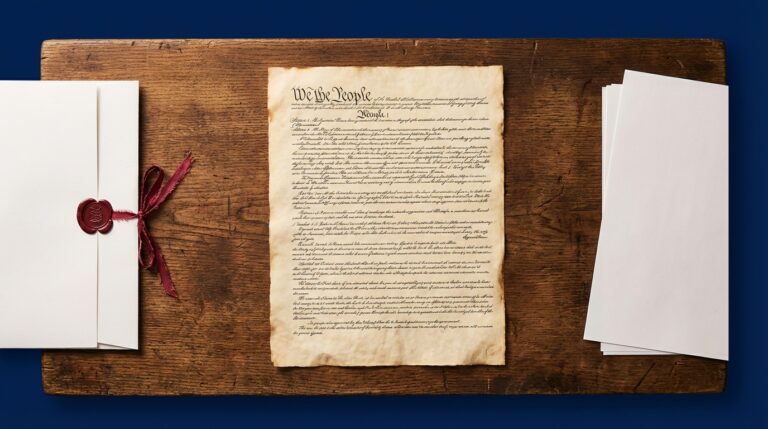
For historical study that requires the document’s exact appearance, the National Archives provides facsimile images that show the physical document and its features, which can be important for archival work National Archives Charters of Freedom.
Official translations are useful for understanding, but they are not authoritative for legal citation; for formal use rely on the English original and check with the receiving institution for any permitted translations.
When to check for the latest authoritative guidance
Consult the Constitution Annotated for updates to annotations and references tied to congressional practice, since it is maintained as a congressional reference for interpretation Constitution Annotated.
Before finalizing a formal citation, ask the court, publisher, or instructor which source and citation format they prefer. Institutional rules take precedence over general guidance. Learn more about the author on the about page.
Some civic pages, such as the U.S. Senate civics resources, provide plain-language explanations that are useful for public reference and teaching, though they are supplementary to the primary texts U.S. Senate civics pages.
Quick checklist: where to read and what to use
Casual reading: National Archives for the official transcription and facsimile images National Archives Charters of Freedom.
Citation and legal context: Constitution Annotated for annotations and case links Constitution Annotated.
Quick links and mobile reading: Library of Congress or Cornell LII for searchable HTML and stable section anchors Cornell Law School, Legal Information Institute.
Download or print: National Archives or National Constitution Center for PDFs and printable facsimiles National Constitution Center interactive full text.
Summary and next steps
Authoritative online texts are available for multiple uses. Use the National Archives for an official transcription and facsimile, the Constitution Annotated for legal notes and case links, and the Library of Congress or Cornell for searchable HTML and stable anchors National Archives Charters of Freedom.
For formal citation, prefer authenticated government copies or the Constitution Annotated for interpretive context and confirm the receiving institution’s citation rules before filing or publishing Constitution Annotated.
Next step: open one of the authoritative sites, try copying a section anchor or downloading the official PDF, and use the source that matches your purpose.
Yes. Public institutions publish the full text and facsimile images online for free; check the National Archives for an official transcription and downloadable files.
For annotated legal context use the Constitution Annotated; for authenticated copies check GPO or govinfo and follow the receiver's citation rules.
No. Translations can aid understanding but are not authoritative for legal citation; use the English original for formal work.
References
- https://www.archives.gov/founding-docs/constitution
- https://constitution.congress.gov/
- https://www.loc.gov/collections/united-states-constitution/about/
- https://www.law.cornell.edu/constitution/
- https://constitutioncenter.org/interactive-constitution/full-text
- https://avalon.law.yale.edu/18th_century/usconst.asp
- https://www.govinfo.gov/content/pkg/GPO-CONAN-2022/pdf/GPO-CONAN-2022.pdf
- https://uscode.house.gov/static/constitution.pdf
- https://michaelcarbonara.com/contact/
- https://michaelcarbonara.com/issue/constitutional-rights/
- https://michaelcarbonara.com/news/
- https://michaelcarbonara.com/about/
- https://www.senate.gov/civics/constitution_item/constitution.htm