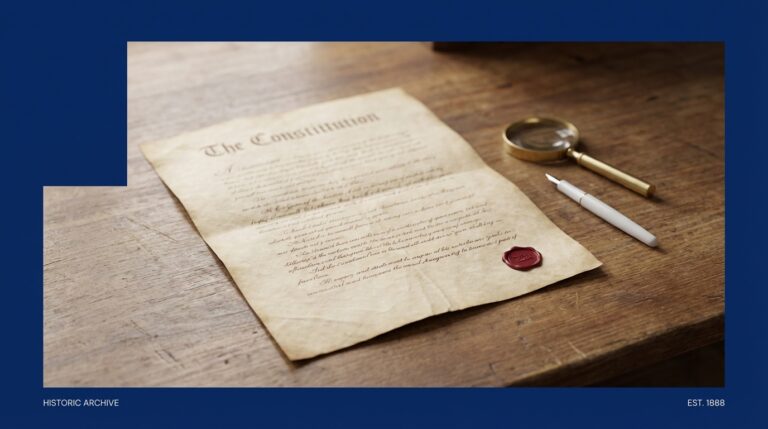
The goal is practical clarity: what you will see in the Rotunda, why institutions set photo rules, and where to find official images for study or publication.
Quick answer: can you read the US Constitution at the National Archives and take photos?
You can visit and read the original Constitution on display in the National Archives Rotunda, but photography around the Charters of Freedom may be limited and visitors must follow posted rules and staff directions; the Archives’ general photography policy notes area-specific restrictions that apply in some exhibits National Archives Photography & Filming page. See also my constitutional rights page.
Stay informed and involved with Michael Carbonara
Check the Archives' photography page and follow posted signs at the Rotunda before attempting photography.
The Constitution is part of the Charters of Freedom and is exhibited in sealed, climate-controlled cases in the Rotunda, which affects how close you can get and whether photos are feasible Charters of Freedom page.
Before you try to take pictures, check the Archives’ online pages for current guidance and watch for on-site signage that can override general rules National Archives Catalog Charters collection.
What it means to read the US Constitution in person: display, distance, and access
Seeing the original text in the Rotunda means viewing it behind sealed display glass rather than handling or studying it up close; the Charters of Freedom are arranged and protected to balance public access with conservation and security needs Charters of Freedom page.
Visitors should expect a protective viewing distance and controlled lighting that make the document readable from a few feet away but not accessible for close inspection or handling by the public National Archives Photography & Filming page.

Why the Archives restricts or limits photography of fragile documents
NARA’s policy states that non-flash photography is generally allowed in many public areas but that specific exhibitions or spaces may carry posted restrictions that visitors must follow; that reservation is the basis for area-specific photo rules in the Rotunda National Archives Photography & Filming page. The federal regulations provide additional detail in the CFR.
The Charters of Freedom are shown under special display and handling rules, and those rules can limit or prohibit photography at the exhibit to protect the documents and the visitor experience Charters of Freedom page.
Conservation science: how light and flash affect historic paper and inks
Conservation research shows that exposure to light, and especially ultraviolet radiation and repeated intense flashes, speeds the fading and chemical change of historic paper and inks; that cumulative effect is a key reason institutions restrict flash and manage lighting for fragile documents Smithsonian Museum Conservation Institute guidance on light.

Museums and archives use low, controlled lighting levels, filters, and limited exposure to slow deterioration over decades, which is why on-site rules commonly discourage bright or repeated photography near sensitive items Getty Conservation Institute information on light and exhibits.
Display cases, climate control, and security: practical reasons close-up photos may be blocked

The Charters of Freedom are housed in sealed, climate-controlled encasements that regulate humidity, temperature, and air quality to preserve the paper and inks, and those cases also naturally limit the angles and proximity available for photography Charters of Freedom page.
Security and visitor-safety procedures, plus staff enforcement of posted rules, are additional practical reasons why close-up or high-resolution photos may be impractical or prohibited in the exhibit space National Archives Photography & Filming page.
What the National Archives says about photography and the Charters of Freedom
NARA’s Photography & Filming page makes two points: non-flash photography is often permitted in public areas, and the Archives may post area-specific restrictions that visitors must follow National Archives Photography & Filming page.
The Charters of Freedom page explains the display context for the Constitution and the special handling and enclosure methods used in the Rotunda Charters of Freedom page.
You can read the original in the Rotunda, but photography may be restricted by posted rules, conservation measures, and display enclosures; check NARA pages and follow on-site signage.
When signage or staff instructions conflict with general photography allowances, the posted or staff directions are the controlling guidance on site National Archives Photography & Filming page.
Alternatives to in-person photography: high-resolution scans and authorized reproductions
If close-up or flash photography is restricted, the National Archives provides high-resolution digital scans and authorized reproductions of the Constitution and other founding documents that are suitable for study and publication National Archives Catalog Charters collection.
These official scans are better for classroom use, publishing, or detailed study than a phone photo taken at a distance, and the Archives’ image pages include transcripts and download options when available The Constitution high-resolution images and transcripts.

Legal and reproduction considerations when using images of the Constitution
The Archives provides guidance about authorized reproductions and credit lines in the Catalog metadata, and users should follow those stated use requirements when relying on official scans National Archives Catalog Charters collection.
In-person permission to take a photo does not automatically grant reproduction or commercial rights, so for publication or commercial use consult the Catalog guidance or contact the Archives for reproduction permission The Constitution high-resolution images and transcripts.
How to prepare if you want to read the US Constitution in person
Before your visit, check the Archives’ Photography & Filming page and the Charters of Freedom page for the current rules so you arrive aware of any photography limits National Archives Photography & Filming page.
At the Rotunda, follow posted signage and staff directions, keep a respectful distance behind barriers, and avoid flash or close-up attempts that may contravene display rules Charters of Freedom page.
find and download high-resolution scans in the National Archives Catalog
Use exact title for best results
If you need high-quality images for study, bring catalog URLs or download the Archives’ official scans before you go rather than relying on on-site photographs National Archives Catalog Charters collection.
Common mistakes visitors make when trying to photograph the Constitution
One frequent error is assuming flash is allowed; flash and bright repeated exposures are discouraged because of their cumulative effect on fragile inks and paper Smithsonian guidance on light.
Other common missteps include trying for a close-up against sealed cases or ignoring posted signs and staff instructions; these actions can conflict with conservation and security rules and may be denied on-site Charters of Freedom page.
A simple corrective action is to use the Archives’ digitized images for any work that needs clarity or higher resolution, and to ask staff before attempting photography for any permitted exceptions National Archives Catalog Charters collection. For context on civic education, see my about page.
Practical scenarios: what to do if you need images for school, publication, or personal use
Students and classroom users should use the Archives’ official high-resolution scans and cite them in assignments rather than depending on phone photos taken in the Rotunda National Archives Catalog Charters collection.
Journalists and publishers who need publication-quality images or broader rights should consult the Catalog metadata and contact the Archives for reproduction permission before publishing The Constitution high-resolution images and transcripts.
For both students and professionals, the Archives’ image pages typically include guidance on credit lines and allowable uses; when in doubt, request permission through the official channels referenced on the Catalog pages National Archives Catalog Charters collection or contact me.
When temporary exhibits or conservation work change access and photography rules
Temporary exhibitions, conservation treatments, or anniversary programming can change access and photography allowances, so a policy that applied on one visit may not apply on another National Archives Catalog Charters collection. See recent rulemaking on NARA facility use Federal Register notice.
Always re-check the Archives’ official pages and look for posted signage on the day of your visit; common sign phrasing includes instructions such as ‘no photography’ or ‘no flash’ that will override general allowances National Archives Photography & Filming page.
A short checklist: how to read the US Constitution responsibly on a visit
Before you go: check the Archives’ Photography & Filming page and the Charters of Freedom Catalog entries for current rules and image options National Archives Photography & Filming page.
At the Rotunda: follow posted signs, obey staff directions, keep back from barriers, and avoid flash or close-up attempts that may be prohibited Charters of Freedom page.
If you need high-resolution images for work, use the Archives’ scans or request permission from NARA rather than relying on an on-site photo National Archives Catalog Charters collection.
Conclusion: read the US Constitution safely and use NARA resources for images
The original Constitution is on view in the Rotunda, but conservation, display, and security practices can limit photography; viewing the document in its encasement provides public access while protecting the item for future generations Charters of Freedom page.
For detailed images, rely on the Archives’ high-resolution scans and check the Photography & Filming and Catalog pages before a visit to confirm current rules National Archives Catalog Charters collection.
Sources and how to verify the current rules before visiting
Primary NARA pages to check include the Photography & Filming guidance and the Charters of Freedom pages, which explain display conditions and area-specific rules National Archives Photography & Filming page and Visit Archives photography policy.
For official image downloads and transcription resources use the National Archives Catalog and the Constitution images page, which offer high-resolution scans suitable for research National Archives Catalog Charters collection.
For background on conservation and light effects consult museum conservation resources such as the Smithsonian Museum Conservation Institute and the Getty Conservation Institute Smithsonian guidance on light.
You can view the original, but photography may be limited by posted rules and staff directions; check the Archives' Photography & Filming page before your visit.
The National Archives offers high-resolution scans and authorized reproductions in its Catalog and on the Constitution image pages suitable for research and publication.
Not necessarily; publication or commercial use may require following Catalog credit guidance or requesting reproduction permission from the Archives.
References
- https://www.archives.gov/visit/photography
- https://michaelcarbonara.com/issue/constitutional-rights/
- https://www.archives.gov/founding-docs/charters
- https://catalog.archives.gov/collection/231/charters-of-freedom
- https://www.si.edu/mci/english/learn_more/topics/light.htm
- https://www.getty.edu/conservation/our_projects/science/lighting.html
- https://www.ecfr.gov/current/title-36/chapter-XII/subchapter-G/part-1280/subpart-B
- https://www.archives.gov/founding-docs/constitution
- https://michaelcarbonara.com/contact/
- https://michaelcarbonara.com/about/
- https://www.federalregister.gov/documents/2023/08/28/2023-18465/use-of-nara-facilities-rules-for-filming-photographing-or-videotaping-on-nara-property-for-personal
- https://visit.archives.gov/visit/tips-guidelines/photography-policy