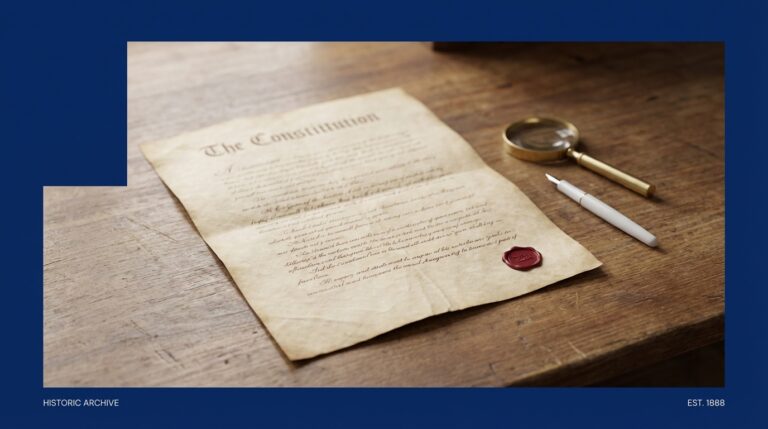
Readers who want to evaluate reforms will find practical criteria and primary-source references to help distinguish political claims from institutional realities.
What it means that the U.S. is a republic in the constitution
The phrase republic in the constitution means the United States is organized as a representative constitutional system in which citizens choose officials to make most laws on their behalf, rather than voting on every law directly, according to a clear legal explainer from Cornell Law School LII Cornell Law School LII explainer.
That distinction matters for how authority is exercised and limited. In a direct democracy citizens vote on laws themselves. In a republic elected representatives, institutions, and written constitutional limits shape lawmaking and protect individual rights, a contrast explained by constitutional scholars and legal resources Encyclopaedia Britannica on direct democracy.
Recommend primary-source reading for legal definitions and context
Use these items to confirm textual definitions
Quick answer: why not direct rule?
Short answer: most national lawmaking in the United States is done by elected representatives in Congress and reviewed by courts, not by nationwide referenda, as a legal explainer notes Cornell Law School LII explainer and historical discussions note Origins.
That does not mean there are no direct-democracy mechanisms in the U.S.; many states and localities permit initiatives, referenda, or recalls, which operate alongside representative institutions rather than replacing them, as policy analyses discuss Brookings Institution analysis.

How the Founders explained choosing a republic in ratification-era debates
During the ratification debates the framers argued for representative government as a way to manage factions and prevent unstable majority rule. James Madison laid out this concern in Federalist No. 10, where he argued that a large republic and elected representatives could reduce the danger of factional interests dominating governance Federalist No. 10 text and historical overviews explain these choices Colonial Williamsburg.
The framers also wrote about structuring government so that power would be checked and balanced across branches, and scholars treat those essays as a foundational explanation of the framers’ intent rather than as the only source of meaning, a point discussed in broader constitutional summaries Encyclopaedia Britannica on direct democracy.
Stay informed and get involved with Michael Carbonara's campaign
For readers who want primary texts, read the Federalist essays and constitutional explainers to see how the framers described faction, representation, and checks on power.
Core constitutional mechanisms that limit direct majority rule
Several structural features of the Constitution channel decision-making toward institutions rather than direct national voting. Representative elections to the House and Senate create intermediaries who deliberate and vote on laws at the national level, as legal explainers summarize Cornell Law School LII explainer.
Separation of powers and checks and balances distribute authority across the legislative, executive, and judicial branches so that no single majority can instantly impose policy without institutional review, a description found in constitutional commentaries National Constitution Center on separation of powers.
Federalism further divides authority between national and state governments, making many policy choices matters for state legislatures or voters at the state level rather than for a single national referendum, which reduces the prospects for direct national rule Brookings Institution analysis and official descriptions note the United States’ status as a constitutional federal republic U.S. Embassy.
Separation of powers and checks and balances in practice
In practice congressional majorities pass bills, but the president can veto legislation and the courts can review laws for constitutional conflicts; these reciprocal powers slow or reshape immediate majority policy, a point underscored by constitutional analysts National Constitution Center on separation of powers.
Judicial review gives courts the authority to interpret the Constitution and to invalidate laws that conflict with protected rights or structural limits, which means that even laws passed by elected representatives can be constrained after enactment, as legal explainers explain Cornell Law School LII explainer.

Those institutional checks were designed to prevent the concentration of power and to protect minority interests from transient majorities. This design is why representative institutions and judicial review are central to how the republic functions in the constitution, according to constitutional summaries National Constitution Center on separation of powers.
Federalism: how power division reduces direct national rule
The Constitution assigns some powers to the federal government and leaves others to state governments, an arrangement that creates multiple decision sites rather than a single national vote, which in turn reduces the practical scope for direct national rule, as policy analyses note Brookings Institution analysis.
States commonly regulate education, local criminal law, land use, and many public services, while the federal government handles national defense, interstate commerce, and other enumerated areas; that division helps explain why many governance questions are resolved at the state level rather than by national plebiscite, according to constitutional explainers Cornell Law School LII explainer.
Bill of Rights and minority protections that limit majority power
The Bill of Rights lists specific liberties that the Constitution protects from ordinary lawmaking, so a majority cannot simply vote to remove those protections without confronting constitutional limits, an institutional fact described in constitutional summaries Cornell Law School LII explainer, and see related content on constitutional rights.
Courts interpret those protections case by case and can strike down laws that they find to violate constitutional rights, which means minority protections can operate as legal constraints on majority-driven legislation, as constitutional commentaries explain National Constitution Center on separation of powers.
The Constitution establishes representative institutions, separation of powers, federalism, and protected rights so that citizens exercise power mainly by electing officials who legislate and govern, rather than by voting on every law directly.
These protections are part of why the founders and later interpreters favored representative institutions tied to a written constitution, rather than leaving every question to direct majority votes, a point reflected in primary source debates and legal explainers Federalist No. 10 text.
The Electoral College as an example of mediated representation
The Electoral College is a constitutionally prescribed, state-based mechanism for choosing the president. It is structured so that electors from each state cast votes rather than using a single national popular tally, and the National Archives provides an official explainer of its mechanics National Archives Electoral College.
Because the Electoral College allocates power through states rather than a single national vote, it illustrates how the Constitution uses mediated representation for some national offices rather than direct nationwide voting, a structural point made in constitutional explainers Cornell Law School LII explainer.
How national laws are made in practice: representatives and judicial review
A bill typically moves through committees, floor votes in both Houses of Congress, and then to the president for signature or veto; that chain means most national policy decisions are taken by elected representatives and the executive rather than by direct popular ballot, as legal explainers outline Cornell Law School LII explainer.

After a law is enacted courts can review its constitutionality, and judicial rulings can limit how laws are applied or require legislative changes; this post-enactment check is part of the republic’s structural safeguards and a reason the framers designed representative institutions, as constitutional sources and analyses show National Constitution Center on separation of powers.
Direct-democracy tools at state and local levels
Many states allow initiatives, referenda, or recalls that let voters decide particular laws or remove officials at the state or local level; these tools provide citizens with direct input on certain questions but operate within state constitutional frameworks rather than replacing national representative institutions, as policy researchers explain Brookings Institution analysis.
State ballot measures have shaped policy in areas such as taxation, ballot access, and local regulation, but their legal scope and enforceability depend on state constitutions and courts, so state-level direct democracy functions differently from national lawmaking Cornell Law School LII explainer.
Trade-offs and contemporary debates about more direct democracy
Contemporary debates weigh democratic responsiveness and civic engagement against risks like short-term majoritarian overreach and the complexity of governing modern, technical policy areas; policy analysts summarize these trade-offs and how they shape reform proposals Brookings Institution analysis.
Proposals to expand direct-democracy elements at state or national levels face legal and institutional constraints, and many advocates and critics agree that changing the balance between representative and direct mechanisms involves complex constitutional questions, a point noted in scholarly and policy writing Encyclopaedia Britannica on direct democracy.
How to evaluate proposals to increase direct democracy or reform institutions
When judging reform proposals check legal feasibility, whether the change requires constitutional amendment, how it would affect minority protections, and the practical capacity to administer complex ballot measures; these evaluation criteria help separate rhetoric from structural effects and are recommended by policy analysts Brookings Institution analysis.
Read primary sources such as the constitutional text, the Federalist Papers for historical intent, the National Archives explainer on the Electoral College, and explainers from legal resources to test whether proposed reforms are realistic or require deeper institutional change Federalist No. 10 text.
Common misunderstandings and pitfalls when discussing direct democracy
A common mistake is assuming that widespread state ballot measures amount to a national direct democracy; state-level tools are important but do not change the structural fact that national lawmaking is representative unless the Constitution is amended, as legal explainers note Cornell Law School LII explainer.
Another pitfall is treating the Federalist Papers as the only interpretive source; they are central for historical context but should be read alongside constitutional text, court decisions, and contemporary legal scholarship to form a complete view Federalist No. 10 text.
Conclusion: what voters should take away about the republic in the constitution
Bottom line: the United States is structured as a constitutional republic where representative institutions, separation of powers, federalism, and the Bill of Rights limit direct majority rule in many national matters, a structural description supported by constitutional explainers and primary sources Cornell Law School LII explainer.
Readers interested in weighing reforms should consult primary sources, institutional explainers, and balanced policy analyses to understand legal requirements and likely effects before drawing conclusions about national-level changes Brookings Institution analysis, and consider the author’s about page.
Becoming a national direct democracy would require major constitutional changes because the Constitution establishes representative institutions and mechanisms like the Electoral College and separation of powers.
Yes. Many states permit initiatives, referenda, or recalls for state and local matters, but those tools operate under state constitutions and do not convert national governance into direct democracy.
Framers like James Madison argued that representative institutions help manage factions and protect minority rights, and they designed checks among branches to prevent concentration of power.
References
- https://www.law.cornell.edu/wex/republic
- https://www.britannica.com/topic/direct-democracy
- https://origins.osu.edu/read/united-states-democracy-republic
- https://www.brookings.edu/articles/the-limits-of-direct-democracy-in-the-american-system/
- https://avalon.law.yale.edu/18th_century/fed10.asp
- https://www.colonialwilliamsburg.org/discover/civics/was-the-united-states-founded-as-a-republic-or-a-democracy/
- https://constitutioncenter.org/interactive-constitution/articles/article-ii
- https://michaelcarbonara.com/contact/
- https://ar.usembassy.gov/u-s-government/
- https://www.archives.gov/electoral-college
- https://michaelcarbonara.com/issue/constitutional-rights/
- https://michaelcarbonara.com/issues/
- https://michaelcarbonara.com/about/
{"@context":"https://schema.org","@graph":[{"@type":"FAQPage","mainEntity":[{"@type":"Question","name":"Why is the United States structured as a republic instead of a direct democracy?","acceptedAnswer":{"@type":"Answer","text":"The Constitution establishes representative institutions, separation of powers, federalism, and protected rights so that citizens exercise power mainly by electing officials who legislate and govern, rather than by voting on every law directly."}},{"@type":"Question","name":"Can the United States become a direct democracy at the national level?","acceptedAnswer":{"@type":"Answer","text":"Becoming a national direct democracy would require major constitutional changes because the Constitution establishes representative institutions and mechanisms like the Electoral College and separation of powers."}},{"@type":"Question","name":"Do states already use direct-democracy tools?","acceptedAnswer":{"@type":"Answer","text":"Yes. Many states permit initiatives, referenda, or recalls for state and local matters, but those tools operate under state constitutions and do not convert national governance into direct democracy."}},{"@type":"Question","name":"Why did the Founders prefer a republic over direct democracy?","acceptedAnswer":{"@type":"Answer","text":"Framers like James Madison argued that representative institutions help manage factions and protect minority rights, and they designed checks among branches to prevent concentration of power."}}]},{"@type":"BreadcrumbList","itemListElement":[{"@type":"ListItem","position":1,"name":"Home","item":"https://michaelcarbonara.com"},{"@type":"ListItem","position":2,"name":"Blog","item":"https://michaelcarbonara.com/news/%22%7D,%7B%22@type%22:%22ListItem%22,%22position%22:3,%22name%22:%22Artikel%22,%22item%22:%22https://michaelcarbonara.com%22%7D]%7D,%7B%22@type%22:%22WebSite%22,%22name%22:%22Michael Carbonara","url":"https://michaelcarbonara.com"},{"@type":"BlogPosting","mainEntityOfPage":{"@type":"WebPage","@id":"https://michaelcarbonara.com"},"publisher":{"@type":"Organization","name":"Michael Carbonara","logo":{"@type":"ImageObject","url":"https://lh3.googleusercontent.com/d/1eomrpqryWDWU8PPJMN7y_iqX_l1jOlw9=s250"}},"image":["https://lh3.googleusercontent.com/d/1Dhdzg691tNWPnhqknfbL24nwGl0wRGD6=s1200","https://lh3.googleusercontent.com/d/1eomrpqryWDWU8PPJMN7y_iqX_l1jOlw9=s250"]}]}