The goal is to provide sourced background and useful pointers to primary materials so readers can locate treaty texts, court decisions and platform policies relevant to a specific incident. The information here is informational and not legal advice.
Quick overview: what the right of expression is and why it matters
The right of expression refers to the protection people have to hold opinions and communicate ideas, both publicly and privately, and it is closely tied to international notions of freedom of opinion and expression under treaty law. The primary international text that frames this protection is the ICCPR, which defines the right and recognizes that some restrictions may be lawful in limited circumstances ICCPR text.
This right matters because it supports public debate, press freedom and civic participation, enabling people to discuss government, culture and policy without undue interference. At the same time, the exact scope and remedies for the right of expression differ between international guidance and national constitutions, so what is protected in one legal system may be treated differently in another.
International law and leading UN guidance on the right of expression
Article 19 of the ICCPR is the principal treaty provision that secures freedom of opinion and expression at the international level. It sets out both the right to hold opinions and the right to seek, receive and impart information, and it acknowledges that states may place certain restrictions consistent with treaty obligations ICCPR text.
The United Nations Human Rights Committee, which monitors ICCPR implementation, issued General Comment No. 34 to explain how Article 19 should be interpreted in practice. According to the Human Rights Committee, permissible restrictions must meet tests of legality, necessity and proportionality, and procedural protections for those affected are important parts of the assessment General Comment No. 34. For a web version of the Human Rights Committee guidance see OHCHR General Comment No. 34.
Find primary texts and practical resources to compare standards
For readers seeking the primary texts and civil-society explanations, consult the ICCPR and General Comment No. 34 and review clear summaries from established human-rights organizations to compare international standards with national rules.
General Comment No. 34 frames procedural safeguards as part of the protection of expression, meaning that when a state restricts speech the process used, transparency of reasons and access to remedies are relevant to whether the restriction is lawful under international standards UN Human Rights Committee guidance.
Regional approaches and case law shaping the right of expression

Regional human-rights bodies, such as the European Court of Human Rights, play a major role in shaping how expression rights are applied within their member states. The Court and similar bodies apply proportionality and public-order grounds to determine whether specific restrictions are justified under regional law ECHR factsheet.
Regional courts also provide detailed case law on artistic, symbolic and journalistic expression, clarifying how the balancing between individual rights and collective interests should work in concrete situations. These decisions emphasize that context matters: the same expression may receive different treatment depending on location, audience and the form of speech.
Because regional bodies interpret rights through their own legal frameworks, definitions and enforcement approaches can differ from UN guidance and from each other. That is why comparative analysis often focuses on the tests used, such as proportionality or necessity, rather than identical outcomes.

How the right of expression is protected in the United States
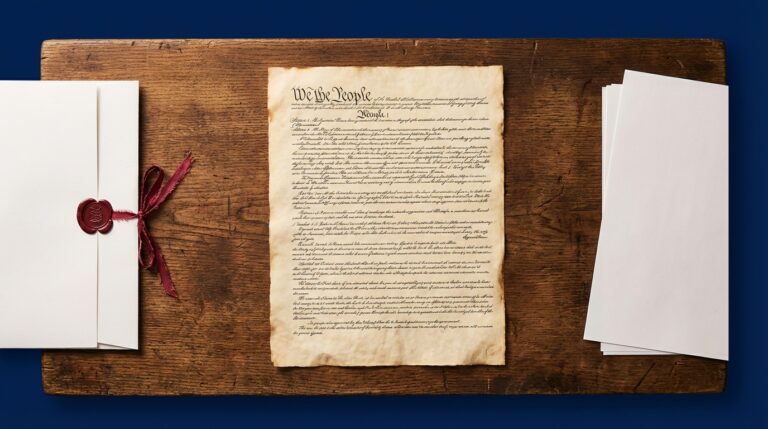
The First Amendment to the U.S. Constitution is the primary domestic safeguard for speech and press in the United States, and it provides broad protection that has been developed through Supreme Court jurisprudence over time First Amendment text.
At the international level, UN tests emphasize legality, necessity and proportionality. U.S. constitutional doctrine uses related but distinct tests and doctrines developed by the Supreme Court, so the legal analysis and remedies can differ between treaty-based interpretation and domestic constitutional review.
International law, principally the ICCPR and UN guidance, affirms the right to hold opinions and to seek and impart information, while national constitutions and courts apply domestic tests and remedies; the balance between protection and permissible limits depends on the governing legal framework.
Because the two systems use different frameworks, it is important for those in the United States to note which standard applies in a specific dispute. Courts, administrative bodies and lawyers will look to the domestic constitutional text and precedent first when resolving U.S. cases, while international instruments inform broader interpretations and may guide treaty obligations.
Readers who are comparing standards should keep the difference in mind: international guidance establishes baseline norms that many states accept, while U.S. doctrine is applied directly by U.S. courts and can result in different outcomes on similar facts.
Common legal limits on the right of expression and how courts evaluate them
Many jurisdictions recognize limits on expression in categories such as incitement to violence, certain forms of hate speech, and restrictions tied to public safety or national security. These categories are common starting points but their precise definitions and enforcement vary across countries UN Human Rights Committee guidance. See additional discussion on freedom of expression and counter-terrorism at UNODC.
Court systems typically evaluate restrictions by asking whether they are provided by law, pursue a legitimate aim, and are necessary and proportionate to that aim. That balancing approach is central to how states reconcile public-order or safety concerns with individual rights.
Because domestic law may adopt different formulations or thresholds, an expression that is restricted in one place might remain protected in another. For that reason, legal outcomes often depend on context: the content of the expression, the intent of the speaker, the likelihood of harm, and available alternative measures.
Practical steps to assert and defend your right of expression
The first step when you believe your expression has been restricted is to document what happened in detail: record dates, collect screenshots or copies of the material, note any notices or takedown communications, and preserve witness accounts where possible UDHR overview.
After documenting the incident, identify the applicable legal standard for your situation, which may be a domestic constitution, a statute, or an international treaty. Depending on the context, options may include administrative appeals to the agency or platform that took action, judicial review in courts, or advocacy through civil-society organizations. Seeking legal advice is often appropriate to map these options to local procedures RSF World Press Freedom Index. If you need help, contact us.

If you are a local voter or community member interested in public explanations of campaign positions, candidate pages and public filings can be sources of context. For example, campaign profiles and FEC filings are primary sources for candidate-related claims, and neutral summaries can help explain a candidate’s stated priorities.
When administrative routes are available, use them early because procedural rules often limit the time to challenge a restriction. If the issue raises significant public-interest questions, civil-society organizations or legal aid groups may be able to assist in bringing broader challenges or public-interest litigation.
Platform moderation, AI content decisions and emerging challenges for the right of expression
Private platforms make moderation choices that can significantly affect expression even in places where governments must meet high legal thresholds to restrict speech. Platform rules, terms of service and enforcement practices therefore shape how expression is experienced online.

AI-driven moderation tools introduce new questions about transparency and the ability to seek remedies. Because algorithmic decisions can be opaque, concerns include whether affected users receive clear reasons for removal and have accessible appeal mechanisms. Documenting platform actions and saving original content is especially important in these contexts Reporters Without Borders index.
Procedural safeguards and clearer notice-and-appeal processes on platforms can help preserve meaningful access to expression, but solutions remain a mix of platform policy changes, regulatory interventions and legal challenges in different jurisdictions.
Examples and scenarios: journalists, protests, online posts – how the right of expression plays out
Journalistic reporting often receives explicit protections under regional and national law, but reporters can still face legal restrictions where authorities rely on public-order or national-security grounds. Regional case law helps define the boundary between protected reporting and legitimate restrictions in particular contexts ECHR factsheet.
Protests and symbolic expression, such as banners or art, present classic fact-specific questions. Courts tend to consider the location, the intended audience and the likelihood of disruption when deciding if a restriction is lawful under proportionality or necessity tests.
a short documentation checklist for expressive incidents
Keep all original files and metadata
Online posts and social-media enforcement show how platform rules and domestic law can interact. A takedown that is permitted under a platform’s terms might nonetheless raise questions under national free-speech standards, and affected users should document both the platform decision and any government involvement to determine the right path forward UN Human Rights Committee guidance.
These scenarios are illustrative: outcomes depend on the governing law, the facts of the case and the remedies that are available in the relevant jurisdiction. When researching a specific incident, consult primary sources such as treaty texts, court decisions and platform terms to see which standards apply.
Conclusion: where to find primary sources and next steps if your right of expression is restricted
To read primary international texts, consult the ICCPR and the Human Rights Committee’s General Comment No. 34 for authoritative guidance on interpretation and permissible restrictions ICCPR text. Additional commentary on General Comment No. 34 is available at Justice Initiative.
For jurisdiction-specific rules, check domestic constitutions and key court decisions such as U.S. Supreme Court rulings for the United States, and consider seeking legal advice when remedies are needed. This primer is informational and not a substitute for professional legal counsel. See also our constitutional-rights hub for related posts.
International instruments like the ICCPR set baseline norms and interpretive guidance, while domestic constitutions and courts apply local tests and procedures; outcomes can therefore differ depending on which legal framework governs a dispute.
Document the content and any notices, save timestamps and screenshots, check the platform's appeal process, and consider seeking legal advice about administrative or judicial remedies.
Not always; many jurisdictions restrict incitement to violence and certain forms of hate speech, but definitions vary and courts apply legality, necessity and proportionality tests before upholding restrictions.
References
- https://www.ohchr.org/en/instruments-mechanisms/instruments/international-covenant-civil-and-political-rights
- https://www2.ohchr.org/english/bodies/hrc/docs/gc34.pdf
- https://www.ohchr.org/en/documents/general-comments-and-recommendations/general-comment-no34-article-19-freedoms-opinion-and
- https://www.echr.coe.int/Documents/FS_Freedom_expression_ENG.pdf
- https://www.archives.gov/founding-docs/bill-of-rights-transcript
- https://www.un.org/en/about-us/universal-declaration-of-human-rights
- https://rsf.org/en/ranking
- https://www.unodc.org/cld/fr/education/tertiary/terrorism/module-13/key-issues/freedom-of-expression.html
- https://www.justiceinitiative.org/publications/un-human-rights-committee-general-comment-no-34
- https://michaelcarbonara.com/contact/
- https://michaelcarbonara.com/news/
- https://michaelcarbonara.com/issue/constitutional-rights/
{"@context":"https://schema.org","@graph":[{"@type":"FAQPage","mainEntity":[{"@type":"Question","name":"What legal protections exist for people who want to express opinions or share information?","acceptedAnswer":{"@type":"Answer","text":"International law, principally the ICCPR and UN guidance, affirms the right to hold opinions and to seek and impart information, while national constitutions and courts apply domestic tests and remedies; the balance between protection and permissible limits depends on the governing legal framework."}},{"@type":"Question","name":"What is the practical difference between international and domestic protections for expression?","acceptedAnswer":{"@type":"Answer","text":"International instruments like the ICCPR set baseline norms and interpretive guidance, while domestic constitutions and courts apply local tests and procedures; outcomes can therefore differ depending on which legal framework governs a dispute."}},{"@type":"Question","name":"What should I do first if my speech is taken down online?","acceptedAnswer":{"@type":"Answer","text":"Document the content and any notices, save timestamps and screenshots, check the platform's appeal process, and consider seeking legal advice about administrative or judicial remedies."}},{"@type":"Question","name":"Do hate speech laws always justify removing content?","acceptedAnswer":{"@type":"Answer","text":"Not always; many jurisdictions restrict incitement to violence and certain forms of hate speech, but definitions vary and courts apply legality, necessity and proportionality tests before upholding restrictions."}}]},{"@type":"BreadcrumbList","itemListElement":[{"@type":"ListItem","position":1,"name":"Home","item":"https://michaelcarbonara.com"},{"@type":"ListItem","position":2,"name":"Blog","item":"https://michaelcarbonara.com/news/%22%7D,%7B%22@type%22:%22ListItem%22,%22position%22:3,%22name%22:%22Artikel%22,%22item%22:%22https://michaelcarbonara.com%22%7D]%7D,%7B%22@type%22:%22WebSite%22,%22name%22:%22Michael Carbonara","url":"https://michaelcarbonara.com"},{"@type":"BlogPosting","mainEntityOfPage":{"@type":"WebPage","@id":"https://michaelcarbonara.com"},"publisher":{"@type":"Organization","name":"Michael Carbonara","logo":{"@type":"ImageObject","url":"https://lh3.googleusercontent.com/d/1eomrpqryWDWU8PPJMN7y_iqX_l1jOlw9=s250"}},"image":["https://lh3.googleusercontent.com/d/1bZw2xiRuSaPIveDbqj2WC8UxLcMwutho=s1200","https://lh3.googleusercontent.com/d/1EL7nMJqUDFBfIlP4RiNG6QMKzWU6OBD8=s1200","https://lh3.googleusercontent.com/d/1eomrpqryWDWU8PPJMN7y_iqX_l1jOlw9=s250"]}]}