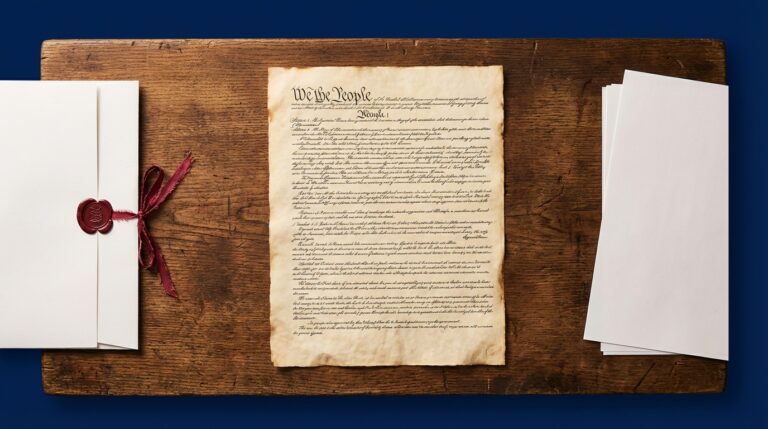
The focus is practical and nontechnical. It is meant for voters, students, and civic readers who want clear, sourced information about the rights protected by the bill of rights and how those rights work today.
What the Bill of Rights is and why it matters
The phrase rights protected by the bill of rights refers to the specific liberties listed in the first ten amendments to the U.S. Constitution. The Bill of Rights was ratified on December 15, 1791, and its text is the primary source for many individual protections under United States law, as shown in the National Archives transcription National Archives transcription.
The original text lists concrete limits on federal power and names particular freedoms. In plain language, these amendments tell government what it generally may not do in relation to religion, speech, searches, criminal trials, and other areas. Readers should understand that the written text is stable, while courts and statutes shape how those words apply in practice; the Library of Congress collection provides a useful primary-text view of the documents Library of Congress collection.
quick checklist to find primary texts and case summaries
Use primary sources first
Scholarly summaries and case trackers help explain judicial developments but do not change the amendment text itself. For current contours and important decisions, Oyez and similar case summaries record major Supreme Court rulings and arguments Oyez topics on the Bill of Rights.
A plain-language summary of each amendment
First Amendment: religion, speech, press, assembly, petition
The First Amendment protects five core freedoms: religion, speech, press, assembly, and petition. Courts recognize categories and permissible limits, including reasonable time, place, and manner rules; for an overview of how courts treat these freedoms, see the Cornell Law School summary Cornell Law School – LII on the First Amendment.
Second Amendment: bearing arms – scope and regulation

The Second Amendment relates to keeping and bearing arms. Modern Supreme Court decisions and federal and state statutes mean the right can be regulated; the historical text is fixed, but the current legal landscape allows regulatory limits depending on context, as described in general summaries of the Bill of Rights Encyclopaedia Britannica overview.
Third and Fourth Amendments: quartering and searches
The Third Amendment limits quartering of soldiers in private homes in peacetime, a provision now rarely litigated but included among the early protections. The Fourth Amendment guards against unreasonable searches and seizures and generally requires warrants supported by probable cause; established exceptions include consent, plain view, and exigent circumstances, which courts have outlined in many decisions Cornell Law School – LII on related protections.
Fifth through Eighth Amendments: criminal process and protections
The Fifth Amendment provides several protections in criminal cases, including due process and protection against self-incrimination. The Sixth Amendment ensures a speedy and public trial by an impartial jury, the right to counsel, and the ability to confront witnesses. The Eighth Amendment limits excessive bail and fines and prohibits cruel and unusual punishment. Courts have further defined how these rights operate in practice, and case summaries capture those developments Oyez topics on the Bill of Rights. See due process cases on Justia Due Process Supreme Court Cases.

Ninth and Tenth Amendments: retained rights and federalism
The Ninth Amendment notes that listing particular rights does not mean other rights do not exist, while the Tenth reserves powers not delegated to the federal government to the states or the people. These provisions help frame questions about federalism and the allocation of authority between national and state government, as discussed in historical and legal overviews National Archives transcription.
How the Bill of Rights applies to the states: incorporation through the Fourteenth Amendment
The phrase rights protected by the bill of rights also covers protections that courts have applied to state governments through the incorporation process. Incorporation is a judicial doctrine by which the Supreme Court has used the Fourteenth Amendment to make most Bill of Rights guarantees enforceable against the states, rather than only against the federal government, as summarized in legal case collections Oyez topics on the Bill of Rights. See also discussion on Scotusblog The dissent everyone knows was right.
In practice, incorporation means that a right originally written to limit federal power can, through judicial interpretation, constrain state action in comparable circumstances. Which rights have been incorporated and how they apply has developed case by case over more than a century; readers should consult case summaries for the latest holdings.
Stay connected with the campaign and receive news
Consult the cited case summaries and the National Archives or Library of Congress texts to verify how a specific right has been applied by the courts.
Because incorporation is a matter of Supreme Court jurisprudence, the exact contours can change as new decisions are issued. For up-to-date coverage of major incorporation rulings, authoritative case trackers and court summaries are the practical resources to consult.
Common limits and exceptions to these rights
Free speech protections are broad but not absolute. Courts recognize categories such as defamation, incitement to imminent lawless action, and true threats. They also permit reasonable time, place, and manner restrictions that regulate when and where expression may occur without targeting its viewpoint, a framework summarized by legal reference sources Cornell Law School – LII on the First Amendment.
The Fourth Amendment generally requires warrants based on probable cause, but well-established exceptions allow searches without a warrant in situations like consent, plain view, exigent circumstances, and certain searches incident to arrest. Courts have developed these rules through decades of decisions that balance privacy and public-safety interests Oyez topics on the Bill of Rights.
The Second Amendment recognizes a right related to keeping and bearing arms, but the extent of that right and permissible regulations are defined by modern case law and statutes. Regulatory limits may address who can possess firearms, where they can be carried, and what categories of weapons are restricted under current legal frameworks Encyclopaedia Britannica overview.

How rights affect criminal justice and procedural protections
The rights protected by the bill of rights include core safeguards in criminal proceedings. The Fifth Amendment provides protection against compelled self-incrimination and requires due process before deprivation of life, liberty, or property; courts have interpreted these protections over time to shape police procedures and trial rules Cornell Law School – LII on related protections.
The Sixth Amendment secures a set of trial rights: a speedy trial, an impartial jury, the right to counsel, and the ability to confront witnesses. These protections affect practical stages of prosecution, from arraignment through appeal, and courts have clarified what each right requires in particular settings Oyez topics on the Bill of Rights.
Identify the relevant amendment text, then look up key Supreme Court cases and reliable summaries to see how courts have applied that right in similar facts.
The Eighth Amendment limits excessive bail and fines and prohibits cruel and unusual punishment. In practice, courts review sentencing procedures and correctional practices against this standard, and case law shapes how courts apply the Eighth Amendment in specific disputes.
Typical misunderstandings and pitfalls when people discuss these rights
A common mistake is to treat constitutional text as identical to statutory or regulatory rules. An amendment may protect a liberty in principle while allowing regulation that courts find constitutional; readers should not assume a right is absolute simply because it appears in the text. Case trackers and summaries help show how courts reconcile text and regulation Oyez topics on the Bill of Rights.
Another pitfall is relying on slogans or simplified statements instead of checking the amendment text and controlling cases. Short phrases can obscure important exceptions and factual conditions that matter in legal disputes. Consulting primary sources and reputable legal summaries avoids many oversimplifications.
People also sometimes conflate federal rules with state rules. While many Bill of Rights protections have been incorporated against the states via the Fourteenth Amendment, the specific application can differ by jurisdiction and by the particular right at issue, so verify claims against current case law.
Putting it together: where to read the text and check current cases
Start with the amendment text itself to understand precise language; the National Archives provides an accessible transcription of the Bill of Rights for readers checking the original words National Archives transcription. You can also consult the site constitutional rights hub constitutional rights.
For summaries of how courts have applied the amendments, use authoritative case trackers and educational resources that collect major Supreme Court rulings and provide plain-language summaries. Oyez and similar collections offer case summaries and audio of oral arguments that help explain how interpretation has evolved Oyez topics on the Bill of Rights, the Constitution Center retrospective A look back at the Supreme Court in 2025, and our news index news index.

As a quick checklist for follow-up research: read the amendment text, look up key Supreme Court cases relevant to the question, and consult authoritative legal summaries to understand the context and recent developments. This stepwise approach helps separate the written guarantees from their judicially developed applications. See the about page About.
The Bill of Rights comprises the first ten amendments to the U.S. Constitution and lists specific protections such as free speech, religion, search-and-seizure limits, and criminal procedure rights.
No. Courts recognize limits and exceptions such as time, place, and manner rules for speech, warrant exceptions for searches, and permissible regulations on firearms under current law.
Start with the amendment text at the National Archives, then consult reputable case trackers and legal summaries for recent Supreme Court decisions and their practical implications.
For questions about local applications or specific court rulings, seek authoritative legal summaries or consult a legal professional for guidance tailored to your situation.
{"@context":"https://schema.org","@graph":[{"@type":"FAQPage","mainEntity":[{"@type":"Question","name":"Which of these constitutional protections applies in a given situation?","acceptedAnswer":{"@type":"Answer","text":"Identify the relevant amendment text, then look up key Supreme Court cases and reliable summaries to see how courts have applied that right in similar facts."}},{"@type":"Question","name":"What does the Bill of Rights cover?","acceptedAnswer":{"@type":"Answer","text":"The Bill of Rights comprises the first ten amendments to the U.S. Constitution and lists specific protections such as free speech, religion, search-and-seizure limits, and criminal procedure rights."}},{"@type":"Question","name":"Are these rights absolute?","acceptedAnswer":{"@type":"Answer","text":"No. Courts recognize limits and exceptions such as time, place, and manner rules for speech, warrant exceptions for searches, and permissible regulations on firearms under current law."}},{"@type":"Question","name":"How can I check current case law on these rights?","acceptedAnswer":{"@type":"Answer","text":"Start with the amendment text at the National Archives, then consult reputable case trackers and legal summaries for recent Supreme Court decisions and their practical implications."}}]},{"@type":"BreadcrumbList","itemListElement":[{"@type":"ListItem","position":1,"name":"Home","item":"https://michaelcarbonara.com"},{"@type":"ListItem","position":2,"name":"Blog","item":"https://michaelcarbonara.com/news/%22%7D,%7B%22@type%22:%22ListItem%22,%22position%22:3,%22name%22:%22Artikel%22,%22item%22:%22https://michaelcarbonara.com%22%7D]%7D,%7B%22@type%22:%22WebSite%22,%22name%22:%22Michael Carbonara","url":"https://michaelcarbonara.com"},{"@type":"BlogPosting","mainEntityOfPage":{"@type":"WebPage","@id":"https://michaelcarbonara.com"},"publisher":{"@type":"Organization","name":"Michael Carbonara","logo":{"@type":"ImageObject","url":"https://lh3.googleusercontent.com/d/1eomrpqryWDWU8PPJMN7y_iqX_l1jOlw9=s250"}},"image":["https://lh3.googleusercontent.com/d/12ODSqx1j-EZKFrCfRAsfGCdzqFy2gErx=s1200","https://lh3.googleusercontent.com/d/1RJTNiUR6ftoUPvxltyg62Kfvs7HJpxaD=s1200","https://lh3.googleusercontent.com/d/1eomrpqryWDWU8PPJMN7y_iqX_l1jOlw9=s250"]}]}