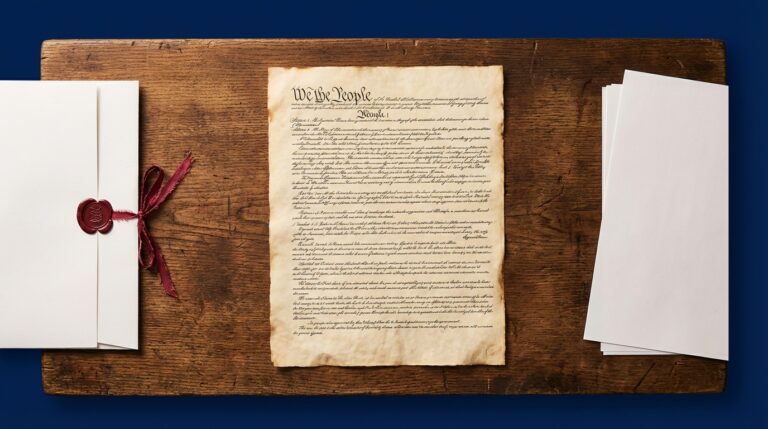
This guide explains what those words mean in practice, how courts have limited certain categories of speech, and where to look for primary sources when you want to verify a rights claim. The tone is neutral and aims to help voters, students, and civic readers make clearer distinctions between government action and private moderation.
Quick answer: what people mean by the phrase right to freedom
When someone uses the phrase right to freedom in the United States, they are usually referring to the five core liberties that the Bill of Rights protects, most directly in the First Amendment. The constitutional text names freedom of speech, religion, the press, assembly, and petition as the foundational guarantees readers most commonly mean, and the National Archives provides the primary source for that wording. National Archives, Amendments 11-27

That plain-language list is a starting point for legal questions. Courts and legal commentators then interpret how those words apply to particular facts, and those interpretations define the practical scope of the right people cite in daily disputes. For a clear explainers that connect the text to case law, see a legal overview from Cornell Law School. Cornell LII, First Amendment overview
What the First Amendment covers: the five core freedoms explained
the first amendment
Speech, religion, press, assembly, and petition form a short list, but each freedom covers different kinds of activity in practice. The phrase the first amendment often stands in for this cluster of protections and serves as a shorthand when people ask what ‘‘the right to freedom’’ covers in civic life. For the original constitutional wording and placement among the Bill of Rights, consult the National Archives. National Archives, Amendments 11-27
Stay informed on Michael Carbonara's campaign and civic updates
To see primary texts and campaign statements in one place, consider checking official sources and a candidate's public site for current positions and ways to stay informed.
Freedom of speech protects a wide range of expression, from spoken comments and published articles to symbolic acts and political protest. That protection is central to debate in public life because it lets citizens criticize officials, discuss policy, and share ideas without advance government permission; legal overviews provide useful plain-language context. Cornell LII, First Amendment overview
Freedom of religion covers both the right to practice a faith and protections against government actions that unduly favor or suppress religion. In practice this means the government may not adopt laws that force people to follow a religion or that prohibit reasonable religious exercise without a compelling interest and careful review. For background on the amendment’s application to religion, see constitutional explainers. Cornell LII, First Amendment overview

Freedom of the press protects the ability of newspapers, broadcasters, and other news organizations to publish reporting and opinions without government prior restraint. That protection supports public accountability by making it harder for officials to use government power to silence criticism. The text in the Bill of Rights names the press among the core freedoms. National Archives, Amendments 11-27
Freedom of assembly and petition together protect organized public action and formal requests for government redress. Peaceful protests, rallies, and petitions to legislatures are the most visible examples; these activities are protected against most government interference when they remain nonviolent and within lawful limits. For a concise source on the underlying rights, see the constitutional text and legal overviews. Cornell LII, First Amendment overview
How courts set limits: unprotected categories and why they matter
Even strong constitutional guarantees have boundaries. The Supreme Court and lower courts have long held that certain categories of expression fall outside First Amendment protection when the speech meets accepted legal tests, and the incitement standard offers a clear example. The Brandenburg decision established that speech meant to and likely to produce imminent lawless action may be regulated. Brandenburg v. Ohio opinion See the Brandenburg test at Cornell LII for another overview. Brandenburg test | Cornell LII
It usually refers to the five core guarantees in the First Amendment and the way courts interpret and limit those guarantees in specific cases.
Beyond incitement, courts recognize other narrow categories that may be regulated or punished, including true threats, certain defamation claims that involve falsity and fault, and historically defined obscenity. These categories are fact dependent, so a short label does not settle whether a particular statement is protected. For an accessible summary of how courts approach those categories, see a detailed explainer. Cornell LII, First Amendment overview
Put plainly, the deciding factor is context. Courts ask whether a message is likely to produce imminent harm, whether it constitutes a serious threat, whether it is false and harmful in ways defamation law recognizes, or whether material meets a narrow legal test for obscenity. That contextual approach means similar speech can be treated differently depending on who spoke, how, and where. For the incitement test used by courts, see the Brandenburg opinion. Brandenburg v. Ohio opinion A helpful case summary is also available on Oyez. Brandenburg v. Ohio | Oyez
Landmark cases that shape everyday rights
New York Times Co. v. Sullivan reshaped defamation law in the United States by requiring public-figure plaintiffs to show falsity and fault before a claim can limit critical speech about public officials. This standard makes it harder to use defamation suits to silence reporting or commentary about those who hold public office. A primary source for the ruling is the Supreme Court opinion itself. New York Times Co. v. Sullivan opinion
Tinker v. Des Moines is a leading case on student speech in public schools; the Court held that public school students do not check their constitutional rights at the schoolhouse gate, while also allowing schools to regulate speech that would materially and substantially disrupt classwork or school discipline. That case frames many disputes about student protests, apparel, and classroom expression. The decision is available from the Court’s opinion text. Tinker v. Des Moines opinion

These two decisions are examples of how doctrine affects everyday debate: Sullivan limits easy use of defamation claims against critics of public actors, and Tinker protects student expression while recognizing a school’s role in preventing real disruption. Readers encountering controversies over press reporting or school discipline will often see these precedents mentioned in summaries of the facts and the legal stakes. For Sullivan and Tinker, consult the Court opinions above. New York Times Co. v. Sullivan opinion
Government action versus private moderation: who the Constitution binds
The First Amendment restricts government action; it generally does not require private companies or platforms to carry speech. Private employers, social networks, and other nonstate actors can set their own rules for content and conduct, and those rules are enforced through private policies or contracts rather than constitutional law. For a clear explainer of the state-action boundary, see a legal overview. Cornell LII, First Amendment overview
That distinction matters in everyday disputes. When a user’s post is removed by a social platform, the action typically reflects the platform’s moderation rules and terms of service, not a constitutional violation. By contrast, when a government entity takes action to suppress speech or penalize expression, constitutional protections are likely to apply. For discussion of how this divide is treated in commentary and law, see the Brennan Center explainer. Brennan Center, What Is the First Amendment?
Examples make the difference clear: a private employer can discipline an employee under a company policy without triggering the First Amendment, while a public school or city agency doing the same would raise constitutional questions. Those practical contrasts are why verifying the actor involved is a quick first step when someone claims a rights violation. For background, consult authoritative explainers. Cornell LII, First Amendment overview
Contemporary questions: digital platforms, algorithms and emerging issues
New technologies have complicated how people talk about rights. Courts and scholars continue to examine whether and how constitutional principles apply when algorithmic systems and platform rules shape what people see and say online. Many explainers describe this area as evolving and highly fact specific. For a recent explainer that highlights open questions, see the Brennan Center summary. Brennan Center, What Is the First Amendment?

Two practical issues often recur: whether platform moderation creates a public forum that would trigger constitutional limits, and how intermediary liability rules affect platform behavior. Both questions are unsettled in some courts and are the subject of ongoing legislative and judicial attention, so outcomes can vary by jurisdiction and case facts. For broader context on how explainers frame these disputes, see Cornell LII. Cornell LII, First Amendment overview
Because the law is still developing, careful readers should look for primary sources and recent court rulings when a headline claims a definitive new rule about platforms or algorithms. Authoritative explainers and court opinions remain the best starting point for verifying such claims. Brennan Center, What Is the First Amendment?
Common mistakes people make when saying their rights are violated
One frequent error is conflating private moderation with government censorship. If a private platform enforces its terms of service, that action is usually not a constitutional violation; asking whether the actor is a government entity is a quick way to begin assessing the claim. For an overview of the state-action distinction, consult legal explainers. Cornell LII, First Amendment overview
Another common mistake is assuming the First Amendment protects all offensive or unpopular speech absolutely. Courts recognize narrow exceptions for categories like incitement and true threats, so offensiveness alone does not end the legal inquiry. For the incitement standard and similar limits, see the Brandenburg decision. Brandenburg v. Ohio opinion
Quick checklist to evaluate a claimed violation: 1) Who took the action, government or private actor; 2) What exactly was said or done; 3) Did the speech advocate imminent illegal action or pose a real threat; 4) Is there a governing legal decision or statute that applies. If you do not find supporting court authority or a primary text, treat headline summaries with caution. For primary texts, consult the constitutional wording and court opinions. National Archives, Amendments 11-27
Practical examples and scenarios readers might recognize
Protest and police response: A peaceful march that stays within a permit and avoids violence is generally protected from government suppression, though police may impose narrow time, place, and manner restrictions tied to safety. The balance between protection and regulation depends on context; for background on protest rights and limits, see legal overviews. Cornell LII, First Amendment overview
Social media removal dispute: If a platform removes a post for violating its community standards, the action is typically private moderation rather than state censorship. That distinction means constitutional remedies generally do not apply against the platform, though other legal or contractual issues might be relevant. For a plain-language discussion of the private-public divide, see the Brennan Center. Brennan Center, What Is the First Amendment?
Student protest at school: When students speak on campus, they receive First Amendment protection under Tinker unless the school shows the expression would materially and substantially disrupt educational activities or invade the rights of others. That standard governs many disputes about student signs, walkouts, or classroom statements. See the Tinker opinion for the controlling language. Tinker v. Des Moines opinion For related commentary on educational issues, see the site’s educational freedom page. Educational freedom
How to read claims about rights: a quick source and verification guide
Quick guide to verify primary texts and authoritative explainers
Use this to track the key source types
Start with the constitutional text for basic wording and a major Supreme Court opinion when a case is disputed. Primary documents are the most reliable way to check claims that an action violates constitutional rights. For the constitutional text and linked Court opinions, the National Archives and Justia host authoritative copies. National Archives, Amendments 11-27 You can also consult the site’s constitutional rights hub for related posts. Constitutional rights
Use reputable explainers for plain-language context. Resources like Cornell LII and the Brennan Center summarize doctrine and track changes, but do not substitute for reading the controlling opinion in a relevant case. If a headline cites a case, read the opinion to see how a court described the facts and the legal test. For a compact explainer, see Cornell LII. Cornell LII, First Amendment overview
Red flags in commentary include claims that any one phrase settles complex disputes, headlines that omit who took the action, and summaries that conflate private rules with government censorship. When in doubt, look for the governing Court opinion or the constitutional text. Primary documents reduce the risk of oversimplification. Brennan Center, What Is the First Amendment?
Takeaway: what the phrase right to freedom actually means for everyday readers
In short, the phrase right to freedom most often refers to the five protections in the Bill of Rights that we associate with the First Amendment, and those protections are shaped by decades of court decisions that determine how the text applies in concrete situations. For the original language, consult the constitutional amendments. National Archives, Amendments 11-27
Remember three practical points: check whether the actor is a government body, look for a controlling judicial test if the speech is challenged, and seek the primary opinion for contested cases. Those steps make it easier to separate strong rights claims from oversimplified headlines. For accessible background reading, start with legal explainers and major Court opinions, and learn more about the author on the about page. Cornell LII, First Amendment overview About
No. Courts recognize narrow exceptions such as incitement to imminent lawless action, true threats, certain defamation, and some obscenity, depending on context.
Yes. The First Amendment restricts government actors; private platforms and employers generally set and enforce their own rules.
Start with the constitutional text at the National Archives and read relevant Supreme Court opinions for disputes, then consult legal explainers for context.
If you want to follow updates or learn how a candidate frames free-speech issues, check official campaign pages and primary sources to see how positions are described and sourced.
References
- https://www.archives.gov/founding-docs/amendments-11-27
- https://www.law.cornell.edu/wex/first_amendment
- https://michaelcarbonara.com/contact/
- https://www.law.cornell.edu/wex/brandenburg_test
- https://supreme.justia.com/cases/federal/us/395/444/
- https://www.oyez.org/cases/1968/492
- https://supreme.justia.com/cases/federal/us/376/254/
- https://supreme.justia.com/cases/federal/us/393/503/
- https://www.brennancenter.org/our-work/research-reports/what-first-amendment
- https://michaelcarbonara.com/issue/educational-freedom/
- https://michaelcarbonara.com/issue/constitutional-rights/
- https://michaelcarbonara.com/about/