Then summarize that the constitution of the united states and the Bill of Rights set the foundational rules, and courts interpret those rules for modern circumstances. Note that remedies and procedures vary by context and that readers should seek current case law or legal counsel for time-sensitive questions.
What the Constitution of the United States is and why it matters
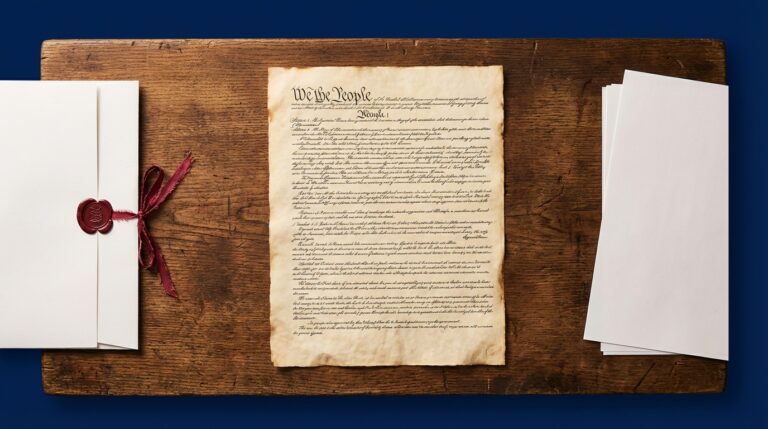
The constitution of the united states is the nation’s foundational governing document, establishing the structure of federal government and the basic rules that limit government power. The text and authoritative transcription remain the primary legal source for how those rules are written and understood, and the National Archives maintains a clear primary-text transcription for readers to consult The Constitution of the United States: A Transcription.
Alongside the original document, the Bill of Rights – the first ten amendments – sets out many of the core individual liberties that people commonly ask about, such as freedoms of speech and religion and protections in criminal cases. The Bill of Rights is treated as a foundational legal source in contemporary discussion and practice.
Quick links to authoritative primary texts for direct lookup
Use official transcripts for citation
Court systems, led by the U.S. Supreme Court at the federal level, play the central role in interpreting the constitutional text and applying it to modern facts. Courts explain how broad phrases in the written text translate into rules for policing, public speech, administrative procedures, and individual rights (see Oyez case listings).
Understanding where to read the text and how courts interpret it helps people frame practical questions, for example what rights apply during a police encounter or what limits a city can impose on a demonstration. For the exact wording of the amendments, primary-text transcriptions remain the authoritative reference.

Key rights in the Bill of Rights: what they cover
The Bill of Rights contains several familiar protections that form a brief map of constitutional liberties. Below are short, user-focused summaries of principal rights and what they cover.
These summaries give a quick orientation but are not exhaustive. For the precise language of each amendment and further legal context, consult the primary texts and legal summaries cited in this article.
- First Amendment: Protects freedom of speech, religion, the press, assembly, and petition. Courts have long allowed certain content-neutral and narrowly tailored limits, for example on time, place, and manner of public gatherings, when those limits meet constitutional tests First Amendment.
- Fourth Amendment: Protects against unreasonable searches and seizures and generally requires a warrant supported by probable cause, subject to defined exceptions such as consent, exigent circumstances, and certain vehicle searches.
- Fifth Amendment: Includes the right against compelled self-incrimination and protection from double jeopardy, along with procedural protections that intersect with criminal charging and grand jury rules.
- Sixth Amendment: Guarantees criminal defendants the right to notice of charges, a public and speedy trial, confrontation of witnesses, and assistance of counsel.
These core protections are the backbone of many legal disputes and public questions about civil liberties. When readers search for “Bill of Rights summary” they should expect a concise map like this and then turn to primary-text sources or legal guides for finer detail.

These core protections are the backbone of many legal disputes and public questions about civil liberties. When readers search for “Bill of Rights summary” they should expect a concise map like this and then turn to primary-text sources or legal guides for finer detail.
Stay connected to campaign updates and volunteer opportunities
Consult the primary texts and the official guides cited in this article to confirm exact language and current interpretations before taking legal or formal steps.
How the Fourteenth Amendment applies rights at the state and local level
The Fourteenth Amendment, adopted after the Civil War, contains two clauses that are central to how constitutional protections operate against state and local governments. The Due Process Clause and the Equal Protection Clause together provide the primary basis for applying many federal protections to state action.
Due process prevents the government from depriving people of life, liberty, or property without appropriate legal procedures, and equal protection requires that comparable cases be treated similarly unless the government can show a lawful reason. These clauses are the legal routes courts use to review state and local laws and official conduct Due Process and Equal Protection (Summary and Resources).

Practically, Fourteenth Amendment review can be triggered by laws that classify people in a discriminatory way, by official actions that treat similarly situated people differently, or by government procedures that deny an individual basic notice or the chance to be heard. Remedies and the appropriate forum for challenge vary depending on whether the action is local, state, or federal.
How limits and exceptions work: rights are strong but not absolute
Constitutional protections are protections, not automatic exemptions. Courts balance individual rights against legitimate government interests and often permit carefully tailored regulations. For example, limitations that are content-neutral and narrowly tailored to serve a significant government interest may be upheld when they regulate time, place, and manner rather than speech content First Amendment.
Search and seizure law follows a similar pattern: the Fourth Amendment generally requires warrants supported by probable cause, but courts recognize exceptions such as consent searches, exigent circumstances, and searches of vehicles in certain situations. Those exceptions are defined by precedent and by the factual context of an encounter Searches and Seizures (Fourth Amendment) – Know Your Rights.
Because courts refine rules through decisions, interpretations evolve. A regulation or police practice that seemed lawful under one ruling can be limited by a later decision. For recent coverage of cases the Supreme Court has taken up, see SCOTUSblog. That is why, for time-sensitive or novel fact patterns, recent case law should be considered before drawing firm conclusions.
If you think your rights were violated: practical next steps
When someone believes a constitutional right was violated, clear documentation is the first practical step. Record the time, date, and location of the incident, identify any officers or officials involved when possible, and preserve physical evidence such as photographs, receipts, or recordings made lawfully at the time.
Keep a short contemporaneous note of events and, if there are witnesses, ask for contact information. These basic records help lawyers and complaint offices assess what happened and what remedies may be available.
The Constitution, especially through the Bill of Rights and later amendments, provides protections such as free speech, religious liberty, protection from unreasonable searches, and criminal-procedure rights; courts and statutes clarify how those protections apply in specific situations.
After documenting the incident, people commonly contact a qualified attorney or a civil-rights office for advice. The Department of Justice Civil Rights Division and state civil-rights agencies handle certain administrative complaints, while bar associations provide referral services to connect people with counsel in civil or criminal matters Searches and Seizures (Fourth Amendment) – Know Your Rights. You can also visit the contact page for site inquiries.
Available remedies depend on context and may include filing an administrative complaint with a government agency, bringing a civil lawsuit, seeking relief in criminal proceedings, or requesting supervisory review. Timeliness matters for many remedies, so consult counsel or a relevant agency promptly when feasible Due Process and Equal Protection (Summary and Resources). For more site resources, see the constitutional rights hub or the about page.
Rights for people accused of crimes: what to expect
People accused of crimes have specific protections under the Constitution designed to limit governmental power during charging, arrest, and trial. These protections include the Fifth Amendment right against compelled self-incrimination and the Sixth Amendment guarantees of counsel and a fair trial.
In practical terms, the Fifth Amendment underlies the familiar Miranda warnings that police give during custodial interrogation in many situations, advising people of the right to remain silent and the right to an attorney. Those rules and their application are based on longstanding constitutional texts and court decisions Bill of Rights: A Transcription.
The Sixth Amendment guarantees the right to counsel at critical stages of criminal proceedings, the right to know the charges, and the right to confront witnesses. Statutes and case law explain timing, when appointed counsel is provided, and how trial procedures operate, so individuals should consult counsel for case-specific guidance.
Common misunderstandings and mistakes to avoid
A frequent mistake is treating constitutional protections as absolute. Rights often have lawful limitations, and asserting a right without understanding the surrounding law can produce unintended consequences, such as waiving a claim or escalating an encounter.
Consenting to a search is one common area where people unintentionally weaken later legal claims. When a person clearly and voluntarily consents, courts may treat the search as lawful even if there was no warrant. Before consenting, consider documenting the encounter and, when safe, ask clarifying questions rather than consenting immediately Searches and Seizures (Fourth Amendment) – Know Your Rights.
Another frequent issue is relying on social media as a substitute for legal advice. Public posting can affect legal options and public perceptions. A better first step is to preserve evidence privately and consult an attorney or trusted legal resource.
Practical scenarios: how these rights play out in everyday situations
Below are short, numbered vignettes that show how constitutional rights commonly arise. These examples are outcome-neutral and meant to clarify typical boundaries.
1) Protest and public assembly. A local group plans a public demonstration. The First Amendment protects speech and assembly in public forums, but the city may enforce time, place, and manner rules that are content-neutral and narrowly tailored. Permits or noise restrictions may be lawful if they meet constitutional standards for regulation First Amendment.
2) Traffic stop and vehicle searches. During a traffic stop, the Fourth Amendment protects against unreasonable searches, but officers may search a vehicle in certain circumstances such as when they obtain consent, face exigent circumstances, or have probable cause tied to the vehicle. Whether a particular search was lawful depends on the facts of the stop and applicable precedent (see relevant Supreme Court filing here).
3) Being questioned by police. If you are detained and questioned, the Fifth Amendment protects against compelled self-incrimination, and Miranda warnings are tied to custodial interrogation. Asking for an attorney and politely declining to answer questions are standard steps people may take to preserve rights, and counsel can advise on how to proceed in the specific case Bill of Rights: A Transcription.
Where to read the Constitution and find authoritative help
Start with primary texts when you want exact language. The National Archives maintains an authoritative transcription of the Constitution and a separate transcript of the Bill of Rights that are useful for citation and precise wording The Constitution of the United States: A Transcription.
For practical guides and complaint channels, government resources such as the Department of Justice Civil Rights Division and legal-education materials from the American Bar Association provide accessible overviews and contact paths for administrative complaints or referrals to counsel Searches and Seizures (Fourth Amendment) – Know Your Rights.
When legal remedies are likely, consult a qualified attorney promptly. Remedies depend on the situation and may include administrative complaints, civil lawsuits, or criminal-defense strategies. Timeliness and accurate documentation can affect options, so seek counsel or a reputable legal referral service when possible.
When legal remedies are likely, consult a qualified attorney promptly. Remedies depend on the situation and may include administrative complaints, civil lawsuits, or criminal-defense strategies. Timeliness and accurate documentation can affect options, so seek counsel or a reputable legal referral service when possible.

The Bill of Rights is the name for the first ten amendments to the Constitution that list many core individual liberties such as free speech, religion, and criminal procedure protections.
Yes. The Fourteenth Amendment’s Due Process and Equal Protection Clauses are the main means by which federal constitutional protections are applied to state and local government actions.
Document the incident, preserve any evidence, and contact a qualified attorney or the appropriate civil-rights office to learn about complaint channels and possible remedies.
References
- https://www.archives.gov/founding-docs/constitution-transcript
- https://www.law.cornell.edu/wex/first_amendment
- https://www.americanbar.org/groups/public_education/resources/law-related-education/what-is-due-process/
- https://michaelcarbonara.com/contact/
- https://www.justice.gov/crt/know-your-rights-searches-and-seizures
- https://www.archives.gov/founding-docs/bill-of-rights-transcript
- https://www.oyez.org/cases
- https://www.scotusblog.com/2026/01/supreme-court-takes-up-four-new-cases-including-disputes-on-geofence-warrants-and-roundup-weedkiller/
- https://www.supremecourt.gov/opinions/25pdf/24-624_b07d.pdf
- https://michaelcarbonara.com/issue/constitutional-rights/
- https://michaelcarbonara.com/about/