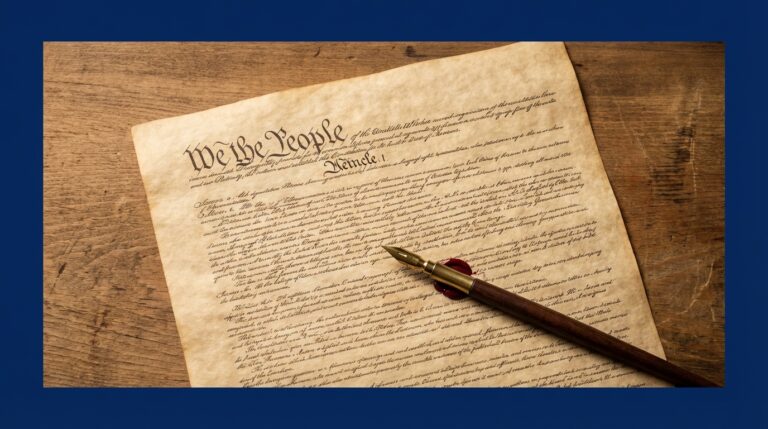
The piece highlights the statute's main purposes, notes its historical limits, and points to reliable sources for further reading so that students, voters and journalists can follow the evidence themselves.
What is the english bill of rights? Definition and historical context
The english bill of rights is a 1689 statute that formally limited the monarch’s prerogative and affirmed the authority of Parliament; the statute text itself remains the primary source for those limits and arrangements, and readers should consult the original enactment when possible Legislation.gov.uk.
The immediate historical setting was the Glorious Revolution, a political settlement that brought William and Mary to the throne and produced a written statute intended to prevent abuses associated with personal monarchy, according to parliamentary research summaries that assemble the political background and aims of the Act UK Parliament research overview.
The three key ideas are parliamentary supremacy and limits on the monarch; selected individual protections such as petition and limits on cruel and unusual punishment; and procedural rule-of-law elements including regular parliaments, free elections in the period sense, and lawful succession.
For readers seeking a readable transcript of the 1689 wording, the Avalon Project provides a convenient presentation of the original clauses and phrases that scholars and students cite when they analyse the text Avalon Project (see our constitutional-rights hub).
Short definitions help set expectations: as a statute, the English Bill of Rights records specific limits and procedures in late 17th-century England rather than offering a modern, comprehensive human-rights code.
Why the 1689 Act mattered: a short summary
In plain terms, the Act changed the balance between Crown and Parliament by restricting certain royal powers and making Parliament’s legislative role central to governance; the statute frames those changes directly in its operative language and in its preamble Legislation.gov.uk.
The Act also set procedural expectations that mattered practically, such as requirements around how parliaments should be called and how succession should be handled, measures aimed at stabilising governance after the revolution as described in parliamentary research UK Parliament research overview.
It is important to read the statute within its political context: the 1689 text lists targeted limits and protections that responded to specific events of the 1680s rather than asserting universal, modern rights applicable in all times.

The three key ideas of the english bill of rights, at a glance
Here are the three central ideas readers should take from the 1689 statute, briefly stated and tied to where those themes appear in the text.
1) Parliamentary supremacy and limits on the monarch: the Act’s preamble and operative clauses place limits on royal prerogative and assert that Parliament has legislative authority. For the statute’s wording and structure, consult the original text as published online Avalon Project.
2) Selected individual protections: the Act names particular rights and protections, such as the right to petition, prohibitions on cruel and unusual punishments, limits on excessive fines and bail, and a provision about Protestants and arms, rather than providing a comprehensive catalogue of modern rights Legislation.gov.uk.
3) Procedural rule-of-law elements for governance: the statute includes provisions meant to secure regular parliaments, to require elections that were understood as free in the period sense, and to clarify lawful succession, features aimed at creating predictable constitutional procedures UK Parliament research overview.
These three themes appear in the preamble and in several operative clauses; historians treating the document as central to the post-1689 settlement point to those parts of the statute when describing its purpose.
Continue reading and consult primary sources to learn more about the 1689 statute
Continue to the sections below for detailed explanation of each idea and guidance on where to read and cite the original wording.
Join the campaign list to receive updates and resources about civic history and the campaign
Each of the three ideas is explored in the sections that follow, with clause-level pointers to the primary text and careful notes about historical limits and later influence.

The short overview above is not exhaustive; the Act contains other clauses and historical references that matter to specialists, and later scholarship places the statute within a wider constitutional story.
The short overview above is not exhaustive; the Act contains other clauses and historical references that matter to specialists, and later scholarship places the statute within a wider constitutional story.
Idea 1: Parliamentary supremacy and limits on the monarch
The first key idea is that the 1689 Act formally limited the monarch’s prerogative and affirmed that Parliament had legislative primacy, a point reflected in the statute’s wording and reiterated in modern parliamentary summaries UK Parliament research overview.
In practice the Act responded to perceived abuses by earlier Stuart monarchs and sought to ensure that future disputes over taxation, law-making and military command would be settled by Parliament’s authority rather than unfettered royal action; the statute’s preamble and various clauses record these concerns in legislative language Avalon Project and this theme is discussed in literature on judicial review and parliamentary supremacy judicial review and parliamentary supremacy.
Legal historians note that this establishment of parliamentary supremacy was as much procedural as doctrinal: the statute created expectations about how power would be exercised and limited, helping to stabilise government after the Glorious Revolution Legislation.gov.uk.
Idea 2: Selected rights and protections in the 1689 text
The second key idea is the Act’s listing of certain individual protections; these are discrete items in the statute rather than a modern charter of universal rights, and readers should consult the primary text for exact language Avalon Project.
Notable protections named in the Act include the right to petition the monarch without fear of retribution, prohibitions on cruel and unusual punishments, and limits on excessive bail and fines; these provisions are phrased against the abuses of the late Stuart period and are embedded in the statute’s operative clauses Legislation.gov.uk.
The Act also includes a provision that permits Protestants to have arms for their defence, a clause that is clearly tied to the confessional politics of the time and must be read with that context in mind Avalon Project.

Scholars stress that these protections were selected and limited rather than universal; later commentators place the statute among several early modern documents that influenced constitutional thought without equating it to a contemporary human-rights catalogue Encyclopaedia Britannica.
When writers summarise these protections, it is useful to cite the clause or sentences in the 1689 text and to note the political background that led to each provision.
Idea 3: Procedural rules – parliaments, elections and succession
The third key idea focuses on procedural, rule-of-law elements: the Act sets expectations about holding regular parliaments, about the conduct of elections as understood in the period, and about lawful succession to the Crown; these measures are part of the statute’s attempt to secure a stable constitutional order after the revolution Legislation.gov.uk.
Provisions related to parliamentary scheduling and succession procedures were practical efforts to prevent the abrupt personal rule of the 17th century and to ensure that contested claims to authority would be resolved within a framework of legal and parliamentary processes, as noted in parliamentary analysis of the Act UK Parliament research overview.
Readers should note that phrases like “free elections” appear in a late 17th-century context where franchise and electoral practice were narrower than modern democratic standards; the statute therefore secures procedural stability rather than broadening the franchise in the modern sense Avalon Project.
How to read and cite the original 1689 text
To read the authoritative statute, begin with the official publication of the text and then consult a readable transcript for clause-level study; the UK government’s legislation site contains the official version and the Avalon Project provides an accessible transcript for quotation and study Legislation.gov.uk.
When citing the statute, use its formal citation, 1 Will. & Mar. c.2, and indicate the source you used for the wording, for example the legislation website or the Avalon Project transcript; this practice makes clear whether a reader is looking at a contemporary government copy or a scholarly transcript (see our contact page).
Find and cite the 1689 text accurately
Prefer primary text when possible
Practical tip: when you quote a clause, keep the original punctuation and add a brief parenthetical note giving the source and, if useful, a modern paraphrase immediately after the citation to show the contemporary meaning.
Another practical rule is to avoid using modern legal terms as if they were present in 1689; instead, quote the wording and add a short explanatory sentence that places the clause in its historical setting.
Influence on later constitutional developments and the U.S. tradition
Scholars and reference works describe the Bill of Rights as influential for later constitutional developments, and they note that some framers in America cited English precedents when drafting constitutional texts, while cautioning that the 1689 Act was one of several influences Encyclopaedia Britannica (for US context see Constitution Center on the Supremacy Clause).
Academic summaries of constitutionalism place the statute within a broader early modern debate about the rule of law and the limits of sovereignty, and they remind readers that influence is often indirect and mediated by later political and legal changes Stanford Encyclopedia of Philosophy (see a contrasting academic view on the Bill’s role here).
Modern commentators therefore treat the Act as an important precedent rather than as a direct legal source for current human-rights law, a distinction that appears in recent parliamentary and historical overviews UK Parliament research overview.
Limitations and the confessional context: what the Bill did not do
A key limitation is the Act’s confessional focus: certain clauses explicitly address the status of Protestants and their rights, a feature that reflected late 17th-century religious politics and constrains how the statute maps onto modern, inclusive human-rights frameworks Avalon Project.
The franchise and the scope of protections in 1689 were limited by class, property and religious qualifications of the period; the statute therefore does not expand voting rights in the way later reforms did, and modern readers should not assume the Act guarantees broad suffrage UK Parliament research overview.
Scholars recommend treating the Bill as historically bounded: it is a milestone in constitutional history, but it carries period-specific exclusions that matter for contemporary interpretation History Today.
Common misunderstandings and pitfalls when referencing the english bill of rights
A common mistake is to treat the statute as if it were a modern human-rights charter; that overstates the Act’s scope and ignores its procedural and confessional limits, a point emphasised in scholarly and reference accounts Encyclopaedia Britannica.
Another pitfall is to neglect the political and religious context of 1689 when paraphrasing clauses; precise attribution to the primary text and to interpretive summaries prevents misleading claims and keeps historical description accurate Stanford Encyclopedia of Philosophy.
To avoid these errors, writers should quote the statute for key claims and then attribute interpretive statements to parliamentary research or scholarly work instead of presenting them as direct readings of contemporary rights doctrine UK Parliament research overview.
Practical examples: clauses and plain-language paraphrases
Example extract: the Act includes a clause on the right to petition; when quoting that clause use the original wording and then give a concise paraphrase that explains its purpose in plain language, citing the source transcript you used Avalon Project.
Another extract: the statute’s prohibition on cruel and unusual punishments is phrased in a manner tied to the practices of the period; a short paraphrase should explain what sort of abuses the clause aimed to prevent and should identify the text you are citing Legislation.gov.uk.
Suggested attribution format: quote the clause, then add parenthetical source information such as (1 Will. & Mar. c.2, quoted from the Avalon Project transcript) and follow with a one-sentence modern paraphrase that signals interpretive distance from the original wording.
How scholars assess the Bill’s modern relevance (2026 perspective)
By 2026 the mainstream scholarly view treats the Bill as a foundational historical source that influenced later constitutional developments while also noting its limits in scope and confessional framing, a conclusion supported by both reference articles and scholarly entries on constitutionalism Encyclopaedia Britannica.
Interpretive debates focus on how directly ideas from 1689 map onto later documents and whether the Act should be read as a rights-first text or as a settlement about governance procedures; recent analyses emphasise the latter and place the statute in a lineage of constitutional adjustments rather than as a single origin point Stanford Encyclopedia of Philosophy.
Open questions for scholars include how to weigh the Bill’s influence against other early modern sources and how to relate its confessional clauses to later, more inclusive human-rights frameworks; historians continue to treat the Act as precedent rather than a self-contained model of modern rights law History Today.
Quick guide: Where to find reliable texts and summaries
Authoritative primary sources include the government’s legislation website for the official statute and the Avalon Project transcript for a readable text; start with these two sources when you need the original wording Legislation.gov.uk.
Neutral secondary summaries to consult are the UK Parliament research overview for context and Encyclopaedia Britannica for a concise reference article that situates the Bill historically and assesses its influence UK Parliament research overview.
Prefer primary texts plus reputable scholarly summaries when drawing conclusions; that combination helps prevent overstatement and keeps interpretive claims anchored to documented sources Stanford Encyclopedia of Philosophy (see also our strength and security section).
Conclusion: Three takeaways about the english bill of rights
1) The 1689 statute limited royal prerogative and placed Parliament at the centre of legislative authority, a fact evident in the Act’s language and modern parliamentary summaries UK Parliament research overview.
2) The Act lists selected individual protections-such as the right to petition, limits on cruel and unusual punishments, and the Protestant arms provision-that were framed by late 17th-century politics and are not a modern universal catalogue of rights Avalon Project.
3) It establishes procedural rules about parliaments, elections and succession intended to stabilise governance after the Glorious Revolution, and scholars treat the statute as influential precedent rather than direct modern law Legislation.gov.uk.
For further reading, consult the quick guide to primary texts and reputable summaries listed above.
The Bill of Rights aimed to limit the monarch's prerogative and to secure parliamentary authority while listing selected protections and procedural rules relevant to late 17th-century England.
No. The Act lists selected protections within its historical context and is treated by scholars as an influential precedent rather than a direct source of contemporary universal human-rights law.
The official statute is available on the UK government's legislation website and a readable transcript is available via the Avalon Project at Yale.
References
- https://www.legislation.gov.uk/aep/WillandMar/1/2/contents
- https://www.parliament.uk/about/living-heritage/evolutionofparliament/houseofcommons/reformacts/overview/the-bill-of-rights/
- https://avalon.law.yale.edu/17th_century/england.asp
- https://michaelcarbonara.com/issue/constitutional-rights/
- https://judicature.duke.edu/articles/judicial-review-parliamentary-supremacy/
- https://michaelcarbonara.com/contact/
- https://www.britannica.com/event/Bill-of-Rights-British-document
- https://www.historytoday.com/archive/glorious-revolution-english-bill-rights
- https://plato.stanford.edu/entries/constitutionalism/
- https://econ.umd.edu/sites/www.econ.umd.edu/files/users/pmurrell/Design_and_Evolution_JCE_February_2017.pdf
- https://constitutioncenter.org/the-constitution/articles/article-vi/clauses/31
- https://michaelcarbonara.com/issue/strength-security/