The goal is neutral information for voters, students and civic readers. Where the article discusses doctrine it relies on primary transcriptions and legal primers rather than editorial interpretation.
What the First Amendment actually says
Exact text and date of ratification
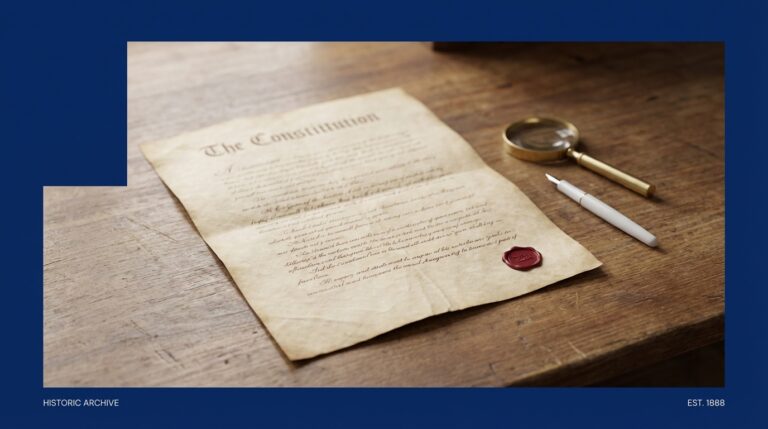
The First Amendment, ratified December 15, 1791, begins with a clear command about lawmaking: “Congress shall make no law respecting an establishment of religion, or prohibiting the free exercise thereof; or abridging the freedom of speech, or of the press; or the right of the people peaceably to assemble, and to petition the Government for a redress of grievances.” The National Archives provides the authoritative transcription of this text and its placement in the Bill of Rights National Archives transcript
The opening phrase, “Congress shall make no law,” historically limited the immediate text to federal action. Legal primers note, however, that incorporation doctrine and later judicial interpretation extend most protections against state and local governments as well, so readers should treat the constitutional text and modern application together Cornell LII primer and see the Constitution Annotated for statutory context Constitution Annotated

Why the text begins with “Congress shall make no law”
The phrase frames an initial boundary: the Framers directed the restriction at legislative power. Over time, courts used doctrinal tools to apply those restrictions to other government actors, and legal guides explain that context clause-by-clause Cornell LII primer
Five distinct protections and how commentators treat them
Law commentators and annotated texts treat the First Amendment as five related but distinct protections: the Establishment Clause, the Free Exercise Clause, the freedom of speech, the freedom of the press, and the rights of assembly and petition. This clause-by-clause framework is a common organizing tool in legal instruction and commentary Cornell LII primer
How legal primers annotate each clause
Primers such as Cornell LII provide short definitions and typical doctrinal questions for each clause, which courts and scholars use to translate text into tests and precedents. Those annotations help readers see where clause boundaries are clear and where they overlap in practice Cornell LII primer
Religion clauses: establishment and free exercise explained
What each clause protects and common legal questions
The Establishment Clause bars government endorsement of religion, while the Free Exercise Clause protects individuals’ religious practices from governmental interference. Legal primers outline typical dispute areas such as school prayer, government funding for faith-based entities, and religious accommodations in public programs Cornell LII primer
How courts balance establishment and free exercise claims
Cornell’s annotated guide emphasizes that courts weigh competing interests and apply doctrinal tests developed in case law rather than reading the text as self-executing rules. As a result, the boundaries between establishment and free exercise claims evolve through litigation and appellate decisions Cornell LII primer
Speech protections and their limits
What counts as protected speech
The freedom of speech covers a broad range of expressive acts, including spoken words, written expression and some symbolic conduct. Legal primers caution that protection is robust but not unlimited, and that courts use doctrinal categories to identify when government may regulate certain expression Cornell LII primer
The incitement test and other limits
The Supreme Court set the modern incitement standard in Brandenburg v. Ohio, holding that advocacy of illegal action is protected unless it is directed to producing imminent lawless action and is likely to produce such action; this imminence and likelihood formulation remains the controlling test for incitement claims Oyez summary of Brandenburg v. Ohio and for broader case listings see Justia’s free speech cases Free Speech Supreme Court Cases
Stay connected with Michael Carbonara
For direct reading, consult the National Archives transcript and clause commentary on Cornell LII.
Clause-by-clause overview: religion, speech, press, assembly and petition
Five distinct protections and how commentators treat them
Law commentators and annotated texts treat the First Amendment as five related but distinct protections: the Establishment Clause, the Free Exercise Clause, the freedom of speech, the freedom of the press, and the rights of assembly and petition. This clause-by-clause framework is a common organizing tool in legal instruction and commentary Cornell LII primer
How legal primers annotate each clause
Primers such as Cornell LII provide short definitions and typical doctrinal questions for each clause, which courts and scholars use to translate text into tests and precedents. Those annotations help readers see where clause boundaries are clear and where they overlap in practice Cornell LII primer
Religion clauses: establishment and free exercise explained
What each clause protects and common legal questions
The Establishment Clause bars government endorsement of religion, while the Free Exercise Clause protects individuals’ religious practices from governmental interference. Legal primers outline typical dispute areas such as school prayer, government funding for faith-based entities, and religious accommodations in public programs Cornell LII primer
How courts balance establishment and free exercise claims
Cornell’s annotated guide emphasizes that courts weigh competing interests and apply doctrinal tests developed in case law rather than reading the text as self-executing rules. As a result, the boundaries between establishment and free exercise claims evolve through litigation and appellate decisions Cornell LII primer
Speech protections and their limits
What counts as protected speech
The freedom of speech covers a broad range of expressive acts, including spoken words, written expression and some symbolic conduct. Legal primers caution that protection is robust but not unlimited, and that courts use doctrinal categories to identify when government may regulate certain expression Cornell LII primer
The incitement test and other limits
The Supreme Court set the modern incitement standard in Brandenburg v. Ohio, holding that advocacy of illegal action is protected unless it is directed to producing imminent lawless action and is likely to produce such action; this imminence and likelihood formulation remains the controlling test for incitement claims Oyez summary of Brandenburg v. Ohio and for broader case listings see Justia’s free speech cases Free Speech Supreme Court Cases

Beyond incitement, courts recognize other limited categories such as true threats, obscenity and narrowly defined fighting words, and they apply specific tests to each category. Legal primers advise that outcomes depend heavily on facts and precedents rather than a single textual reading Cornell LII primer
Press protections and public-figure defamation
How the press clause differs from the speech clause

The freedom of the press complements the freedom of speech by protecting reporting, commentary and newsgathering. Primers explain that press protections support public discussion and journalistic practices, and that courts treat press interests as central to democratic discourse Cornell LII primer
New York Times Co. v. Sullivan and actual malice
The Supreme Court’s decision in New York Times Co. v. Sullivan established that public-figure defamation claims require proof that a defendant acted with “actual malice,” meaning knowledge of falsity or reckless disregard for the truth. That standard raises the bar for plaintiffs who are public officials or figures in disputes over reporting and commentary Oyez summary of New York Times Co. v. Sullivan
Assembly and petition: rights to protest and redress
What peaceable assembly covers
Peaceable assembly protects collective, public expression such as marches and rallies when those gatherings are not violent or unlawful. Legal primers note that expressive conduct in public spaces usually receives constitutional protection, though governments can impose time-place-manner restrictions that are content neutral and narrowly tailored Cornell LII primer
How petitioning the government is protected
The right to petition allows citizens to ask government for redress of grievances through petitions, petitions supplemented by assembly, or other forms of advocacy. Primers explain that petition rights are part of a broader set of civic procedures that the First Amendment protects from undue government interference Cornell LII primer
How courts and legal resources explain the First Amendment
Role of annotated primers like Cornell LII
Annotated resources provide clause-by-clause explanations, sample doctrinal tests and links to primary cases; courts, lawyers and students commonly use these primers to translate constitutional text into legal questions and tests Cornell LII primer
How judges apply clause-by-clause analysis
Judicial opinions typically quote the text, then apply precedent and doctrinal tests to facts. This method produces practical outcomes that can diverge from a simple reading of the wording, which is why legal guides stress both the original text and subsequent case law Cornell LII primer and readers can find related material on the site’s constitutional rights hub constitutional rights
Quick checklist to review each First Amendment clause
Use the National Archives and Cornell LII for primary text and commentary
Key Supreme Court decisions that shape modern doctrine
Brandenburg, Tinker and New York Times v. Sullivan explained
Brandenburg v. Ohio created the contemporary incitement rule, which requires intent to produce imminent lawless action and a likelihood that the speech will do so; that test remains the touchstone for incitement law Oyez summary of Brandenburg v. Ohio
Why these cases remain important
Tinker v. Des Moines protected student expression by holding that students do not lose constitutional rights at school unless speech materially disrupts operations, and New York Times Co. v. Sullivan set the actual malice standard for public-figure defamation. Together, these decisions show how courts translate text into manageable legal rules across contexts Oyez summary of Tinker v. Des Moines and see the American Bar Association discussion of landmark cases ABA landmark cases
The trio of decisions is often cited in modern arguments about limits and protections because each supplies a durable doctrinal test that lower courts apply to facts in new disputes Cornell LII primer
Modern tensions and public attitudes
What polling shows about support for free speech
Recent polling finds broad public support for First Amendment principles in the abstract, but support declines when speech is perceived as hateful, dangerous or targeted, highlighting public ambivalence during specific controversies Pew Research Center findings
How perceptions of harm shape limits
Public perceptions create pressure points for courts, platforms and policymakers, and commentators note that technology and platform moderation raise unresolved questions about how historical tests apply to modern digital spaces Cornell LII primer
The First Amendment, ratified December 15, 1791, begins with the words "Congress shall make no law" and protects religion, speech, press, peaceable assembly and petition; courts and legal primers translate that text into doctrine through precedent and doctrinal tests.
When courts consider online speech, they assess government action and may adapt doctrinal tests while preserving core textual protections, but outcomes depend on case-specific facts and evolving precedent Cornell LII primer
Common legal limits and exceptions in practice
How incitement, defamation and student-speech rules operate
Courts treat incitement under Brandenburg with an immediacy and likelihood requirement; defamation involving public figures requires proof of actual malice under New York Times Co. v. Sullivan; and student-speech doctrine follows Tinker unless disruption is shown Oyez summary of Brandenburg v. Ohio
Other recognized exceptions and their tests
Legal primers list categories like obscenity, true threats and narrowly defined fighting words, and they describe tests that courts use to separate protected from unprotected expression in each category Cornell LII primer
Student speech, schools and the First Amendment
Tinker and its limits
Tinker v. Des Moines holds that students retain First Amendment protections in school unless their speech materially disrupts school operations, a standard that requires courts to evaluate context and impact rather than apply a blanket rule Oyez summary of Tinker v. Des Moines
How schools balance order and expression
Subsequent decisions and lower-court rulings refine how Tinker is applied, and schools commonly rely on narrowly tailored discipline policies to address disruptive expression while attempting to respect constitutional limits, according to legal guides Cornell LII primer
Typical mistakes and misunderstandings when citing the First Amendment
Overreading the text as absolute immunity
A frequent error is treating the phrase “Congress shall make no law” as an absolute shield against all consequences; primers clarify that constitutional protections constrain government actors, not private organizations, and that courts balance competing interests in many disputes National Archives transcript
Confusing private-sector rules with constitutional rules
Another common misunderstanding is assuming private employers or platforms are bound by the First Amendment. Legal guides emphasize the constitutional distinction between state action and private rules, and they advise careful attribution when describing rights and remedies Cornell LII primer
Practical scenarios: social media, protests, campus and workplace
How the First Amendment applies to online platforms
Courts continue to apply historical doctrinal tests to new technologies, but the question of how far those tests reach into platform governance remains unsettled and requires case-by-case analysis and updated precedent Cornell LII primer
Examples for protesters and workplaces
In public protests, governments can enforce time-place-manner rules that are content neutral and narrowly tailored, while workplace rules may limit speech by private employers; the constitutional protections apply directly to government action and not to purely private conduct Cornell LII primer
Conclusion and where to read the primary sources
Quick takeaways
The First Amendment contains five core protections for religion, speech, press, assembly and petition, and courts translate those words into doctrine through precedent and doctrinal tests that respond to factual disputes National Archives transcript

Links to primary texts and legal primers
For the full text and clause commentary, readers should consult the National Archives transcript for the exact wording and Cornell LII for clause-by-clause explanation; key cases such as Brandenburg, Tinker and New York Times Co. v. Sullivan provide the doctrinal framework courts use to resolve disputes Cornell LII primer and visitors can also start at the Michael Carbonara homepage Michael Carbonara
No. The First Amendment protects a wide range of expression from government restriction, but courts recognize limits such as incitement, true threats, obscenity and certain narrow categories that are evaluated case by case.
Generally no. The First Amendment restrains government actors; private companies and platforms may set their own rules, though government action affecting private moderation can raise constitutional questions in specific cases.
The National Archives posts the authoritative transcript of the Bill of Rights, and legal primers like Cornell LII provide clause-by-clause commentary and links to key cases.
References
- https://www.archives.gov/founding-docs/bill-of-rights-transcript
- https://www.law.cornell.edu/constitution/first_amendment
- https://constitution.congress.gov/browse/amendment-1/
- https://www.oyez.org/cases/1968/492
- https://supreme.justia.com/cases-by-topic/free-speech/
- https://michaelcarbonara.com/contact/
- https://www.oyez.org/cases/1963/39
- https://www.law.cornell.edu/constitution/first_amendment
- https://www.oyez.org/cases/1968/21
- https://www.americanbar.org/groups/public_education/programs/constitution_day/landmark-cases/
- https://www.pewresearch.org/topic/freedom-of-expression/
- https://michaelcarbonara.com/issue/constitutional-rights/
- https://michaelcarbonara.com/